Western philosophical tradition has long placed culture in opposition to nature. This dual thinking has shaped the canon of the sciences and humanities, and architecture was not left aside. Under that logic, everything that is not human exists to be exploited by them and is named "natural resource". This extractivist mindset has shaped the development of many parts of the world in the last centuries, leaving deep—sometimes irreparable—marks on the planet. Nevertheless, other ways of living have always existed. From West-African religious practices based on animism to the herbal sciences of the masters of the Sacred Jurema in Brazil; from indigenous communities in India whose life rhythm mirrors the monsoons, to the Arctic's Inuits who can see dozens of shades of white: humans and nature bear no distinction, what exists is life.
Contemporary authors bring this discussion to the realms of philosophy and, more specifically, architecture. Donna Haraway, Antônio Bispo dos Santos, Achille Mbembe, and Beatriz Colomina are only a few whose work has helped expand the narrow Western perspective, shedding light on alternative ways of living together—with other humans and more-than-humans—on this planet.
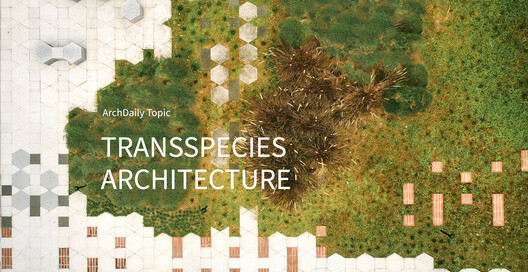
This month, ArchDaily explores Transspecies Architecture: The Life of Materials, Ecological Alliances, and Nature's Agency, a topic that examines architecture's entanglement with extraction, territory, and planetary life. Moving beyond questions of sustainability as performance, the theme asks how materials carry geological memories and political geographies, and how emerging practices in microbiological design, biofabrication, and more-than-human alliances are reshaping what it means to build at all.
Related Article
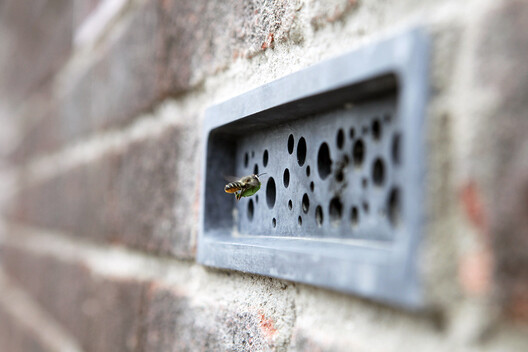
Architecture Beyond Humanity: Designing for Non-Human Species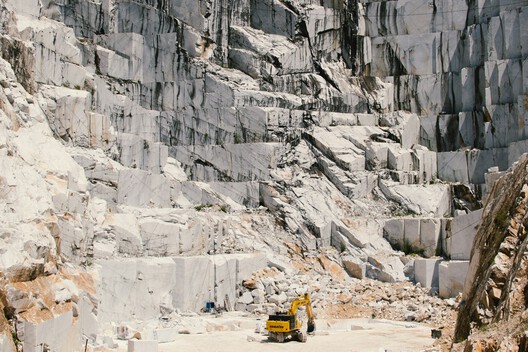
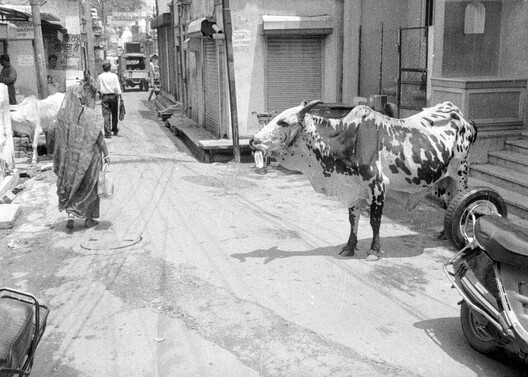
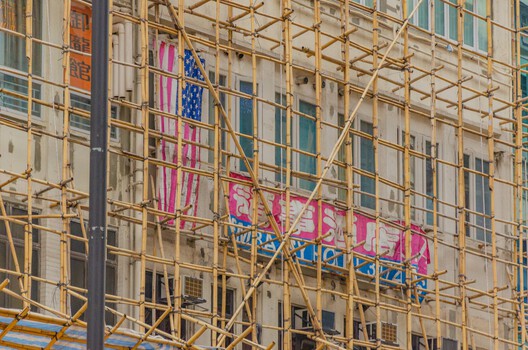
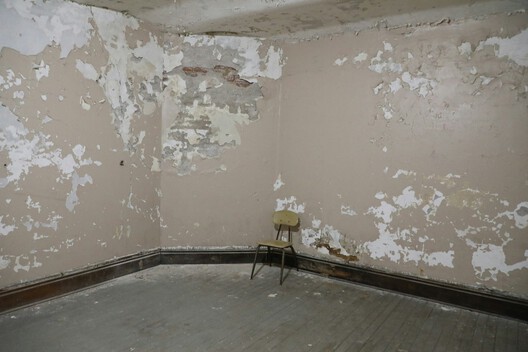
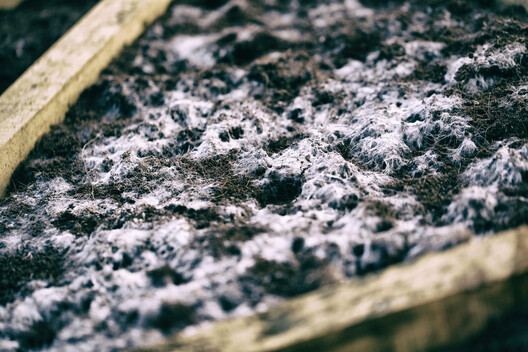
The coverage will trace this entanglement across scales and registers. It will examine the full production chain of granite—from quarry to countertop—to make visible the territorial and ecological costs embedded in a single material. It will ask what bamboo's rapid rise from vernacular craft to carbon infrastructure reveals about its full life cycle. It will also focus on mold as an architectural subject in its own right, probing how living organisms that colonize buildings unsettle assumptions about permanence and design intent. The coverage also turns to the cities where dogs, cows, birds, and insects already share urban space with humans, asking what architecture designed for these other realities might look like. And it examines how food production—and the underlying metabolic needs of animals and plants—have historically shaped coastlines, generated building typologies, and reorganized entire landscapes.
Underlying all of this is a deeper provocation: that architecture has long treated matter and other species as resources to be exploited rather than collaborators to be understood. What would change if they were approached not as inputs but as agents with their own timelines, tendencies, and specificities?
As these perspectives accumulate, the questions become harder to avoid: What are the true ecological and political costs of the materials we take for granted? Can architecture be designed to accommodate non-human life as a founding condition? And what might it mean for a building to decay, transform, and persist beyond the human uses it was made for?
This month's coverage invites readers to reconsider the moment before construction begins—the quarry, the field, the colony of organisms, the animal crossing the threshold—and to ask whether architecture's relationship with matter can be something other than extraction.
This article is part of the ArchDaily Topic: Transspecies Architecture: The Life of Materials, Ecological Alliances, and Nature's Agency. Every month we explore a topic in-depth through articles, interviews, news, and architecture projects. We invite you to learn more about our ArchDaily Topics. And, as always, at ArchDaily we welcome the contributions of our readers; if you want to submit an article or project, contact us.