When we think of façades, we rarely think of them as habitats. We see them as the elements that separate interior from exterior, regulate temperature, reduce noise, and protect buildings from external conditions. They give architecture its visual language, but they are also expected to keep the outside world at a distance. In doing so, façades have often been understood as barriers: surfaces that define where human comfort begins and where the environment is meant to remain outside.
But the outside of a building is never empty. For centuries, architecture has unintentionally created opportunities for other forms of life. Birds nested beneath roof tiles, insects occupied cracks in masonry walls, and mosses or plants took root along ledges, gutters, and rough stone surfaces. These conditions were rarely designed with other species in mind, but they created small opportunities for life to inhabit them.
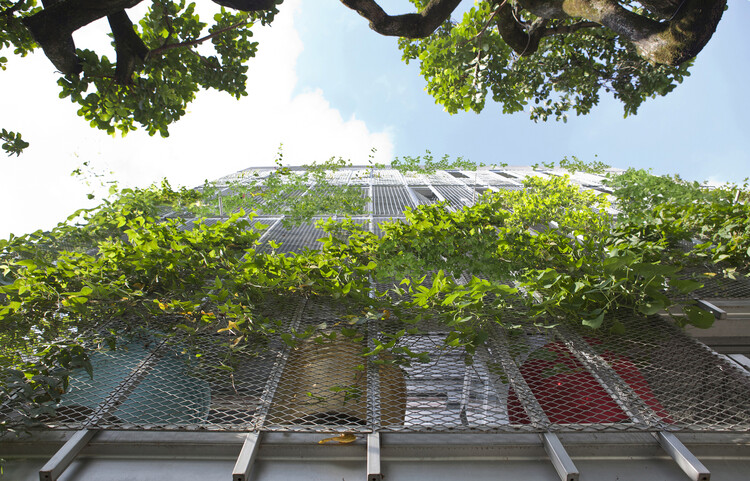
As façades have become more insulated, sealed, and controlled, many of these spaces have gradually disappeared. The question, then, is not only how buildings protect human interiors, but what kinds of life they leave out in the process.
Some recent projects are beginning to respond to this question. Rather than treating the façade only as a protective boundary, they use it to provide food, shelter, nesting opportunities, and space for other species. The façade remains part of the building, but it also begins to participate in the ecological systems that surround it.
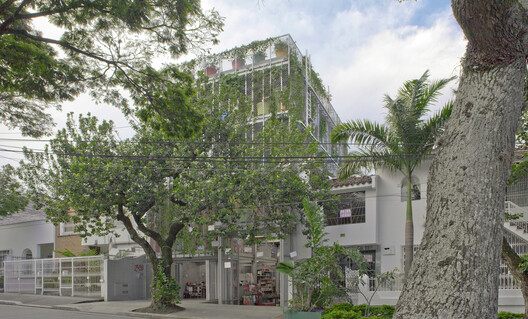
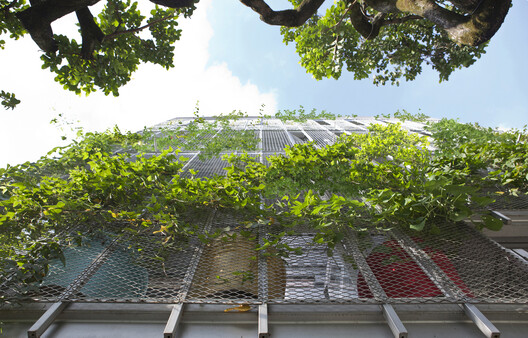
In the Bioclimatic Prototype of a Host and Nectar Garden Building by Husos Architects in Cali, Colombia, the façade becomes more than a layer of greenery. Conceived as both a workplace and a residential building, the project turns the envelope into a vertical garden that supports local species rather than simply covering the building with plants. Bushes and climbing plants from the surrounding ecosystem, especially nectar and host plants for butterflies, become part of the façade. Some provide food, while others support reproduction and allow insects to complete part of their life cycle. The façade also creates shade, improves the building's microclimate, and reduces energy consumption, connecting ecological functions with everyday comfort. In this sense, it is not treated only as a protective layer, but as a living edge where birds, insects, and plants can remain present within the city.
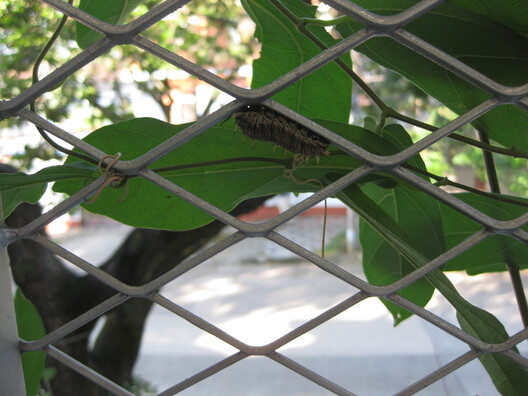
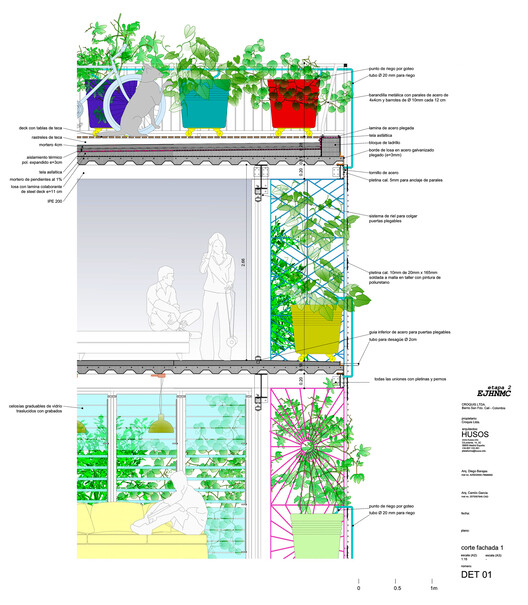
Because the building also operates as a workshop and a place of exchange, this ecological role is not limited to its façade. The project used its everyday visitors as a way to circulate seeds, information, and awareness about local plants. Workshops with neighborhood children extended this logic beyond the building, encouraging similar vegetation to appear in balconies, patios, and front gardens. The façade, therefore, operates at two scales. It supports life directly through vegetation, but it also encourages similar interventions beyond the building itself.
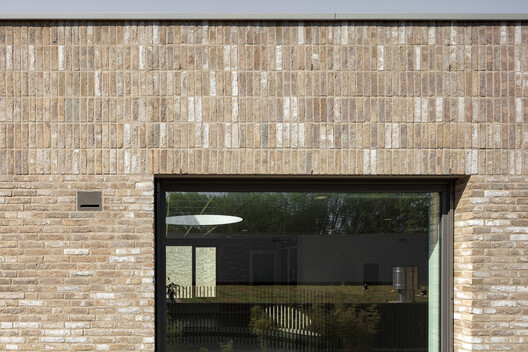
In the SO Fier School in Utrecht, designed by EVA architecten, the strategy is discreet but intentional. Nest boxes for birds and bats are integrated directly into the façade, creating small spaces for other forms of life within the building envelope. The intervention is almost absorbed into the architecture, but that is part of its relevance. It shows that making room for other species does not always depend on a highly visible ecological gesture. It can also happen through precise architectural decisions that allow the façade to remain protective while becoming porous to the life around it.
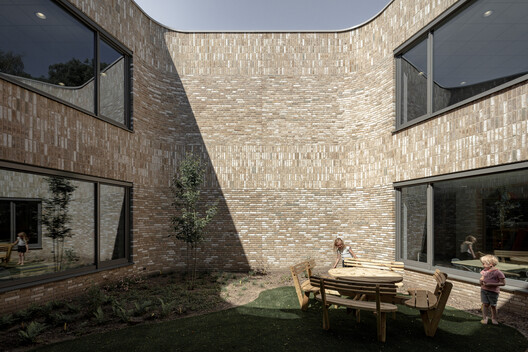
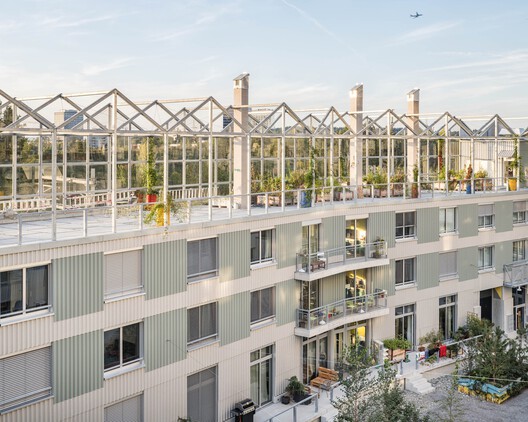
A similar strategy appears in Hochbord Housing by Conen Sigl Architekten in Switzerland, but here it is tied to everyday residential life. The project incorporates nesting aids for eight bird species, as well as bats and wild bees, into the façade and roof. Rather than concentrating ecological functions in a single area of the site, the habitat is distributed throughout the building itself. Nesting spaces become part of the same structure that houses apartments, circulation spaces, and shared amenities, bringing different forms of life closer together.
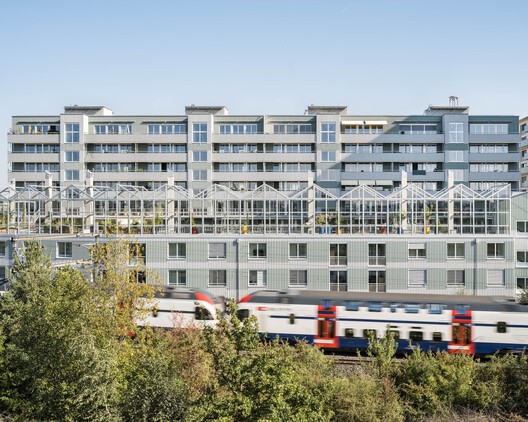
These nesting spaces also work together with the planted areas, community gardens, and landscaping around the building. Plants attract insects, which then become part of the food source for the birds and bats using the nesting aids. The façade, therefore, does more than provide shelter. It becomes one piece within a larger system of relationships between vegetation, wildlife, and residents. What emerges is not a single ecological gesture, but a network of small interventions that allow different species to occupy the site in different ways.
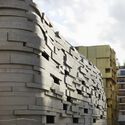
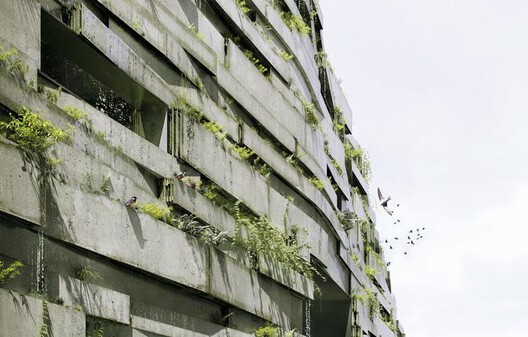
The Primary School for Sciences and Biodiversity by Chartier Dalix Architectes pushes this idea further because the façade is not treated as a surface to which habitats are added, but as the place where those habitats are formed. Its concrete envelope is built from prefabricated blocks whose relief, depth, and porosity create different conditions for vegetation and fauna. Water is directed through the geometry of the wall, while folds, cavities, and overhangs generate places for insects, birds, and bats to occupy. Nesting boxes are inserted directly into the blocks, making shelter part of the construction system rather than an external addition.
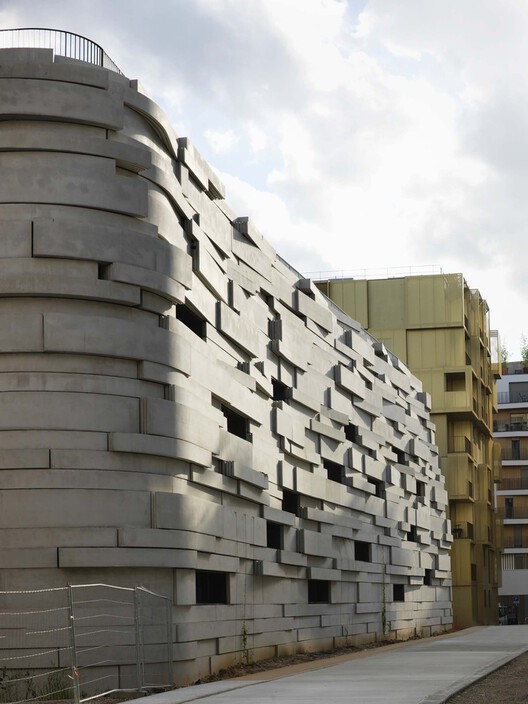
This makes the project especially relevant to the larger argument. The façade is no longer only a protective enclosure around the school; it becomes a designed thickness where material, water, vegetation, and animal life interact. Biodiversity is not represented through greenery alone, but through the way the wall is shaped, detailed, and allowed to change over time.
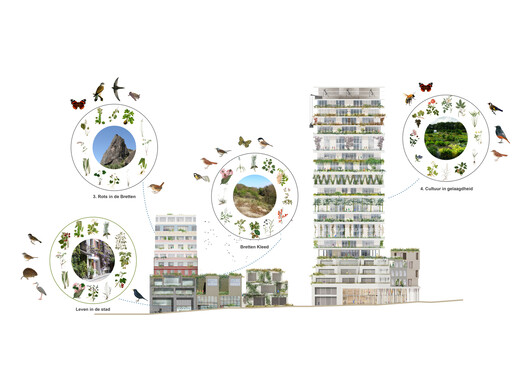
The VERTICAL Building in Amsterdam expands this question from the façade to the city. Developed within the transformation of Sloterdijk from an office district into a mixed-use neighborhood, the project responds to a part of the city where infrastructure and dense development had reduced many of the connections between green spaces. In this context, the façade becomes more than the outer layer of the building. Through nesting spaces, planted terraces, façade gardens, and openings for birds, bats, and insects, it helps reintroduce places for other species to move, feed, and find shelter.
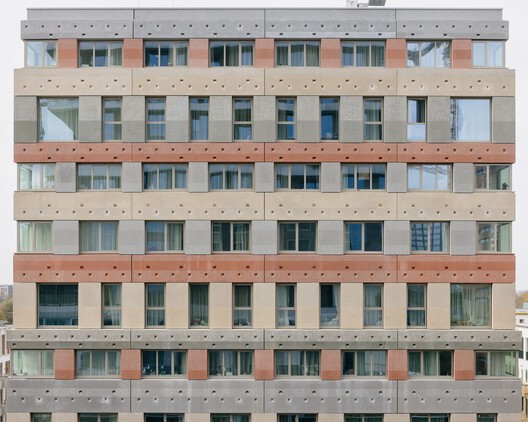
Rather than relying on a single intervention, the project combines vegetation, nesting spaces, water storage, roof gardens, and planted edges throughout the building. The planting provides food and shelter for different species, while also helping reduce heat and manage rainwater. In this case, the building envelope becomes a vertical extension of the landscape, allowing the façade to connect the building to the larger environmental systems around it.
Although these projects differ in scale, program, and context, they share a common approach. Rather than treating the façade as a fixed boundary between building and environment, they use it as a space of exchange. Through vegetation, cavities, nesting spaces, and changes in surface depth, the building envelope begins to accommodate forms of life that are often excluded from contemporary construction.
In that sense, the question is not only whether buildings can support biodiversity. It is also how architecture can recover some of the spatial conditions that once made buildings more open to their surroundings. In many of these projects, that shift does not come from large technological interventions, but from a reconsideration of the wall itself. A façade remains a boundary, but these projects suggest it can also become something else: a place where architecture makes room for other inhabitants.
This article is part of the ArchDaily Topic: Transspecies Architecture: The Life of Materials, Ecological Alliances, and Nature's Agency. Every month we explore a topic in-depth through articles, interviews, news, and architecture projects. We invite you to learn more about our ArchDaily Topics. And, as always, at ArchDaily we welcome the contributions of our readers; if you want to submit an article or project, contact us.