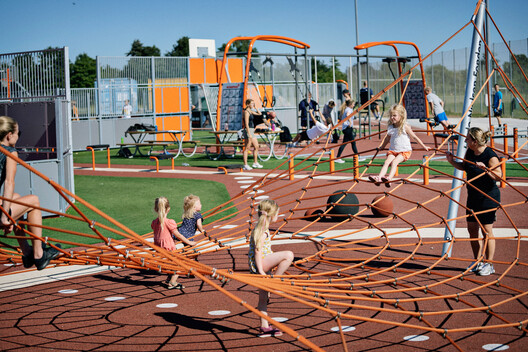
Play, as a human activity, is a multidimensional practice: it stems from biology, is socially transmitted, and is situated within the architectural realm. Within this interrelation, while play introduces dynamics and narratives that invite us to explore alternative ways of inhabiting the world, architectural projects provide the physical and sensory support needed to unlock these possibilities, with play structures serving as the medium connecting the two. Consequently, a defining relationship emerges between play, the built environment, and its evolution over time.
Although its roots trace back to the very origins of human society, it was around the mid-20th century—in a postwar context—that the act of playing began to establish itself as a means of reclaiming space, exploring, experimenting, and building connections with the environment to foster urban enjoyment. Today, the shift from "playgrounds of the past" to contemporary spaces reflects a transformation driven by innovation and learning through play, responding to new dynamics of integration, fabrication, and spatial use.


.jpg)
