While other architecture students spend their summers strolling the streets, seeing the sights, and contently sketching, you could be getting your hands dirty, turning your designs into reality, and making a difference in a community that needs you.
Every summer, Global Architecture Brigades (GAB) activates student volunteers to work with a community in Honduras, helping them alleviate needs in health and education. The program isn’t a lesson in a charity; it’s a hands-on experience of the community-entrenched work of a designer of the 21st century.
Read more about Global Architecture Brigade’s work in Honduras, and how you can get involved, after the break...
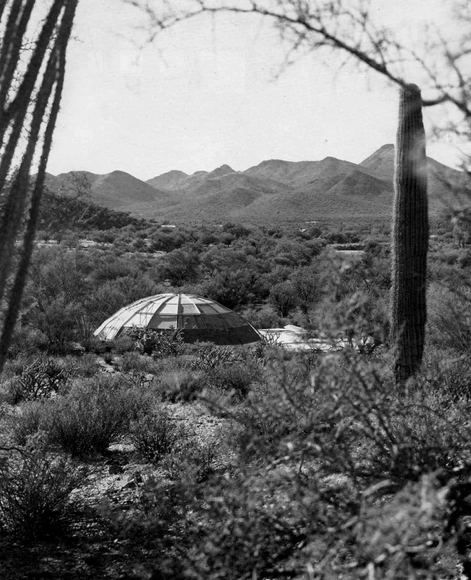
This article, written by Arizona-based architectWendell Burnetteof Wendell Burnette Architects, recounts the story of Paolo Soleri's 'The Dome' in the desert.
A glass house in the desert? Was it an architectural caprice, a folly, or was it a solution to the problems of desert living whose appropriateness is still not recognized? Having had the experience of living in The Dome for a full year, through all the seasons, I felt it incumbent upon myself to take a fresh look at this remarkable work of architecture.
Paolo Soleri, its designer, was born in 1920 in Turin, received a PhD in architecture from the Torino Politecnico, and in 1947 came to America to study with Frank Lloyd Wright, remaining with him for just over a year. Mark Mills, who assisted Soleri in the construction of The Dome, was born in 1921, received an architectural engineering degree from the University of Colorado, and studied with Wright for four years. It was at Taliesin that Soleri and Mills became friends. In 1948, when they and two other apprentices were working on an experimental structure at Taliesin West, which became what is known as the Sun Cottage, there was a misunderstanding with Wright that led to all four of them leaving. Soleri and Mills went to work with a developer, providing design work for some condominiums at the base of Camelback Mountain, below the north face in Paradise Valley. Soleri developed a scheme that involved a tower element supporting a hex form canopy and he and Mills built a mockup of Camelback out of concrete block and wood. It was shortly after this that “the Cli,” as she was fondly called, came along.
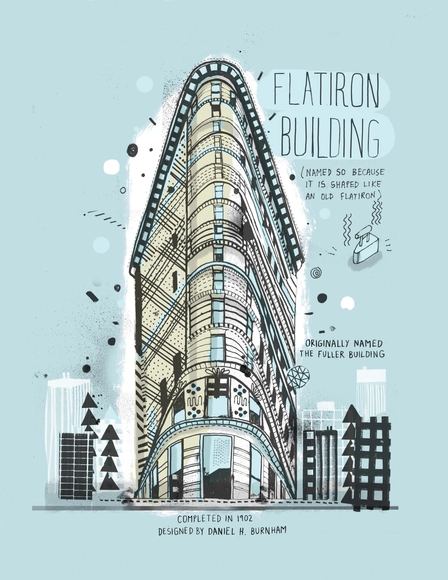
ALL THE BUILDINGS IN NEW YORK is a blog, a book, and, above all, illustrator James Gulliver Hancock's love letter to New York City.
As his website reveals, Hancock "panics that he may not be able to draw everything in the world… at least once." Since Kindergarten, he's been obsessed with drawing in meticulous detail (or, as he tells the Atlantic Cities, with a mix of "technicality and whimsy"), a characteristic this native Australian brought with him when he moved to Brooklyn, New York.
What began as a blog, All The Buildings In New York, to keep track of his many sketches of New York's architecture (particularly the brownstones), is now a book (All The Buildings in New York: That I've Drawn So Far - which includes about 500 drawings). Organized by neighborhoods, it features New York architectural icons from the past and present, including the Chrysler Building, the Flatiron, Apple's 5th Avenue store, as well as the everyday buildings that make up New York's unique cityscape.
See more images from All the Buildings in New York, after the break...
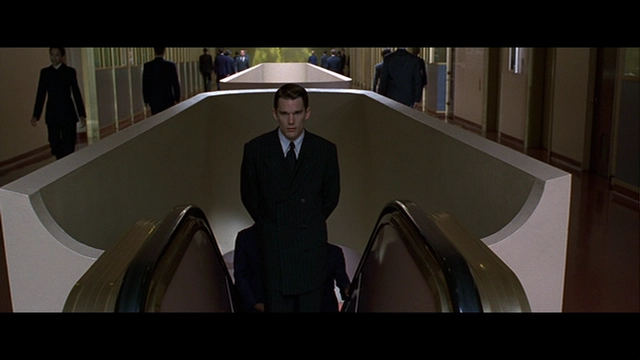
Screenshot of Frank Lloyd Wright's Marin Center in the film Gattaca. Courtesy of Columbia Pictures.
You would think that of all film genres, Science Fiction would be the one least likely to feature real buildings. It stands to reason that production designers would want to avoid connections with things so grounded in reality. But in fact, there is somewhat of a tradition of using modern architecture as a foundation for the creation of fictional film worlds.
Science fiction relies on an audience believing in the world they are presented with. Clever camera work, perspective design, and temporary materials can only do so much. What often tips the balance in favour of using real, Modern buildings - rather than a temporary set - is the authenticity and atmosphere they provide the Science Fiction genre.
Read about Modern architecture in Sci-Fi films Blade Runner, Gattaca, Aeon Flux, and more, after the break...
Having been involved in the creative industries education for over decade now, one of the most common questions students ask in interviews (and parents ask on open days) is about ‘getting a job’ at the end of the course. As if a graduating student can simply go and trade in their degree certificate and swap it for a ‘good job’. If only employment was this easy.
‘Getting a job’ in the Arts has always been a difficult undertaking; with no boxes to tick it can be a complicated process finding an appropriate vacancy - and so ensues the hellish time of resume writing and job interviews.
A drastic [most revolutions are] but more appropriate approach to this situation is not to think of ‘getting a job’ as ‘getting’- the mere word suggests a degree of affordance, of being gifted employment - but rather as ‘creating a job’. ’Creating’ is about being pro-active and entrepreneurial; it involves going out, attending events, talking to people, doing internships and apprenticeships – essentially increasing your exposure. After all, how will employers know they need you in their firm if they only see your skills in a nice little list on a sheet of A4? You must make yourself indispensable, and for that you don’t need a resume. You need guts.
By now you have probably heard that UNStudio, the Dutch firm led by Ben van Berkel and Caroline Bos, is on target to relaunch this June as an open-source web-based knowledge hub… that, by the way, will still pursue adventurous architecture. We could say they are “launching” this initiative, but it seems more accurate to say they themselves are “relaunching”.
Because of the difficult economic climate in Europe, van Berkel and Bos began to reimagine the practice along the lines of something more fluid, flexible, and agile, a knowledge-based approach to how they work within the office and how they engage the larger world. They are basing this around four topics or “knowledge platforms”: sustainability, materials, organization, and parametrics.
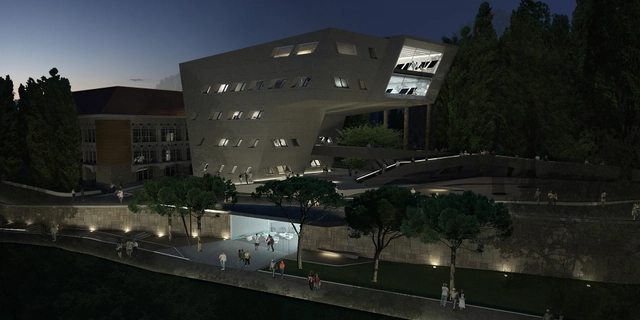
Context in architecture has become a subject bloated with discussion and debate over the years. And, as a matter of fact, it has come to matter very little in its formal and typological sense. Take, for instance, the fluid forms that compose Zaha Hadid’s hundreds of projects around the world, or Frank Gehry’s exploding compositions seen from South America to the unmistakable Guggenheim in Bilbao. The form architecture takes in these cases, and countless others, is in itself a deliberate disregard towards context in its literal sense.
But is this disregard for context a mistake? Observers would often say so, though I would like to disagree. It has become frequent that projects like these, largely formal and not politely accommodating their historic surrounding, actually take greater interest in social urban issues that have a direct impact on the city dwellers. Quite simply, successful architecture today is one that serves society culturally and practically, addressing tangible problems of 21st century cities and dealing with context in a solution-oriented manner, going beyond aesthetics (whose value is only temporary) and into future-invested urbanism. Case-in-point? My hometown: Beirut, Lebanon.