

This guide explains how to structure multi-image prompts in the RunDifussion platform. Explore RunDifussion's product catalog.
Articles
How to Prompt and Annotate Multiple Images with AI
| Sponsored Content
https://www.archdaily.comhttps://www.archdaily.com/catalog/us/products/38860/how-to-prompt-and-annotate-multiple-images-with-ai-rundiffusion
“Shobuj Pata” (Green Leaf) Eco Community Development / JET, JCI, and Terraplan

JET Design Group was invited by JCI Architects along with Terraplan Landscape Architects, to joint venture in the design of the Green Leaf project. After winning the commission earlier in 2011, in December, the final negotiations were completed to enable the project to move forward quickly. The team will be working together, helping Bangladesh to design a sustainable community with an innovative green concept. Green Leaf is green landscape architecture and built form which takes full advantages of the local natural resources to create a hybrid habitable space combining architecture and nature. The concept is inspired by adopting current and green innovative technology to make the design construction economic and feasible. More images and architects’ description after the break.
https://www.archdaily.com/198749/percent-e2-percent-80-percent-9cshobuj-pata-percent-e2-percent-80-percent-9d-green-leaf-eco-community-development-jet-jci-and-terraplanAlison Furuto
'An Imprint of Spain in China' Exhibition

In tribute of the 80th anniversary of the death of Abelardo Lafuente, Polifactory organized and designed ‘An Imprint of Spain in China’ exhibition in Shanghai during this past December which centered around his legacy. The exhibition, featuring the hidden story of Spanish architecture in China, was the result of the research overseen by Alvaro Leonardo, co-founder and director of Polifactory about Abelardo Lafuente (1871-1931), the first Spanish architect in China, who introduced the moorish spanish style in Shanghai, and was responsible for the design of some of the most luxurious ballrooms in Asia and other landmarks of the city. More information on the exhibition after the break.
https://www.archdaily.com/198741/an-imprint-of-spain-in-china-exhibitionAlison Furuto
Architectural Workshop by Will Alsop

Ajman University of Science and Technology announced that there will be an architectural workshop by the renowned architect Will Alsop on the theme of ‘Designing a space that will lift the spirit’ to be held at the university itself (AUST), UAE, during the period of January 30-February 2.
https://www.archdaily.com/198624/architectural-workshop-by-will-alsop-2Alison Furuto
PLAT Journal 3.0 / Rice University School of Architecture

From unforeseen endings come dramatic beginnings. Plat 3.0, an independent architectural journal published by students at Rice School of Architecture, invites projects, images, essays, and manifestos, which explore the discursive opportunities that emerge in the wake of collective disruption. In a time characterized by rapidly shifting conditions and perpetual crises, contingencies and opportunities to innovate emerge.
Such moments lay the ground for radical change. Free from the constraints of the established doctrine, architectural and urban practice find new frontiers where experimentation is not only allowed, but demanded—where temporary breakdown establishes new, lasting thresholds for design and research. More information after the break.
https://www.archdaily.com/198622/plat-journal-3-0-rice-university-school-of-architectureAlison Furuto
CO/FXFOWLE Announce Joint Venture

Los Angeles-based CO Architects and New York City-based FXFOWLE have announced the formation of a joint venture firm known as CO/FXFOWLE. Formed in late December, the two firms will embark in a “genuine collaboration” with all their project services. While each firm will still maintain their individual identity and operations, they will pursue new projects together, allowing them to expand their geographic and expertise reach.
https://www.archdaily.com/199319/cofxfowle-announce-joint-ventureKarissa Rosenfield
AD Round Up: Cultural Centers Part VIII

For our eight selection of previously featured Cultural Centers we have 5 amazing projects from early-2011. Check them all after the break.
Edcouch-Elsa ISD Fine Arts Center / Kell Muñoz Architects This building evolved from significant public conversations with students, parents, teachers and community activists, working with historians, curators, folklorists, artists and architects to envision a community gathering place. As the first important civic building funded in over thirty years, the fine arts center needed to convey the community’s cultural heritage, hopes and aspirations (read more…)
https://www.archdaily.com/199245/ad-round-up-cultural-center-part-viiiSebastian Jordana
Reality Check

In 2007 I presented a conceptual (unbuilt) design for the Virginia Tech Autism Clinic. During that presentation I argued for a calming environment, in part because of high divorce rates among families with individuals with autism. There is one catch; I couldn’t have known what the divorce rates were. No study prior to 2010 had seriously looked at divorce rates among families with autism, more on that later. My irresponsible and inexcusable blunder reflects the depressingly common urge we have to jump to conclusions about the why and how of a situation before we analyze the reality of it. For centuries, countless scholars built elaborate models to explain why and how the sun went around the earth without ever asking “does it?” This kind of cognitive blindness makes sense from an evolutionary standpoint; it is better to assume a hungry lion is making the grass rustle than to ponder if it is nothing at all. Not surprisingly we tend to make more Type I errors (false positives) than Type II errors (false negatives). Although advantageous on the African savannah, this type of thinking can be disastrous when making design decisions.
https://www.archdaily.com/199240/reality-checkChristopher N. Henry
Kimball Art Center / Brooks + Scarpa Architects

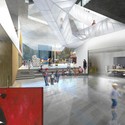
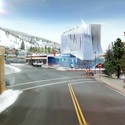
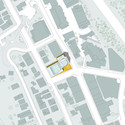
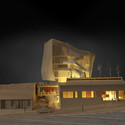
As we announced yesterday, Brooks + Scarpa Architects is one of the five finalists selected for the Kimball Art Center competition. Inspired by the “seemingly endless” blue skies and the unique blend of new and old within the historic Park City, Brooks + Scarpa delicately weave the heavy mass of the existing 12,000 square foot Kimball Art Center with the new 22,000 square foot addition that has been referred to as the Kimball “Cloud”.

https://www.archdaily.com/199278/kimball-art-center-brooks-scarpaKarissa Rosenfield
Seeing the Building for the Trees by Sarah Williams Goldhagen

This article, recently seen on The New York Times, was kindly shared with us by the author Sarah Williams Goldhagen.
A REVOLUTION in cognitive neuroscience is changing the kinds of experiments that scientists conduct, the kinds of questions economists ask and, increasingly, the ways that architects, landscape architects and urban designers shape our built environment.
This revolution reveals that thought is less transparent to the thinker than it appears and that the mind is less rational than we believe and more associative than we know. Many of the associations we make emerge from the fact that we live inside bodies, in a concrete world, and we tend to think in metaphors grounded in that embodiment.
https://www.archdaily.com/199257/seeing-the-building-for-the-trees-by-sarah-williams-goldhagenKarissa Rosenfield
National and University Library NUK II Competition

The Chamber of Architecture and spatial planning of Slovenia (ZAPS) is currently putting on a competition for public, project, open, anonymous, single-stage, architectural design for the selection of the most appropriate expert solution for the structure and external arrangement of the National and University Library NUK II.
The construction of NUK II on the location of the new building must implement the common objective of urban planning, cultural heritage protection and archaeology, and therefore provide a contemporary urban space of high quality, reflecting recognisable local and historical characteristics. The NUK II project is located in the southern part of Ljubljana city centre, between Slovenska, Zoisova and Emonska ulica and Rimska cesta. More information after the break.
https://www.archdaily.com/198618/national-and-university-library-nuk-ii-competitionAlison Furuto
Sea Tree / Waterstudio.NL

As a response to urban density, Waterstudio.NL has created a floating Sea Tree that would restore environmental value in crowded metropolises. The Sea Tree, a multilayered tower-esque structure, would inhabit the harbors and rivers surrounding major cities, such as New York, as a way to provide an opportunity for flora and fauna even when land is sparse.
More about the Sea Tree after the break.
https://www.archdaily.com/199230/sea-tree-waterstudio-nlKaren Cilento
Bumbogo Project / Guillaume Sardin

Africa is currently building its urban culture, in a global context of clusterized cities, of insularized space. Urbanism shouldn’t be just about numbers. Although Africa is currently strongly lacking infrastructure, its needs cannot always be quantified. Urbanism should reflect culture, history and create a sense of belonging. Guillaume Sardin‘s Bumbogo Project in Kigali, Rwanda, which won second place in a competition, will be a manifest, a pragmatic utopia. By using the meaning of Rwanda and Kigali as a matrix, this project generates an ultra site-specific master plan setting an example of fair urbanism. More images and architects’ description after the break.
https://www.archdaily.com/198610/bumbogo-project-guillaume-sardinAlison Furuto
Transit Oriented City – Dongtan Central Business Master Plan / Ojanen Chiou Architects + SWA Group

Designed by SWA Group with Ojanen Chiou Architects LLP, the 157 hectare Dongtan Central Business Master Plan is at the heart of Dongtan City: a new urban center located just 30 km south of Seoul in South Korea. The development zone is situated on a former agricultural plain that had been taken over by various industrial uses. Bounded by a river to the west and mountainous terrain to the east, this zone is bisected by a major transportation corridor connecting Seoul with the southern reaches of the country. At the core of the development is a transit center that will accommodate high-speed and metropolitan rail stations connecting with a bi-modal (bus + tram) transit system, and long-distance and city buses, establishing Dongtan City as a major regional transit hub. More images and architects’ description after the break.
https://www.archdaily.com/198593/transit-oriented-city-%25e2%2580%2593-dongtan-central-business-master-plan-ojanen-chiou-architects-swa-groupAlison Furuto
Forumtorget / White Architects

White Architects was recently named the winner of the competition for the Forumtorget project in Uppsala, Sweden. The proposal, with its subdued paving, expressive sofa and generous plateau, is powerful, substantive and empathetic. Here, the people of Uppsala have a natural meeting place and an open breathing space within the built-up business district. More images and architects’ description after the break.
https://www.archdaily.com/198379/forumtorget-white-architectsAlison Furuto
Learning from Ricardo: an unpublished recent talk with Ricardo and Victor Legorreta by Carlo Ezechieli

In memory of Ricardo Legorreta (May 7, 1931 – December 30, 2011), Carlo Ezechieli (Ph.D., Adjunct Professor of Architecture Politecnico di Milano, Principal of CE-A Architects) has shared with us his story of discovering Ricardo Legorreta’s work and his recent interview with Ricardo and his son, Victor Legorreta.
The first time I came in contact with Ricardo Legorreta’s work, was back in 1998. Of course I was familiar with his name, particularly due to Kenneth Frampton’s “Critical Regionalism” writings, but I actually did not know much about his architecture. One day I happened to visit the Camino Real Hotel in Mexico D.F. which, according to my hosts, it was something that had to be seen, although none of us was really knew what architect had designed it. I was totally amazed. The entrance, an extraordinary space, was filled up by the sound and movement of an unconventional fountain that resembled the ocean waves. The interior was a huge, astounding introverted and essential translation of Pre-Hispanic monumental spaces. I was surprised to learn, later on, that this very contemporary building dated back to 1968 and was completed when Legorreta was not even 40.
I did not have many chances to meet Ricardo privately, nevertheless I believe that the few meetings we had, were sufficient to learn something really important from him in terms of ethics, approach to work and, eventually, attitude towards life in general. Ricardo Legorreta was the author of incredible works and was a great innovator exactly because he was able to move and orient himself, with complete freedom, within the coordinates of a culture and a tradition that he knew deeply and to which he felt he belonged totally. He did this always avoiding “architect’s” bizarre and unneeded brain-waves and remembering “not to take oneself too seriously”. A set of values, too often forgotten, that emerge from his narration in this interview and which finds full continuity in his son Victor. His death, last December 30, leaves a deep sense of sorrow and loss.
Continue reading for Ezechieli’s exclusive interview with Ricardo and Victor Legorreta.
https://www.archdaily.com/199061/learning-from-ricardo-an-unpublished-recent-talk-with-ricardo-and-victor-legorreta-by-carlo-ezechieliKarissa Rosenfield
Kimball Art Center Shortlist

In 1976, art enthusiast Bill Kimball transformed the 1929 Kimball Bros automotive garage into a non-profit community center for the visual arts, now known as the Kimball Art Center. Located in the heart of downtown Park City, Utah, the non-profit center serves as a gathering place for individuals to experience art through education, exhibitions and events. The aging historic building is in need of restoration and an addition that will allow the organization to increase their educational outreach and enhance the quality and scale of the exhibitions, while maintaining free admission to the public.
BIG, Brooks + Scarpa, Sparano + Mooney Architecture, Tod Williams and Billie Tsien Architects, and Will Bruder + Partners LTD are the five architects selected to submit final proposals for the transformation of the Kimball Art Center.
Continue after the break to watch each firm’s introductory presentation.
https://www.archdaily.com/199037/kimball-art-center-shortlist-presentationsKarissa Rosenfield
Mine Plug: Didactic Subterranean Architecture

The Mine Plug proposal, by recent Louisiana Tech graduate Brandon Mosley, explores an innovative technique for appropriating a now defunct mine shaft in the once thriving city of Picher, Oklahoma. The city which peaked at a population of almost 20,000 during the mining boom of the 1900’s, has since suffered the inevitable after effects of such environmentally destructive activities. Designated as a superfund site in 1981 by the EPA, the state of Oklahoma began offering buyouts for residents to relocate in 2005. The remnants from years of lead and zinc mining have left mountains of waste called “chat” on the peripheries of the town, as well as contaminated water and over 14,000 underground voids that threaten the stability of the town above. Read more after the break.
https://www.archdaily.com/198621/mine-plug-didactic-subterranean-architectureTim Winstanley
A brief guide for recently hired interns

A brief guide to recently hired Architectural interns at Svehn-Björner-Rödskägg Design Collective:
- If you take the last cup of coffee, make a new pot, and return your key-card to Anneka. She will escort you out of the building.
- Remove shoes prior to entering the contemplation gallery. Do NOT place shoes on the stainless steel bench outside the glass doors.
- All details will be drawn full scale, using standard Swedish proportions.
- The Lutefisk in the refrigerator is left over from last night. It’s supposed to smell that way, do not throw it out.
https://www.archdaily.com/199038/a-brief-guide-for-recently-hired-internsJody Brown
Dead Sea Resort & Opera House / Accent Design Group

The main concept in the Dead Sea Resort & Opera House by Accent Design Group is to create a resort that naturally blends in this special site, by having the built up areas merge naturally with the surroundings, appearing as terraces in the landscape. These terraces, or strips, would contain the individual housing units, amidst a natural/artificial landscape of palm trees and water pools. The idea again is to have something that infringes as little as possible on the experience of the Dead Sea, and that would provide an antidote to the other reigning ideas of suburban recreational facilities, which create completely artificial surroundings. More images and architects’ description after the break.
https://www.archdaily.com/198362/dead-sea-resort-opera-house-accent-design-groupAlison Furuto
Design Tactics and the Informalized City Symposium

Informality, which was first categorized and described in the 1970s, is now pervasive — across cities, in the places we live, work, and move through the everyday. For many, the informal is no longer a discrete sector appended to the workings of the “formal” city, but an integral effect of the structuring of cities and landscapes by contemporary economic, political, and technological change. Self-built architectures and urban agglomerations, ambivalent landscapes, nomadic and temporal spatial manifestations of informalized are situationally specific, but globally ubiquitous. Design Tactics and the Informalized City symposium, being put on by Cornell University on April 13-14, brings a discussion of this reality to disciplines that work on the city in material and spatial terms: architecture, urban design, landscape architecture, engineering, media and product design. More information on the event after the break.
https://www.archdaily.com/198350/design-tactics-and-the-informalized-city-symposiumAlison Furuto
Wimmer Medien Business Center and Urban Development / Atelier Thomas Pucher

The proposal for the Wimmer Medien Business Center and Urban Development in Linz, Austria by Atelier Thomas Pucher recently won the third prize in the international invited competition. Their main concept is the creation of a 33,600 m2 gross floor area central public space that recovers the mystical feeling of the Italian piazzas, offering flexibility to host the most variety of events and activities, like ice-skating, Christmas market or outdoors cinema. This piazza is also a central point for the social life of the building, providing outdoors spaces for the offices, significant synergies for the commercial area and a feeling of the life of the city to the apartments. More images and architects’ description after the break.
https://www.archdaily.com/198337/wimmer-medien-business-center-and-urban-development-atelier-thomas-pucherAlison Furuto
Open Call for Entries: The Next Issue of Scroope, The Cambridge Architecture Journal

Papers, projects and drawings that consider and reflect on any aspect of the changing nature of architectural teaching, practice and research, at a national or international level are welcome. Topics may include emerging technological developments; the role of the architect today; and, the value of architectural training to such diverse fields as regeneration, disaster management and sustainable development. They welcome a short description of your proposed submission in the form of an abstract. This should be in English and should not exceed 500 words. Send us your abstract by e-mail to: scroope@aha.cam.ac.uk by 1st February 2012.
https://www.archdaily.com/198335/open-call-for-entries-the-next-issue-of-scroope-the-cambridge-architecture-journalAlison Furuto
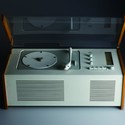
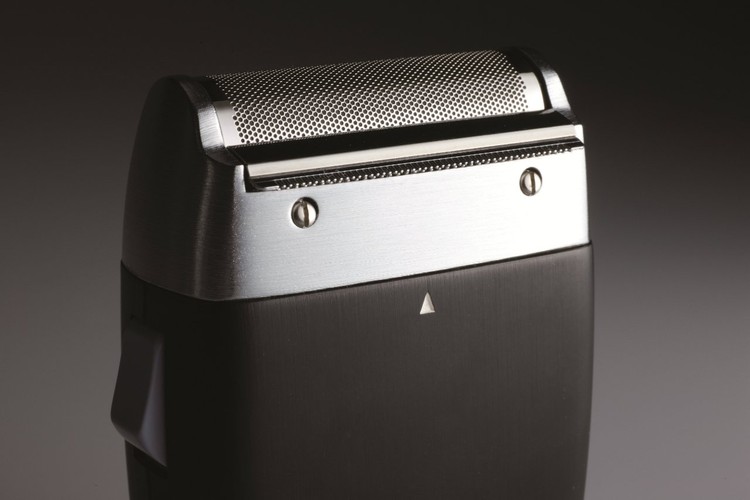
Dieter Rams 10 Principles of “Good Design”

As the New Year begins, architects and designers everywhere search for the latest information in hopes to find inspiration to provide them with ample amounts of motivation. Unsure of my inspiration, I found myself reading Neither Restrospective, Nor Predictive: Dieter Rams & Design of Self on the Semantic Foundry WordPress. I was then reminded of the famous German industrial designer Dieter Rams and his ten principles of “good design”. The straightforward list lays down key points, clearly stating what makes a good design. This information is a timeless source of inspiration that most any designer can appreciate.
Continue reading for Dieter Rams Ten Principles of “Good Design”



https://www.archdaily.com/198583/dieter-rams-10-principles-of-%25e2%2580%259cgood-design%25e2%2580%259dKarissa Rosenfield
AD Recommends: Best of the Week

Took some time off after New Year’s? Haven’t visited us since 2011? Don’t worry… here’s our brief selection of the best of last week. Check them all after the break.
COFCO Tianjin Showroom / L&A Design Group On 2009 COFCO (China National Cereals, Oils and Foodstuffs Corporation) Tianjin Group organized a competition for its Tianjin showroom. The brief called for facilities of a real estate sale house and a wine display club, offering a wine taste room for COFCO’s own brand -The Great Wall red wine (read more…)
https://www.archdaily.com/198734/ad-recommends-best-of-the-week-68Sebastian Jordana