From ceramic tiles and metal sheets for roofs to wooden decks and floating cement tiles for roofing, roofing materials not only contribute to the drainage and protect the lower layers from solar radiation and wear, but also have an important aesthetic function.
Currently, when choosing the roof covering, you can find a wide variety of materials and dimensions, each with specific characteristics, determined by the type of roofing, the location of the project, and its future maintenance.
Review a catalog of options to incorporate creatively into your designs, below.
Ten winning projects in Central America, the South and the Caribbean and twelve in North America are awarded in four categories: stores, shopping malls, hotels and restaurants. In May, built projects in Africa and Asia will be awarded in Algiers and Beijing. The European winners will be announced in Paris.
Check a gallery of the continental winners projects, below.
Continental Winners Central America, the South and the Caribbean:
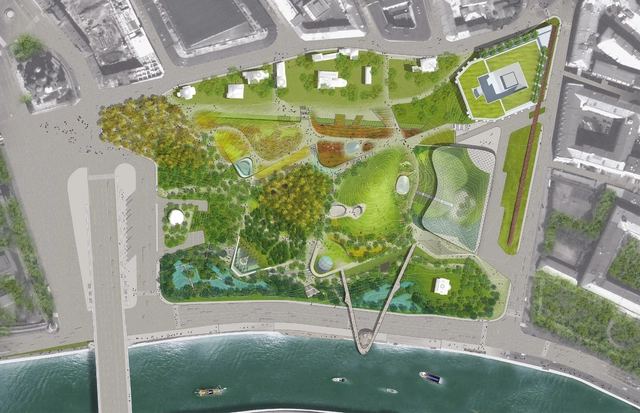
Parque Zaryadye Plan / Diller Scofidio + Renfro. Image via Diller Scofidio + Renfro
Frequently imperceptible to the inhabitant, the architectural plans of landscape designs are unquestionably the best tool for understanding certain relationships between elements and the strategic organization of the work. They are therefore an essential part of any good architecture project.
The distribution and type of vegetation, topography levels, the relationships between the preexisting urban or natural context, the possible routes and incorporated activities, and the materiality and the dimensional precision required for its construction are some of the considerations that are usually reiterated in this type of representation.
The result permits the communication of intentions in an organized way, while clearly exposing the concerns of the authors; for this reason, we invite you to review a series of different examples of architectural plans of public spaces that enables a comprehensive approach to the role of each project.
via Wikipedia User: HalloweenHJB Licensed Under CC BY-SA 3.0
Even in the age of instant information, museums enthrall us. Lining the tourist guidebooks of cities across the world, art museums are a must-see destination for visitors and locals alike. However, as our methods of communication and archiving change, driven by science and innovation, historic institutions such as art museums must keep up.
In cities around the world, art museums are redefining themselves to respond to the contemporary, experimental demands of the 21st-century. In Buenos Aires, the architecture of art museums showcases a diverse catalog of form, materiality and atmosphere, blending the instant, flexible demands of the modern age with a historic role of archiving some of humanity's most evocative works.
Below, we paint a picture of Buenos Aires' diverse art museums, showcasing the changing nature of exhibition architecture in one of the world’s most energetic cities.
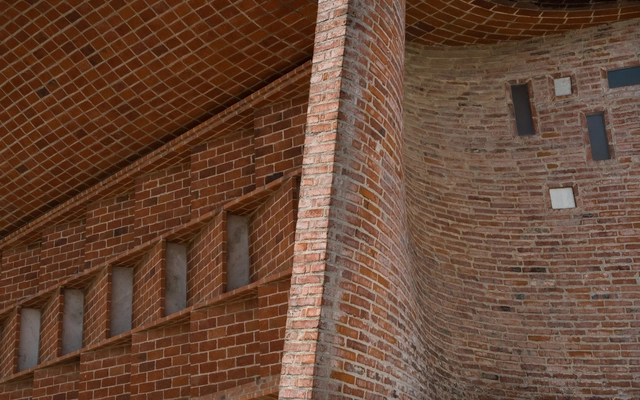
Gonzalo Viramonte has released a series of photographs that focus in on the use of bricks by engineer Eladio Dieste in his Atlántida Cristo Obrero church.
Viramonte shows us the essence of the project with an artful register that places the serial yet simple material element (the brick) at the forefront. This gallery also celebrates the potential and versatility of bricks by highlighting the artfully geometric interior and exterior spaces and the apertures that allow natural light to cast upon the walls, floors, and other surfaces.
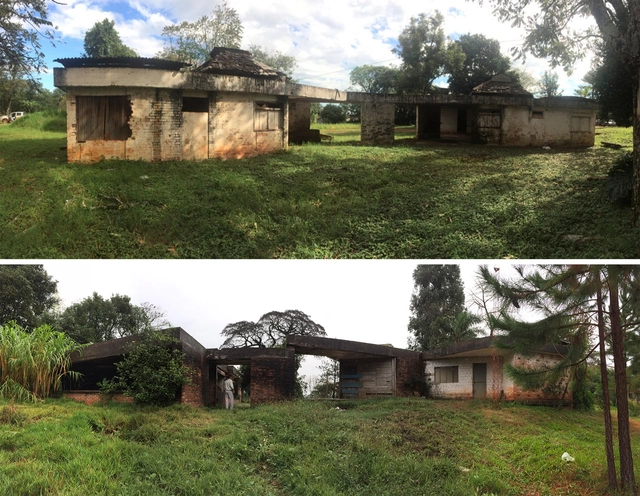
Tourist Inn at A. del Valle and Parador in San Pedro. Image via Agustina Basile
It is difficult to forget about the demolition of Clorindo Testa’s Commissariat of Santo Pipó and with it, the demolition of part of the Argentine architecture.
With the objective of addressing issues related to the rescue and protection of the forgotten and deteriorated buildings, the MMM3 (Modern Movement in Missions) of the Faculty of Humanities and Social Sciences (UNaM) held an exhibition on October 31 in the locality of A. Del Valle.
The exhibition is part of the 60th anniversary of other works of the architect in the Argentine northeast: the Tourist Paradores, three buildings located in A. del Valle, San Ignacio and San Pedro product of the architects Boris Davinovic, Augusto Gaido, Francisco Rossi and Clorindo Testa.
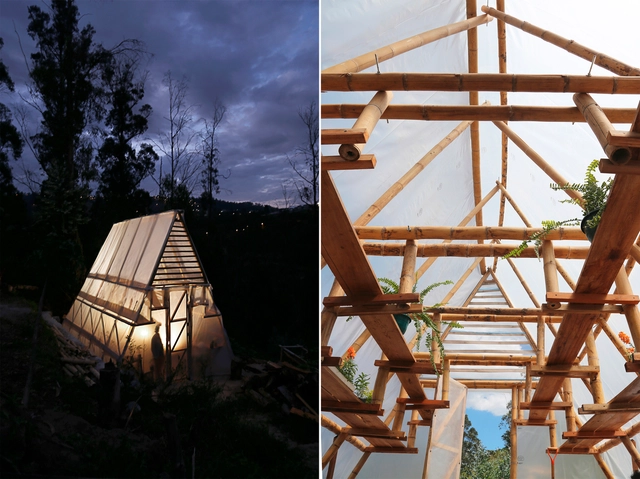
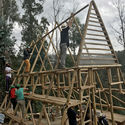
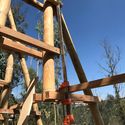
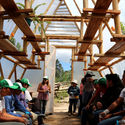
The social design from Natura Futura Arquitectura for a greenhouse in the warm subtropical climate of Nayón, Ecuador, the proposal approaches the use of local material resources in the construction of low-budget productive structures for the development of the collective.
The project, materialized with bamboo, wood and greenhouse plastic, is based on the basic geometrical figure of the triangle, proposing sectors with different levels of illumination for different types of farming.
via Flickr User: Marcelo Campi Licensed Under CC BY-SA 2.0
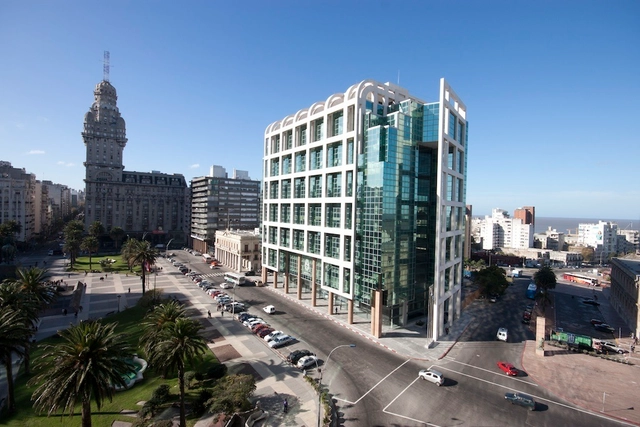
There are a number of reasons to visit the architecture of Montevideo: the coastal city is the result of a complex interaction of historical factors that provided multiple trends and architectural styles, currently coexisting at par. Its streets and buildings tell the story of its past.
The city´s architectural sites are easily found walking around Ciudad Vieja (Old Town) or in the renowned Rambla. Below is a list of 15 sites that every architect should know of and visit.
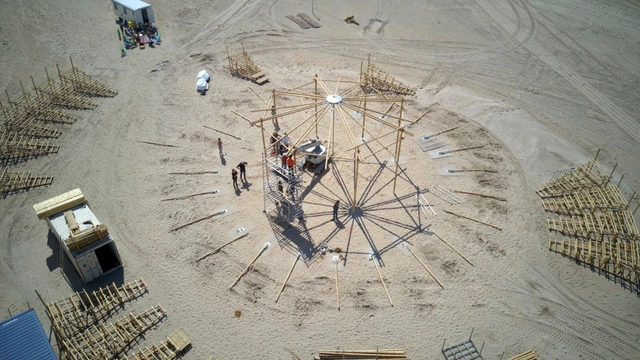
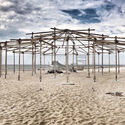
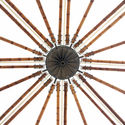
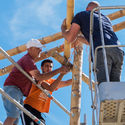
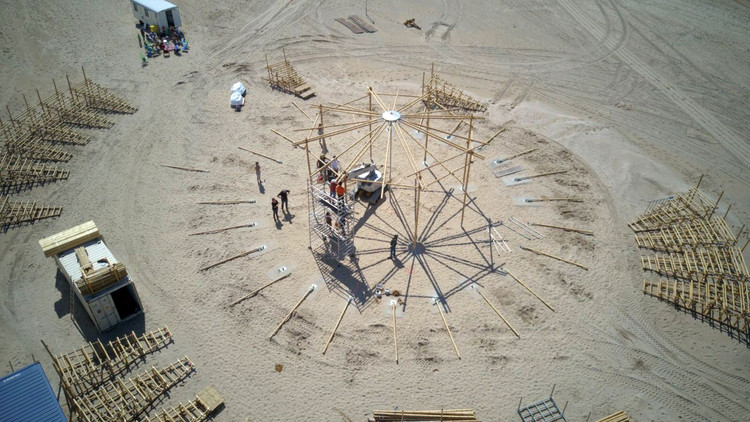
Studio Akkerhuis' bamboo design for a mobile theater proposal off the Netherlands coast addresses the characteristics of the material in the construction of light, resistant, accessible and transportable structures.
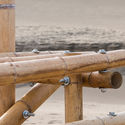
The project, a compact space similar to a small amphitheater, allows reuse with different configurations in various places with its joints made up of ropes and screws.
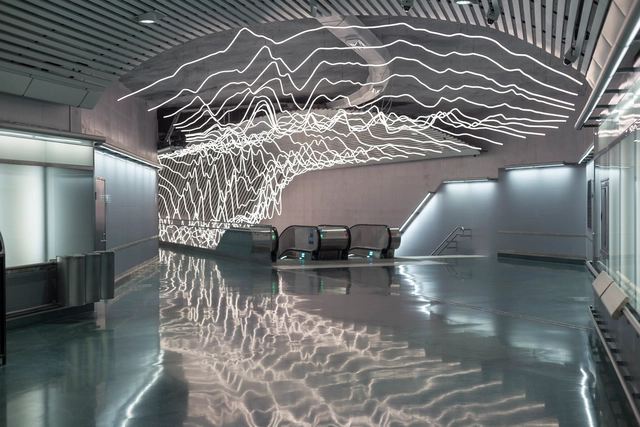
Designed by David Svensson, a total of 400 meters of a neon resembled warm white LED from GE is a work of art representing the pulse of city life in busy Stockholm station.
The project, a piece of suspended light, is built by metal profiles and a ceiling where the warm and white light of a series of LED strips is projected, in the quest to represent the basic visual language of the line.