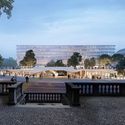
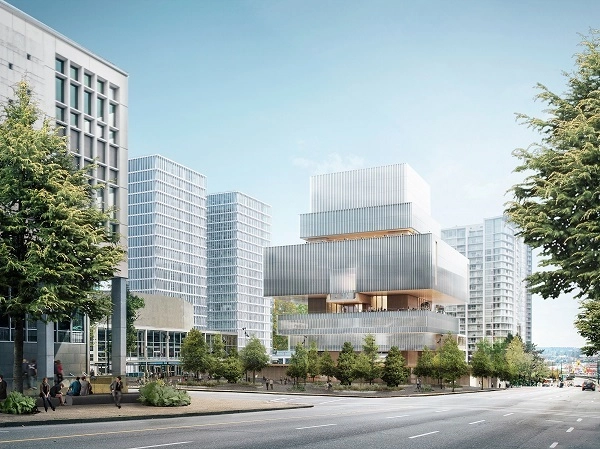
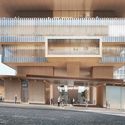
The Vancouver Art Gallery has unveiled the final design for its 300,000-square-foot building designed by Herzog & de Meuron. Designed to serve the Gallery’s ever-expanding collection of art and educational programs, the scheme will offer “a global platform for Vancouver’s and Canada’s thriving arts scene and play a vital role in establishing this city as one of the world’s most foremost cities for arts and culture.”
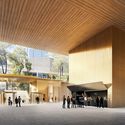
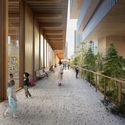
The scheme has been designed as a sculptural, symmetrical, upright building infusing opaque and transparent surfaces. The stacked scheme sees a minimal mass at the bottom contrast with larger volumes concentrated at the top, allowing light and air to filter down to an active, open-air courtyard below.
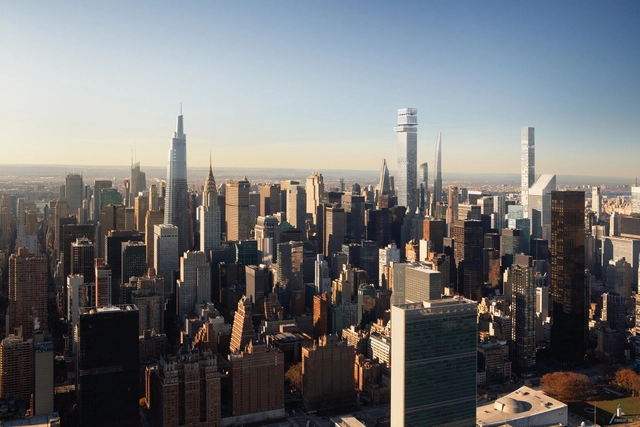
Gensler has released details of their proposed Tower Fifth in New York City. If realized, the 1556-foot-tall scheme would be the second-tallest building not just in New York, but in the Western Hemisphere. Located east of Fifth Avenue between 51st and 52nd Street, the tower will sit adjacent to St. Patrick’s Cathedral.
According to Gensler, who designed the scheme in collaboration with developer Harry Macklowe, the tower “creates a new paradigm for how a supertall structure meets the street and interacts with its neighbors.”
https://www.archdaily.com/910068/genslers-tower-fifth-in-new-york-city-will-be-the-second-tallest-building-in-the-western-hemisphereNiall Patrick Walsh
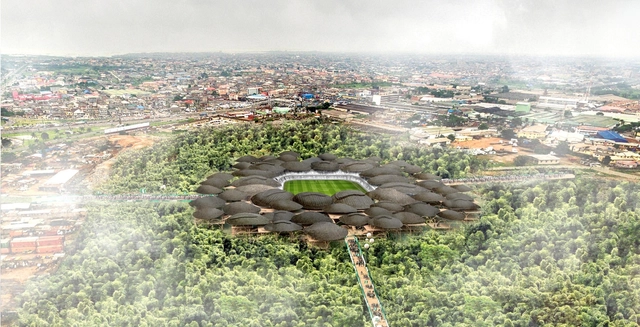
First Place: Bamboo Stadium. Image via arch out loud
Architecture research initiative “arch out loud” has announced the winners of their “Waste: Multi-Purpose Stadium” competition, asking participants to speculate on the design of a multi-purpose stadium at the former Olusosun Landfill in Lagos, Nigeria.
The competition was organized in response to the fact that the world creates more than a billion tons of garbage per year, most of which is incinerated, buried, and explored to landfills. As populations and major cities expand, so too must our “ability to reverse wasteful tendencies and begin living more efficiently and sustainably.”
https://www.archdaily.com/910049/competition-winning-ideas-for-multi-purpose-stadiums-on-former-lagos-landfillNiall Patrick Walsh
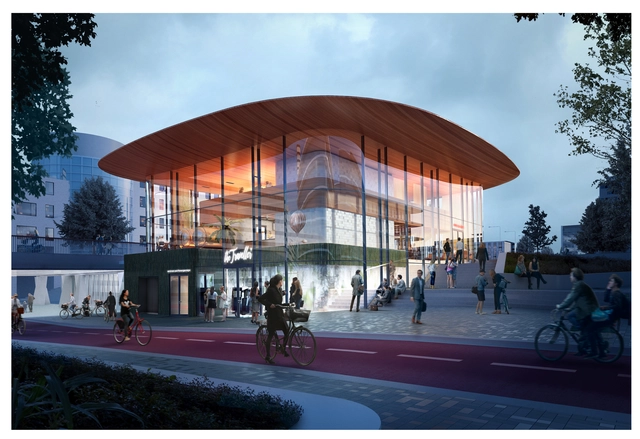
Construction has begun on the Powerhouse Company-designed pavilion for the ING campus in Amsterdam. Located in the up-and-coming district of Amsterdam Southeast, the 900-square-meter pavilion seeks to “make a bold statement while integrating with its surroundings."
The clean, minimalist pavilion will sit at the heart of the ING campus, serving as both a dining area and a multifunctional space for the community. Emphasizing the natural landscape, the pavilion offers a synergy between the built and natural environment through a friendly circular form, a timber interior, and green Tichelaar tiles on the north and east facades.
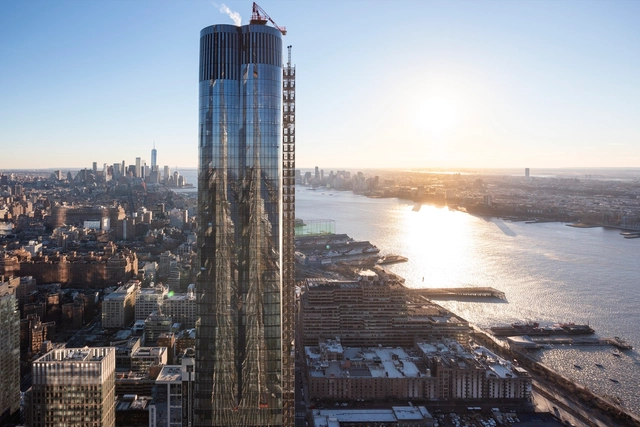
Construction has completed on Diller Scofidio + Renfro (Lead Architect) and Rockwell Group's (Lead Interior Architect) 15 Hudson Yards, an 88-story skyscraper marking the first residential project in the Manhattan masterplan. The scheme is now open with 60% of residential units already sold, totaling over $800 million in sales.
Microsoft has unveiled plans to commit $500 million to advance affordable housing solutions across the city of Seattle, Washington. The money, to be distributed as loans and grants, will kick-start new solutions to the city’s housing crisis, where income increases have lagged behind rising housing prices.
The investment breaks down as $225 million committed to subsidize middle-income housing construction in six targeted cities, $250 million to support low-income housing across the King County region, and $25 million to philanthropic grants to address homelessness in the greater Seattle region. The tech giant has targeted the region in close proximity to the site of its Redmond headquarters expansion, expected to accommodate 8,000 new employees.
https://www.archdaily.com/909841/microsoft-is-investing-500-dollars-million-in-seattle-affordable-housingNiall Patrick Walsh
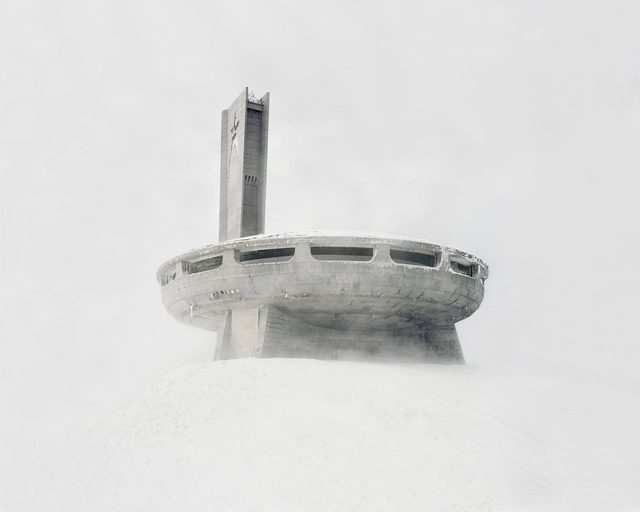
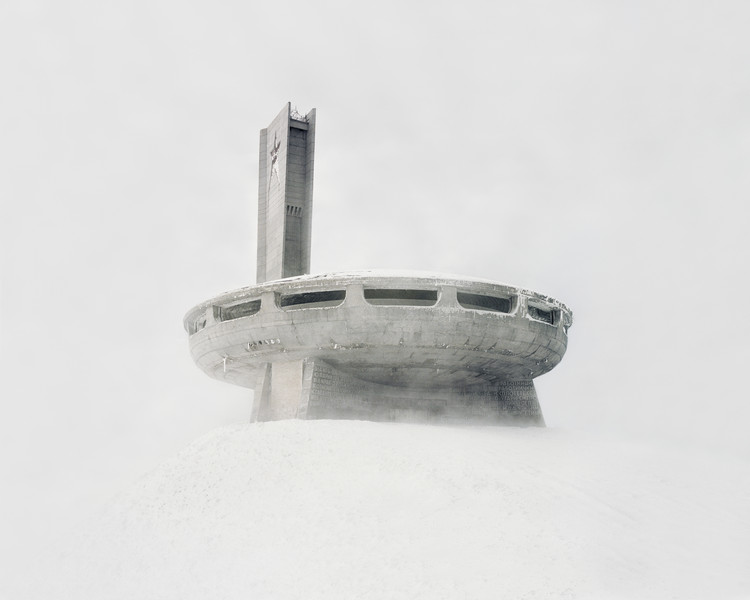
The “Restricted Areas” photography set distills humanity’s strive to perfection through recording abandoned Soviet infrastructure. Traveling to now-deserted landscapes which once held great importance as centers of technological progress, Tkachenko captured images of “forgotten scientific triumphs, abandoned buildings of almost inhuman complexity” and a “technocratic future that never came.”
The development’s larger 35-story, 400-foot-tall structure will twist alongside a second 300-foot-tall sister tower, both clad with bronze and travertine, sharing a connected podium and skybridge.
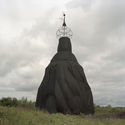
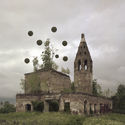
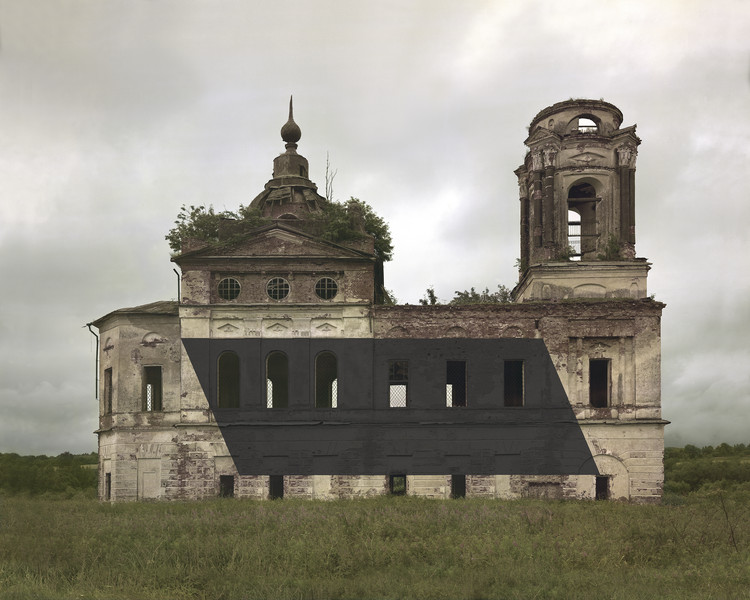
Moscow-based visual artist Danila Tkachenko has developed a project researching the boundaries of historical memories in Russian Orthodox churches. “Monuments” involved the sensitive appropriation of the abandoned rural churches, erecting lightweight structures in abstract modernist shapes.
The project sought to explore the area between fact and fiction, reflecting on “humanity’s inclination to exploit images of the past for the sake of our current needs, and future goals.” The structures, all abandoned in 1917 following the Russian Revolution, were adorned with striking modernist elements which, although visually powerful, can be dismantled following the project’s completion with no effect on the landmarks.
https://www.archdaily.com/909662/abandoned-russian-orthodox-monuments-appropriated-with-abstract-modernist-shapes-by-danila-tkachenkoNiall Patrick Walsh
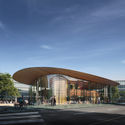
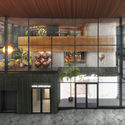
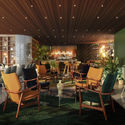
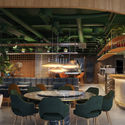
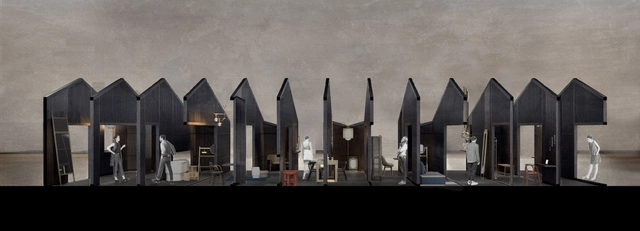
Shanghai/London-based firm Neri&Hu has published details of their “Unfolding Village” installation, set to take center stage at the StockholmFurniture & Light Fair 2019. The exhibition, taking place in February, will see Neri&Hu depart from the traditional convention of furniture fairs, often purely focused on product design, and instead actively engage with pressing social issues unique to their base country of China.
Having recently studied the issue of disappearing villages and village cultures in China, the designers were alarmed by the impact of such a disappearance on community, family, and cultural roots. With many products centered on the ideas of nostalgia, dwelling, and “the individual’s relationship within a collective,” the firm created the “Unfolding Village” exhibition to capture the essence of traditional Chinese villages.
https://www.archdaily.com/909620/unfolding-village-exhibition-celebrates-vanishing-cultures-of-gossip-and-eavesdroppingNiall Patrick Walsh
A professional networking platform has been launched aimed at connecting early-career architects in the USA. Ticco admits architects with between 2 and 15 years of experience, with the goal of sharing smart design ideas for the future of the built environment. Developed by Katie Rispoli Keaotamai over a one-and-a-half-year timespan, the platform will now accept applications for its first 100 members until April, at a cost 31% lower than the fees paid for professional memberships.
Centered around dialogue, the platform offers access to ideas and opportunities that will positively shape the built environment, be it exchanging information, consulting on a project, or finding a new role in the profession.
https://www.archdaily.com/909489/networking-platform-aims-to-connect-and-kickstart-the-careers-of-young-architectsNiall Patrick Walsh
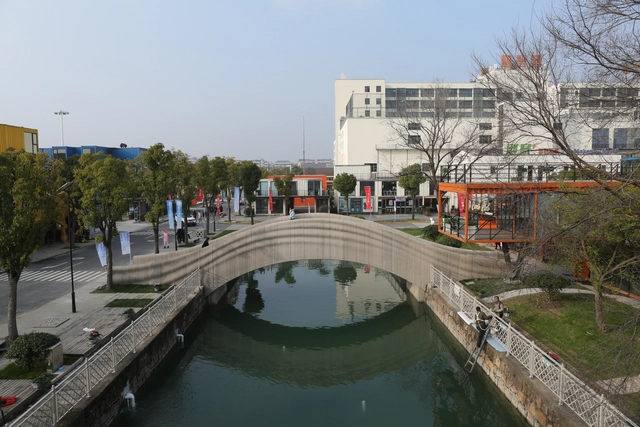
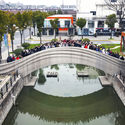
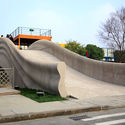
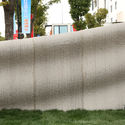
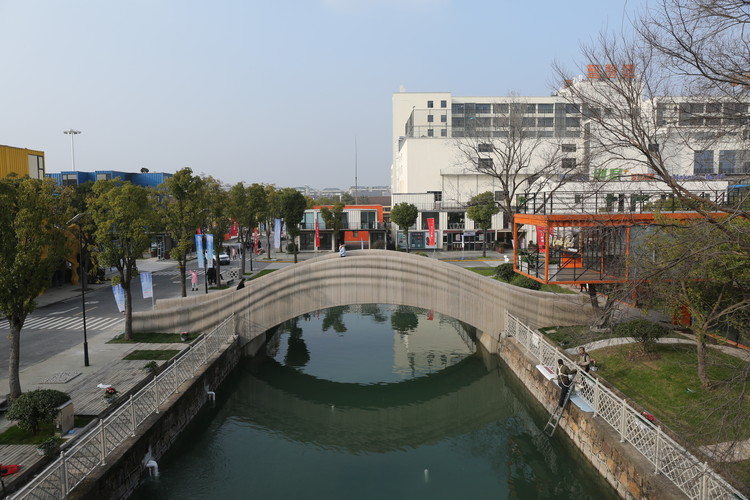
The world’s longest 3D-printed concrete pedestrian bridge has been completed in Shanghai. Designed by Professor Xu Weiguo from the Tsinghua University (School of Architecture) - Zoina Land Joint Research Center for Digital Architecture, the 26.3-meter-long bridge was inspired by the ancient Anji Bridge in Zhaoxian, China.
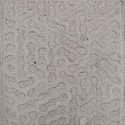
The single-arch structure was created using a 3D printing concrete system developed by Professor Xu Weiguo’s team, integrating digital design, cost efficiency, smart technology, and architectural dynamism. Enclosing the 3.6-meter width, the bridge’s handrails are shaped like flowing ribbons on the arch, creating a light, elegant movement across the Shanghai Wisdom Bay pond.
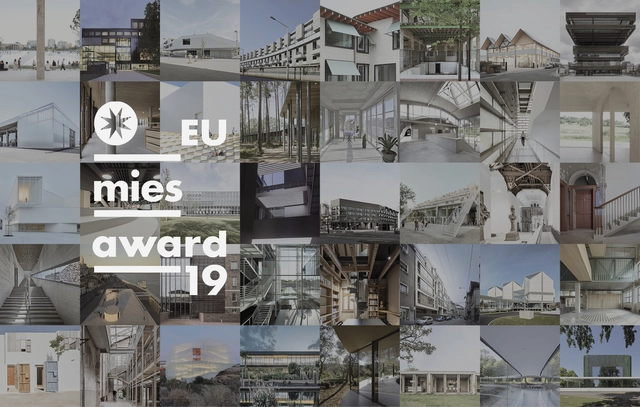
The European Commission and the Mies van der Rohe Foundation have announced the 40shortlisted works that will compete for the 2019 European Union Prize for Contemporary Architecture – Mies van der Rohe Award. The Prize, for which ArchDaily is a media partner, has seen a jury distill 383 nominated works into a 40-project-strong shortlist, celebrating the trends and opportunities in adaptive reuse, housing, and culture across Europe.
https://www.archdaily.com/909537/shortlisted-projects-announced-for-the-eu-mies-award-2019Niall Patrick Walsh
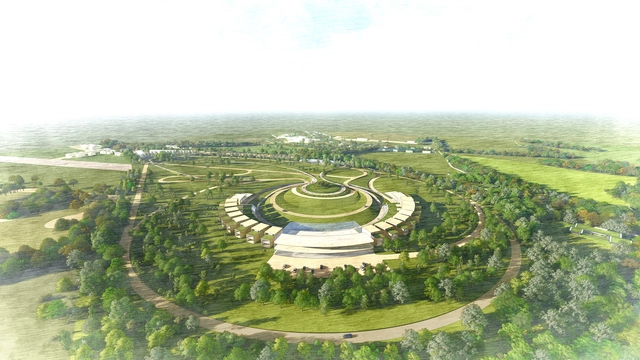
Foster + Partners have released images of their proposed Mullin Automotive Park at Enstone Airfield, now submitted for planning permission. Intended as a “world-class automotive museum in the heart of the British countryside” the scheme will rehabilitate a disused airfield to support a growing community of classic automobile collectors.
Designed as a collection of buildings arranged in a crescent, the museum draws inspiration from the concept of a rural estate, with a journey through a carefully-considered landscape towards a main focal building. As well as reflecting on the history of the automobile industry over the last century, the scheme will house an open-ended collection charting the future of mobility.
https://www.archdaily.com/909472/foster-plus-partners-plan-automotive-museum-on-disused-airfield-in-rural-englandNiall Patrick Walsh
Carlo Ratti Associati has teamed up with Makr Shakr, the world’s leading producer of robotic bartending systems, to design a driverless robotic bar which “aims to propose new on-demand ways to enjoy leisure in cities.” GUIDO (Italian for “I drive”) features two mechanical arms with the ability to precisely prepare and serve drinks in seconds, mounted atop an autonomous vehicular platform.
Self-driving technology allows GUIDO to weave through the built environment, responding to bookings from a customer app. As orders are placed through the app, GUIDO sources the cocktail’s components from bottles stored on the counter, and prepares the drink on site. GUIDO’s system also performs ID age verification and supports paying via mobile phone.
https://www.archdaily.com/909466/carlo-ratti-associati-designs-self-driving-robotic-cafeNiall Patrick Walsh
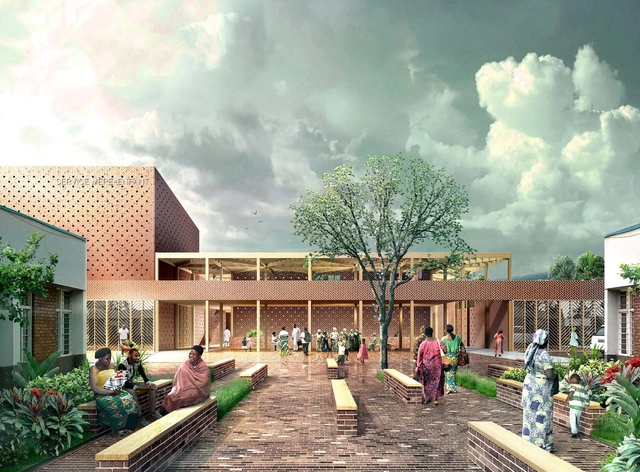
White Arkitekter has unveiled its design for a mother and baby unit for the Panzi Hospital in the Democratic Republic of Congo. The Scandinavian firm developed a new facility to be built onto the existing hospital, designed to improve the wellbeing for mothers and children. The project was highly commended at WAF 2018 in the Health-Future Project category.
The Panzi Hospital, set up following 20 years of war and devastation, has expanded its focus to treating survivors of sexual violence and serves over 400,000 people. The new unit will replace the overcrowded facilities at Panzi Hospital, which deals with up to 3500 births per year, and aims to reduce the maternal and post-natal mortality rate while providing more positive birth experiences.
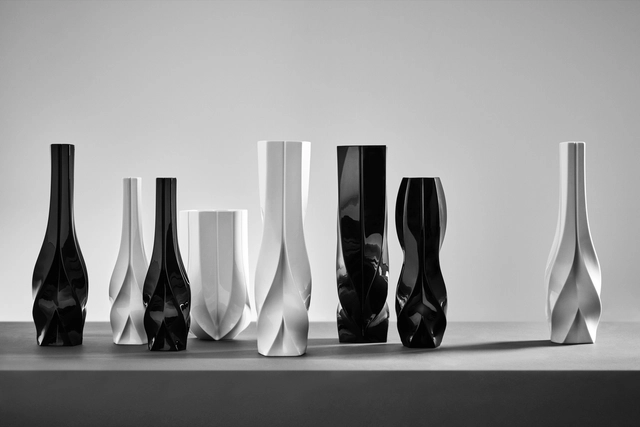
Zaha Hadid Design has released images of its latest collection set to be featured at the Maison et Objet 2019 in Paris later this month. The collection, embodying Zaha Hadid’s inventive process, features a Swirl bowl in crystal glass, and a monochromatic marble collection from the Cell range.
The Maison et Objet festival is described as the international authority for home décor, interior design, architecture, and lifestyle culture, with its bi-annual Paris trade fair taking place from January 18th to 22nd 2019.
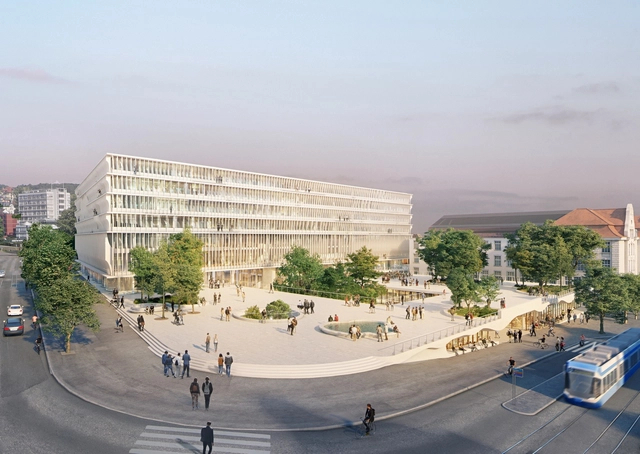
Herzog & de Meuron has released details of their proposed Forum UZH, creating a new center for education and research on the city campus of the University of Zurich. The new building is a seen as a crucial element for ensuring the future viability of Zurich as a higher education hub, upgrading and consolidating an existing aging, dispersed campus.
Due to be completed in 2027, the Forum UZH will occupy a prominent corner site, combining expansive public space with the firm’s recognizable clean, contemporary language. Situated in the old city’s university quarter, dominated by stand-alone buildings set back from the street on below-ground plinths and terraces, the Forum UZH forms the 21st-century embodiment of the stately urban campus.




















.jpg?1547730450 "Courtesy of Neri&Hu")
.jpg?1547730380 "Courtesy of Neri&Hu")
.jpg?1547730372 "Courtesy of Neri&Hu")
.jpg?1547730466 "Courtesy of Neri&Hu")