Patrick is ArchDaily's News Editor. Prior to this position, he was an editorial intern for ArchDaily while working full time as an assistant for a watercolor artist. Patrick holds a B. Arch degree from Penn State University and has spent time studying under architect Paolo Soleri. He is currently based in New York City.
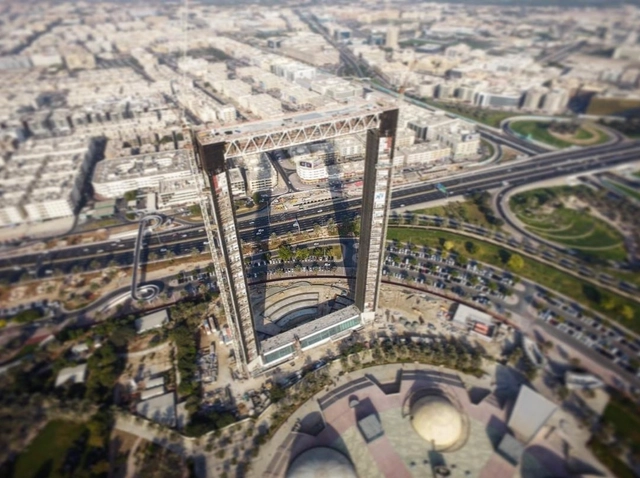
The Dubai Frame is scheduled to open later this year. Image via Instagram user bachir_photo_phactory
Dubai’s newest mega-attraction, a 150-meter-high, 93-meter-wide picture frame structure dubbed the “Dubai Frame” is approaching completion after a nearly two-year delay, and is set for opening in the second half of this year. At a cost of $43.60 million, the new building will stand as a symbol of the city’s rapid rise from modest settlement to gleaming metropolis, giving visitors a panoramic view of the boundary-pushing skyscrapers from the coast of the Persian Gulf.
It also may stand as a symbol of something far less idyllic: intellectual property theft.
Hyperloop One has revealed images of its full-scale test track, called the DevLoop, for the first time as it prepares for its first public trial later this year. The 500-meter-long (1,640 feet) DevLoop is located in the flat terrain of the Nevada desert, just 30 minutes from Las Vegas. In its final form, the track will extend two miles between launching and receiving points.
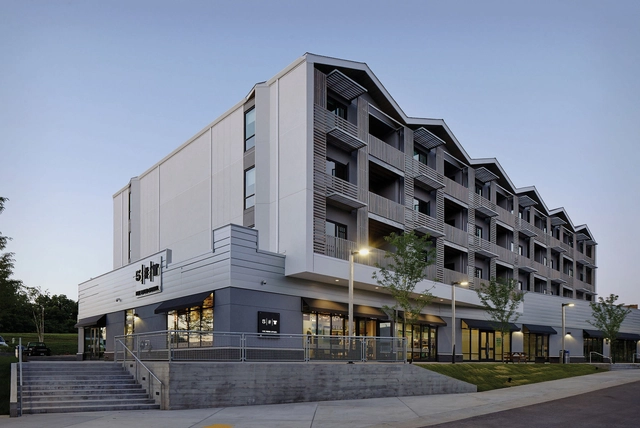
The American Institute of Architects (AIA) has selected 14 recipients for the 2017 AIA Young Architects Award. Now in its 24th year, the award was founded to honor young architects - licensed 10 years or fewer regardless of their age - who have “shown exceptional leadership and made significant contributions to the profession early in their careers.”
The capsules will slowly float 3.75 miles to the island overnight
It’s an age old question: How do you transport visitors to your Dutch-themed Amusement Park located four miles off the coast of Japan while also providing them with a place to sleep under the night sky?
Okay, age-old it isn’t – but it was the scenario facing the Huis Ten Bosch theme park in Sasebo, Japan, who recently acquired a 420,000 square-foot-island off the coast of the Nagasaki Prefecture. Their proposed solution? A fleet of floating capsules capped with a glass-roofed sleeping chamber that will slowly float overnight to the island housing new adventure-type attractions.
Dedicated to providing opportunities for designers to explore contemporary sociopolitical issues, arch out loud is now hosting the first international architecture competition addressing the global epidemic of human trafficking.
Invisible and incomprehensible to most, the issues of modern day slavery are real and widespread. The Polaris Project, a leading organization in the battle against human trafficking, reports nearly 20.9 million victims worldwide fueling an obscene, yet lucrative, multi-billion dollar Industry.
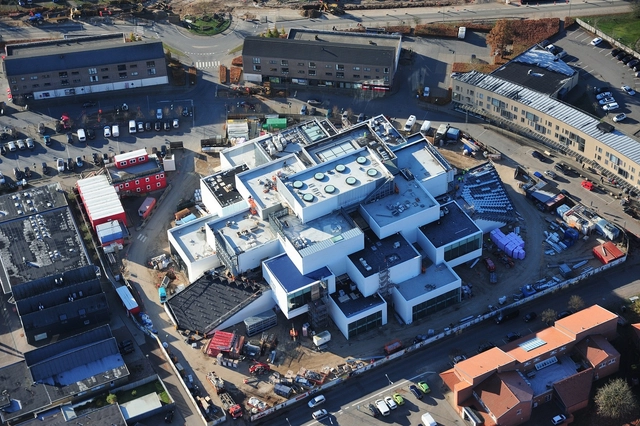
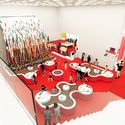
The BIG-designed LEGO House has topped out and is headed toward completion ahead of its just-announced grand opening date on September 28. Located near LEGO’s corporate campus, in the heart of Billund, Denmark, the LEGO experience center will provide an estimated 250,000 yearly guests with a variety of LEGO-themed activities within its 12,000 square meters, inviting visitors of all ages to play and unleash their creativity.
AIA New York has announced the winners of their 2017 AIA New York Design Awards, highlighting the best new projects located in the Empire State or completed by AIA NY registered architects across categories of architecture, projects, interior design and urban planning.
Within the four categories, winning projects have been granted either an “Honor” or “Merit” distinction. Each project has been chosen for its “design quality, response to its context and community, program resolution, innovation, thoughtfulness, and technique.” The winners scale in scale from temporary exhibitions to large-scale urban interventions.
This year 22 of the 35 winners were New York City-located projects, including the grand prize winner, Diller Scofidio + Renfro’s striking Roy and Diana Vagelos Education Center at Columbia University’s medical campus. Continue reading to see the full list of winners.
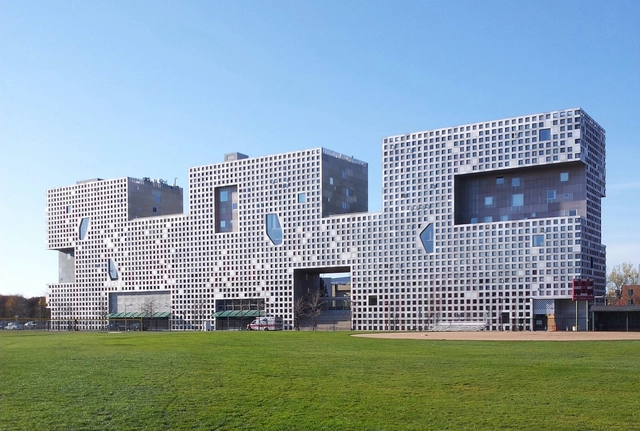
Global higher education analysis firm Quacquarelli Symonds (QS) has released in 2017 rankings of the world’s top universities for the study of Architecture & Built Environment. This year, for the seventh edition of the survey, QS has expanded the ranking to list the world’s top 200 schools, including institutions across all six inhabited continents.
For the third year in a row, MIT has topped the list, finishing ahead of the Bartlett School of Architecture and the Delft University of Technology (TU Delft). Read on for the full rankings.
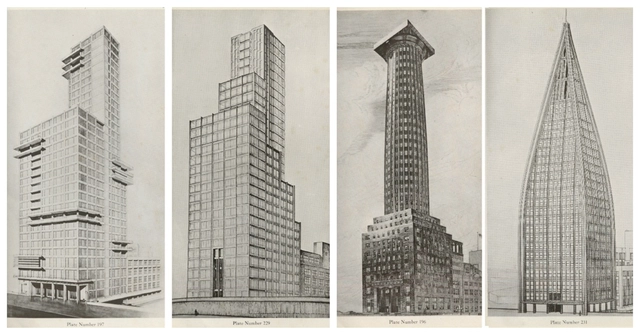
Designs for the Chicago Tribune Tower by (left to right) Walter Gropius and Adolf Meyer; Max Taut; Adolf Loos; and Bruno Taut, Walter Gunther, and Kurz Schutz. Image via skyscraper.org
The Chicago Architecture Biennial has announced the first exhibit that will on display during the event’s second edition from September 16 to January 7, 2018 – a contemporary reboot of one of architecture’s most well-known competitions, the Chicago Tribune tower design contest. Sixteen young architects from around the world will contribute new versions of the iconic skyscraper that will be displayed as a series of 16-foot-tall architectural models in the Chicago Cultural Center, the Biennial’s main venue.
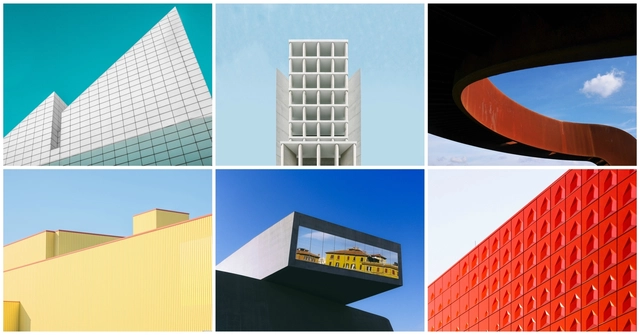
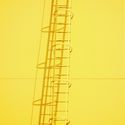
Global photography community and marketplace EyeEm has announced the winners of their Minimalist Architecture Photography Mission to find photos that best highlight “the beauty of minimalism in architecture.” Organized alongside art and design blog We and the Color, the competition saw photographers from across the globe submit over 45,000 images focusing on the color, lines, shapes, and compositions of contemporary, minimalist architecture.
From the entries, 20 images were selected as winners with a top 3 was chosen by German minimalist photographer Matthias Heiderich. Read on to see the full list of winners.
Mies van der Rohe’s seminal Barcelona Pavilion is one of the most well-loved structures in the history of architecture, a de facto pilgrimage site for architects and architecture lovers around the world. Now, even those unable to make the trip have the opportunity to get a tour of the beautiful structure, thanks to a new virtual walkthrough produced by The Mies van der Rohe Foundation.
James Welling, 8183, 2016 from the series Chicago, 2016-2017, Courtesy the Artist and David Zwirner, New York and London. Image Courtesy of Chicago Architecture Biennial
The Chicago Architecture Biennial has announced the list of participants invited to contribute to the event’s second edition, which will be held from September 16 to January 7, 2018 in Chicago. More than 100 architecture firms and artists have been selected by 2017 artistic directors Sharon Johnston and Mark Lee, founders of Los Angeles–based Johnston Marklee, to design exhibitions that will be displayed at the Chicago Cultural Center and throughout the city.
“Our goal for the 2017 Chicago Architecture Biennial is to continue to build on the themes and ideas presented in the first edition,” explained Johnston and Lee. “We hope to examine, through the work of the chosen participants, the continuous engagement with questions of history and architecture as an evolutionary practice.”
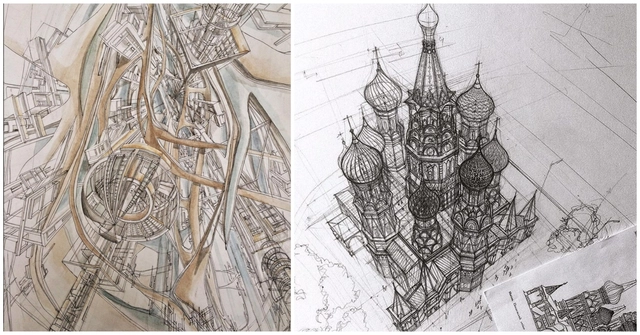
Despite the rush of new technologies available to architects to express their designs, the humble art of hand-drawing is still alive and well. And when sketching are drafting are done well enough, they can become their own artifacts for inspiring architectural thought.
The work of architecture student Adelina Gareeva is one such example. Studying at Kazan State University of Architecture and Engineering (KSUAE) in Russia, Gareeva produces incredibly detailed architectural drawings, from carefully constructed perspective drawings of St. Basil’s Cathedral, to travel sketches to more abstract architectural compositions that draw similarities to Zaha Hadid’s Suprematist paintings or the Cubist works of Georges Braques. Check out some of her best sketches below.
The tragedy of architecture is how stupid architects are... we spend too much time trying to convince people to do things they don’t want to do. That really lowers the level of the discussion, I think.
In this video from the Louisiana Channel, Canadian architect Adam Caruso, founding partner of London-based Caruso St John, provides his take on the current climate of the architectural profession and the influences driving his own personal architectural philosophy. With his firm, Caruso has led the design of numerous art institutions, including the 2016 RIBA Stirling Prize winning Newport Street Gallery in London, that respond to “a deeper idea of place, of the history and culture of the place and how you read it today.
Construction on Herzog & de Meuron’s 160 Leroy condominium tower in New York’s West Village has nearly topped out, with 12 of its planned 15 floors now complete. The design, inspired by the great Brazilian architect Oscar Niemeyer, features a curved concrete and glass facade and contains 57 luxury condos ranging in price from $3.1 to $48.5 million.
UNStudio has been selected as the winners of an international competition to design a new mixed-use development on the site of the former Deutsche Bank offices in Frankfurt, Germany. Selected to complete the urban strategy for the district last March, UNStudio has now been unanimously selected to carry out the architectural redevelopment of the site, beating out third prize proposals from the teams of Dudler / Jahn and MSW / Snøhetta, and an honorable mention from Christoph Mäckler / CoopHimmelblau.
The new mixed-use development will consist of four high-rise towers ascending from a multi-story plinth in the heart of the city. The project includes space for retail, restaurants and hotels, as well as a full range of residential accommodation. The four towers, rising up to 228 meters (748 feet) high, will serve as a new landmark on the Frankfurt skyline.
New images of BIG and Heatherwick Studio’s proposed Google campus in Mountain View California have been revealed in planning documents presented to the city last month. Initially announced in 2015, the project has seen several revisions after first running into difficulty with the city planning board, and then after swapping sites with fellow tech giant LinkedIn. The latest iteration, the 18.6-acre Charleston East campus, features a 2-story, 595,000-square-foot building topped with a flowing, tent-like canopy.
All planned for completion no later than 2022, the new buildings would target international businessmen and researchers, especially those displaced following the United Kingdom’s exit from the European Union.