ArchDaily was born within a university, founded by two architecture students who believed that architectural knowledge should circulate more freely. Eighteen years later, this conviction remains unchanged — yet the insights, tools, and opportunities have grown. We have launched the Student Ambassador Program to give the next generation of architects a direct role in connecting their universities to the global architectural conversation.
ArchDaily began on campus, founded by two architecture students after graduation who believed that architectural and design ideas should be accessible to everyone, spreading further and wider. Eighteen years later, while our tools have advanced, our horizons expanded, and our opportunities multiplied, our core mission remains unchanged. ArchDaily is now officially launching the Student Ambassador Program, empowering the next generation of architects to play a direct role in connecting their campus to the global architectural discourse.
The architecture of Latin America and Spain is a testament to the rich and diverse cultures, traditions, needs, and solutions that define these territories. With more than 700 completed projects in Spanish-speaking countries published on ArchDaily en Español, the time has come to explore, debate, and choose your favorites for the Obra del Año 2026 award.
Now in its seventeenth edition, Obra del Año reaffirms its position as the premier architecture award in the Spanish-speaking world, decided entirely by its community. Starting today, March 24, our readers will take on the responsibility of choosing the best architectural works of 2025.
Over the next three weeks, the collective intelligence of our community will navigate through hundreds of projects built across Spanish-speaking nations: Argentina, Bolivia, Chile, Colombia, Costa Rica, Cuba, Ecuador, El Salvador, Spain, Guatemala, Honduras, Mexico, Nicaragua, Panama, Paraguay, Peru, Puerto Rico, the Dominican Republic, Uruguay, and Venezuela.
Ten years ago, ArchDaily Brasil launched the inaugural edition of the Obra do Ano Award. Over the past decade, hundreds of architectural projects have been recognized as the best in the Portuguese-speaking world, thanks to the collective intelligence of ArchDaily Brasil's readers.
Today marks the start of the 2026 Obra do Ano Award, and once again we are relying on the ArchDaily Brasil community to select the best built projects in Portuguese-speaking territories. Over the next three weeks, you will be responsible for choosing the 15 finalists and the 3 winners of this edition.
All projects published during 2025 from the following countries are eligible: Brazil, Portugal, Mozambique, Angola, Guinea-Bissau, East Timor, Equatorial Guinea, Macau, Cape Verde, and São Tomé and Príncipe. In this first phase, readers can nominate one project per day to advance to the finalist stage, which will be announced on April 8.
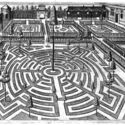
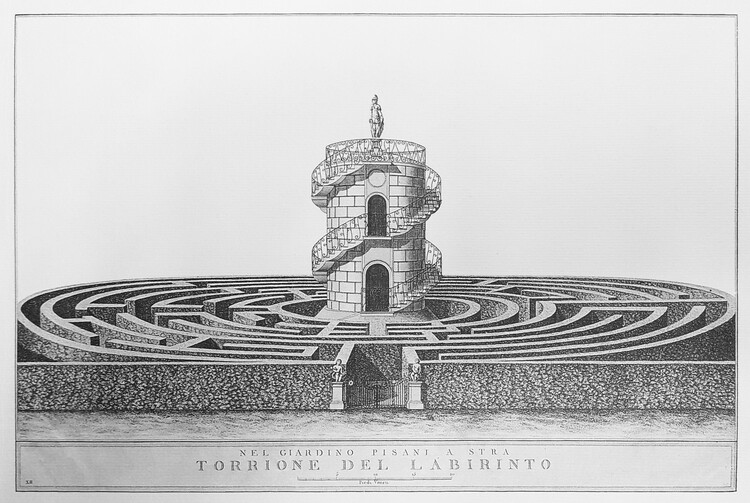
Villa Pisani, labirinto. Image Cortesia de Martins Fontes
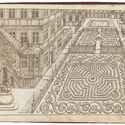
Architecture is typically understood through principles such as order, clarity, and functionality. In O Livro dos Labirintos, Francesco Perrotta-Bosch proposes another entry point: thinking about the discipline through the labyrinth—a structure that, since its mythical origins, has operated through detours, ambiguity, and disorientation.
Drawing on the Labyrinth of Crete, attributed to Daedalus in Greek mythology, the author shifts the discussion on the origins of architecture to a realm less associated with constructive rationality and closer to spatial experience. The book's guiding question is direct: why would architecture have begun with a form that subverts linearity and legibility?
ArchDaily started inside a university, with two architecture students who believed that architectural knowledge should travel further than it did. Eighteen years later, that conviction hasn't changed — but the insights, the tools, and the opportunities have grown. We are launching the Student Ambassador Program to give the next generation of architects a direct role in bridging their university and the global architectural conversation.
ArchDaily is looking for a Projects Team Lead to guide the curation and strategic development of one of the platform's core content pillars: built projects. This role sits at the intersection of editorial and architectural judgment, data-driven strategy, and team leadership, shaping how architecture is selected, presented, and amplified to a global audience.
The Projects Team Lead will oversee the direction, performance, and evolution of project content on ArchDaily. This includes defining curation standards, supporting a distributed team of curators, and aligning editorial output with broader platform goals.
In November 2025, ArchDaily launched its first edition of the Student Project Awards. The decision to introduce this new award came from a place of hope; hope in the next generations of architects, their talent and vision, and the importance of giving them visibility and recognition. After all, the future of architecture is being shaped right now, in classrooms, studios, and workshops around the world, and it is vital to support those shaping it. The response was remarkable, with projects from students in every continent, showcasing a wealth and breadth of viewpoints, solutions and visions.
Five months after the launch of the open call, and following the announcements of a longlist of 104 projects and a shortlist of 20, our external jury of architects and practitioners carefully reviewed the proposals to select the three winners and four honorable mentions of the ArchDaily Student Project Awards. Approaching each project with care, the jury looked beyond final outputs, focusing on the ideas, questions, and positions driving the work. The result is a selection of winning projects that reflect both the spirit of the awards and the shifting priorities shaping architecture today.
Every architecture student knows what it's like to spend sleepless nights working away, rushing to finalize a project as a deadline looms ahead. Revising every detail, putting the finishing touches and hoping for the best. The pay-off? Seeing the finished project, talking about it with your classmates, and getting to dream about your perfect idea of what a space should look and feel like.
While making the shortlist selection throughout the past two weeks, the ArchDaily jury panel was well-aware of what it feels like to be an architecture student. Comprised of architects, the panel carefully studied, considered and debated each individual project, with an understanding of what goes into each and every submission. The result is a shortlist that exemplifies the spirit of the Student Project Awards and its mission to recognize the creativity and vision of students who are redefining architectural practice and discourse.
The ArchDaily Student Project Awards submission deadline has been extended by one week. Students now have until February 20, 2026, at 11:59 pm (CET) to submit their projects.
Open to students subscribed to ArchDaily Campus, the inaugural edition of the Awards centers on the theme Architecture of Coexistence, inviting proposals that explore inclusive spaces for communities and collective forms of care. The extension provides additional time for students to refine their conceptual projects and strengthen both their spatial and narrative arguments.
ArchDaily is expanding its product team and looking for an additional Product Manager to help expand our portfolio. Working at the intersection of content, technology, and the built environment, this role offers the opportunity to contribute directly to the world's most visited architecture platform and to products used daily by millions of professionals.
If you're passionate about architecture, digital products, and building meaningful tools at a global scale, we'd love to hear from you.
Based in Florianópolis, Brazil, Eduardo Souza brings a nuanced perspective to architecture shaped by his lifelong engagement with design, research, and editorial practice. Growing up in an environment deeply connected to architecture—his father a civil engineer and professor—Eduardo developed an early fascination with creativity, craftsmanship, and spatial thinking. This foundation naturally led him to study architecture, and later, to explore the editorial realm where writing and curation became extensions of his architectural passion.
Eduardo joined ArchDaily as a translator in its early years and gradually grew into various editorial roles, developing a keen interest in the intersection of materials, technologies, and construction systems. His editorial work focuses on uncovering innovations that challenge traditional modes of making architecture, emphasizing coherence between concept, execution, and context. He pays close attention to sustainable practices such as circularity, local material use, and vernacular reinterpretations that respond to today's environmental and cultural challenges.
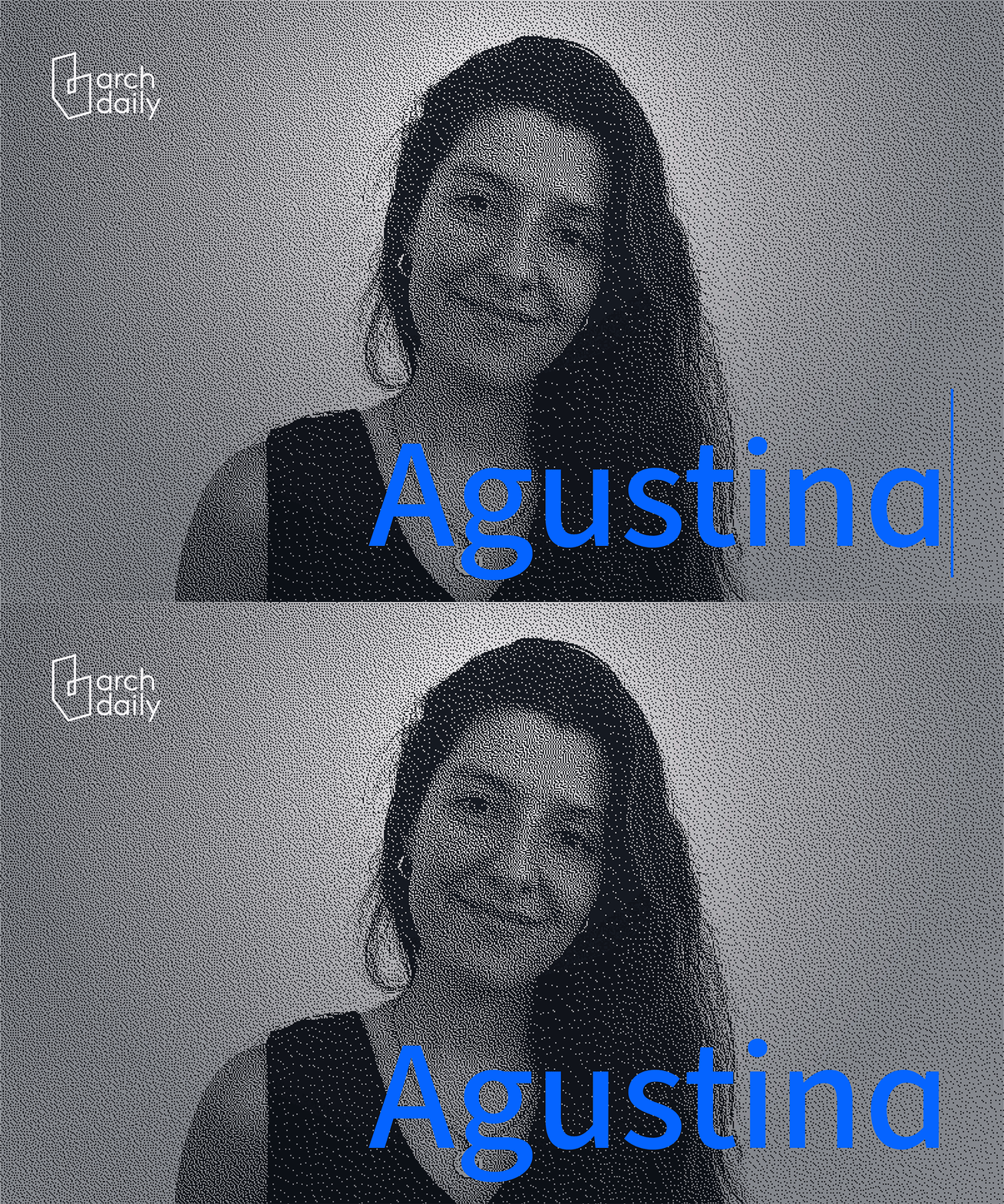
Agustina Iñiguez's journey into architecture was rooted in a deep appreciation for art, drawing, and craftsmanship, interests that naturally evolved into a formal architectural education beginning at age 18. Based in Buenos Aires, Agustina balances her professional architectural practice with an active role in academia, serving as a teaching assistant at the University of Buenos Aires and as an assistant professor at Torcuato Di Tella University. Since joining ArchDaily's Editorial Team in 2021, she has brought a thoughtful and interdisciplinary approach to curating content that bridges theory, practice, and social engagement.
Her editorial focus centers on exploring architectural projects and themes that carefully consider materials, building techniques, and site integration, with a consistent emphasis on improving quality of life through design. Agustina is particularly drawn to adaptive reuse, urban rewilding, and inclusive design strategies that respond to the needs of diverse communities. She advocates for interdisciplinary collaboration and champions work that thoughtfully connects architectural innovation with environmental and cultural contexts.
Olivia Poston's architectural perspective is deeply rooted in her upbringing amid the post-industrial landscapes of Tennessee's foothills, where she developed an early fascination with the complex relationship between urban environments and ecology. This formative experience shaped her view of architecture not just as building, but as a lens to explore social, cultural, and environmental systems in flux. Olivia's work bridges research, writing, and editorial practice, focusing on how cities across diverse climates evolve and adapt in response to increasing environmental challenges.
She is particularly drawn to collaborative design strategies that integrate insights from architects, planners, and engineers to foster resilience and equity within the built environment. Her editorial approach prioritizes projects that engage critically with climate risk while maintaining a sense of optimism and possibility. She values content that offers both reflection and practical pathways forward, serving as a platform to highlight innovative responses to the pressing demands of sustainability.
Jonathan Yeung's architectural journey began through his deep appreciation for the physical and bodily experience of moving through carefully crafted spaces. Having grown up and studied across diverse places—Hong Kong, Kyoto, Cambridge, and Berkeley—he developed a sensitivity to how architecture resonates culturally, often in ways that transcend straightforward explanation. For Jonathan, architecture evolved from an embodied experience to a powerful form of expression, encompassing design, construction, and writing. Editorial work has naturally become an extension of this exploration, offering him a platform to reflect on architectural ideas from multiple perspectives.
He approaches editorial curation with a focus on issues that remain persistently relevant—topics that invite complex, multi-layered conversations grounded in social, cultural, or architectural dilemmas. He looks for projects marked by intentionality and excellence: works that push boundaries, refine the everyday into something exceptional, or reveal subtle spatial and material nuances that shape our experience of the built environment. His interest in architectural detailing stands out as a recurring theme, highlighting the craft and precision that contribute to enduring, timeless spaces often overlooked in broader discourse.
As the world grows in complexity, multiplying both its challenges and opportunities for innovation, so does the architecture profession. Positioned as mediators in a complex system, architects increasingly step out of the traditional office and into laboratories, town halls, and communities. They are developing new materials, reassessing urban policies, and responding directly to society's most pressing needs.
Susanna Moreira's path into architecture was shaped early by her involvement in architectural theory and research during her undergraduate studies. Born in Salvador, Brazil, she has also lived and studied in Milan and São Paulo—experiences that have enriched her understanding of the dynamic intersections between art, architecture, and urban environments. These interdisciplinary interests continue to inform her curatorial approach and editorial work.
As ArchDaily's Project Curator for Portuguese-speaking countries, Susanna seeks out projects that offer meaningful contributions to architectural discourse. She values originality, quality, and relevance, always questioning what lessons a project might offer in terms of innovative materials, construction techniques, or conceptual approaches. In an era of information overload, she believes careful curation is essential to build trust, enhance learning, and highlight work that truly stands out.
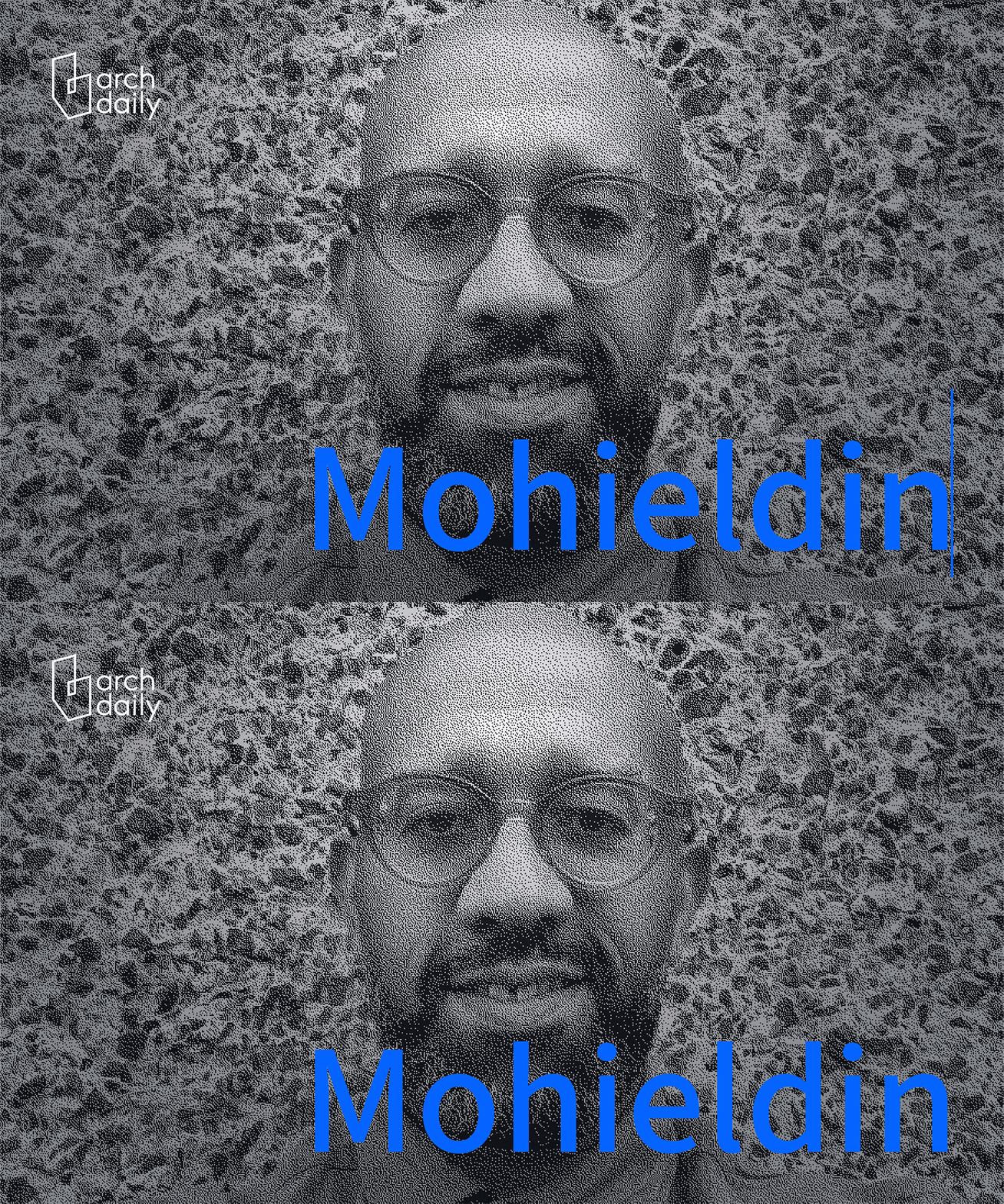
Born in Sudan and currently based in London, Mohieldin Gamal brings a unique perspective to architecture shaped by his deep connection to both his homeland and global practice. His early fascination with architecture began in 1995, during the construction of his primary school, where he first encountered the significance of materiality, climatic design, and historical context. These formative experiences laid the foundation for his multifaceted approach to architecture as both a practitioner and a writer.
Mohieldin studied architecture at the University of Nottingham and gained valuable experience working with prominent UK firms. In 2021, he returned to Sudan to teach at the University of Khartoum and helped establish the Sudan Chapter of Docomomo, underscoring his commitment to preserving and promoting Sudanese architectural heritage. His work focuses on exploring underreported architecture and the complex historical, political, and economic forces that shape building practices in Africa and beyond.