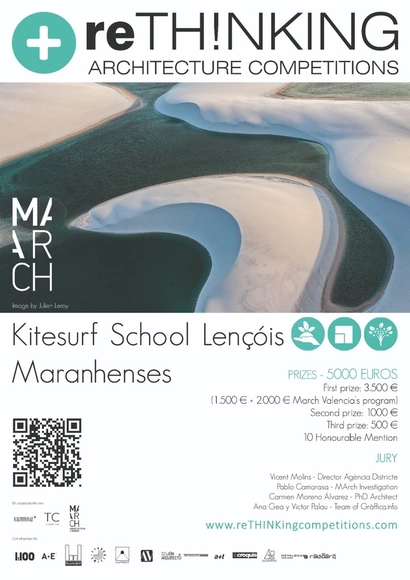
The Kitesurf School Lençóis Maranhenses competition presents a space where you can experience the relationship between sport, nature and human beings. The project should highlight the uniqueness of the place and become a space where there is a respect for the landscape, culture and atmosphere of the place. This last point is important as the place arrives tourists from Europe or America constantly interested in knowing the place and in fact it is such an inaccessible place that it is normal to make small camping in the area. That is why this kitesurfing school has to allow itinerant accommodation of people but without excessive contamination of the place. Therefore, the proposed building should consider combining all these options. Tourists who arrive share experiences with the nature. A unique and unforgettable experience to get to know this amazing place. In these bases, the designer himself will define the m2 of each area, according to the unique idea he proposes. All ideas proposed will be valid. The project may be on earth, in the sky, buried or flying. It can be developed at the choice of the designer; it can be a compact module or be a dispersion of small buildings that solve the problem. The competition programme proposes the following spaces, which can be expanded, simplified and manipulated by the contestant as it sees fit but justified: - Personal area. Area dedicated to the work of 2 or 3 people who will put visitors first, give them kitesurfing instructions or the necessary material to practice the sports. - Food and rest area. This area can be shared, linked or even the same as the rest area if you want. It will be small accommodations for up to 10 people who come to practice the sport and want to have this experience more than 1 day. - Toilet area. The minimum and indispensable unit needed to do so. Bathroom, shower and toilet. It is not intended to place a battery of small toilets as the minimum possible impact and the minimum ecological footprint possible are required. -Storage area: All material needed for sports must be stored. This warehouse may be indoors or outdoors, covered or not. Depends on the idea of the designer. As mentioned above, the surface of the proposal is free and these spaces can be closed, opened or semi-open depending on the intentions of each project, and can be set to any dimension of the enclave. Hence, there are no restrictions that can influence the decisions each participant makes. The freedom of the project is absolute, this contest proposes that the participant research the landscape and the different forms of intervention in it. Study boundaries, scales, views, cross-looking, horizons, accesses. It’s the keys to follow. * Participants can suggest new areas not proposed in this document, as well as eliminate or combine some of those already mentioned
The Ireland Cultural Center will establish a dialogue with the context to give new value to the history of the place. Conferences rooms, workshop spaces, and areas for debates will host meetings in continuity with the cultural influences promoted by writers and artists of the past. A place that will represent the Dublin of the 21st century in continuity with its own tradition.
The Tapestry Design Prize for Architects is a unique $10,000 award that encourages innovation and visionary thinking by challenging architects to design contemporary tapestries.
Concrete in architecture is an architecture competition organized by archiol in association with artuminate. Concrete is an important material in the field of architecture and construction. What is the past, present, and future of concrete as a building material used in architectural construction?
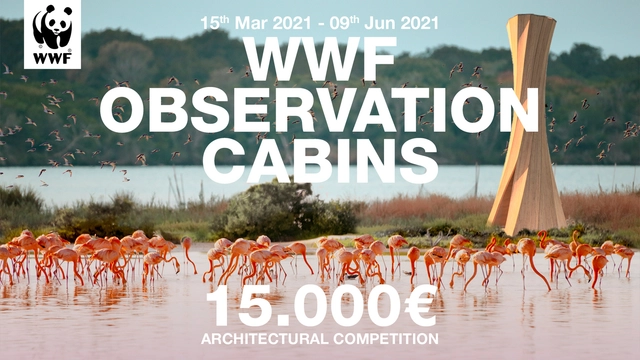
YAC (Young Architects Competitions) and WWF launch WWF OBSERVATION CABINS, a competition of ideas for the design of some observation points and a visitors’ center for the WWF Oasis of Orbetello as a unique space to protect and safeguard nature.
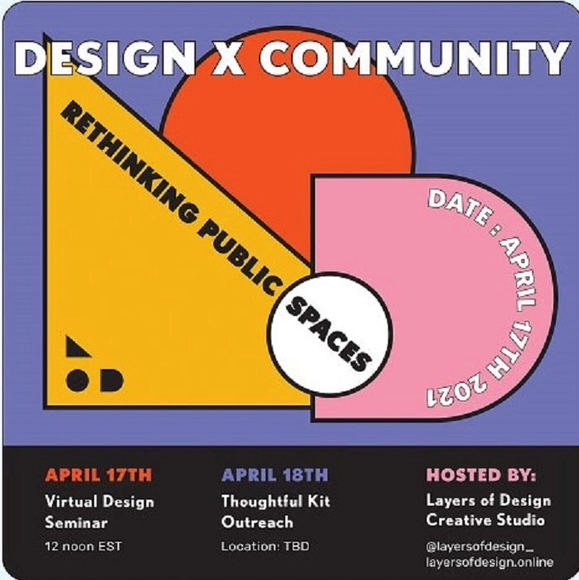
DESIGN X COMMUNITY: Rethinking Public Spaces. A competition by Layers of Design Creative Studio encouraging the design community to create solutions for people experiencing homelessness.
INFORMATION Layers of Design is launching a brand new and exciting competition that will look into developing temporary design solutions for people experiencing homelessness, an issue that is present all around us. There are so many reasons people become homeless. Many homeless people find it difficult to fit into society and feel unwelcomed. Public spaces should be a safe and fair space where all the members of a community can coexist together. This competition aims to bring positive strategies and scenarios that could aid people get back on their feet while transforming public spaces into becoming more energetic, engaging, and welcoming to all.
INTRODUCTION: Have you ever imagined what the architecture of Africa would look like today, if the great civilizations of Egypt, Timbuktu, Mali, the Dogon, Zulu, Yoruba, and thousands of other African empires had continued to develop and evolve in their own unique identity? Imagine the transformation of the African landscape into sprawling metropolises filled with architectural masterpieces celebrating new interpretations of traditional design elements, portrayed with all the comfort of modern innovations and technique.
Deadline: Midnight (BST) on Tuesday 1 June 2021 4 Prizes of £1000 The Drawing Matter Trust is pleased to announce the return of the Drawing Matter Writing Prize. The competition invites participants to carefully look at drawings and to consider what they reveal about the process of design, and the buildings or objects they represent. The Writing Prize competition is open to anyone aged over 18, with or without a background in architecture or design. We welcome a broad range of approaches towards writing, and voices from art and architectural history, the sciences and humanities, alongside practitioners – architects, designers, artists and writers. This year the competition will be judged by Prof. Adrian Forty and Prof. Briony Fer, with support from the Drawing Matter editorial team. The competition winners, and other participants with outstanding entries, will be invited to publish their texts on Drawing Matter’s website. Covid-19 restrictions permitting, we hope to announce the winners on Saturday 17 July 2021 at the Drawing Matter Archive in Somerset.
Introduction Presentation skills are just as important as designing; one of the best mediums to present your architectural designs is through rendering. Architectural rendering aims to create life-like experiences of the buildings before they are built. Rendering aids the designer to convey his or her ideas, an image that represents the designers' imagination most realistically.
IF it is an international platform for competitions that aims to connect ideas from different areas of society in order to help transform cities and make them increasingly self-sustaining, efficient and green. We are looking for innovative ideas and new ways of thinking. In a global emergency period, it is increasingly important that we think globally. IF is the space Here, you can try and experiment, everything is possible!
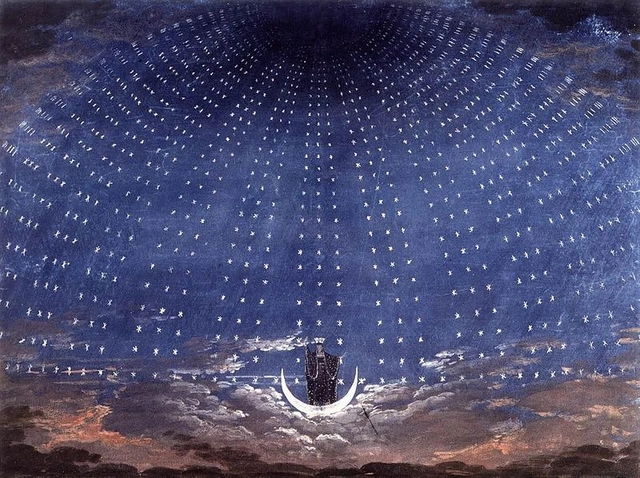
Karl Friedrich Schinkel's set design for The Magic Flute. Image via Wikimedia Commons.
The Henning Larsen Foundation is proud to announce the latest edition of its competition series this year an open international competition on the theme of Utopia in architecture. Previous competition editions have explored photography and architecture (2007), drawing and architecture (2008), writing and architecture (2012), architecture and film (2015), and architecture and music (2017.)
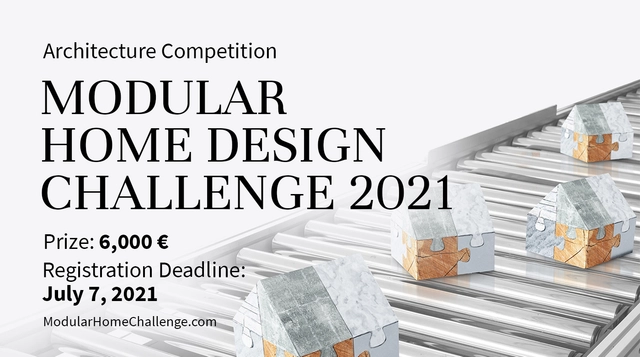
Enter the Modular Home Design Challenge 2021 Architecture Competition now! 6,000 € in prize money! Closing date for registration: JULY 7, 2021
A house isn’t always a home and a home isn’t always a house. The concept of a home is both universal and distinctly unique to each individual person and each culture from every part of the world. From big cities to small towns to tiny rural villages, each culture is influenced by its own history, politics, economy, and resources in how they define a home. That being said, there are a few common traits of an ideal home that we can all aspire to.
Coffee plants grew in the wilderness in Ethiopia and were used by nomadic tribes for thousands of years, only until the 1400s when people figured out that they could roast its seeds. By the 1500s, the drink had spread to coffee houses across the Arab world. Coffee houses first appeared in Turkey, Syria, and Egypt as early as 1530. Since they became a hotspot for political discussions, they were banned repeatedly.
Young architects are being invited to participate in a design competition for Tipat Halav – early years centres – in Israel. “Between the Drops” is a collaboration between the Israeli Ministry of Health, the Bernard van Leer Foundation and the Department of Architecture at Bezalel Academy of Arts and Design, open to fourth- and fifth-year students and recent graduates in Israel and beyond.
As more of us flock to urban living in quest of enhanced lives and professions, there is a paradigm shift in the way we live, work, and play. Today, more than half the world’s population lives in cities. The century has witnessed a dramatic population shift from rural to urban to experience the growth dynamism of the world’s metropolises. However, this ‘growth’ is chewing the space and adding a ‘weight’ to the functioning of the cities. The housing stock isn’t growing as fast as their migration and hence there is a resurgence of co-living.
INTRODUCTION Metaphysics in Architecture is a 2021 Architecture Essay Competition, organized by Archiol. Architecture as a part of the physical world provokes metaphysical reactions such as feelings and thoughts in the individual experiencing the architecture. How can designs reach the metaphysical aspect of architecture? The competition, Metaphysics in Architecture is looking for essay submissions on the Metaphysical aspect in architectural design. • A write-up of 1500 words on metaphysics in architecture. • An Image supporting your essay (size 42cm X30cm) What can be submitted? • Text of up to 1500 words or less. (1000 words min.) • Image of size 42cm X30cm • Illustrations • Graphics • Diagrams