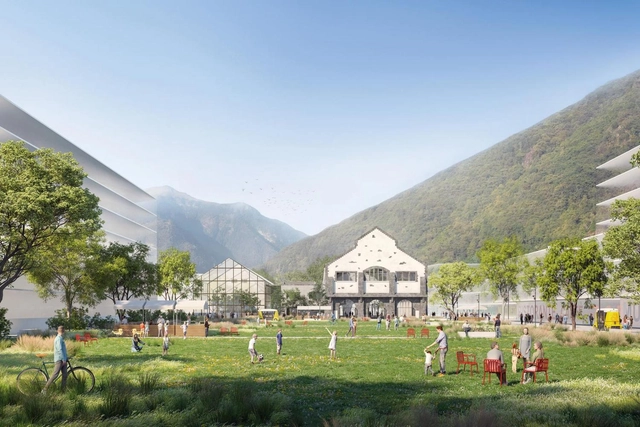
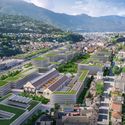
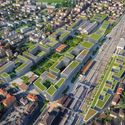
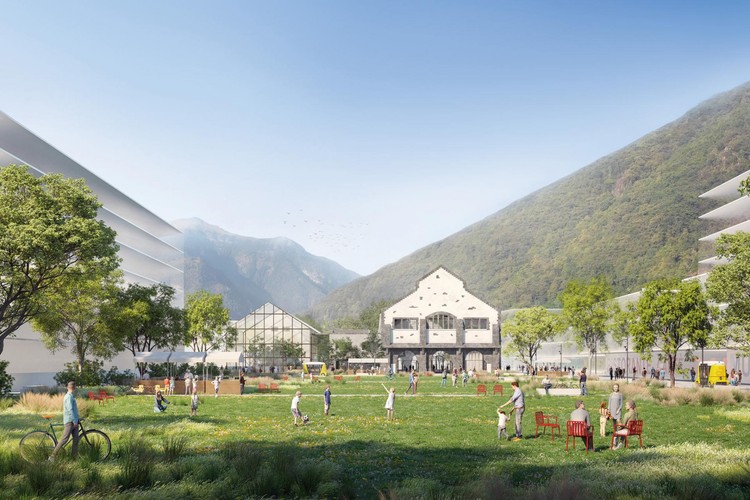
TAMassociati has designed a new “future proof” regeneration plan for the Officine industrial site in Bellinzona, Switzerland. Working with sa_partners and Franco Giorgetta Landscape Architect, the team created a proposal for the large-scale masterplan that explores gradual development in the Swiss alpine city.
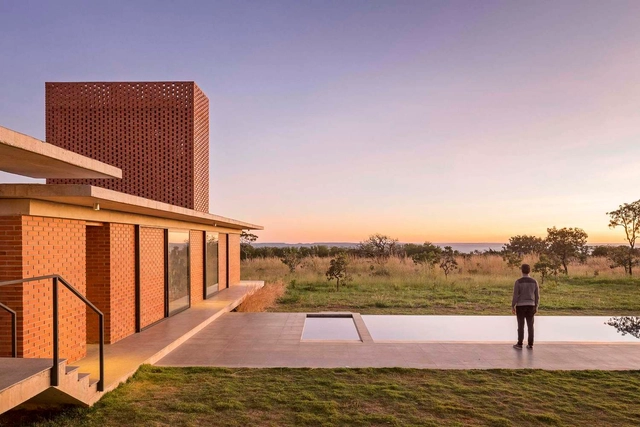
The Cerrado is a vast tropical savanna ecoregion of Brazil, a biome consisting of low trees, sparse shrubs, and grass, occupying an area of more than 2 million km² – about 23% of the national territory – covering most of the eastern, southern, and central portions of the country, particularly in the states of Mato Grosso, Mato Grosso do Sul, Goiás, Minas Gerais, Piauí, the Federal District, Tocantins and part of the states of Bahia, Ceará, Maranhão, São Paulo, Paraná, and Rondônia.
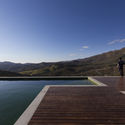
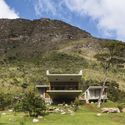
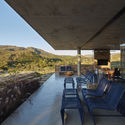
We invite you to discover the landscapes of the Cerrado through architecture. Check out the following 10 projects located in various areas of the second largest biome in South America.
Master of Design Studies at the Fay Jones School of Architecture and Design
There is a growing demand for specialized knowledge and skills to address emerging and critical issues that span the architecture and design disciplines. This demand is underpinned by the sustained movement in which research informs an interdisciplinary and transdisciplinary design practice. Graduate study is a way for early and mid-career design professionals to gain expertise, strategically focus and develop their career path, and even seek leadership positions. The three areas of practice framed below show how advanced design education can lead to professional development and growth.
Today, Open House Worldwide (OHWW) will stage its first collaborative event: a free 48-hour non-stop streamed festival of events, discussions, tours and more. As media partners, ArchDaily will be broadcasting the entire event.
I am tired of design magazines and paint companies trying to sell me on dull “neutral” colors. They claim ”Beige Is Back,” that there is a historical elegance and calming effect to monochromatic off-whites. I don’t buy it. A minimalistic approach to color in modern buildings and interiors doesn’t relax me—it puts me to sleep. When I awake, I am angry. The historical notion that bleached Greco-Roman temples represent beauty is a myth. The ancients never rendered their structures, interiors, and ornament without color. Their architecture was vividly polychromatic.
Videos
Laura Lizondo Sevilla, Débora Domingo Calabuig, and Avelina Prat García. Image Courtesy of Fundació Mies van der Rohe
Fundació Mies van der Rohe and Ajuntament de Barcelona have announced online that the 2nd Lilly Reich Grant for Equality in Architecture has been awarded to the research proposal: “[On Set with] Lilly Reich” by Valencian architects Laura Lizondo Sevilla, Débora Domingo Calabuig, and Avelina Prat García. The granted project was selected by an international jury, composed of three professionals linked to the fields of research and dissemination in architecture and the research and dissemination in the matter of equality.
The 462-meter-high Lakhta Center in St. Petersburg, Russia has been awarded the Emporis Skyscraper Award. Designed by GORPROJECT and RMJM, it is the fourteenth tallest building in the world. As the northernmost supertall skyscraper, the building regulates extreme temperatures through a double skin façade. The winner was chosen by an international jury from over 700 skyscrapers completed in 2019 with a minimum height of 100 meters.
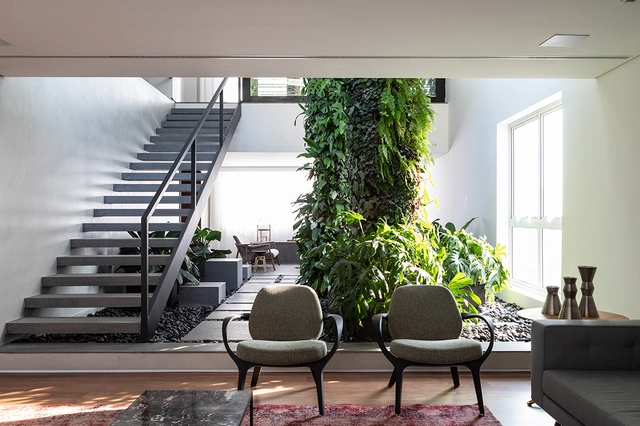
During times of isolation, many people have been talking about the importance of greenery in indoor spaces as a way to nourish our vital relationship with nature. These touches of green can contribute to the well-being and emotional comfort of users, whether in homes or commercial spaces.
Besides this psychological connection, a well-designed indoor garden can also help to purify the air and provide thermal comfort to the environment.
If a person were to imagine a setting of complete relaxation, odds are the first image that comes to mind is a place surrounded by nature, be it a forest, the mountains, the sea, or a meadow. Rarely does one imagine an office or a shopping mall as a source of comfort and relaxation. Still, the majority of people spend almost 80-90 % of their time indoors, going back and forth from their houses to their workplaces.
Architects and designers are now searching for design solutions that will resonate well into the future, turning to 'biophilia' as an important source of inspiration that promotes well-being, health, and emotional comfort.
Every child has drawn a house. Perhaps a sunny day with some clouds, a leafy tree, a family with a dog, low wooden fences, or even a car. But in these drawings, they will almost certainly draw a simple rectangle with a gable or hip roof. This archetype of the house appears in virtually all cultures, and even today many architects use it for contemporary projects.
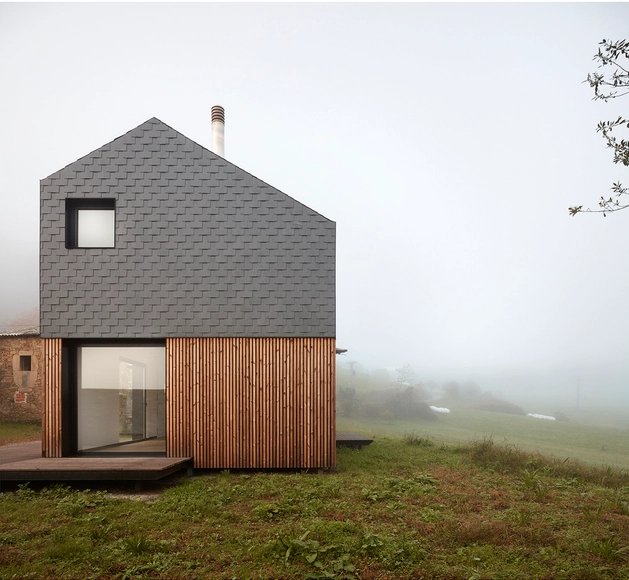
In addition to the primary function of draining rainwater and snow, and thus protecting the building from the weather, roofs can be an important aesthetic device for composing a project. In modern architecture, waterproof roof slabs emerged as a popular alternative, but sloping roofs have continued to captivate both clients and architects. In this article, we will cover the various types of roofs and, more specifically, the manufacturing process and characteristics of natural slate tiles.






![“[On Set with] Lilly Reich” Awarded the 2nd Lilly Reich Grant for Equality in Architecture - Featured Image](https://snoopy.archdaily.com/images/archdaily/media/images/5fab/bd6b/63c0/176e/b200/0143/slideshow/00_Winners_Lilly_Reich_Grant_for_equality_in_Architecture_(Photo_Diego_Opazo).jpg?1605090585&format=webp&width=640&height=580)
GORPROJECT.jpg?1605053828&format=webp&width=640&height=580)
GORPROJECT.jpg?1605056165 "© GORPROJECT")
GORPROJECT.jpg?1605055665 "© GORPROJECT")
GORPROJECT.jpg?1605054092 "© GORPROJECT")
GORPROJECT.jpg?1605053870 "© GORPROJECT")
GORPROJECT.jpg?1605053828)