

This guide explains how to structure multi-image prompts in the RunDifussion platform. Explore RunDifussion's product catalog.
News
How to Prompt and Annotate Multiple Images with AI
| Sponsored Content
https://www.archdaily.comhttps://www.archdaily.com/catalog/us/products/38860/how-to-prompt-and-annotate-multiple-images-with-ai-rundiffusion
The 2026 Edition of the UIA 2030 Award Honors Built Projects Advancing the UN Sustainable Development Goals

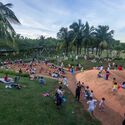
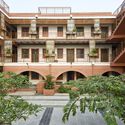
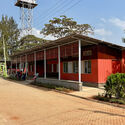
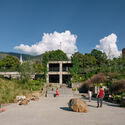
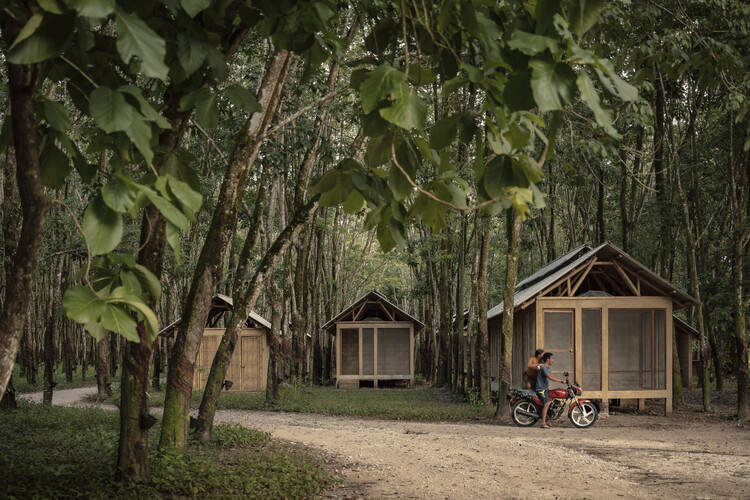
During a ceremony held at the World Urban Forum (WUF) in Baku, Azerbaijan, on May 20, 2026, the International Union of Architects (UIA) and UN-Habitat announced the winners of the third cycle of the UIA 2030 Award. The biennial award recognizes built projects that make meaningful contributions to achieving the United Nations Sustainable Development Goals (SDGs). Architects were invited to submit architecture, landscape, and urban design projects addressing pressing environmental, social, and economic challenges across six categories: sustainable water management, the promotion of safe working environments, adequate and affordable housing, efficient and inclusive planning, access to green and public space, and climate resilience.
The third cycle launched in July 2025, and regional finalists from the UIA's five global regions were announced in January. In the final stage, the jury selected winning, highly commended, and commended projects in each category, recognizing works in China, Bangladesh, India, Thailand, Mexico, Peru, Colombia, Spain, Kenya, Morocco, and the United States.
https://www.archdaily.com/1041666/the-2026-edition-of-the-uia-2030-award-honors-built-projects-advancing-the-un-sustainable-development-goalsAntonia Piñeiro
The Technical Reality of Mass Timber Housing: Five European Case Studies

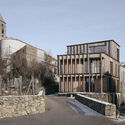
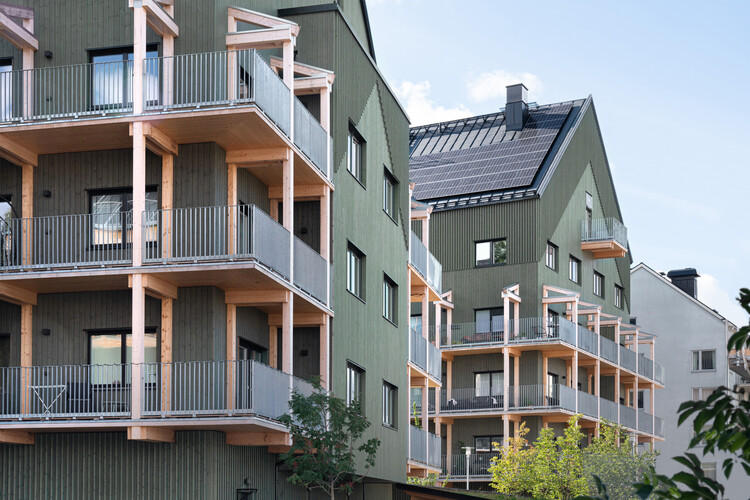
Recent years have seen a shifting paradigm in multi-family residential architecture, as more and more new projects are being built with engineered wood, specifically Cross-Laminated Timber (CLT) and glued-laminated timber (glulam). Because timber is lightweight, these systems can reduce dead load and ease foundation demands, which is especially useful on sites with limited bearing capacity or over existing infrastructure. From a sustainability standpoint, timber can store carbon over the life of the building and often reduces embodied carbon compared with conventional concrete-and-steel systems. In fire design, large timber members can be engineered to char at a predictable rate, allowing the structural core to remain protected for a defined period when detailed appropriately.
https://www.archdaily.com/1041598/the-technical-reality-of-mass-timber-housing-five-european-case-studiesMoises Carrasco
Buildner Reveals Winners of the 6th Annual Last Nuclear Bomb Memorial Competition
| Sponsored Content

Buildner has announced the results of its competition, the Last Nuclear Bomb Memorial No.6. This competition is held each year to support the universal ban on nuclear weapons. In 2017, on the 75th anniversary of the 1945 bombings of Nagasaki and Hiroshima, which claimed the lives of over 100,000 people, the United Nations adopted the Treaty on the Prohibition of Nuclear Weapons.
https://www.archdaily.com/1041457/buildner-reveals-winners-of-the-6th-annual-last-nuclear-bomb-memorial-competitionRene Submissions
Global Design Forum Istanbul Concludes First Edition With City-Wide Programme of Installations and Talks

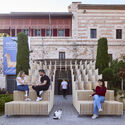
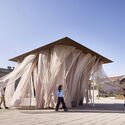
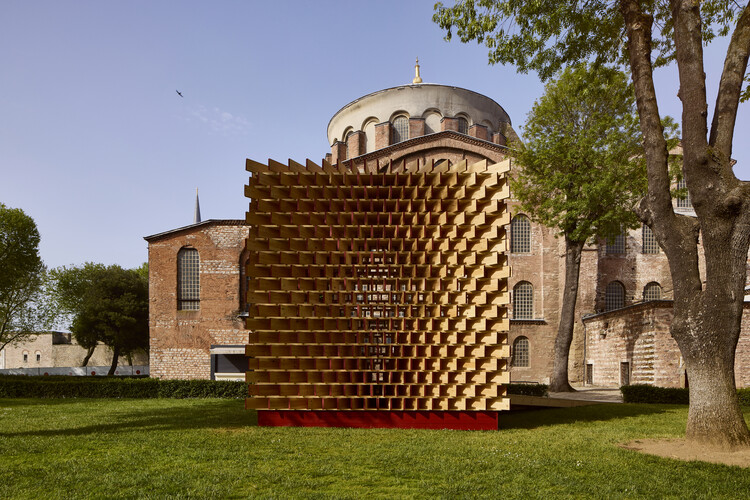
Global Design Forum Istanbul concluded its inaugural edition between May 13 and 16, 2026, bringing together architects, designers, urbanists, and cultural practitioners through a city-wide programme of installations, talks, screenings, and public events. Presented by London Design Festival in collaboration with People Places Ideas, the forum was developed and curated by Artistic Director Melek Zeynep Bulut and Forum Content Advisor Beatrice Galilee. Organized around the theme "Worlds in Contact," the programme featured contributions from figures including Lina Ghotmeh, Marina Tabassum, Liam Young, Tom Dixon, Lesley Lokko, Ma Yansong, Andrew Waugh, and Olaf Grawer, positioning Istanbul as a platform for interdisciplinary discussions on design and the built environment.
https://www.archdaily.com/1041612/global-design-forum-istanbul-concludes-first-edition-with-city-wide-programme-of-installations-and-talksReyyan Dogan
Atelier Bow-Wow and Climate Scientists Honored with 2026 Daylight Award on UNESCO International Day of Light

On UNESCO's International Day of Light, celebrated annually on May 16, the Daylight Award announced its 2026 laureates. Established to support research into the scientific understanding of daylight and its significance for health, well-being, ecosystems, and architectural design, the award recognizes achievements in two categories: Daylight in Architecture and Daylight Research. This year, Japanese architects Momoyo Kaijima and Yoshiharu Tsukamoto of Atelier Bow-Wow were honored for demonstrating how daylight can shape shared spaces and everyday life, while marine biologists Brittany N. Zepernick, Steven W. Wilhelm, and R. Michael McKay of the United States and Canada were recognized for their research on aquatic microorganisms and their implications for planetary health and biodiversity.
https://www.archdaily.com/1041644/atelier-bow-wow-and-climate-scientists-honored-with-2026-daylight-award-on-unesco-international-day-of-lightAntonia Piñeiro
Reconsidering the Shotgun House: Between Preservation, Experimentation, and Displacement

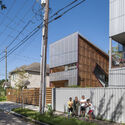
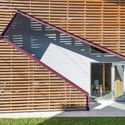
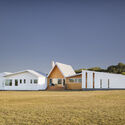
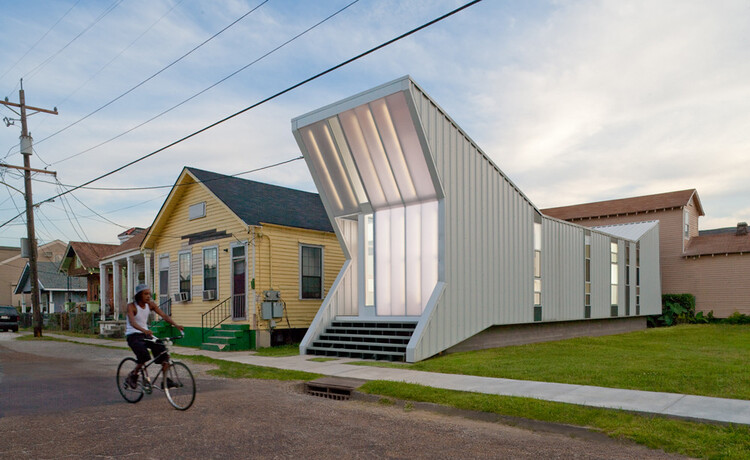
Emerging in port cities and working-class neighborhoods throughout the nineteenth century, the shotgun house became a durable response to density, climate, and constrained urban parcels, becoming one of the defining domestic forms of the Southern United States. Its narrow footprint, sequential plan, and deeply shaded porches produced a spatial logic that was economical and environmentally responsive before either term became central to architectural discourse. From New Orleans and Mobile to Houston and Louisville, shotgun houses formed the physical fabric of neighborhoods shaped by migration, labor, community, and cultural life. Though often dismissed as ordinary, vernacular construction, the housing typology has long embodied sophisticated ideas about climate adaptation, social adjacency, and incremental urban growth, making it one of the most influential domestic forms in the history of the American city.

https://www.archdaily.com/1041562/reconsidering-the-shotgun-house-between-preservation-experimentation-and-displacementOlivia Poston
"Do Architecture": Wang Shu and Lu Wenyu Announce Theme and Title for 2027 Venice Architecture Biennale

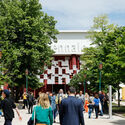
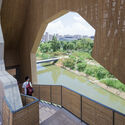
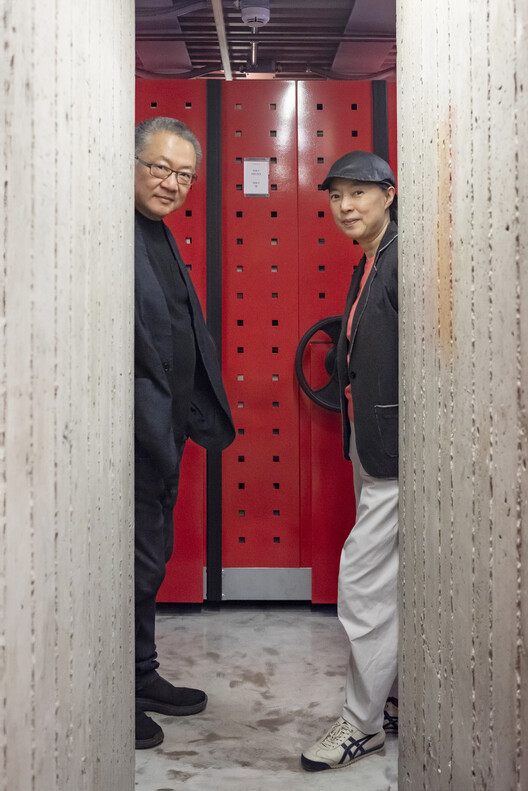
Wang Shu and Lu Wenyu, curators of the 20th International Architecture Exhibition of La Biennale di Venezia, have unveiled the first details of the highly anticipated 2027 edition. Titled "Do Architecture - For the Possibility of Coexistence Facing a Real Reality," the exhibition will take place from May 8 to November 21, 2027, across the Giardini, the Arsenale, and throughout Venice.
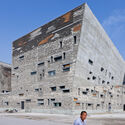
The curatorial direction reflects many of the ideas developed through the work of Amateur Architecture Studio, founded by Wang Shu and Lu Wenyu in 1997. Their projects have consistently explored the reuse of salvaged materials, regional construction techniques, and the continuity between historic and contemporary forms of building. Across both urban and rural contexts, the studio's work often emphasizes craft traditions, collective memory, and the spatial qualities embedded within everyday environments.

https://www.archdaily.com/1041646/do-architecture-wang-shu-and-lu-wenyu-announce-theme-and-title-for-2027-venice-architecture-biennaleReyyan Dogan
Selldorf Architects, STUDIOS Architecture, and BASE Paysagiste Selected to Renovate the Louvre Museum

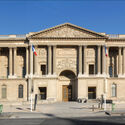
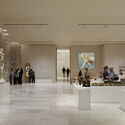
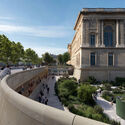
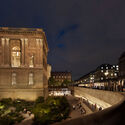
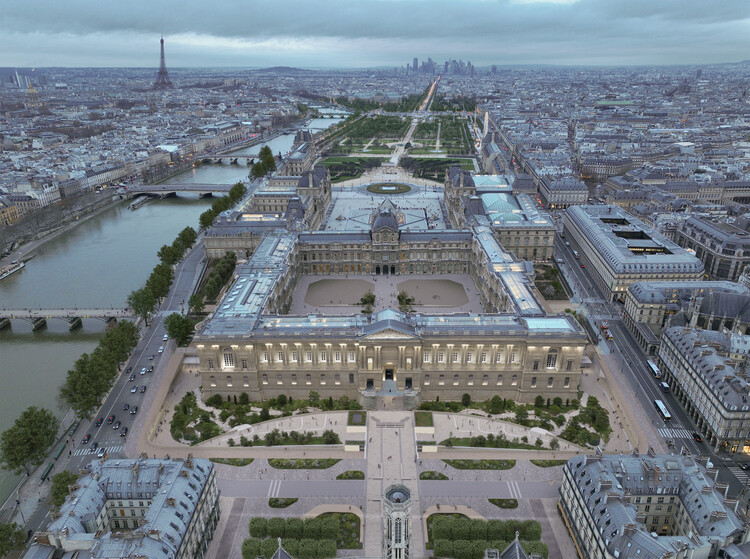
The French Minister of Culture announced on Monday, May 18, 2026, the winner of the "Louvre–Nouvelle Renaissance" competition. The team selected to transform the world-renowned Musée du Louvre is led by STUDIOS Architecture, New York-based Selldorf Architects, and landscape architecture firm BASE Paysagiste. The renovation initiative was announced in January 2025 as a major intervention for the historic complex following concerns expressed by the museum's director regarding its deteriorating condition. The first round of the competition took place in June, with a shortlist of five teams revealed in October. According to French authorities, the project has a dual objective: to repair and transform the building to preserve its collections while updating it to meet contemporary public expectations, including sustainability requirements that will pose significant challenges for the museum in the coming decades.
https://www.archdaily.com/1041630/selldorf-architects-studios-architecture-and-base-paysagiste-selected-to-renovate-the-louvre-museumAntonia Piñeiro
Architecture and Ideology: How Political Systems Shaped 20th-Century Design

Architecture is often presented as the visible expression of its time, its desires, its faith in progress, its idea of order. Yet this reading tends to flatten the conditions under which buildings are produced. It suggests that architecture follows history when, in many cases, it actively participates in it. Few periods make this more evident than the twentieth century, when architecture became deeply entangled with political programs, economic systems, and competing visions of how collective life should be organized.
What is commonly grouped under the label of Modernism is often described as a coherent project, defined by formal clarity, technological optimism, and a break with historical styles. But this apparent coherence dissolves when we look beyond its canonical centres. The same spatial principles (standardization, functional zoning, industrial production) were adopted in political and economic contexts that differed significantly in their structures and objectives. A static movement unfolded as a flexible system continuously reoriented according to the priorities of each regime. What appeared as a shared language was, in practice, a set of tools applied to distinct agendas.
https://www.archdaily.com/1040931/architecture-and-ideology-how-political-systems-shaped-20th-century-designDiogo Borges Ferreira
The Soft Control of Space: Design for Decision-Making

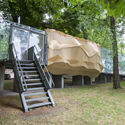
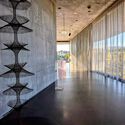
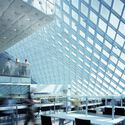
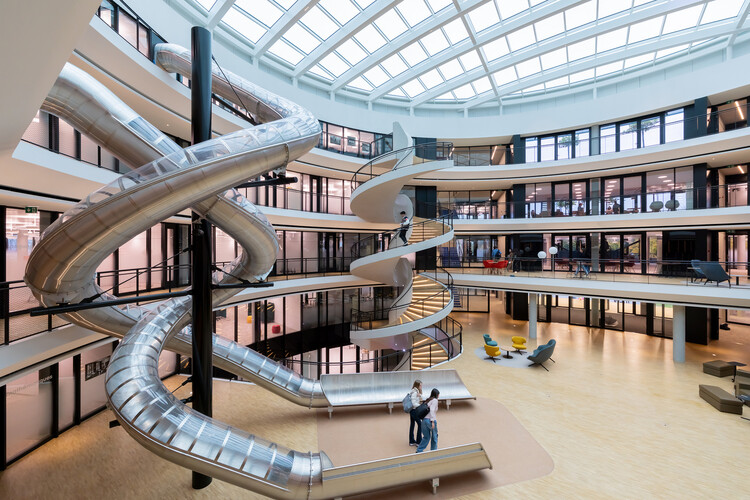
"There is no space without event, no architecture without action." When Bernard Tschumi wrote these words, he was articulating a fundamental principle of the architect's practice. Architecture is about behavior. Every stroke of a pen on a floor plan is a proposition about how occupants will move or what actions become possible.
To draw is to architect a reality. Though with this power, architecture does not command. It does not issue instructions or enforce compliance, but it operates through a soft control — a mode of influence that shapes behavior by structuring perception and guiding attention.

https://www.archdaily.com/1040960/the-soft-control-of-space-design-for-decision-makingAnkitha Gattupalli
LANZA atelier Reveals New Details for the 2026 Serpentine Pavilion

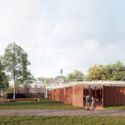
Mexican architecture practice LANZA atelier has unveiled new details for the 2026 Serpentine Pavilion, titled "a serpentine," which will open to the public on 6 June 2026 at Serpentine South. Designed by studio founders Isabel Abascal and Alessandro Arienzo, the project reinterprets the historic serpentine or crinkle-crankle wall through a lightweight brick structure integrated into the landscape of Hyde Park. Marking the 25th edition of the annual commission, the pavilion will remain on view through October 2026 and serve as a venue for Serpentine's public programme of performances, talks, screenings, and community events.




https://www.archdaily.com/1038001/lanza-atelier-selected-to-design-the-2026-serpentine-pavilionReyyan Dogan
Historic Entertainment Venues in Oxford, Valparaíso, and Osaka Reflect Growing Pressures on Cultural Infrastructure

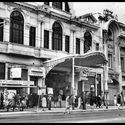
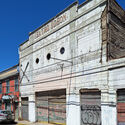
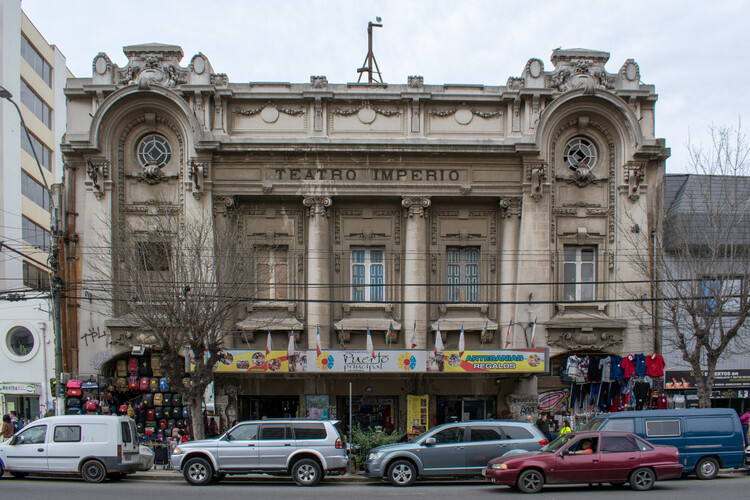
Between 2005 and 2021, French photographers Yves Marchand and Romain Meffre developed a long-term project titled Theaters. Recently exhibited at KYOTOGRAPHIE 2026, the work documents a phenomenon that continues to unfold gradually around the world: the decline of infrastructure originally designed for public entertainment in the early twentieth century. Theaters, cinemas, and performance venues that once accompanied the modernization of cities are increasingly being abandoned, repurposed, or "left suspended as hybrid ruins." This process is often associated with the growing individualization of cultural consumption, from the widespread adoption of television to the rise of the streaming industry, as well as the impact of the COVID-19 pandemic on cultural institutions. Below are three cases located in England, Chile, and Japan that illustrate different stages in this transformation, while also highlighting community-led efforts to preserve modern cultural heritage.


https://www.archdaily.com/1041596/historic-entertainment-venues-in-oxford-valparaiso-and-osaka-reflect-growing-pressures-on-cultural-infrastructureAntonia Piñeiro
Oil, Glass, and Identity: Gulf Modernism Between Global Image and Local Climate

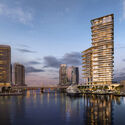
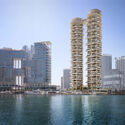
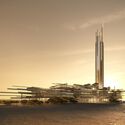
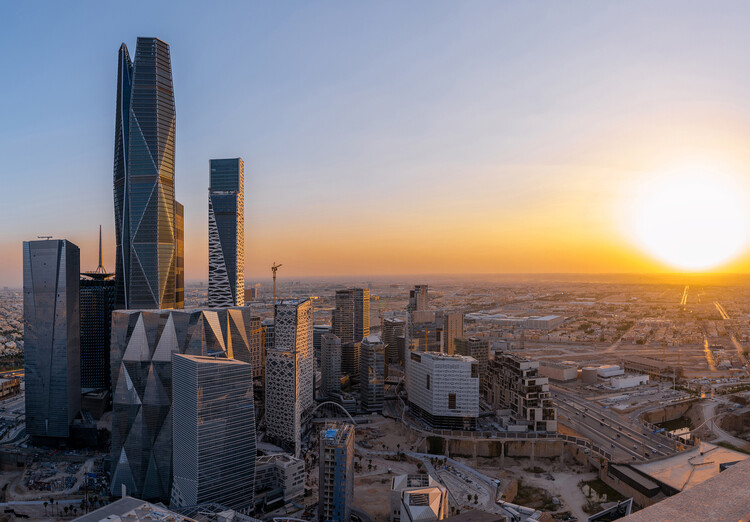
Step from the heat of Dubai into the lobby of a glass tower, and the desert seems to disappear. Outside, temperatures climb past 45 degrees Celsius; inside, the air is cold, sealed, and perfectly controlled. For decades, this contrast became the defining image of Gulf modernity. Architecture became less a negotiation with climate, and more a demonstration that climate could be overcome. Towers of reflective glass rose from the desert as symbols of arrival, projecting financial power, technological confidence, and global ambition. Beneath this urban image sat an infrastructure built on oil, cheap energy, and the continuous mechanical suppression of heat.

https://www.archdaily.com/1041515/oil-glass-and-identity-gulf-modernism-between-global-image-and-local-climateAnanya Nayak
See and Foresee: Architectural Research Across Four Southeastern European Cities
| Sponsored Content

Cities in Southeastern Europe do not wait to be read. They accumulate, layer upon layer of socialist planning, post-socialist disruption, and the quieter, less legible work of citizens remaking space from the ground up. Here, space and legacy insist on their own terms. What happens to architectural research when the cities that we observe already seem to know something our discipline has not yet learned to see?
https://www.archdaily.com/1041132/see-and-foresee-architectural-research-across-four-southeastern-european-citiesMariolina Affatato
From Spanish Presidio to the American Grid: The Hispanic Roots of San Diego’s Urban Core

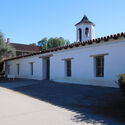
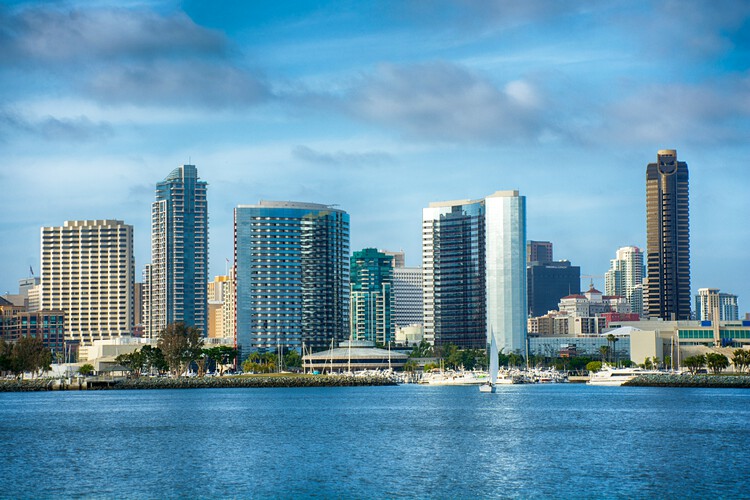
Very close to the Mexican border, in the southwest corner of the United States, lies the city of San Diego. Its urban history began in 1769 with the arrival of a Spanish military expedition commanded by Gaspar de Portola, which marked the first permanent settlement in the territory that was known as Alta California. However, unlike the more formally urbanized administrative capitals and towns of Mexico and Central America, San Diego was conceived as a frontier outpost. Today, it has become the second-largest city in California, just after Los Angeles, and its urban grid tells a story about the Hispanic heritage that is intertwined with the contemporary cultural environment of the United States.



https://www.archdaily.com/1041419/from-spanish-presidio-to-the-american-grid-the-hispanic-roots-of-san-diegos-urban-coreMoises Carrasco
Furniture as Architecture: Micro-Modernisms Inside the Home

Modernism is often encountered through built form, photographed facades, canonical plans, concrete manifestos. For most people, its first encounter was far more immediate. It was a chair in an office, a shelf in a living room, a compact unit that reorganized how one sat, stored, or slept. Long before modern architecture could be widely commissioned, it was furniture that entered everyday space, carrying with it a new logic of living. Modernism's promise of transforming life was often delivered through these smaller, repeatable objects.
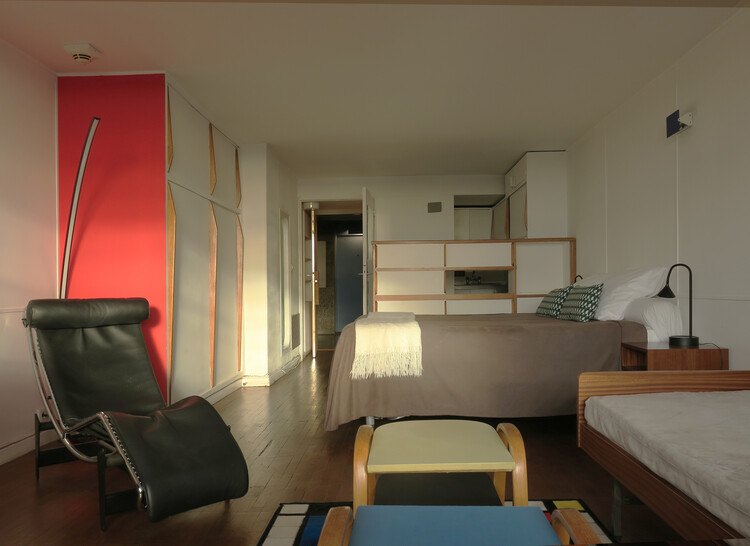
To understand this shift, furniture has to be read as a condensed form of architecture rather than decoration. Early twentieth-century designers treated it precisely this way. Le Corbusier described furniture as équipement de l'habitation (equipment of living), placing it within the operational system of the building rather than outside it. Similarly, the Bauhaus approached chairs and tables as industrial prototypes, embedding principles of standardization, efficiency, and mass production into their design. As architectural historian Beatriz Colomina has argued, modern architecture did not circulate only through buildings, but through media and objects that translated its ideas into everyday life. Furniture became architecture in miniature: portable, reproducible, and capable of reorganizing space without reconstructing it.



https://www.archdaily.com/1041170/furniture-as-architecture-micro-modernisms-inside-the-homeAnanya Nayak
Rethinking the High-Rise: 5 Unbuilt Towers from the ArchDaily Community

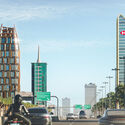
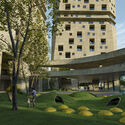
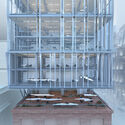
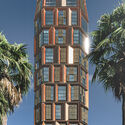
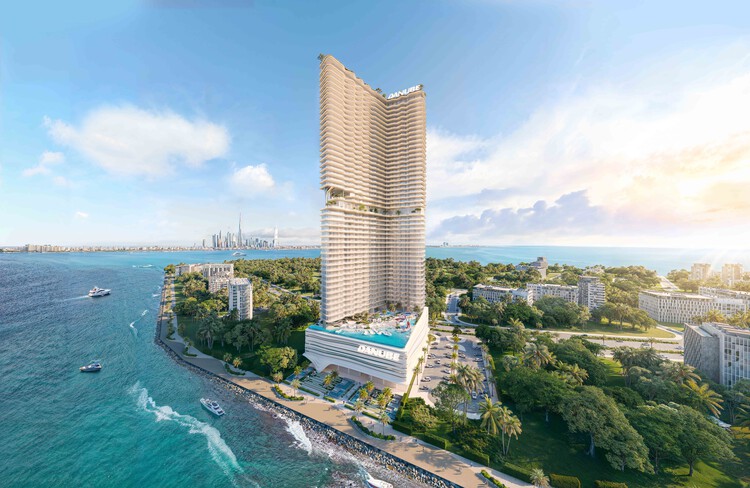
High-rise architecture continues to serve as a primary tool for accommodating density in rapidly evolving urban environments. Traditionally defined by efficiency and repetition, the tower is increasingly being reexamined as a more complex spatial and organizational system. Across different geographies, architects are testing how vertical structures can move beyond singular functions to incorporate layered programs, environmental strategies, and new forms of occupation.
The following selection brings together unbuilt projects submitted by the ArchDaily community, highlighting a range of approaches to the contemporary tower. From mixed-use developments and residential high-rises to speculative ecological proposals, these works reflect an ongoing shift in how vertical architecture is conceived. These towers engage with broader questions of privacy, coexistence, adaptability, and urban integration.
https://www.archdaily.com/1040793/rethinking-the-high-rise-5-unbuilt-towers-from-the-archdaily-communityNour Fakharany
Evolving Classrooms for Diverse Minds and Futures
| In Collaboration

Learning something new is, biologically, a transformation of the brain. With each experience, neural connections are reorganized, creating and strengthening synapses. Far more than simply accumulating information, learning is about reconfiguring internal structures, a process that can reshape individuals and societies alike. The environment in which this takes place can cultivate curiosity, adaptability, and emotional resilience, thus supporting our next generation of leaders, or suppress those qualities, leading to withdrawal and isolation.
With the rise of modern schooling during the Industrial Revolution, a standardized model emerged, defined by rows of desks, simultaneous instruction, and visual supervision. Often compared to a factory system, this model still persists in many places despite profound technological shifts. These rigid environments remain even as modern learning demands experimentation and adaptability.
https://www.archdaily.com/1041145/evolving-classrooms-for-diverse-minds-and-futuresEduardo Souza
Studio Gang Completes the Samuel H. Scripps Theater Center for Hudson Valley Shakespeare in New York

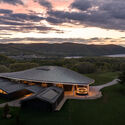
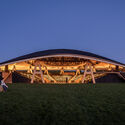
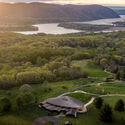
Hudson Valley Shakespeare has opened the Samuel H. Scripps Theater Center in Garrison, New York, marking the completion of a six-year project that establishes the company's first permanent home. The new campus, designed by Studio Gang in collaboration with Nelson Byrd Woltz Landscape Architects, expands the organization's long-standing open-air performance model into a permanent cultural and educational facility integrated within the Hudson Valley landscape. Construction began in September 2024 following several years of planning and fundraising.
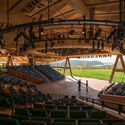
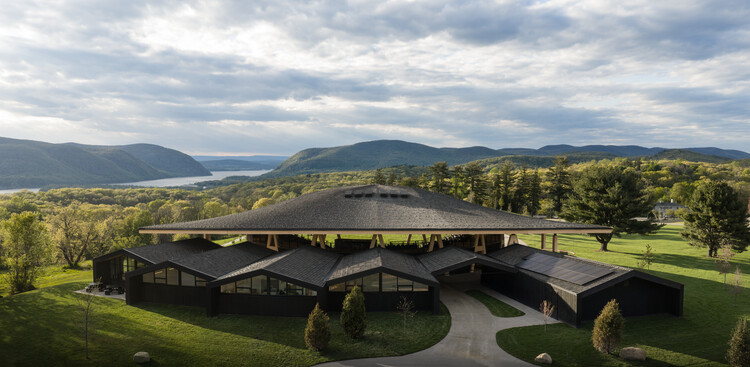
https://www.archdaily.com/1041574/studio-gang-completes-the-samuel-h-scripps-theater-center-for-hudson-valley-shakespeare-in-new-yorkReyyan Dogan
Kengo Kuma & Associates and Paul Raff Studio Selected to Design New Banff National Park Visitor Centre in Canada

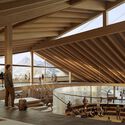
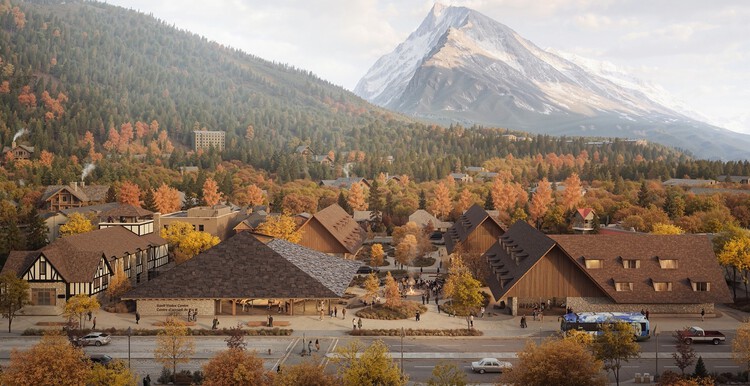
On May 13, 2026, Parks Canada, the federal agency responsible for protecting and managing Canada's natural and cultural heritage, announced the winning design for a reimagined visitor centre and community space in Banff National Park. The competition was organized in partnership with the Royal Architectural Institute of Canada (RAIC) as part of the 200-Block Banff Avenue Redevelopment Project. The proposal by Paul Raff Studio and Kengo Kuma & Associates was selected from a shortlist of five pre-qualified teams that also included EVOQ + Ryder, KPMB Architects, Revery Architecture, and Stantec Architecture. An independent jury assembled by the RAIC selected the design for its approach to landscape, sustainability principles, and its balance between conservation, heritage, Indigenous perspectives, and visitor experience, among other considerations.
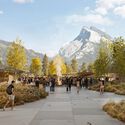
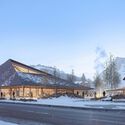

https://www.archdaily.com/1041575/kengo-kuma-and-associates-and-paul-raff-studio-selected-to-design-new-banff-national-park-visitor-centre-in-canadaAntonia Piñeiro
Reading the Territory: The Landscapes of Estudio Ome

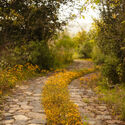
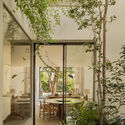
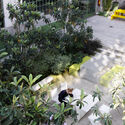
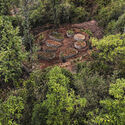
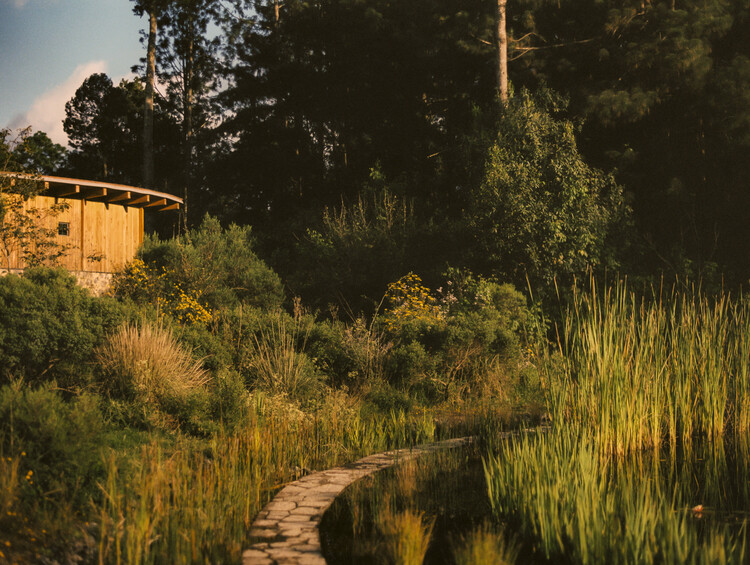
Based in Mexico City, Estudio Ome, founded by Susana Rojas Saviñón and Hortense Blanchard, is an architectural and landscape practice working across forests, volcanic terrains, urban fragments, and former industrial sites. Winner of the ArchDaily 2025 Next Practices Awards, the studio develops projects through sustained observation of ecological and territorial conditions, where design decisions arise directly from the behavior of soil, water, vegetation, and ground.
Each project begins with repeated encounters. The terrain is first approached through walking and prolonged observation, letting drainage patterns, erosion, and seasonal shifts become legible before any formal measurement occurs. These visits form the basis for interpreting both visible and subterranean layers—hydrology and historical transformations that continue to exert force on the surface.
https://www.archdaily.com/1041428/reading-the-territory-the-landscapes-of-estudio-omeValentina Díaz
A Project in Motion: The Story Behind Realengo Park Market Square in Rio de Janeiro

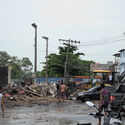
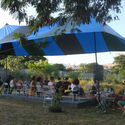
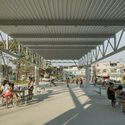
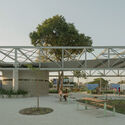
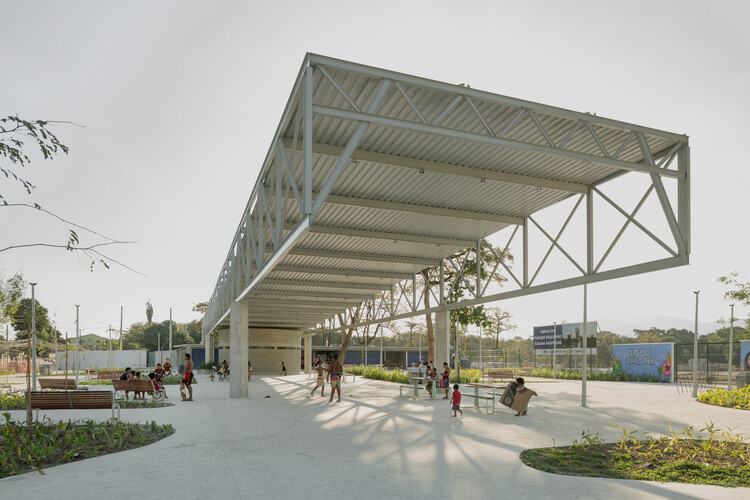
Even before any drawing or formal decision, the place now occupied by Praça do Mercado in Parque Realengo, Rio de Janeiro, already pulsed with movement. Improvised stalls, informal gatherings, music, children running, and adults gathered beneath temporary shelters composed a vibrant landscape, sketching an ephemeral architecture.
It is within this context that the work developed by Juliana Ayako—one of the winners of the ArchDaily 2025 Next Practices Awards—together with Carlos Zebulun, Helena Meirelles, Larissa Monteiro, Rodrigo Messina, Francisco Rivas, emerged. The project management, urban planning, and landscape design were carried out by Ecomimesis Soluções Ecológicas, winner of the public competition organized by the Municipality of Rio de Janeiro in 2023.
https://www.archdaily.com/1041147/a-project-in-motion-the-story-behind-realengo-park-market-square-in-rio-de-janeiroCamilla Ghisleni
Appartamento Spagnolo Opens a Window to Spanish Interior Design at Milan Design Week 2026
| In Collaboration

Interpreting the contemporary habitat is a priority for architects and designers worldwide. Amid shifting trends, stylistic blends, and the revival of different techniques, contemporary interior design brings together materials, textures, and colors to transform the user experience. Within the domestic realm, a series of realities, tensions, and activities unfold, with design serving as a strong foundation and support system to meet the needs of its inhabitants. During Milan Design Week 2026, ICEX and Elle Decor Italia presented the fourth edition of Appartamento Spagnolo—a spatial framework created to showcase contemporary Spanish interior design within a historic context.
https://www.archdaily.com/1041154/appartamento-spagnolo-opens-a-window-to-spanish-interior-design-at-milan-design-week-2026Agustina Iñiguez
WUF13 in Baku and Stefano Boeri’s Ambrosian Monastery in Milan: This Week’s Review

As global urban challenges intensify alongside growing environmental, social, and cultural pressures, this week's news reflects how institutions, exhibitions, and restoration projects are highlighting the relationship between the built environment and collective experience. From international forums addressing housing insecurity and urban resilience to cultural events examining memory, identity, and spatial perception, positioning architecture as both a framework for policy and a medium for critical reflection. At the same time, major restoration and redevelopment initiatives highlight a renewed focus on preserving historical continuity while adapting heritage sites and cultural institutions to contemporary forms of use, accessibility, and public engagement.

https://www.archdaily.com/1041545/wuf13-in-baku-and-stefano-boeris-ambrosian-monastery-in-milan-this-weeks-reviewReyyan Dogan