1. ArchDaily
  2. News

News

From Milan to Chicago: Architecture Now and the Leading Practices of Herzog & de Meuron, Gensler, and Heatherwick

Subscriber Access | 

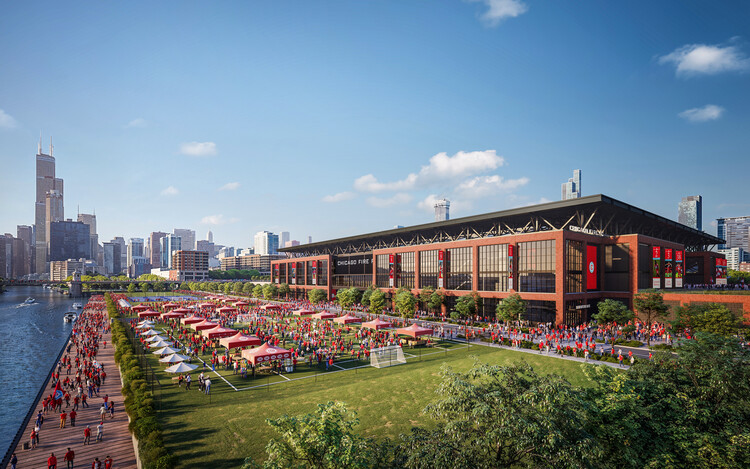
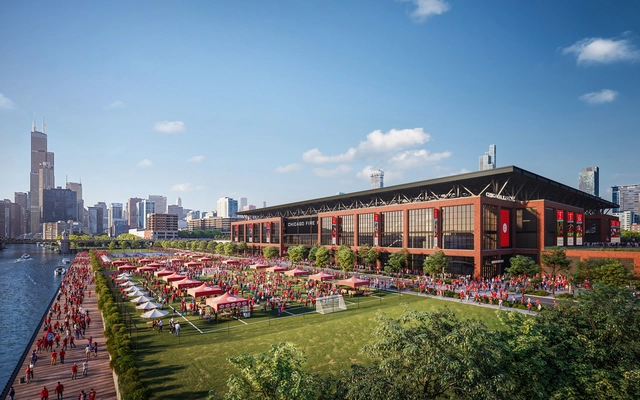
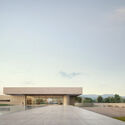
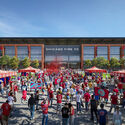
From Milan's Scalo Farini to downtown Chicago, and from the Tuscan countryside to the UK's retrofit initiatives, recent announcements demonstrate how architecture is evolving in response to climate goals, cultural identity, and urban transformation. Herzog & de Meuron's new headquarters for UniCredit will anchor one of Europe's largest redevelopment sites with a focus on sustainability and workplace innovation, while Gensler's stadium design for Chicago Fire FC aims to redefine the U.S. matchday experience as part of a major waterfront development. In Tuscany, Alvisi Kirimoto's Sapaio Pavilion merges agricultural production with architectural sensitivity, and in the UK, RIBA and The King's Foundation are advancing retrofit as a national agenda. Meanwhile, finalists including MVRDV, Heatherwick Studio, and Mecanoo are advancing in an international competition to create a climate landmark intended to inspire large-scale behavioral change. This edition of Architecture Now brings together diverse yet interconnected efforts to shape how architecture can support long-term ecological, cultural, and civic impact.
From Milan to Chicago: Architecture Now and the Leading Practices of Herzog & de Meuron, Gensler, and Heatherwick - Image 1 of 4From Milan to Chicago: Architecture Now and the Leading Practices of Herzog & de Meuron, Gensler, and Heatherwick - Image 2 of 4From Milan to Chicago: Architecture Now and the Leading Practices of Herzog & de Meuron, Gensler, and Heatherwick - Image 3 of 4From Milan to Chicago: Architecture Now and the Leading Practices of Herzog & de Meuron, Gensler, and Heatherwick - More Images+ 3

Concéntrico 2025: The Politics of Urban Presence

Subscriber Access | 

Every June, the Spanish city of Logroño transforms into a space of architectural dialogue, opening its streets, plazas, riverbanks, and traffic islands to temporary structures that redefine how cities are inhabited. For ten editions, Concéntrico has worked not as a specialized fair or an architecture biennale, but as a portable museum — a curatorial gesture that brings a dispersed collection of contemporary architecture into public space. Set in a city suspended between arid plains and distant mountains, far from the circuits of capital cities and cultural institutions, Concéntrico presents itself as a temporary promise. It's a reminder that even cities that are often overlooked can host architecture that is current, diverse, and speculative. In this sense, the festival is less about celebration and more about activation.

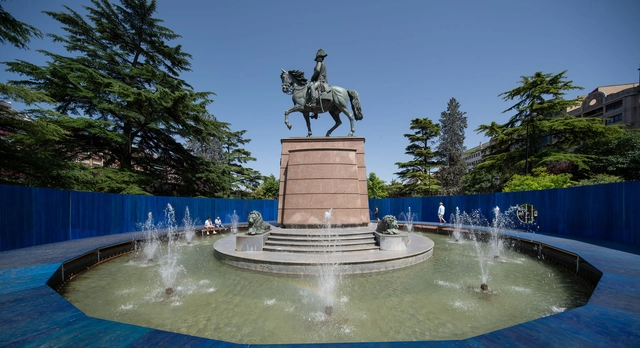
But beyond its curatorial logic, Concéntrico operates as a political structure. In the ancient sense of polis, it invites citizens, architects, and institutions to reassess what public space can be. The interventions offer speculative proposals for urban life that reveal what is missing, what is possible, and what should be questioned. A temporary pool over a fountain, a bathhouse in a roundabout, or a shared meal on a major avenue are not just spatial gestures — they are political statements, asking how urban infrastructure might be redirected from control to care, from efficiency to encounter. In that way, the festival becomes not just a reflection of the city, but an instrument for its transformation.

Concéntrico 2025: The Politics of Urban Presence - Imagem 1 de 4Concéntrico 2025: The Politics of Urban Presence - Imagem 2 de 4