1. ArchDaily
  2. 3D Printing

3D Printing: The Latest Architecture and News

NASA and AI Space Factory Develop a 3D Printed Lunar Structure

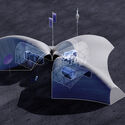
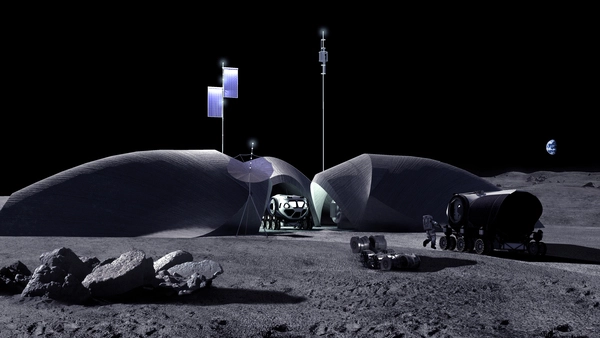
NASA and AI Space Factory developed LINA (Lunar Infrastructure Asset), an in-situ 3D-printed outpost to protect astronauts and critical missions on the Moon. The project is part of the Relevant Environment Additive Construction Technology (REACT), a multi-year collaboration to develop technologies for lunar surface constructions within the timeframe of the Artemis Mission: humankind’s return to the Moon. LINA is a step in the effort to expand civilization to Earth’s natural satellite and explore it in a sustainable way that minimizes human disturbance.

NASA and AI Space Factory Develop a 3D Printed Lunar Structure - Image 1 of 4NASA and AI Space Factory Develop a 3D Printed Lunar Structure - Image 2 of 4NASA and AI Space Factory Develop a 3D Printed Lunar Structure - Image 3 of 4NASA and AI Space Factory Develop a 3D Printed Lunar Structure - Image 4 of 4NASA and AI Space Factory Develop a 3D Printed Lunar Structure - More Images+ 7

Nature and Technology: Walls That Can Grow Plants

Subscriber Access | 

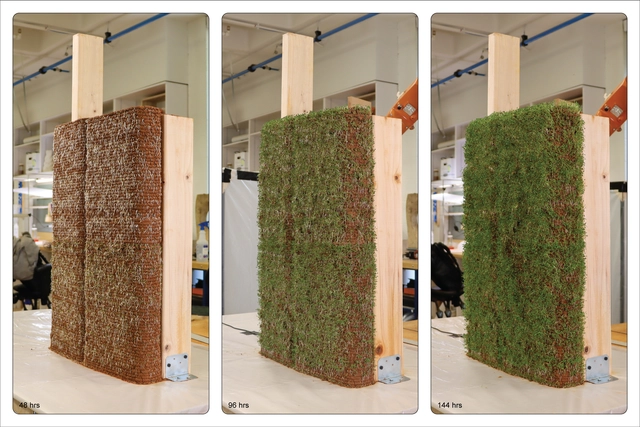
The relationship between architecture and nature is complex. If, on the one hand, we enjoy framing nature as art in our homes; on the other hand, we try at all costs to avoid the presence of obstructive "real" nature in our walls and structures, which can be damaged by roots and leaves. At the same time, we use green roofs, vertical gardens and flower boxes to bring cities closer to nature and improve people's wellbeing; but we also construct buildings with materials that are completely dissociated from fauna and flora. Although the advancement of biomaterials and new technologies is gradually changing this, we should nevertheless ask ourselves whether the structures and buildings we occupy need to be separated from the nature that surrounds them. This was the question that led researchers at the University of Virginia (UVA) to develop geometrically complex 3D-printed soil structures on which plants could grow freely.

The Future of Architecture: Imagining a World Where Buildings are Constructed from Living Materials

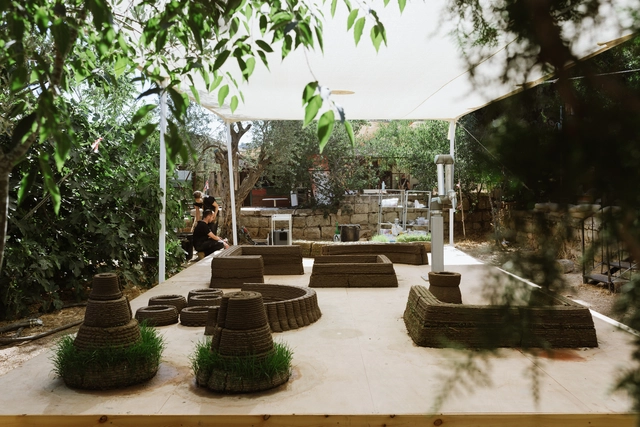
Can you imagine a world in which the built environment around us is 3D printed from living materials? That buildings will germinate, bloom, wither, produce new kinds of material, and eventually return back to the soil? To Grow a Building is a performative lab space that 3D prints - in real time - a live structure. The project presents a new approach to integrating flora into the design process, by developing a novel material for 3D printing, through which seeding is an inseparable part of the fabrication process. To Grow a Building is a gate into a future world in which there are people who build buildings, and there are people who grow them.

The Future of Architecture: Imagining a World Where Buildings are Constructed from Living Materials - Image 1 of 4The Future of Architecture: Imagining a World Where Buildings are Constructed from Living Materials - Image 2 of 4The Future of Architecture: Imagining a World Where Buildings are Constructed from Living Materials - Image 3 of 4The Future of Architecture: Imagining a World Where Buildings are Constructed from Living Materials - Image 4 of 4The Future of Architecture: Imagining a World Where Buildings are Constructed from Living Materials - More Images+ 80

3D-Printed Masonry Wall: The Introduction of Digital Craftsmanship

Subscriber Access | 

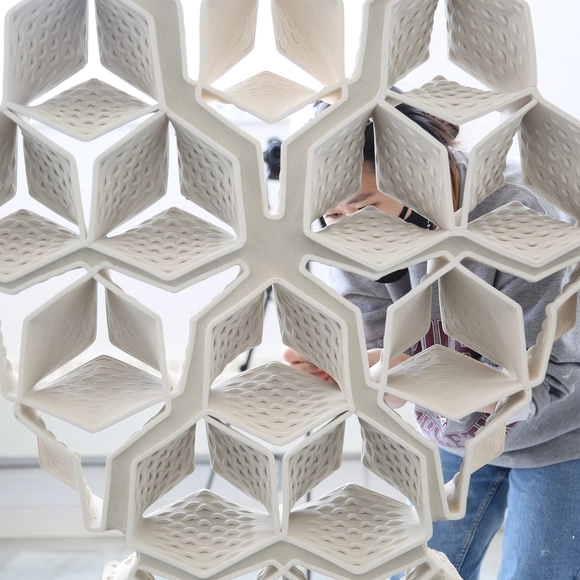
Since the 1980’s, 3D-printing has offered new ways of developing architecture, engineering, and objects of daily use. When it comes to digitizing analogue processes, it is vital for users to become familiar with current tech innovations and their benefits. HIVE Project reshapes the art and craft of building in clay by combining traditional ceramics, smart geometry, and robotic precision to construct a masonry wall composed of one hundred seventy-five unique 3D-printed clay bricks.

A Coastal Intervention with 3D Terracotta Printing: Stools and Shelters for Aquatic Fauna

Subscriber Access | 

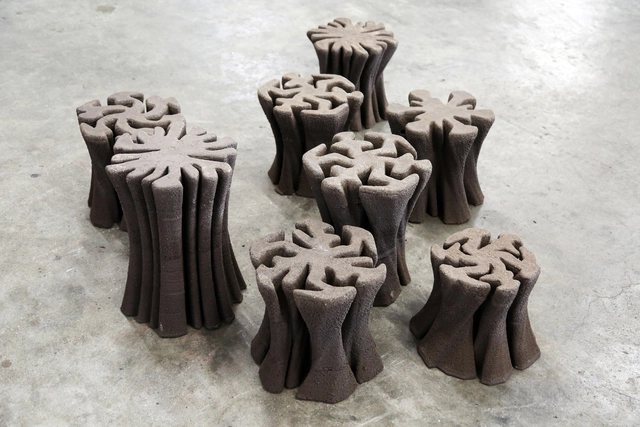
As humanity becomes aware of its impact on the environment, it has also sought ways to reverse some of the harm caused to fauna and flora, especially in cities. Our way of living, consumption and construction has caused severe damage to nature. In fact, according to a study from the Weizmann Institute of Science, we are at a point of inflection where the mass of all man-made materials is equal to the planet's biomass, and it should double by 2040. But not necessarily everything we build should have a negative impact. "The Tidal Stool" project is an example of this - part of a comprehensive revitalization project in Kuk Po Village in Shau Tau Kok in Hong Kong, which brings together two different ecologies, the anthropocentric and natural environment.

A Coastal Intervention with 3D Terracotta Printing: Stools and Shelters for Aquatic Fauna - Image 1 of 4A Coastal Intervention with 3D Terracotta Printing: Stools and Shelters for Aquatic Fauna - Image 2 of 4A Coastal Intervention with 3D Terracotta Printing: Stools and Shelters for Aquatic Fauna - Image 3 of 4A Coastal Intervention with 3D Terracotta Printing: Stools and Shelters for Aquatic Fauna - Image 4 of 4A Coastal Intervention with 3D Terracotta Printing: Stools and Shelters for Aquatic Fauna - More Images+ 15

Towards Sustainable and Affordable Housing: Is 3D Printing the Future or the Present?

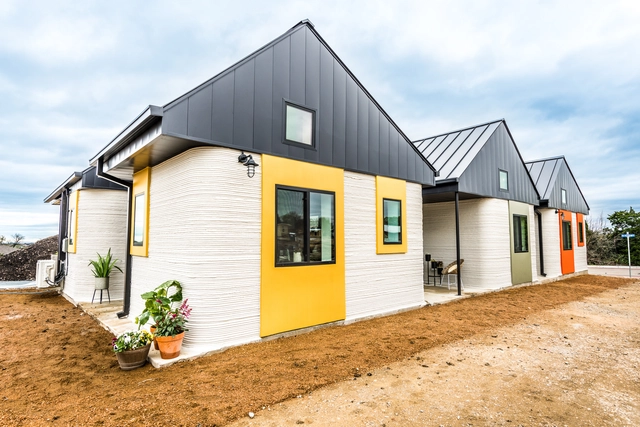
In recent years, the construction industry has faced unprecedented challenges. A lack of skilled workers is driving up costs of labor, there is a global housing shortage, and the effects of climate change around the world are clearer than ever. Therefore, questioning traditional construction methods and pushing the limits of innovation has become a top priority, forcing the industry to implement new technologies as they get on board the digital transformation era. There is one innovation, however, that looks particularly promising: 3D construction printing. Although relatively recent, the technology has already been successfully tested in numerous structures, houses and apartment buildings, reshaping residential construction as we know it. Hence, 3D printing could very well be a viable alternative for more efficient, sustainable and cost-effective mass housing solutions in the near future, positively impacting people’s lives and contributing to greener, healthier cities.

"Form Freedom with Mass Customization": Technical Challenges in 3D Printing

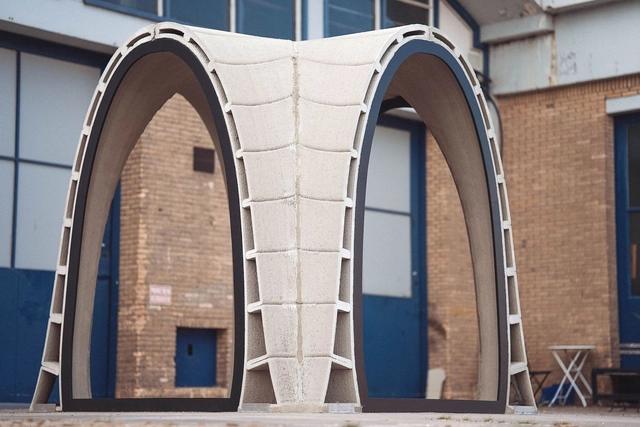
When browsing the 3D printing tag on ArchDaily, it is clear that this technology has developed at an incredibly fast pace. If in the early years we observed the concept as a distant possibility for the future or with small-scale examples, in recent years we have observed entire printed buildings and increasingly complex volumes being produced. Developed by reading a computer file, the fabrication is carried out through additive manufacturing with concrete - or other construction materials - and presents numerous difficulties in providing an efficient process that enables the constructive technique to become widespread. The pavilion printed by the Huizenprinters consortium, for example, illustrates this process well.

3D Printing with Low-Carbon Concrete: Reducing CO2 Emissions and Material Waste