1. ArchDaily
  2. adaptive reuse

adaptive reuse: The Latest Architecture and News

Parasite or Savior? Ibelings van Tilburg's Hovering New High-Rise

Subscriber Access | 

This article originally appeared in uncube magazine as "Saviour or Parasite?"

The post-war city centre of Rotterdam is ruled by commerce. Only five percent of the city's inhabitants live in the centre, which is almost entirely occupied by highstreet fashion chains, fast food restaurants, and offices. After shop closing time, the shutters go down and the streets are deserted. The municipality would like to lure more inhabitants into the centre – but space for new residential buildings is scarce. So in recent years, a 1960s cinema and church had to make way for a huge new housing complex designed by Alsop Architects, and a residential tower by Wiel Arets was speedily attached to Marcel Breuer's department store, De Bijenkorf. It was not until the municipality suggested forcing new housing high-rises into the green courtyards of the Lijnbaanhoven residential complex, designed in 1954 by Hugh Maaskant, that there were protests and the project had to be cancelled. For the time being, that is.

One densification project, however, tried not to destroy or debase the post-war building originally occupying its site. In many respects, the Karel Doorman residential high-rise could even be called the saviour of the old Ter Meulen department store. It might be rather uncommon for a valiant hero to crouch down on the shoulders of the little old lady he intends to rescue – but that's more or less what happened here.

Refurbishing America's Shopping Mall

One thing about a recession is that it accelerates the demise of dying trends and struggling establishments. In this case, it is America’s beloved shopping malls, which have been slowly in decline since its peak popularity in 1990. Now, in the wake of the 2008 economic catastrophe, American cities are riddled with these abandoned shopping meccas, from the mall to big box stores and shopping strips, whose oversize parking lots are equally as useless as the spaces themselves. The question is, how can we effectively repurpose these spaces?

A perfect example after the break...

KAA Design Group wins Best Adaptive Reuse for Latitude 33

Subscriber Access | 
KAA Design Group wins Best Adaptive Reuse for Latitude 33 - Image 20 of 4
Courtesy of KAA Design Group

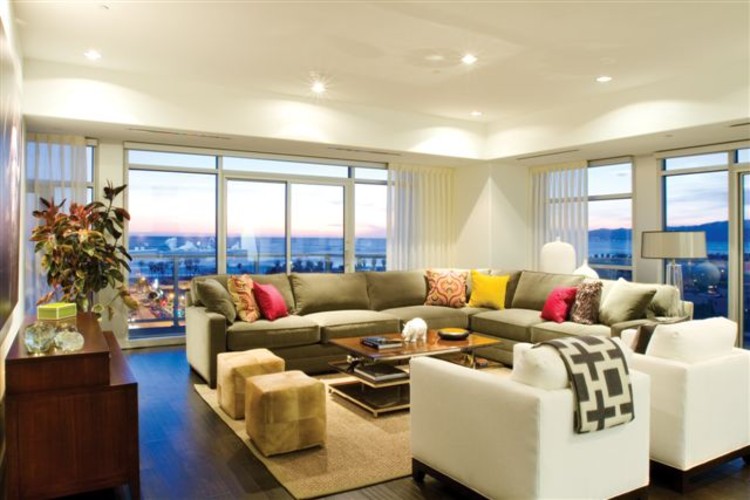
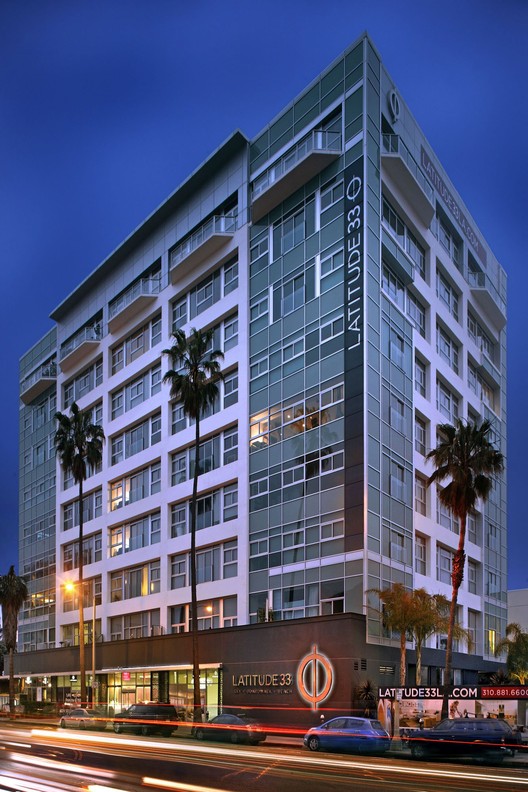
Latitude 33, a luxurious collection of beach-side homes ranging from townhouses, penthouses, and single floor units, was partially designed from a forty year-old, nine-storey “eye sore for the neighborhood” that was once an office building. The mixed use development, designed by KAA Design Group, includes residential and commercial spaces in Marina del Rey in Southern California. The strategic decisions involved with designing these apartments from an early 197os office building earned Latitude 33 two Gold Nugget Merit Awards, one of which was for Best Adaptive Reuse.

Read on for more after the break.

KAA Design Group wins Best Adaptive Reuse for Latitude 33 - Image 10 of 4KAA Design Group wins Best Adaptive Reuse for Latitude 33 - Image 8 of 4KAA Design Group wins Best Adaptive Reuse for Latitude 33 - Image 18 of 4KAA Design Group wins Best Adaptive Reuse for Latitude 33 - Image 9 of 4KAA Design Group wins Best Adaptive Reuse for Latitude 33 - More Images+ 16