A Guide to Off-Grid Architectures

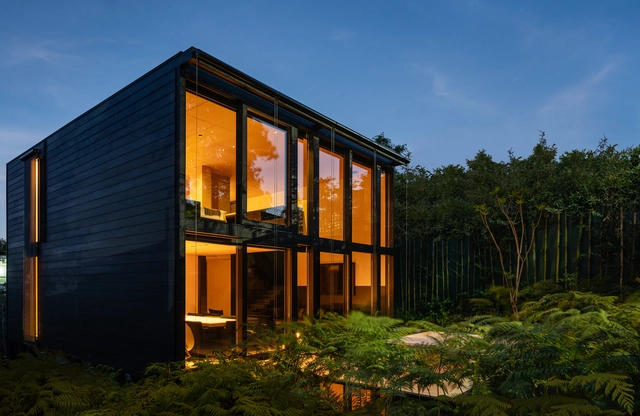
Anyone who lives in a big city may have dreamed of moving elsewhere and living isolated, in a house among the trees or on a deserted beach. During the pandemic and the endless months of quarantine, many more may have had this same idea. As romantic and seductive as this may seem, however, living deep in nature comes with some important practical challenges. Rarely would anyone give up the little comforts they are used to, like turning on a faucet or charging their cell phone. If the location is, in fact, remote, it may not have electricity, drinking water, gas, sewage, or solid waste collection. But there remain several possibilities for a life with comfort and without neighbors. What are the main solutions to enable this and how can an architectural project provide an off-the-grid life?
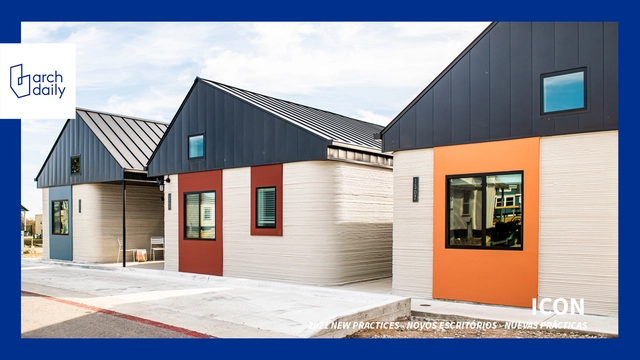
"The Same Technology that Will Allow Us to Address Housing Challenges on Earth, Will Allow Us to Venture Off to Space": Interview with Jason Ballard of ICON

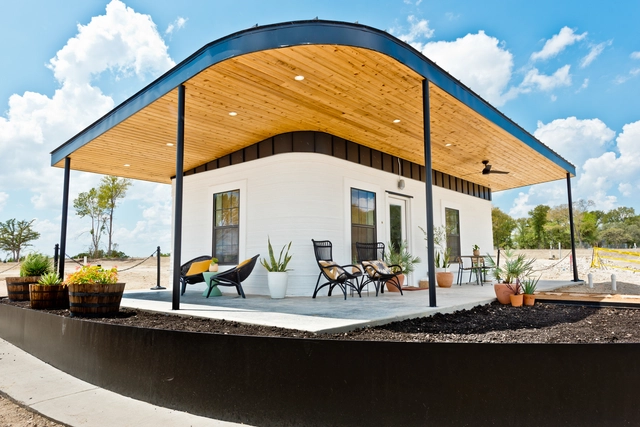
Founded in late 2017, named one of the "Most Innovative Companies in the World" in 2020, and selected as ArchDaily's Best New Practices of 2021, ICON is a construction company that pushed the boundaries of technology, developing tools to advance humanity including robotics, software, and building materials. Relatively young, the Texas-based start-up has been delivering 3D-printed homes across the US and Mexico, trying to address global housing challenges while also developing construction systems to support future exploration of the Moon, with partners BIG and NASA.

Digital Woodworking: Creating Structures, Furniture, and Surfaces Using CNC

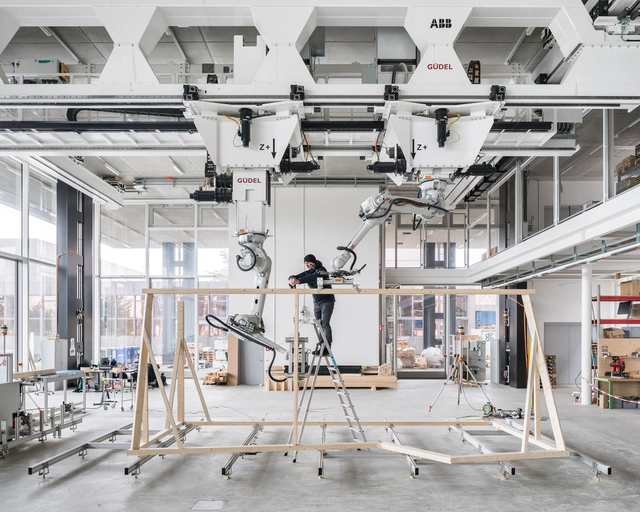
The automation of architectural design and rendering has been further accelerated by digital production tools. Tools such as 3D printers, assembly robots, and laser cutters, have all but perfected the design and construction process and have proven essential in optimizing resources, improving precision, and increasing control of the process.

Mexican Architect Miguel Ángel Aragonés Patents Construction System with "Intelligent Prefabricated" Technology

The renowned Mexican architect Miguel Ángel Aragonés presented ten years of research materialized in his most recent project entitled "Casa PI" whose acronym translates to a new "intelligent prefabricated" construction project. Patented in Switzerland, this system seeks to break the housing paradigm from an integral design that combines the structure of the house with the furniture and new automation technologies in architecture.

A Brief History of Automation in Architecture

Efficiency in the construction site by reducing waste and lowering costs, improving safety through better planning, and introducing machines to assist in the construction and design process. These benefits can be achieved through automation in architecture, but for technology to reach this point of empowering and supporting creativity while also improving efficiency, we have come a long way. To understand how automation developed and the prospects it offers for architecture, here is a brief timeline.

3D Printing and Robotic Construction: HANNAH Office on their Experimental Prototype Ashen Cabin

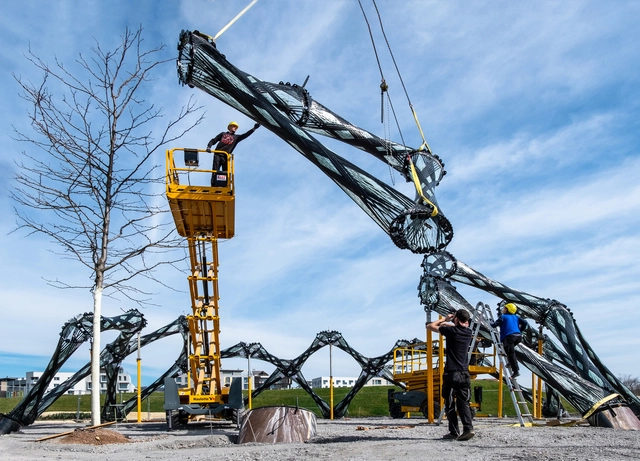
HANNAH office, founded by Leslie Lok and Sasa Zivkovic, is a US-based architecture and research practice that has been experimenting with digital design and fabrication techniques across all types of projects ranging from furniture to urbanism. Both professors at Cornell University College of Architecture, Art, and Planning, Leslie and Sasa lead a studio with a focus on innovative design, where technology plays a crucial role in their work, combined with a sharp study of materials, new applications, and construction techniques, resulting in highly creative projects.

Back to Basics: Natural Ventilation and its Use in Different Contexts

Automation is everywhere around us - our homes, furniture, offices, cars, and even our clothing; we have become so accustomed to being surrounded by automated systems that we have forgotten what life was like without them. And while automation has noticeably improved the quality of interior spaces with solutions like purified air and temperature control, nothing compares to the natural cool breeze of mother nature.

Digitally Designed & Built Projects: Using Technology to Explore New Ways of Construction

By now,  it is clear that technology has taken over almost every aspect of our lives. It has changed the way we communicate, how we connect, how we work and study, and has even modified our buying and eating habits.  Architecture and construction were not the exceptions, and technology is also now present in the way it is being thought, designed, and built.

Does Automation Take Away From the Individuality of Design?

We’re in an age of unprecedented technological innovation. The architecture and construction industries are increasingly becoming more and more automated, as firms seek to take full advantage of new machinery and new ways of working to make the design process more efficient. With this increase in automation, however, comes lots of questions too. Will robots ever replace architects? Will the near future see a fully automated construction industry? A pertinent question, too, is the complicated case of automation and the individuality of design – does automation take away from the individuality of design?

Design with Digital Technology: 3D Printing Opens New Possibilities in China

3D printing (as known as three-dimensional printing) is a type of rapid prototyping technology. It is a technology that uses powdered metal or plastic and other bondable materials to construct objects by printing layer by layer based on digital model files.

Automating the Construction Site

For several years, the construction sector has been facing a labour shortage, generating a growing interest in automation. The health crisis has only exacerbated the trend, prompting automation companies to turn their focus from car manufacturing to the construction industry, for which automation is expected to grow up to 30% within the next few years. The following explores present capabilities and future possibilities of automation within the construction process, its integration within the mainstream practice and the impact on design.

The Aesthetics of Automation: Examining the Appearance of 3D Printed Affordable Housing

The viability of 3D Printing in architecture – has, at the very least – seen a seismic shift over the past few years. Usually relegated to prototypes or conceptual models, 3D Printed building designs are increasingly being actualised as physical projects. In 2013, WinSun, a Chinese company – was able to print 10 houses in a 24-hour period, becoming one of the first companies to achieve this feat using 3D Printing technology. More recently, in 2018, a family in France became the first in the world to live in a 3D Printed house. The city of Dubai is also seeking to have a quarter of its buildings be 3D Printed by 2025. These examples display the upwards category of this technology, and how it is very likely, as the years go by, this automation of building fabrication is even more integrated into the construction process than it is right now.

Holography: How It Could Change Architectural Space

Although holograms have been a possibility for decades—the first hologram was developed in the early 1960’s following the development of laser technology—many might still associate them more with science fiction, the term conjuring up images of high-tech superhero gadgets and spaceships in the distant future. Yet as we inch closer to the reality of a hyper-technologized future, and a variety of industries—including architecture and construction— begin to embrace new forms of increasingly advanced technology, holography, too, has a chance of completely reshaping the way we conceptualize and experience architecture. While it is impossible to predict exactly how holographic technology will be used in the future, below, we list several examples of existing projects that use holograms and other types of holography to create atmospheric environments, fantastical scenes, and practical visualizations. These examples move beyond the use of holograms to visualize structures and sites during the design phase; they utilize holography to shape the completed architectural space itself, completely altering the sensory and spatial experience of their environment.

Will Robots Ever Replace Architects? Why Designs of the Future Won't Ever be Fully Automated

Architecture and automation are two concepts that in the modern era of design and technological advancements go hand in hand- or do they? On one end, there’s a slight fear that “robots will replace designers”, making the profession more automated, and less creative. On the other, technology has made the practice of architecture more efficient in terms of process and cost. How far will technology take us, and will your job ever be lost to technology? The short answer is, probably not.

More Daylight but Less Glare & Heat: How Does Automatically Tintable Glass Work?

In a 2016 survey of 400 employees in the U.S., Saint-Gobain found that office building occupants commonly complained about poor lighting, temperature, noise, and air quality, leading the company to deduce a need for improved lighting and thermal comfort in buildings while also maintaining low energy consumption and freedom of design for architects and clients. Their solution was SageGlass, an innovative glass created first in 1989 and developed over the course of the past three decades. The glass, which features dynamic glazing protecting from solar heat and glare, simultaneously optimizes natural light intake. A sustainable and aesthetic solution, SageGlass’ adaptability to external conditions dispels the need for shutters or blinds.

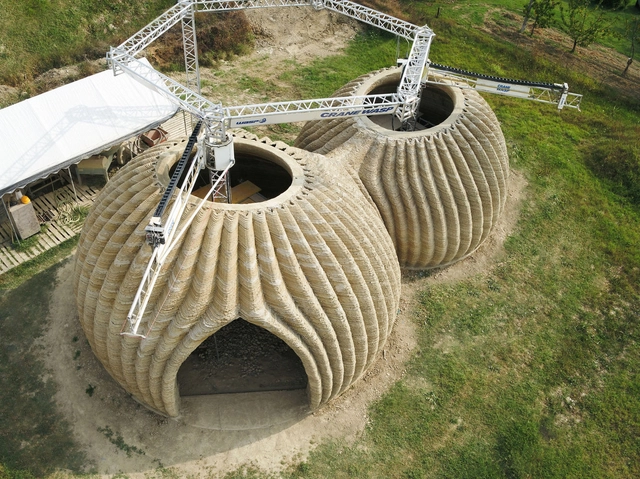
Round Houses of Raw Earth: 3D Printing Sustainable Homes in 200 Hours

A recent collaboration between the team of Mario Cucinella Architects (MC A) and WASP, specialists in 3D Printing in Italy, has resulted in the first 3D-printed construction of a fully natural, recyclable, and carbon-neutral material: raw earth. The circular housing prototype is called TECLA and it was built in Massa Lombarda (Ravenna, Italy) using multiple 3D printers synchronized to work at the same time.

How to Design Smart Homes? 8 Tips for Incorporating Domotics Into Architecture

Home automation has long been associated with high costs, a burdening assembly time, and a cumbersome process that impelled us to discard the idea of automating projects. However, these days are long gone. 

3D Printing a 2-Meter-High Column in 30 Minutes: What's Next With This Technology?

There's no question that 3D printing is here to stay. However, it is still a developing technology that raises certain questions: Is it really effective for massive and large-scale construction? How sustainable is it? Will it go from being an option to becoming the norm in the construction industry?

To help clarify the broader picture of 3D printing's place in architecture and construction, we spoke with Alain Guillen, Managing Director and Co-founder of XtreeE. XtreeE is a platform that allows architects to bring their designs to reality through advanced large-scale 3D printing, which generates quick and precise shapes without material waste. Read below to find out how he and his team envision the future of robotics in architecture and why architects should prepare to embrace this new technology, leading us toward a more efficient yet equally creative future.