Architecture 101: The Essentials

The ArchDaily source for architectural education, bringing together theory, history, typologies, and practical knowledge.

When Façades Become Habitats: Architecture Making Room for Other Species
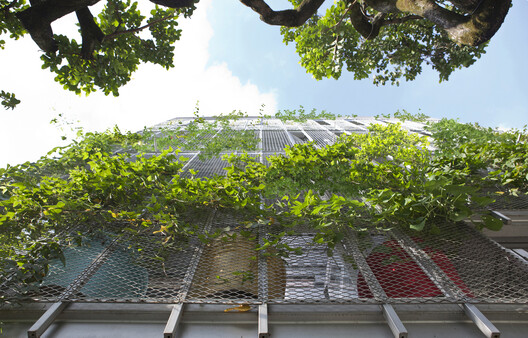
When Façades Become Habitats: Architecture Making Room for Other Species

When we think of façades, we rarely think of them as habitats. We see them as the elements that separate interior from exterior, regulate temperature, reduce noise, and protect buildings from external conditions. They give architecture its visual language, but they are also expected to keep the outside world at a distance. In doing so, façades have often been understood as barriers: surfaces that define where human comfort begins and where the environment is meant to remain outside.

Read more »
Thick Walls and Deep Openings: When Architecture Rediscovers Mass

Thick Walls and Deep Openings: When Architecture Rediscovers Mass

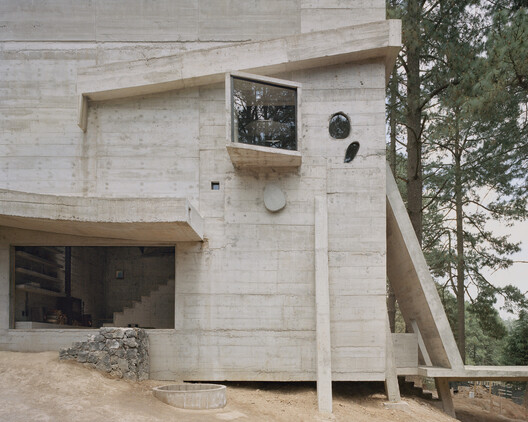
For much of the twentieth century, architectural culture was shaped by the pursuit of lightness. Steel structures and curtain walls reduced the building envelope to a thin layer separating interior from exterior, while façades became smooth, continuous surfaces where windows were cut as precise openings within an abstract plane. But for centuries, buildings were conceived as bodies of mass; walls possessed depth, windows were recessed within thick masonry, and space was often experienced as something carved from the solidity of construction. In recent years, several contemporary projects appear to revisit this older spatial logic, reintroducing thickness as an architectural condition through deep openings, monolithic volumes, and heavy envelopes.

Read more »

Anatomy of a Maya City: The Urban Structure of Copán in Honduras

Anatomy of a Maya City: The Urban Structure of Copán in Honduras

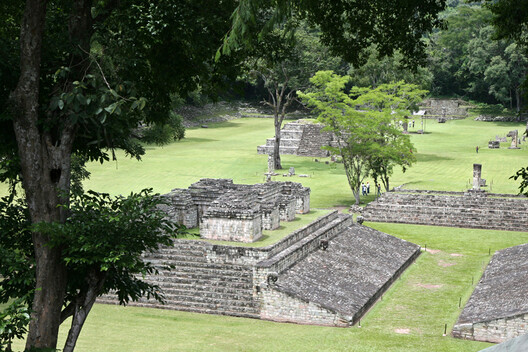
Deep in western Honduras, within a valley near the Guatemalan border, lies the ancient Maya city of Copán. Flourishing during the Classic period between the fifth and ninth centuries CE, the city developed as a regional epicenter through trade networks, dynastic politics, and monumental architecture. Today, the site is designated a UNESCO World Heritage Site due to its extensive architectural remains, including stepped pyramids, sculpted stelae, and ceremonial core. Over a century of systematic archaeological research has documented its urban morphology, revealing distinct residential districts, civic spaces, and systems of movement and visibility.

Read more »

When Modernism Meets Local Resistance: Housing and Urban Friction in Latin America

When Modernism Meets Local Resistance: Housing and Urban Friction in Latin America

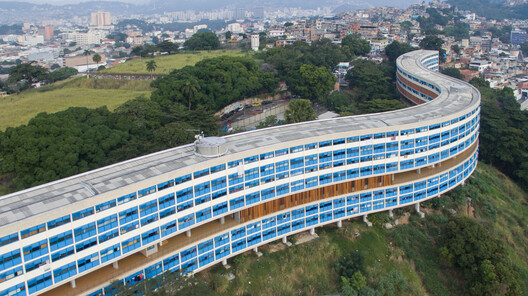
Modern housing was one of the places where modernism made its boldest promise: that architecture could reshape not only the city, but the way people lived within it. As Argentine architectural historian Ramón Gutiérrez has argued, popular housing is "the great unresolved subject, one that usually does not appear in histories of architecture." In Latin America, this absence is significant. Across the 20th century, expanding cities turned housing into one of the clearest ways to imagine urban change, and modernism entered not only plans and drawings, but apartments, neighborhoods, streets, and domestic routines.

Read more »

From Spanish Presidio to the American Grid: The Hispanic Roots of San Diego’s Urban Core

From Spanish Presidio to the American Grid: The Hispanic Roots of San Diego’s Urban Core

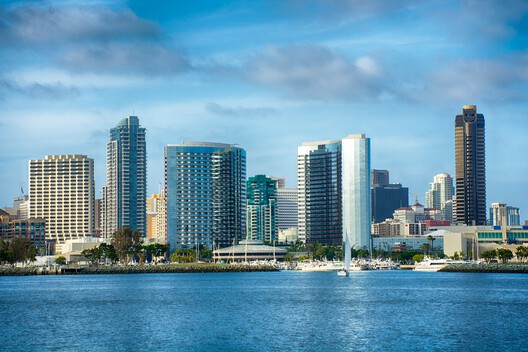
Very close to the Mexican border, in the southwest corner of the United States, lies the city of San Diego. Its urban history began in 1769 with the arrival of a Spanish military expedition commanded by Gaspar de Portola, which marked the first permanent settlement in the territory that was known as Alta California. However, unlike the more formally urbanized administrative capitals and towns of Mexico and Central America, San Diego was conceived as a frontier outpost. Today, it has become the second-largest city in California, just after Los Angeles, and its urban grid tells a story about the Hispanic heritage that is intertwined with the contemporary cultural environment of the United States. 

Read more »

Beyond the Shell: Félix Candela’s Palacio de los Deportes for the 1968 Mexico Olympics

Beyond the Shell: Félix Candela’s Palacio de los Deportes for the 1968 Mexico Olympics

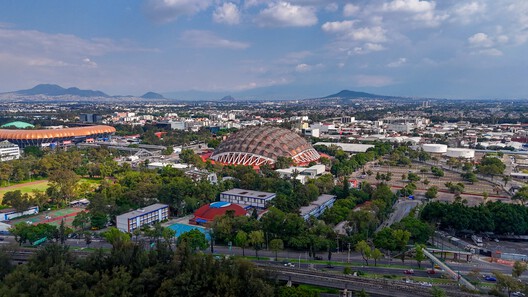
When Mexico City hosted the Olympics in 1968, it was the first time the Games had been awarded to a Latin American country as well as the first time for a Spanish-speaking nation to host them. This made the games a good opportunity to project Mexico and its culture internationally, thus prompting the government to constitute an organizing committee with prominent local talent. They appointed Pedro Ramírez Vázquez as its president, a Mexican architect who held significant influence over the state's mid-century building program. His approach was explicit: architecture as a synthesis of international modernist technique with Pre-Columbian references and local material culture. Under his direction, the committee would oversee the construction and adaptation of venues distributed across the southern districts of Mexico City, nearly all designed and built by local architects, engineers, and technicians. 

Read more »

Building with the Landscape: Non-Invasive Design Strategies for Steep Terrain

Building with the Landscape: Non-Invasive Design Strategies for Steep Terrain

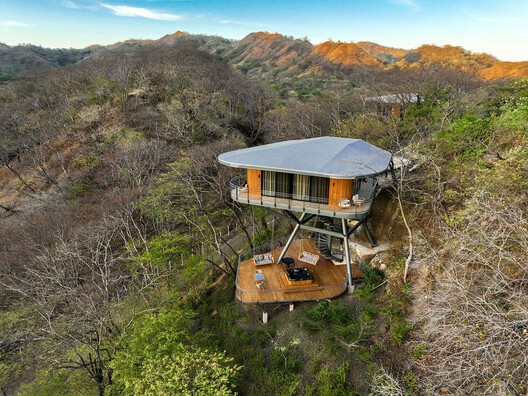
The relationship between constraint and design excellence is well established in architectural theory, yet often remains underexplored in discussions of site-specific practices. When architects encounter extreme topography, they face a fundamental choice: transform the landscape to accommodate the building, or modify the building to fit the landscape. The first approach is straightforward and requires the builder to cut, fill, terrace, and build on level ground. This choice, however, carries cascading consequences as any amount of earth moved may destabilize slopes, disrupt drainage, and fracture ecosystems. A growing body of innovative architectural work demonstrates an alternative to earth-moving and retaining walls.

Read more »

Designing with Air: Rethinking Architecture Beyond the Wall

Designing with Air: Rethinking Architecture Beyond the Wall

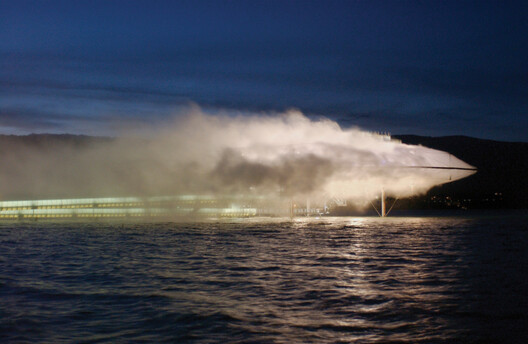
Architecture is traditionally chronicled through the persistence of the solid. We define the discipline by the weight of the lintel, the mass of the pier, and the resistance of the wall. Even when lightness is invoked, it is usually understood as a subtractive act, the thinning of a section or the precarious reduction of a load. Yet there is a parallel history, less visible and harder to isolate, in which the primary material of construction is not what occupies space, but what moves through it.

Read more »

Why Do We Want to Float? The Psychology of Lightness in Architecture

Why Do We Want to Float? The Psychology of Lightness in Architecture

In 1962, the architect Buckminster Fuller envisioned a floating city that would free humanity from its dependence on the Earth. The speculative project consisted of enormous geodesic spheres that would naturally levitate in air warmed by the sun and be anchored to mountaintops. Designed to house thousands of people, Fuller’s Cloud Nine aimed to ease land ownership pressures, address housing shortages, and contribute to environmental preservation.

Read more »

The Alchemy of Mass: Peter Zumthor and the Perception of Lightness

The Alchemy of Mass: Peter Zumthor and the Perception of Lightness

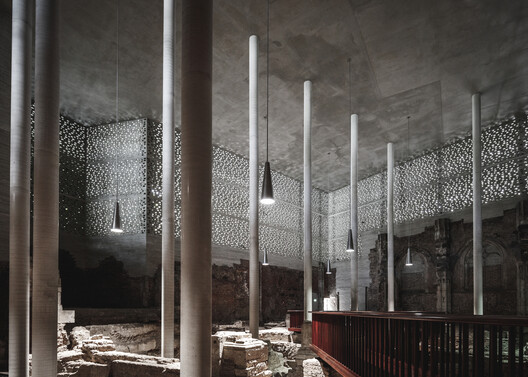
Architecture begins as an encounter with gravity. It is the ancient act of placing weight upon the earth, of persuading matter to stand, hold, and shelter. Within this fundamental condition of heaviness, however, lies a quieter possibility: density itself can generate a sense of lightness—a perceptual condition in which the body, fully convinced of matter's weight, begins to experience space as suspension.

Read more »

Van Wassenhove Residence: Living the Radical Continuity of Juliaan Lampens

Van Wassenhove Residence: Living the Radical Continuity of Juliaan Lampens

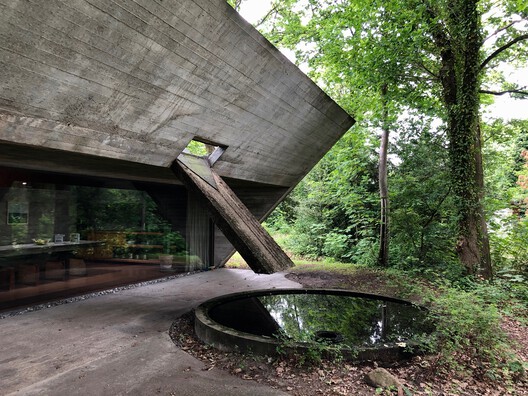
Architectural history often advances through iconic gestures or technological breakthroughs, yet some works remain influential precisely because they resist spectacle. Built between 1972 and 1974 in Sint-Martens-Latem, Belgium, the Van Wassenhove Residence stands as one of those quiet but decisive projects. Conceived as a single, continuous concrete volume set within a wooded landscape, the house challenges conventional ideas of domestic comfort, privacy, and spatial hierarchy. Its presence is direct and uncompromising, yet it avoids monumentality, positioning itself instead as a lived structure shaped by everyday rituals and long-term inhabitation.

Read more »

El Pueblo de Los Angeles: The Spanish Origins of LA’s Urban Grid

El Pueblo de Los Angeles: The Spanish Origins of LA’s Urban Grid

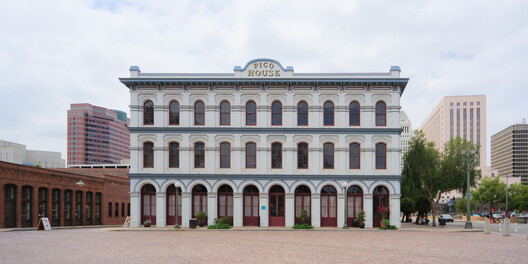
Today, the urban form of Los Angeles is characterized by 20th-century sprawl and extensive automotive infrastructure. However, the physical reality of the city's original core reveals a more complex history that is deeply rooted in Hispanic heritage. In fact, Los Angeles did not originate from the standardized American land system that defines most of the United States' territory. Instead, it is a product of the Spanish urban tradition in the Americas, which followed a structure repeated across major cities on the continent. The intersection of these systems created a layered urban geometry and history that remains visible in the city's contemporary street patterns.

Read more »

How to Measure the Life Cycle of a Construction Material?

How to Measure the Life Cycle of a Construction Material?

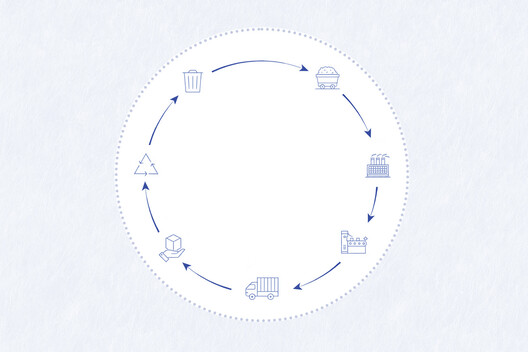
As a major driver of natural resource consumption, energy use, and greenhouse gas emissions, the construction industry has a significant impact on the environment, consuming 32% of global energy and contributing to 34% of global CO₂ emissions. Building materials play a crucial role in shaping the built environment. Through principles of circular economy, renewable and self-sufficient solutions, and technological innovations, analyzing the environmental performance of each material highlights the opportunity to review and assess the different stages of its life cycle.

Read more »

Evenly Lit, Not Overlit: Rethinking Brightness in Subtropical Cities

Evenly Lit, Not Overlit: Rethinking Brightness in Subtropical Cities

In South China, there is occasionally an urban myth—especially across Hong Kong, Shenzhen, and Guangzhou—about choosing a home that avoids western light. Over decades, the west-facing sun has proven to be a particularly difficult condition to live with: its low angle in the afternoon, its aggressive heat gain (especially in summer), and the way it penetrates deep into interiors. With global warming and longer, hotter seasons, that much-romanticized "afternoon glow" is increasingly experienced less as romance and more as glare, heat, and fatigue. Although this wisdom circulates as a community-driven rule of thumb, it carries an undeniable architectural clarity about building orientations: avoiding western light is not only about thermal comfort, but also about avoiding the sharpest, most intrusive form of direct illumination—light that strikes at the most unforgiving angle, washing surfaces, flattening depth, and turning rooms into high-contrast fields of discomfort.

Read more »

Error 404: Architectural Memory in the Age of Algorithms

Error 404: Architectural Memory in the Age of Algorithms

Before the digital turn, architecture's memory was largely tangible. It lived in the weight of drawings, the patina of models, and the thickness of books. To preserve architecture meant to preserve its traces, the documents, sketches, and photographs through which buildings could be remembered long after their material form had changed or disappeared. The modern architectural archive, as it developed in the 20th century, was both a refuge and a device of legitimacy. Institutions such as the Canadian Centre for Architecture, Casa da Arquitectura, or the Deutsches Architekturmuseum were built upon the conviction that to preserve architecture was to preserve its documents.

Read more »

How to Design with the Rain: Architectural Strategies for Rainwater Collection across Climates

How to Design with the Rain: Architectural Strategies for Rainwater Collection across Climates

As climate variability intensifies, extreme storms are becoming more frequent in some regions while water scarcity deepens in others. Architects are increasingly pressed to reconsider how buildings engage with rainfall as an environmental force and a design resource. How can architecture move beyond shedding the excess water to actively collect, store, and reuse it? What would it mean to treat rainwater as a material that shapes resilient and meaningful spaces?

Read more »