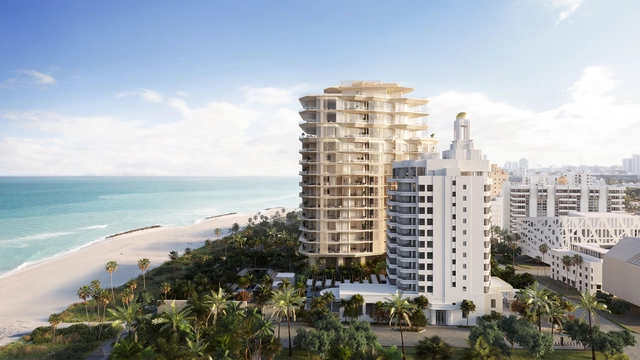
Japan-based architectural office Kengo Kuma and Associates has unveiled the design for what will become the studio’s first residential tower in the United States. Located on the oceanfront of Miami Beach, the 18-story structure will accommodate private condominiums for hospitality brand Aman. The project is adjacent to the Versailles building, a 1940s Art Deco hotel currently under restoration by architect Jean-Michel Gathy. The Art Deco architecture of Miami’s Faena district has a unique rhythm, which, according to the architect, was translated into the geometry of the new building through its vertical and horizontal lines.
The luxury hotel, as an architectural typology, is distinctive. In effect, it's a self-contained community, a building that immerses the well-off visitor into their local context. Self-contained communities they might be, but these hotels are also vessels of the wider socioeconomic character of a place, where luxury living is often next door to informal settlements in the most extreme examples of social inequality.
As the largest city in the United States, New York City is one of the most diverse and vibrant cities in the world, recognized by many as the center for global media, culture, fashion art, and finance. The city was founded in 1624 by settlers from the Dutch Republic and has since grown into “the city that never sleeps”.
While almost every style of architecture exists in New York City, the metropolis is most well known for its skyscrapers, both in historical styles such as Neoclassical and Art Deco and in their varied contemporary expressions. The first building to bring the world's tallest title to New York was the New York World Building, in 1890. Later, New York City was home to the world's tallest building for 75 continuous years, starting with the Park Row Building in 1899.
"The details are not the details. They make the design." – Charles Eames. Creating attractive spaces that anticipate the needs of users relies on several factors: scale, circulation, functionality, and comfort. However, the past few decades have proved that the visual appeal of a project is also greatly important, and can make or break the interior space. In this interior focus, we will explore the aesthetic side of interior design, looking at popular styles across the world and how architects and designers use elements such as color, furniture, accessories, and finishes to define their spatial identity.
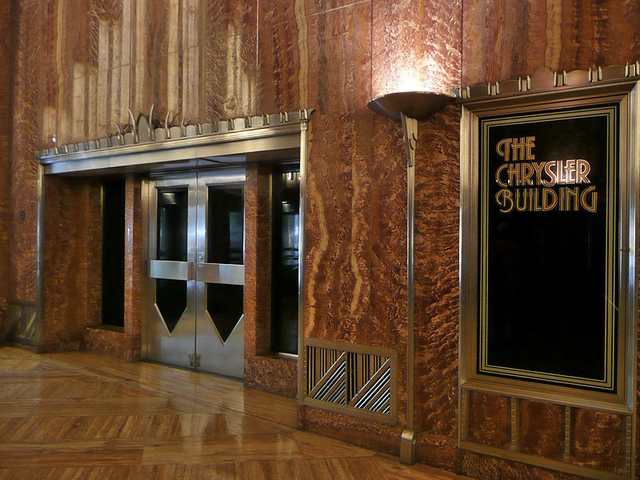
The Chrysler Building interior, Manhatten, New York . Image Courtesy of Dorff / Wikicommons CC BY-SA 3.0
Art Deco or Arts Décoratifs originated in the 1920's, following the Exposition Internationale des Arts Décoratifs et Industriels Modernes held in Paris (1925). However, it wasn’t until the 1930’s that the movement gained momentum across both Europe and the US, broadening Art Deco to cover all elements of decorative art including furniture, interior design, jewelry and architecture. Its popularity stems from its unique origins. Rather than a design movement driven by political or philosophical forces, it was created for the desire of glamorous and alluring change, a reflection of the golden age in Hollywood and a widespread economic boom.
Characterized by its decadence, rich application of color, and geometrical shapes, the movement is dramatically influenced by the discovery of the artifacts of ancient civilizations, and the introduction and admiration of the automobile. A movement heavily influenced by aspects in vogue it sought to create a form of luxury modernism, a step away from a more traditional architecture. It put an emphasis on handcrafted and individually designed elements, rarely to be mass produced.
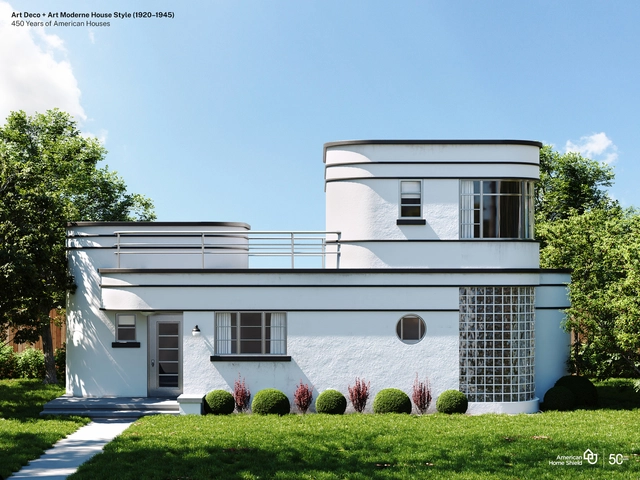
Art Deco + Art Moderne (1920–1945). Image Cortesía de American Home Shield
The history of architecture is made up of demographic, cultural, and social changes. In its relatively short history, American architecture has evolved with changes in the country, representing the catalog of various cultural influences that make up the United States as a whole. Many elements of American home design have remained intact over the past 450 years, reflecting longstanding American traditions and values that have stood the test of time.
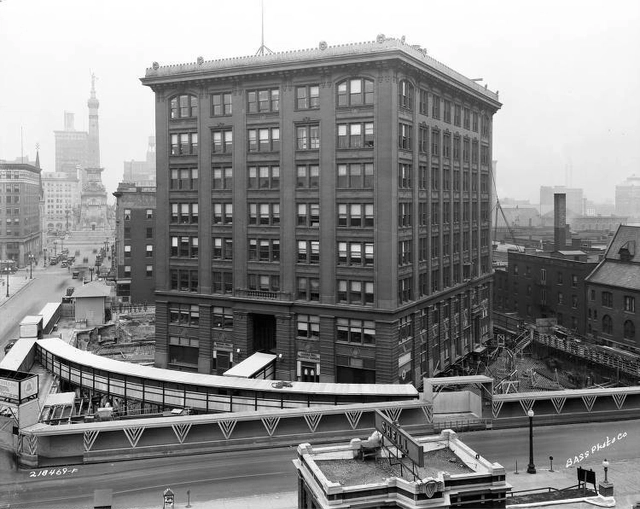
In November 1930, in Indiana, United States, one of the great feats of modern engineering was executed: a team of architects and engineers moved an 11,000-ton (22-million pound) telephone exchange without ever suspending its operations either basic supplies for the 600 employees who worked inside.
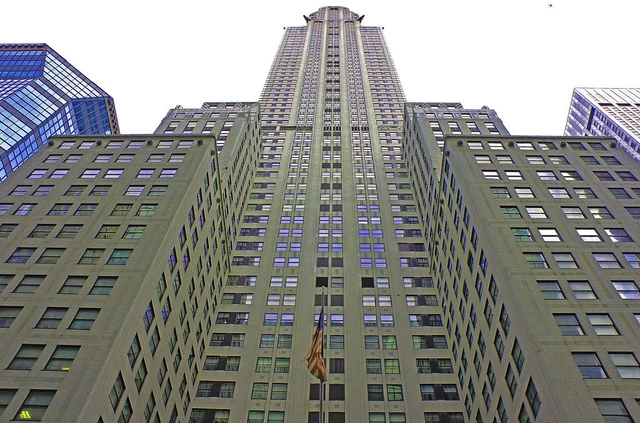
"Chrysler Building NYC NY" by dog97209 is licensed under CC BY-NC-ND 2.0
Art Deco architecture derives from a style of visual arts of the same name that emerged in Europe in the 1920s, which also influenced the movie industry, fashion, interior design, graphic design, sculpture, painting, and other forms of art, in addition to architecture. The milestone of this style was the International Exhibition of Modern Decorative and Industrial Arts held in Paris in 1925, from which it took its name.
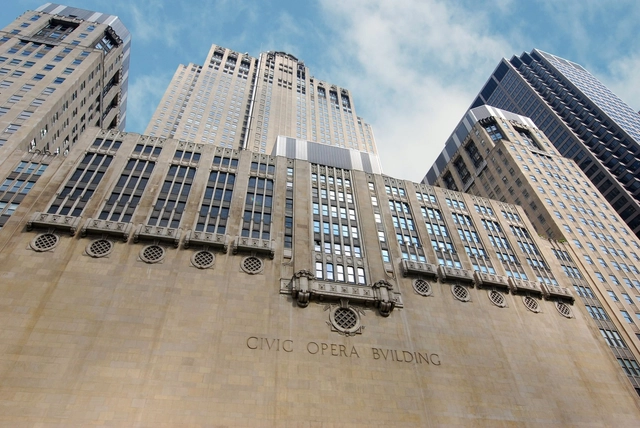
Learn about Art Deco—the opulent architectural style from the 1920s and 1930s—with CAC docent Mike McMains on this live, 45-minute virtual tour in downtown Chicago on May 5 or 10.
Northern Ireland-based architect John Donnelly has launched a studio dedicated to the production of finely-detailed plaster-cast architectural models exploring the diverse built environment of Belfast, Northern Ireland. “Model Citizen” was founded to promote public understanding and appreciation of the architecture and craftsmanship present in Irish cities, manifesting as an ongoing series of intricate sculptures.
Model Citizen sees its sculptures, available for closer inspection here, as a “mechanism to emphasize the beauty and significance of our built heritage,” translating art deco, brutalist, and internationalist styles into tangible, tactile sculptural objects that can be held, felt, and explored.
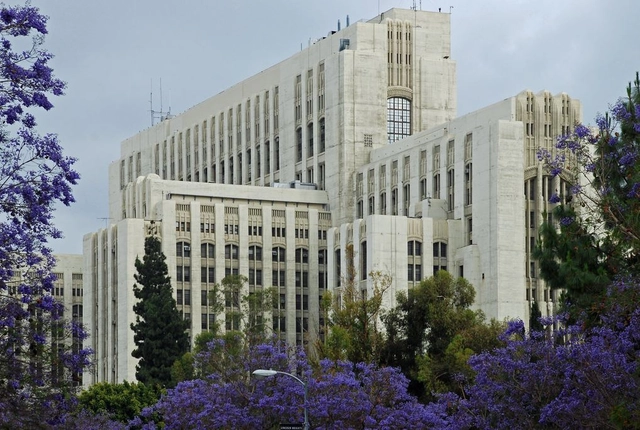
LA General Hospital. Image Courtesy of Los Angeles County
Los Angeles County Board of Supervisors have decided to move forward with a plan to reuse L.A. General Hospital as affordable housing for high-need populations. The plan aims to provide homeless residents and low-income tenants with new living units inside the 1930s-era hospital. The board approved a motion to study the feasibility of reusing the structure and to craft a strategic plan that would bring the project to life. As the “birthplace of emergency medicine,” the Art Deco–style building includes 1.5-million-square-feet of space that could be used for the housing project.
This article was originally published on July 29, 2016. To read the stories behind other celebrated architecture projects, visit our AD Classics section.
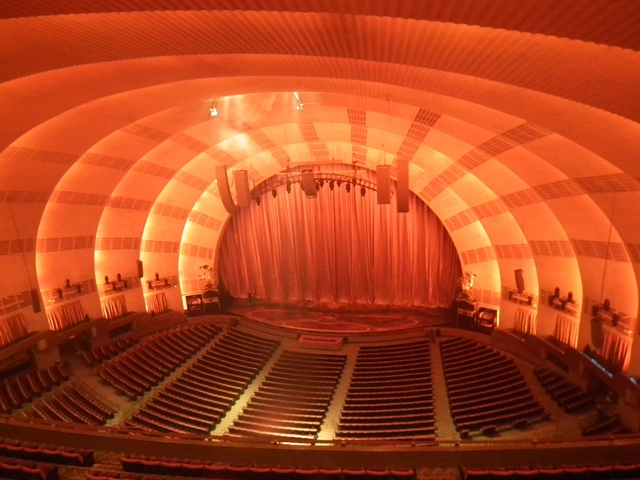
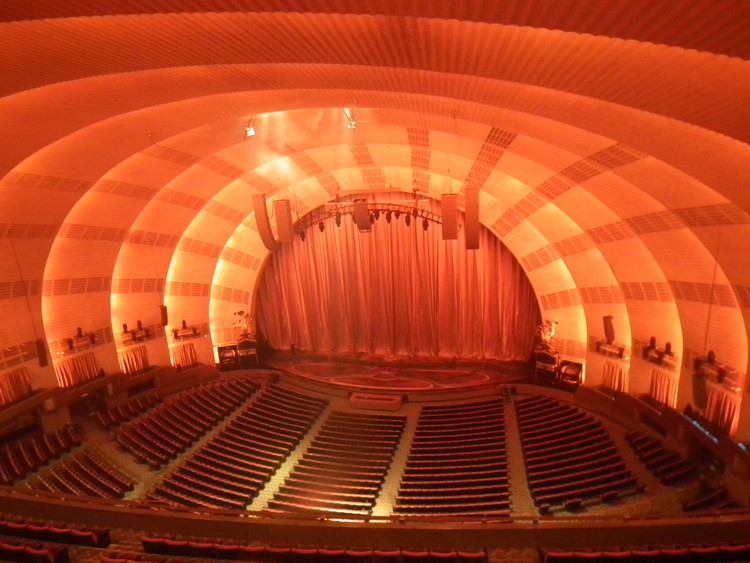
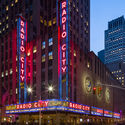
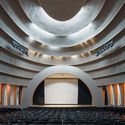
Upon opening its doors for the first time on a rainy winter’s night in 1932, the Radio City Music Hall in Manhattan was proclaimed so extraordinarily beautiful as to need no performers at all. The first built component of the massive Rockefeller Center, the Music Hall has been the world’s largest indoor theater for over eighty years. With its elegant Art Deco interiors and complex stage machinery, the theater defied tradition to set a new standard for modern entertainment venues that remains to this day.
In a permanent state of architectural transience, New York City continues to be adorned with new skyscrapers with every passing day. Historically fueled by financial prosperity coupled with the demand for commercial space, the only way to continue to build was up. Blue Crow Media’s latest map, “Art Deco New York Map” showcases over sixty buildings from the era, celebrating the eclectic nature of Art Deco architecture that is so deeply inherent to the identity of the city.
This article was originally published on December 5, 2016. To read the stories behind other celebrated architecture projects, visit our AD Classics section.
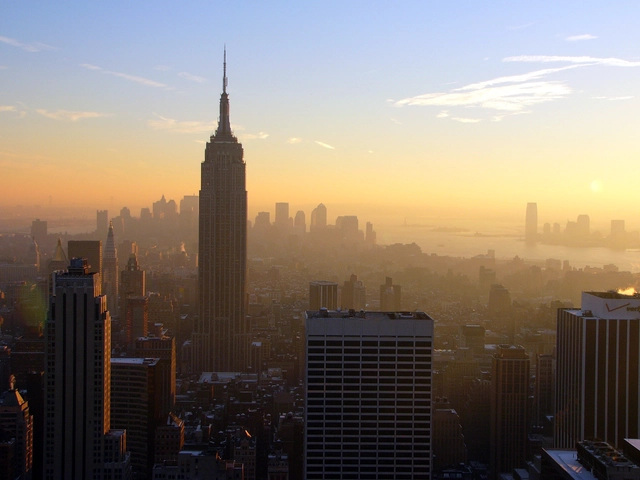
Even in Manhattan—a sea of skyscrapers—the Empire State Building towers over its neighbours. Since its completion in 1931 it has been one of the most iconic architectural landmarks in the United States, standing as the tallest structure in the world until the Twin Towers of the World Trade Center were constructed in Downtown Manhattan four decades later. Its construction in the early years of the Great Depression, employing thousands of workers and requiring vast material resources, was driven by more than commercial interest: the Empire State Building was to be a monument to the audacity of the United States of America, “a land which reached for the sky with its feet on the ground.”[1]
History has often been taught in a linear way. This way of teaching has often left out grand historical narratives, and focused primarily on the occidental world.
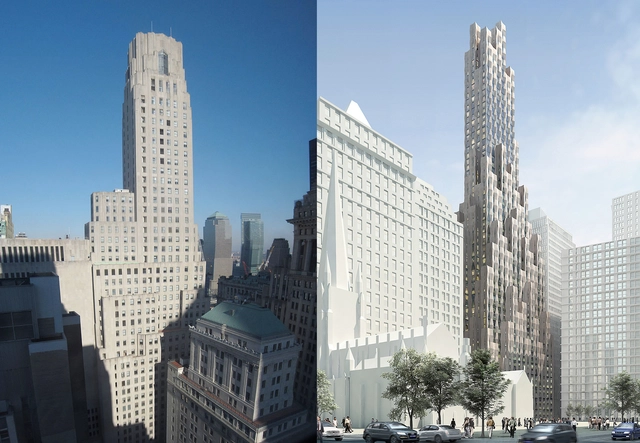
One Wall Street, before and after. Images: left, Via Wikimedia in public domain; right, Courtesy of Hollwich Kushner
The New York Timesrecently reported that over 40% of the buildings on the island of Manhattan wouldn’t be granted construction permits in 2017. Most of the culprits date back to the early 20th century when attitudes towards density, ceiling heights, column placement, and general living standards were different. This begs the question: what would modern iterations of New York’s signature structures look like today? Billed by the practice as “an obsessive-compulsive study of the city we love” HWKN’s New(er) York is a peculiar experiment that tackles this hypothetical.
Plans have been announced by Tishman Speyer for "The Wheeler", a glassy new addition above downtown Brooklyn’s iconic Macy’s store on Fulton Street. The design is a collaboration between Shimoda Design Group and Perkins Eastman, and incorporates 10 stories of dynamic office and mixed-use space that will sit atop the existing department store.
Paying homage to the renowned 19th century Brooklyn developer Andrew Wheeler, the new offices will come complete with 16 foot ceiling heights, an acre of combined outdoor terrace gardens and decks, an amenity floor, and 360,000 square feet of rentable space, all while capturing the surrounding views of Lower Manhattan, the Brooklyn Bridge, the Statue of Liberty and New York harbour from its vantage point above the existing architecture.






















.jpg?1552010046&format=webp&width=640&height=580)



.jpg?1552010046)