1. ArchDaily
  2. Barcelona

Barcelona: The Latest Architecture and News

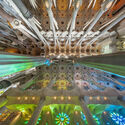
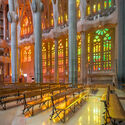
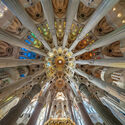
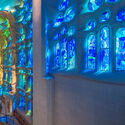
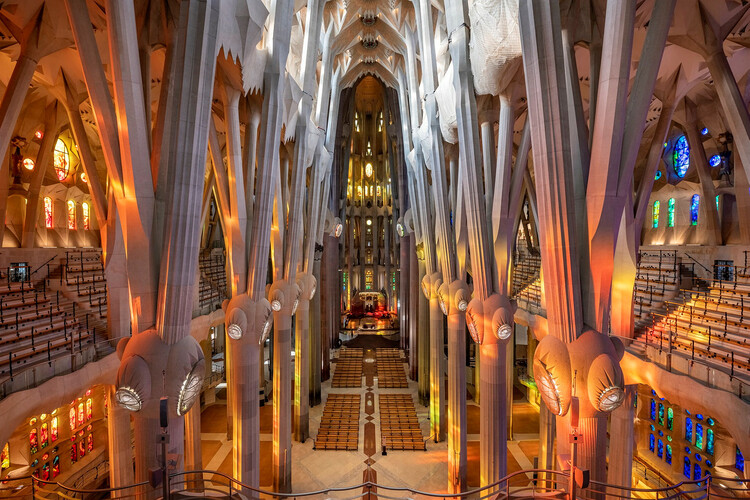
Contemplative Drama: How Gaudí Shaped Light and Color at Sagrada Família

Subscriber Access | 

It is afternoon in the summer, and the nave of the Sagrada Família is saturated with warm colors. Shafts of amber and crimson sweep across the stone floor, shift as a cloud passes over Barcelona, then deepen again. Around you, visitors slow without quite realizing it. Some raise their phones — not to capture the architecture, but to step into the light itself, positioning themselves in a pool of orange or gold as if the colours were something you could wear.

They are, without knowing it, doing exactly what Gaudí intended: surrendering, however briefly, to the sensation of being bathed in something larger than themselves.

Contemplative Drama: How Gaudí Shaped Light and Color at Sagrada Família - Image 1 of 4Contemplative Drama: How Gaudí Shaped Light and Color at Sagrada Família - Image 2 of 4Contemplative Drama: How Gaudí Shaped Light and Color at Sagrada Família - Image 3 of 4Contemplative Drama: How Gaudí Shaped Light and Color at Sagrada Família - Image 4 of 4Contemplative Drama: How Gaudí Shaped Light and Color at Sagrada Família - More Images+ 14

The Metrics We Use Decide the Cities We Build: Urban Indicators and Lived Experience

Subscriber Access | 

Modern cities are running on performance indicators. They move millions of people each day, concentrate capital, separate land uses, and sustain complex systems of logistics and consumption. In that sense, the city functions as a system to be continually adjusted and optimized.

Today's dominant metrics are familiar and widely witnessed: vehicles per hour, average commute times, floor area ratios, parking turnover, housing starts, and tax revenue per parcel of land. These figures describe a city that is legible through efficiency. They are inherited from an industrial logic, where urban space is treated more like a production mechanism than a lived-in environment. In this framing, cities begin to mimic the needs and metrics of a machine.

The Metrics We Use Decide the Cities We Build: Urban Indicators and Lived Experience - Image 1 of 4The Metrics We Use Decide the Cities We Build: Urban Indicators and Lived Experience - Image 2 of 4The Metrics We Use Decide the Cities We Build: Urban Indicators and Lived Experience - Image 3 of 4The Metrics We Use Decide the Cities We Build: Urban Indicators and Lived Experience - Image 4 of 4The Metrics We Use Decide the Cities We Build: Urban Indicators and Lived Experience - More Images+ 2

Diagonal Apartment / De la Villa Studio

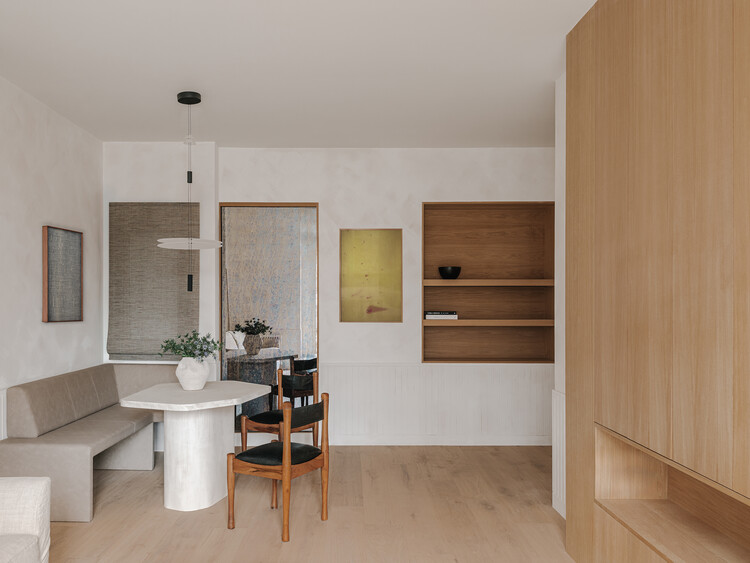
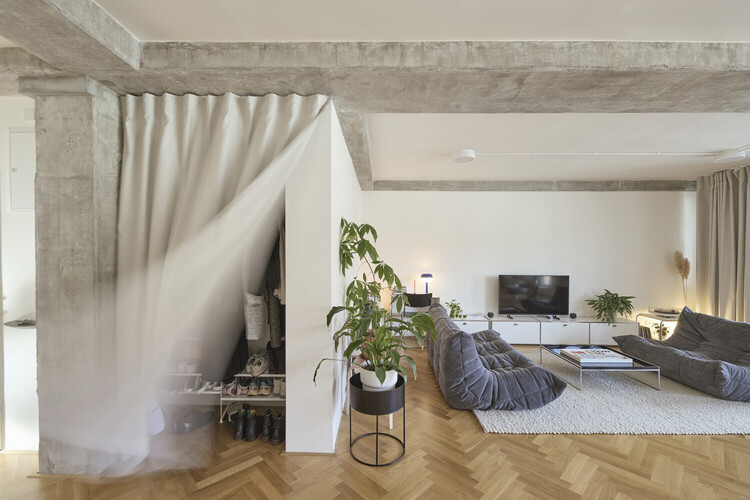
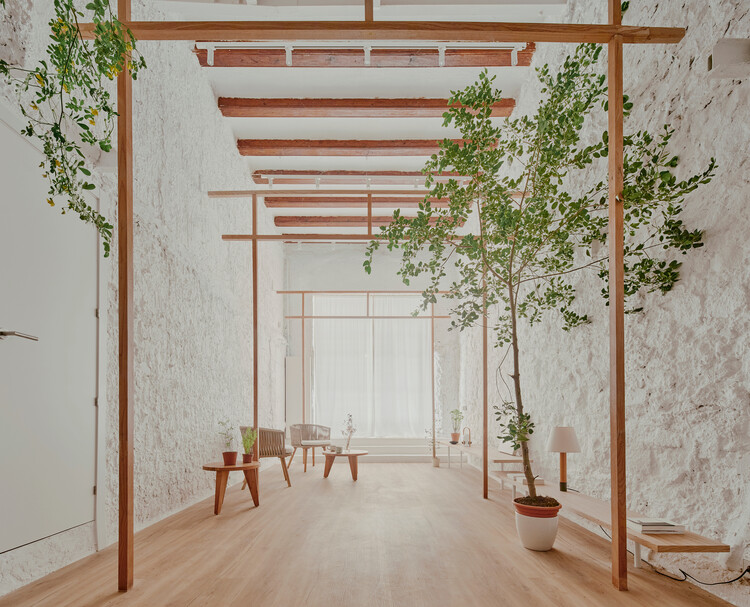
Diagonal Apartment / De la Villa Studio - Interior Photography, Residential Interiors, ChairDiagonal Apartment / De la Villa Studio - Interior Photography, Residential InteriorsDiagonal Apartment / De la Villa Studio - Interior Photography, Residential Interiors, ChairDiagonal Apartment / De la Villa Studio - Interior Photography, Residential Interiors, DoorDiagonal Apartment / De la Villa Studio - More Images+ 18

  • Architects: De la Villa Studio
  • Area Area of this architecture project Area:  133
  • Year Completion year of this architecture project Year:  2025
  • Manufacturers Brands with products used in this architecture project
    Manufacturers:  Tom Dixon, Audo, Elitis, Fenix Originals, Flos, +3

WUF13 in Baku and Stefano Boeri’s Ambrosian Monastery in Milan: This Week’s Review

As global urban challenges intensify alongside growing environmental, social, and cultural pressures, this week's news reflects how institutions, exhibitions, and restoration projects are highlighting the relationship between the built environment and collective experience. From international forums addressing housing insecurity and urban resilience to cultural events examining memory, identity, and spatial perception, positioning architecture as both a framework for policy and a medium for critical reflection. At the same time, major restoration and redevelopment initiatives highlight a renewed focus on preserving historical continuity while adapting heritage sites and cultural institutions to contemporary forms of use, accessibility, and public engagement.

WUF13 in Baku and Stefano Boeri’s Ambrosian Monastery in Milan: This Week’s Review - Image 1 of 4WUF13 in Baku and Stefano Boeri’s Ambrosian Monastery in Milan: This Week’s Review - Image 2 of 4WUF13 in Baku and Stefano Boeri’s Ambrosian Monastery in Milan: This Week’s Review - Image 3 of 4WUF13 in Baku and Stefano Boeri’s Ambrosian Monastery in Milan: This Week’s Review - Image 4 of 4WUF13 in Baku and Stefano Boeri’s Ambrosian Monastery in Milan: This Week’s Review - More Images+ 5

The Productive Clash: Heritage Interiors, Contemporary Projects, and the Value of Imperfection

Heritage, in interiors, is increasingly rarer to be only a matter of preservation alone. More often it arrives as friction: the encounter between what a building already is—its plan logic, its scars, its structural inconsistencies—and what contemporary life demands of it.

Some of the most convincing projects today are not those that "restore" an interior back to a single moment, nor those that erase the past under a seamless new skin. They are the ones that stage a relationship between old and new—allowing contrast to do more than tell a story, and letting the clash become a pragmatic tool for construction, budget, and speed.

The Productive Clash: Heritage Interiors, Contemporary Projects, and the Value of Imperfection - Image 1 of 4The Productive Clash: Heritage Interiors, Contemporary Projects, and the Value of Imperfection - Image 2 of 4The Productive Clash: Heritage Interiors, Contemporary Projects, and the Value of Imperfection - Image 3 of 4The Productive Clash: Heritage Interiors, Contemporary Projects, and the Value of Imperfection - Image 4 of 4The Productive Clash: Heritage Interiors, Contemporary Projects, and the Value of Imperfection - More Images+ 28

Antoni Gaudí’s Last Original Residence at Casa Batlló Opens Following Three-Year Restoration

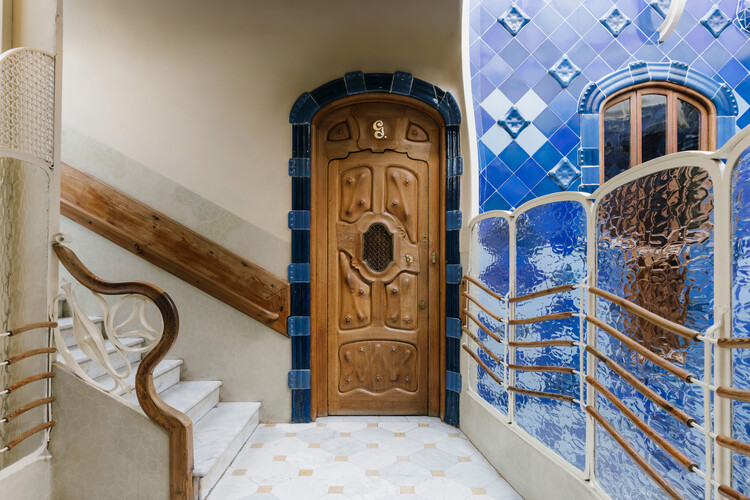
Casa Batlló in Barcelona has unveiled the restored Third Floor of the building, opening the last original residence preserved from Antoni Gaudí's 1904-1906 transformation of the property to the public for the first time. Led by restoration architect Xavier Villanueva and developed over three years through an archaeological-style conservation process, the intervention recovers a largely intact domestic environment that had remained inhabited by descendants of the Batlló family for more than a century. Adapted into a series of private rooms for gatherings, cultural events, and experiences, the restored apartment combines heritage preservation with a contemporary interior design intervention by Paola Navone – OTTO Studio, establishing a new program for one of Barcelona's most recognized architectural landmarks.

Antoni Gaudí’s Last Original Residence at Casa Batlló Opens Following Three-Year Restoration - Image 1 of 4Antoni Gaudí’s Last Original Residence at Casa Batlló Opens Following Three-Year Restoration - Image 2 of 4Antoni Gaudí’s Last Original Residence at Casa Batlló Opens Following Three-Year Restoration - Image 3 of 4Antoni Gaudí’s Last Original Residence at Casa Batlló Opens Following Three-Year Restoration - Image 4 of 4Antoni Gaudí’s Last Original Residence at Casa Batlló Opens Following Three-Year Restoration - More Images+ 9

UIA 2026 Barcelona Announces Full Program, Detailing Formats, Exhibitions, and City-Wide Itineraries

The UIA World Congress of Architects 2026 Barcelona has released its full program, outlining the structure, participants, and range of activities scheduled to take place from June 28 to July 2, 2026. Expanding on the previously introduced theme, Becoming. Architectures for a Planet in Transition, the Congress is conceived as a distributed event across multiple venues and urban contexts rather than a single-site conference. Organized by the International Union of Architects (UIA) in collaboration with the Higher Council of the Colleges of Architects of Spain (CSCAE) and the Architects' Association of Catalonia (COAC), the event is expected to gather approximately 10,000 participants and 250 speakers from more than 130 countries.

UIA 2026 Barcelona Announces Full Program, Detailing Formats, Exhibitions, and City-Wide Itineraries - Image 1 of 4UIA 2026 Barcelona Announces Full Program, Detailing Formats, Exhibitions, and City-Wide Itineraries - Image 2 of 4UIA 2026 Barcelona Announces Full Program, Detailing Formats, Exhibitions, and City-Wide Itineraries - Image 3 of 4UIA 2026 Barcelona Announces Full Program, Detailing Formats, Exhibitions, and City-Wide Itineraries - Image 4 of 4UIA 2026 Barcelona Announces Full Program, Detailing Formats, Exhibitions, and City-Wide Itineraries - More Images+ 18

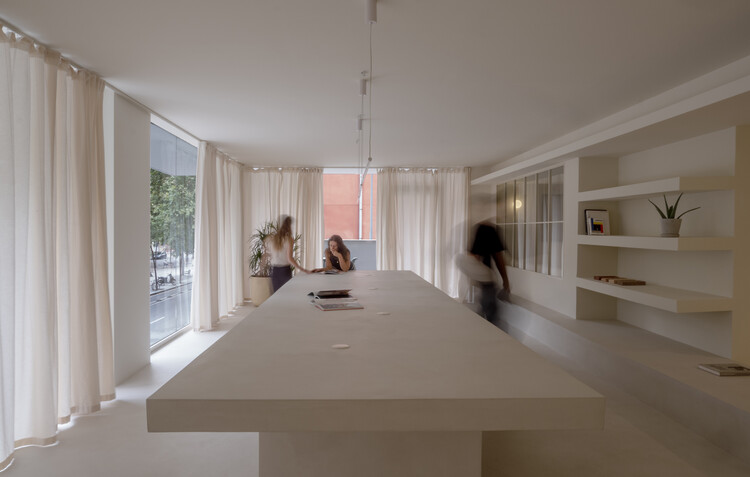
Unwhite Office / brenzo

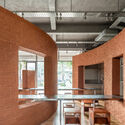
Unwhite Office / brenzo - Interior Photography, Offices Interiors, ChairUnwhite Office / brenzo - Interior Photography, Offices Interiors, Table, ChairUnwhite Office / brenzo - Offices InteriorsUnwhite Office / brenzo - Interior Photography, Offices Interiors, LightingUnwhite Office / brenzo - More Images+ 17

  • Architects: brenzo
  • Area Area of this architecture project Area:  70
  • Year Completion year of this architecture project Year:  2025
  • Manufacturers Brands with products used in this architecture project
    Manufacturers:  Ingremic

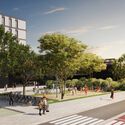
Reimagining the Complete Neighborhood through Urban Renaturing

Subscriber Access | 

The ReGreeneration project, a Horizon Europe project led by Inetum and supported by C40 Cities, ARUP, Placemaking Europe, and several others, operates as an active collaboration with local governments, private companies, academia, and civil society organizations at the intersection of urban regeneration, green public spaces, and neighborhood-scale design. Its premise addresses how European cities are built and maintained and how they experience a changing climate, arguing that cities must fundamentally change to remain livable under accelerating climate pressures.

Reimagining the Complete Neighborhood through Urban Renaturing - Image 1 of 4Reimagining the Complete Neighborhood through Urban Renaturing - Image 2 of 4Reimagining the Complete Neighborhood through Urban Renaturing - Image 3 of 4Reimagining the Complete Neighborhood through Urban Renaturing - Image 4 of 4Reimagining the Complete Neighborhood through Urban Renaturing - More Images+ 12

SANAA, David Chipperfield Architects, and Snøhetta Among Five Finalists for Barcelona’s New Waterfront Cultural Venue, Liceu Mar

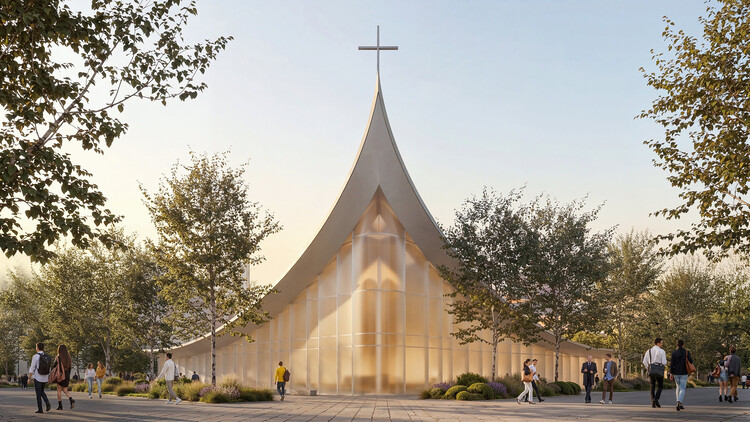
The city of Barcelona has announced the five finalist teams selected to advance in the international competition for Liceu Mar, a new cultural venue planned for the Port Vell waterfront. Promoted by the Gran Teatre del Liceu in collaboration with the Port of Barcelona, the project is conceived as a second venue for the historic institution, expanding its artistic and civic role while strengthening its international presence. Bringing together a group of internationally recognized and locally rooted practices, the shortlist underscores the project's global relevance, with the winning proposal expected to be announced in autumn 2026.

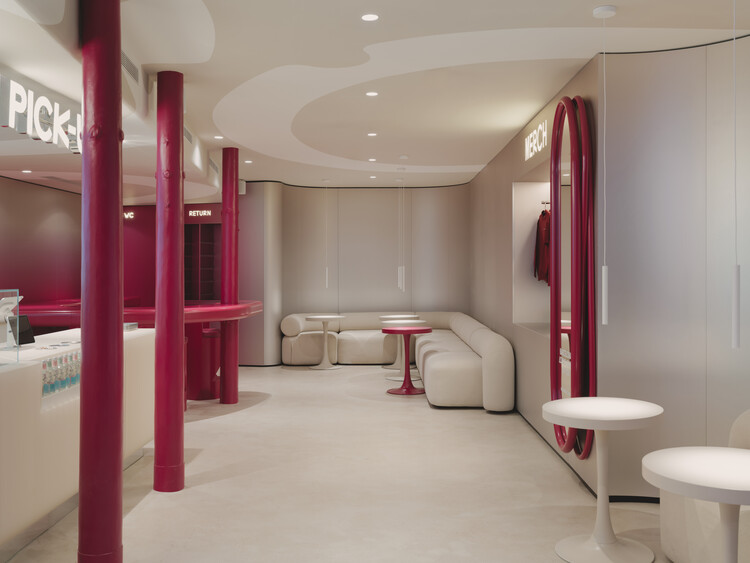
Cinnamood - Specialty Coffee / Kidz Studio

Cinnamood - Specialty Coffee / Kidz Studio - Interior Photography, Interior DesignCinnamood - Specialty Coffee / Kidz Studio - Interior Photography, Interior DesignCinnamood - Specialty Coffee / Kidz Studio - Interior DesignCinnamood - Specialty Coffee / Kidz Studio - Interior Photography, Interior Design, ChairCinnamood - Specialty Coffee / Kidz Studio - More Images+ 6

  • Architects: Kidz Studio
  • Area Area of this architecture project Area:  89
  • Year Completion year of this architecture project Year:  2026
  • Manufacturers Brands with products used in this architecture project
    Manufacturers:  Artu

El Born Loft / Roman Izquierdo Bouldstridge

El Born Loft / Roman Izquierdo Bouldstridge - Interior Photography, Apartment InteriorsEl Born Loft / Roman Izquierdo Bouldstridge - Apartment InteriorsEl Born Loft / Roman Izquierdo Bouldstridge - Interior Photography, Apartment Interiors, Kitchen, ChairEl Born Loft / Roman Izquierdo Bouldstridge - Interior Photography, Apartment Interiors, Bedroom, BedEl Born Loft / Roman Izquierdo Bouldstridge - More Images+ 16

  • Area Area of this architecture project Area:  85
  • Year Completion year of this architecture project Year:  2026
  • Manufacturers Brands with products used in this architecture project
    Manufacturers:  JUNG, Santa & Cole, Finsa, Mapei, Marset, +3

UIA 2026 Barcelona Reveals Program Structured Around Six Thematic “Becomings”

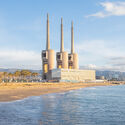
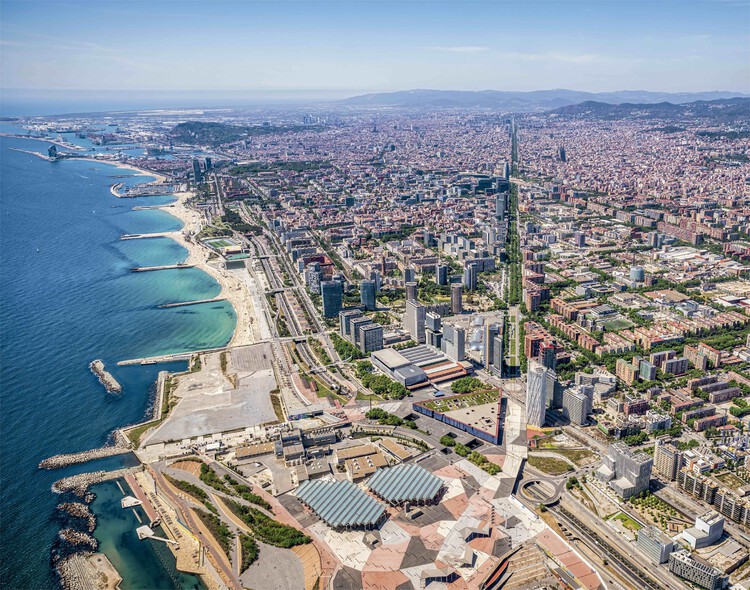
More than three decades after previously hosting the event, Barcelona is set to welcome the UIA World Congress of Architects 2026 Barcelona (UIA2026BCN), bringing the global architectural community back to the city between 28 June and 2 July 2026. Organized under the theme "Becoming. Architectures for a Planet in Transition," the Congress is expected to gather approximately 10,000 participants from over 130 countries, including practitioners, researchers, and students. Rather than being confined to a single venue, the event will unfold across multiple locations along the Mediterranean seafront, among them the Three Chimneys complex, positioning the city itself as an active platform for exchange, discussion, and public programming.

UIA 2026 Barcelona Reveals Program Structured Around Six Thematic “Becomings” - Image 1 of 4UIA 2026 Barcelona Reveals Program Structured Around Six Thematic “Becomings” - Image 2 of 4UIA 2026 Barcelona Reveals Program Structured Around Six Thematic “Becomings” - Image 3 of 4UIA 2026 Barcelona Reveals Program Structured Around Six Thematic “Becomings” - Image 4 of 4UIA 2026 Barcelona Reveals Program Structured Around Six Thematic “Becomings” - More Images+ 13

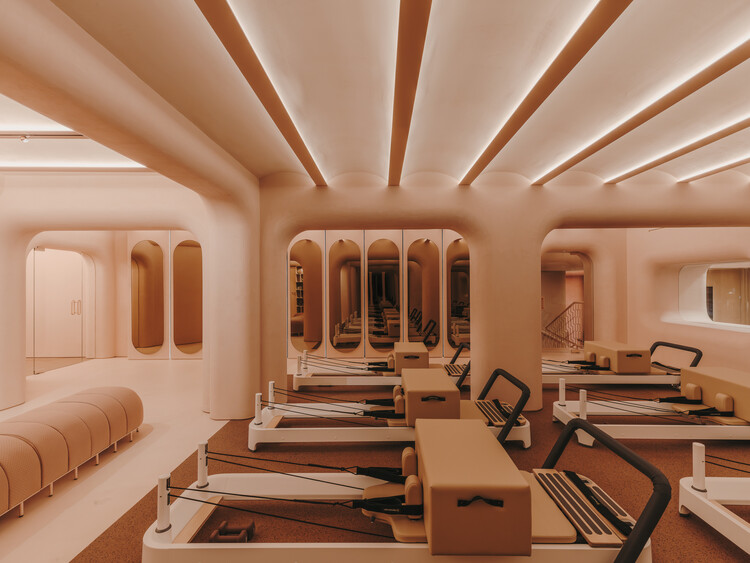
Repeat Wellness Club / MEAN* (Middle East Architecture Network)

Repeat Wellness Club / MEAN* (Middle East Architecture Network) - Wellness InteriorsRepeat Wellness Club / MEAN* (Middle East Architecture Network) - Wellness InteriorsRepeat Wellness Club / MEAN* (Middle East Architecture Network) - Wellness InteriorsRepeat Wellness Club / MEAN* (Middle East Architecture Network) - Exterior Photography, Wellness InteriorsRepeat Wellness Club / MEAN* (Middle East Architecture Network) - More Images+ 31

Mobility Justice: Urban Equity in an Era of Innovation

Subscriber Access | 

Every city contains two transportation systems. One is the visible network of roads, rail lines, sidewalks, and bus routes mapped in planning documents. The other is the invisible geography of privilege and exclusion embedded within it: the neighborhoods that received highways instead of parks, the communities whose bus routes were cut, the sidewalks that abruptly end at the edge of a district. For many years, built-environment professionals have treated infrastructure as a technical challenge. Mobility justice insists it is, fundamentally, a political one.

Mobility Justice: Urban Equity in an Era of Innovation - Image 1 of 4Mobility Justice: Urban Equity in an Era of Innovation - Image 2 of 4Mobility Justice: Urban Equity in an Era of Innovation - Image 3 of 4Mobility Justice: Urban Equity in an Era of Innovation - Image 4 of 4Mobility Justice: Urban Equity in an Era of Innovation - More Images+ 25

The Final Piece of Gaudí’s Sagrada Familia Central Tower Installed in Barcelona

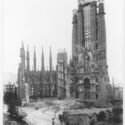
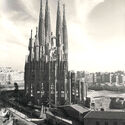
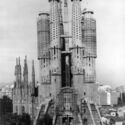
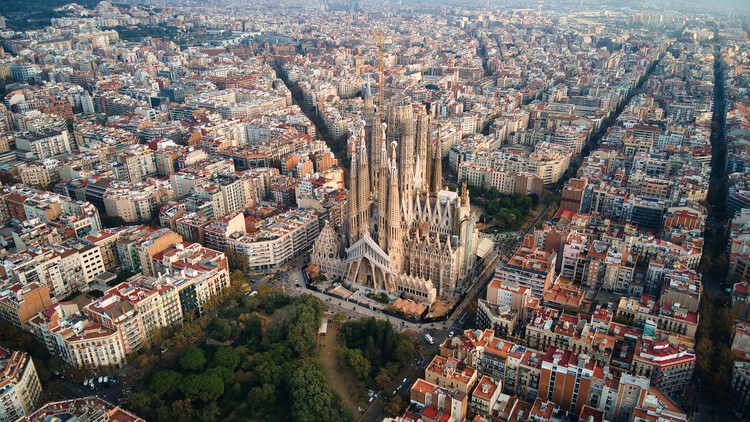
The final piece of the central tower of Barcelona's Sagrada Familia has been laid in place, bringing the church to its maximum height of 172.5 m. La Sagrada Familia, one of architectural history's most notorious unfinished buildings, became Antoni Gaudí's defining project in 1883, when he transformed a neo-Gothic design into one of the best-known structures of Catalan Modernisme. One hundred and forty-four years after construction began, the upper section of the 17-meter-high, four-sided steel and glass cross was winched into position at 11 a.m. on Friday, February 20, completing the tower dedicated to Jesus Christ. This milestone confirms the project's final stage of construction, which, back in March 2024, was announced as one of the most anticipated completions of 2026, commemorating the centenary of Antoni Gaudí's death.

The Final Piece of Gaudí’s Sagrada Familia Central Tower Installed in Barcelona - Image 2 of 4The Final Piece of Gaudí’s Sagrada Familia Central Tower Installed in Barcelona - Image 3 of 4The Final Piece of Gaudí’s Sagrada Familia Central Tower Installed in Barcelona - Image 4 of 4The Final Piece of Gaudí’s Sagrada Familia Central Tower Installed in Barcelona - Image 5 of 4The Final Piece of Gaudí’s Sagrada Familia Central Tower Installed in Barcelona - More Images+ 7

SNOB Architects Designs Contemporary Office Building in Barcelona’s El Raval District

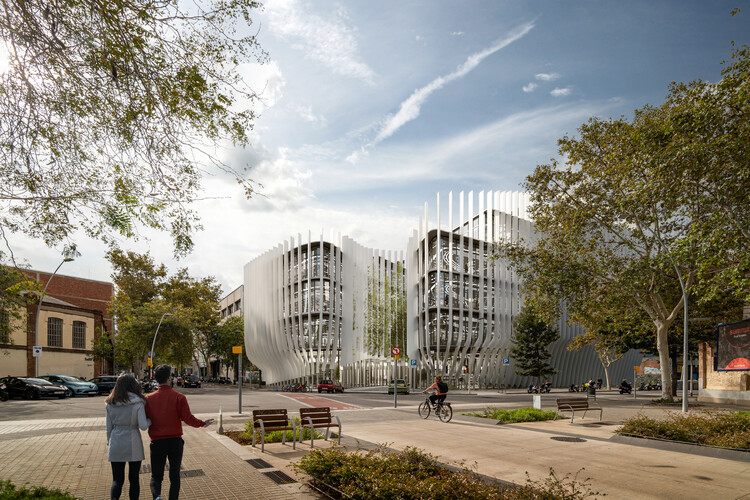
Located in Barcelona's El Raval district, the Futuristic Office Building by SNOB Architects introduces a contemporary office program within a consolidated and historically layered urban environment. Designed by the Lisbon-based practice and scheduled for completion around 2026, the project comprises approximately 12,000 square meters of gross built area. The building's height, massing, and proportions are calibrated in response to the surrounding fabric, reflecting the scale of adjacent structures while establishing a contemporary architectural language. Rather than presenting itself as an isolated object, the project is conceived as part of the existing city, contributing to the gradual transformation of El Raval through a controlled and context-aware architectural approach.

SNOB Architects Designs Contemporary Office Building in Barcelona’s El Raval District - Image 1 of 4SNOB Architects Designs Contemporary Office Building in Barcelona’s El Raval District - Image 2 of 4SNOB Architects Designs Contemporary Office Building in Barcelona’s El Raval District - Image 3 of 4SNOB Architects Designs Contemporary Office Building in Barcelona’s El Raval District - Image 4 of 4SNOB Architects Designs Contemporary Office Building in Barcelona’s El Raval District - More Images

Historic Materials in the Digital Age: How Digitally Assisted Stone Carving Adds a New Dimension to Heritage Restoration

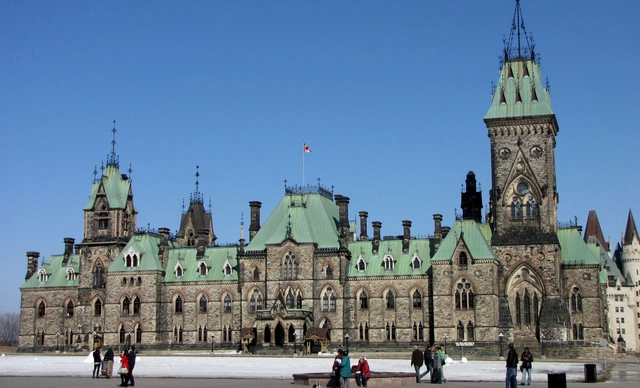
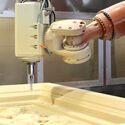
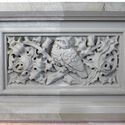
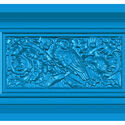
Heritage restoration has always been an intricate process that requires delicate balancing between preserving the integrity of historic materials while integrating contemporary techniques that can enhance accuracy, efficiency, and resilience. With the restoration process of Parliament Hill in Ottawa, Canada's capital city, this intersection of tradition and technology is now on full display. The East Block, built in 1865, offers a compelling example of how digital tools can support the efforts of heritage restoration and contribute to a centuries-old craft such as stone carving.


Historic Materials in the Digital Age: How Digitally Assisted Stone Carving Adds a New Dimension to Heritage Restoration  - Image 4 of 4Historic Materials in the Digital Age: How Digitally Assisted Stone Carving Adds a New Dimension to Heritage Restoration  - Image 6 of 4Historic Materials in the Digital Age: How Digitally Assisted Stone Carving Adds a New Dimension to Heritage Restoration  - Image 5 of 4Historic Materials in the Digital Age: How Digitally Assisted Stone Carving Adds a New Dimension to Heritage Restoration  - Image 2 of 4Historic Materials in the Digital Age: How Digitally Assisted Stone Carving Adds a New Dimension to Heritage Restoration  - More Images+ 8