1. ArchDaily
  2. Bauhaus

Bauhaus: The Latest Architecture and News

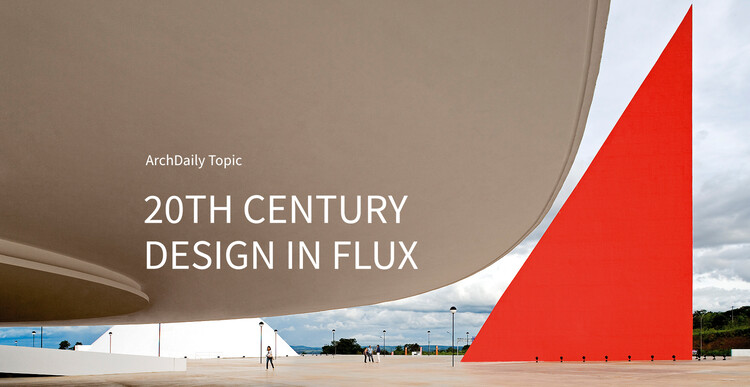
20th Century Design in Flux: ArchDaily’s May Editorial Focus

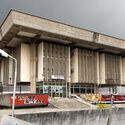
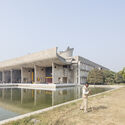
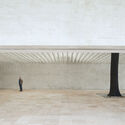
"The story of architecture is not wrong," argued Lesley Lokko in her introduction to the Venice Architecture Biennale 2023, "but it is incomplete." For most of the 20th century, architectural history spoke in one tongue: a singular, dominant narrative centered on a handful of movements, names, and cities, whose reach and influence appeared universal precisely because alternative voices were rendered inaudible. Design movements, however, rarely traveled intact across borders. They were frequently absorbed, resisted, reinterpreted, and transformed depending on geography, politics, economy, climate, and available materials. What arrived in one place as doctrine became, somewhere else, something entirely different.

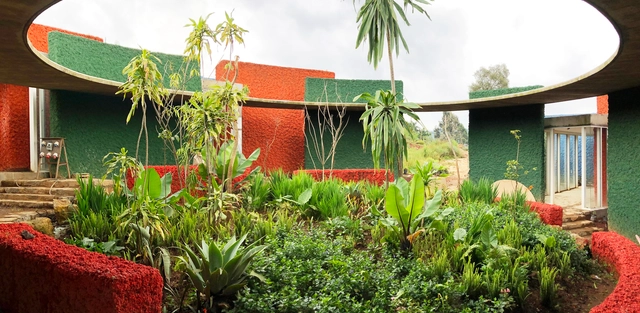
This month, ArchDaily explores 20th Century Design in Flux: A Global Reinterpretation of Architectural History, a topic that traces the century's design languages not as a single canon but as a constellation of evolving, intersecting, and continually reinvented trajectories. The theme challenges the assumption that regional and non-Western architectures were merely derivative — positioning them instead as sites of active reinterpretation, where global ideas were filtered through local materials, climates, labor, and cultural practices to produce something entirely distinct.
20th Century Design in Flux: ArchDaily’s May Editorial Focus - Image 1 of 420th Century Design in Flux: ArchDaily’s May Editorial Focus - Image 2 of 420th Century Design in Flux: ArchDaily’s May Editorial Focus - Image 3 of 420th Century Design in Flux: ArchDaily’s May Editorial Focus - Image 4 of 420th Century Design in Flux: ArchDaily’s May Editorial Focus - More Images+ 5

A Bauhaus Bathroom: Design Competition For a Public Restroom at Gropius House

Utilitarian and mass-produced, the portable toilet at the Gropius House unexpectedly echoes Bauhaus values. But it was always meant to be a stop-gap solution that is clearly inelegant and does not meet contemporary accessibility standards. It fails to adequately welcome visitors to this iconic property.

From Design Fiction to Design Futures: The Changing Role of Architecture in Cultural Production

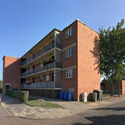
When Archigram published their fanatical vision for pneumatic cities and walking megastructures in the 1960s, they seemed to be designing buildings. Beneath the surface, the avant-gardeists were pushing culture through radical alternatives to lifestyles and forms of organizing in the city. Laboratories found themselves between the lines of copy on Domus or Casabella magazines, propositions doubling as blueprints for the civilizations to come. From Gropius's Bauhaus in 1919 to Arcosanti's desert experiments in the 1970s, architecture operated as a form of cultural prophecy. Built form was the argument. The drawing was the vision. Today, we live in a world that remarkably resembles what the starchitects of the 1900s imagined - modular construction, interconnected digital cities, and automated systems. Yet contemporary architecture rarely proposes culture with the same totalizing confidence.

From Design Fiction to Design Futures: The Changing Role of Architecture in Cultural Production - Image 1 of 4From Design Fiction to Design Futures: The Changing Role of Architecture in Cultural Production - Image 2 of 4From Design Fiction to Design Futures: The Changing Role of Architecture in Cultural Production - Image 3 of 4From Design Fiction to Design Futures: The Changing Role of Architecture in Cultural Production - Image 4 of 4From Design Fiction to Design Futures: The Changing Role of Architecture in Cultural Production - More Images+ 1

Choreographing Space: Architecture and Dance as Interdisciplinary Practices

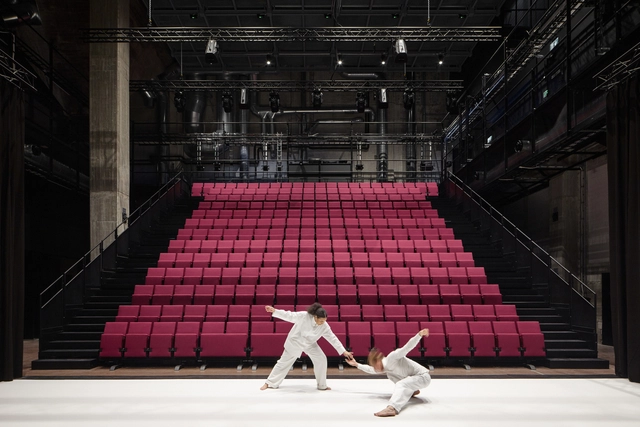
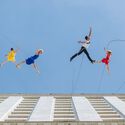
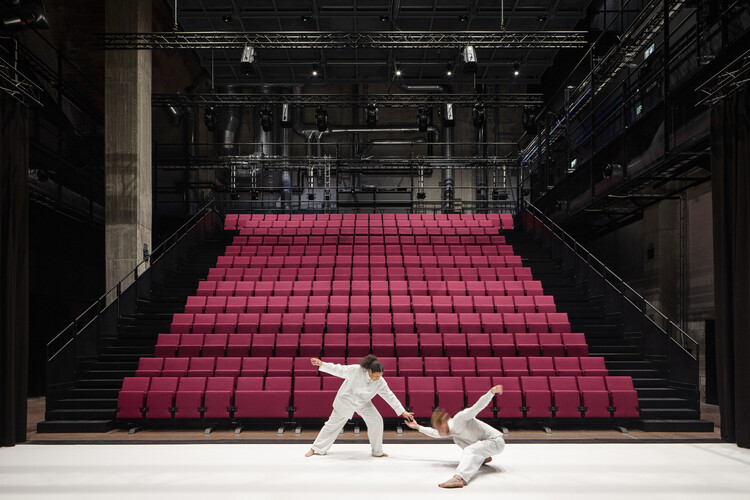
"Dance, dance… otherwise we are lost." This oft-cited phrase by Pina Bausch encapsulates not only the urgency of movement, but its capacity to reveal space itself. In her choreographies, space is never a neutral backdrop, it becomes a partner, an obstacle, a memory. Floors tilt, chairs accumulate, walls oppress or liberate. These are architectural conditions, staged and contested through the body. What Bausch exposes — and what architecture often forgets — is that space is not simply built, it is performed. Her work invites architects to think not only in terms of materials and forms, but of gestures, relations, and rhythms. It suggests that architecture, like dance, is ultimately about how we inhabit, structure, and emotionally charge the spaces we move through.

Historically, architecture and dance have operated in parallel, shaping human experience through the body's orientation in space and time. From the choreographed rituals of classical temples to the axial logics of Baroque palaces, built space has always implied movement. The Bauhaus took this further, as Oskar Schlemmer's Triadic Ballet visualized space as a geometric extension of the body. This was not scenery, but spatial thinking made kinetic. In the 20th century, choreographers like William Forsythe and Anne Teresa De Keersmaeker integrated architectural constraints into their scores, while architects such as Steven Holl, Diller Scofidio + Renfro, and Toyo Ito designed buildings that unfold as spatial sequences, inviting movement, drift, and delay.

Choreographing Space: Architecture and Dance as Interdisciplinary Practices - Image 1 of 4Choreographing Space: Architecture and Dance as Interdisciplinary Practices - Image 2 of 4Choreographing Space: Architecture and Dance as Interdisciplinary Practices - Image 3 of 4Choreographing Space: Architecture and Dance as Interdisciplinary Practices - Image 4 of 4Choreographing Space: Architecture and Dance as Interdisciplinary Practices - More Images+ 35

From Salt Factory to Art Museum: The Story Behind the Schaudepot in Essen, Germany

Subscriber Access | 

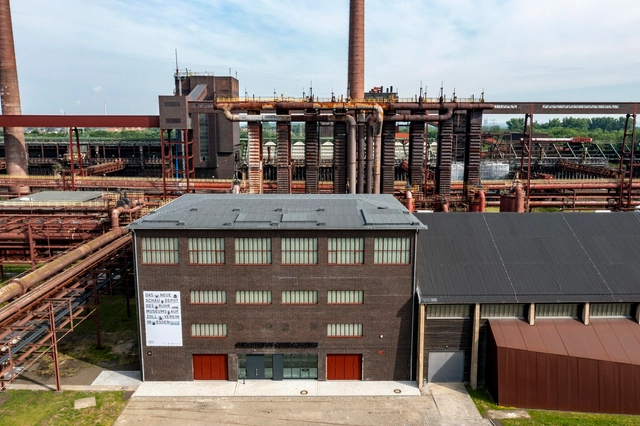
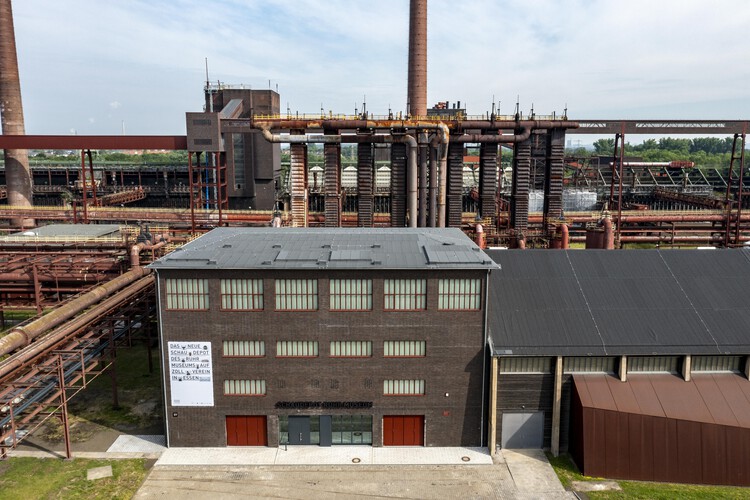
Once the largest coal mine in Europe, the Zollverein complex in Essen, Germany, has undergone a remarkable transformation over the past twenty-five years. What was once a landscape of abandoned industrial facilities is now a laboratory of contemporary architecture, featuring works by Rem Koolhaas, Norman Foster, and SANAA. Their interventions bridge the site’s industrial past with its imagined future. Spanning 100 hectares, the UNESCO World Heritage site has become a global model of adaptive reuse, redefining what it means to preserve industrial heritage. Within this context stands the Ruhr Museum and its enigmatic art repository, the Schaudepot. Located in the complex’s former salt factory, the museum impresses not only with its collection but also with its architecture, which transforms a 1960s industrial building into a vibrant cultural venue.

Because of its historical and architectural relevance, the project is featured in the 2025 edition of Open House Essen, under the theme “Future Heritage.” The initiative explores which spaces might shape our future architectural legacy and asks pressing questions: What should we preserve? What should we adapt? And how can we design a future that is both livable and fair?

From Salt Factory to Art Museum: The Story Behind the Schaudepot in Essen, Germany - Image 1 of 4From Salt Factory to Art Museum: The Story Behind the Schaudepot in Essen, Germany - Image 2 of 4From Salt Factory to Art Museum: The Story Behind the Schaudepot in Essen, Germany - Image 3 of 4From Salt Factory to Art Museum: The Story Behind the Schaudepot in Essen, Germany - Image 4 of 4From Salt Factory to Art Museum: The Story Behind the Schaudepot in Essen, Germany - More Images+ 14

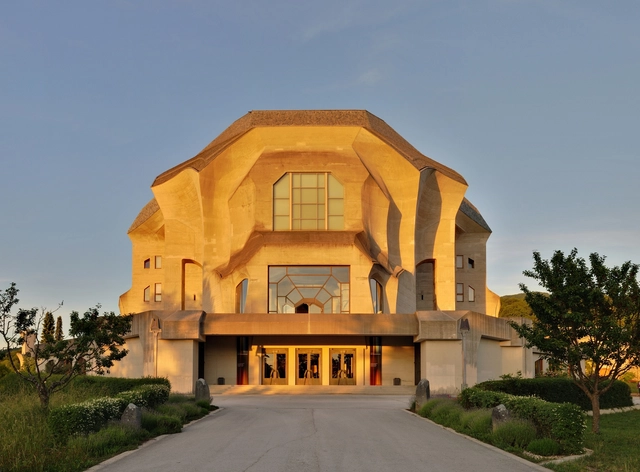
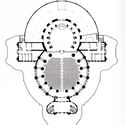
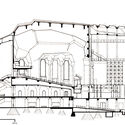
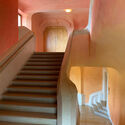
Living Cycles in Regenerative Architecture: Lessons from the Goetheanum

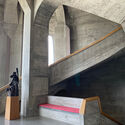
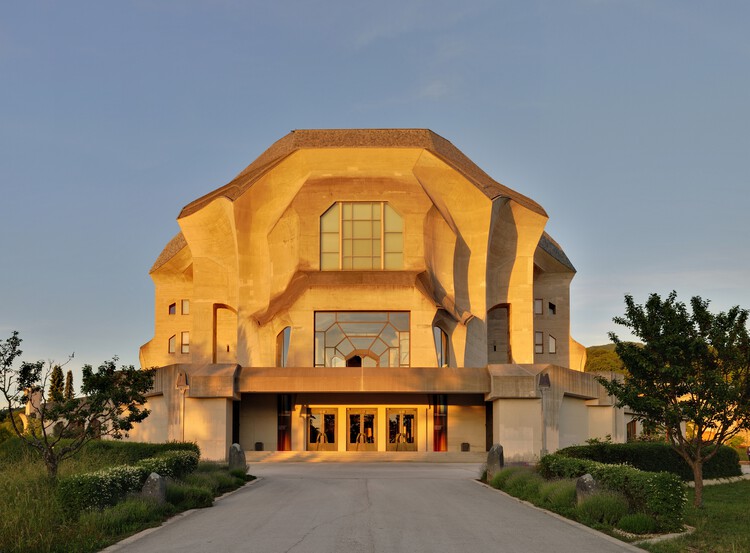
As climate uncertainty and ecosystem changes reshape design priorities, architecture plays an increasingly active role in these discussions, rather than merely observing. Within this perspective, the idea of making a "re" encourages a conscious step back to rethink, reconnect, and realign the relationship between buildings and their environments. This approach, central to regenerative architecture, extends beyond specific technologies or scales, encompassing everything from master plans that aim to re-naturalize cities to national pavilions that combine art and science.

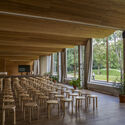
What is the way forward? On the one hand, many current discussions emphasize technology; on the other, there are approaches that, rather than being in opposition, complement one another and broaden the range of possibilities, drawing on tradition, ancestral knowledge, and a profound understanding of the environment. Among these perspectives, the work of Rudolf Steiner and the anthroposophical movement, developed in the early 20th century, offers a vision and insights that connect architecture with ecological rhythms, materials, and community life.

Living Cycles in Regenerative Architecture: Lessons from the Goetheanum - Image 1 of 4Living Cycles in Regenerative Architecture: Lessons from the Goetheanum - Image 2 of 4Living Cycles in Regenerative Architecture: Lessons from the Goetheanum - Image 3 of 4Living Cycles in Regenerative Architecture: Lessons from the Goetheanum - Image 4 of 4Living Cycles in Regenerative Architecture: Lessons from the Goetheanum - More Images+ 9

Towards an Architecture of Many Intelligences: How Collective Knowledge Shapes the Built Environment

As architecture navigates a rapidly changing world shaped by ecological urgency, social transformation, and technological acceleration, the notion of intelligence is shifting. No longer confined to individual cognition or artificial computation, intelligence can emerge from cultural memory, collective practices, and adaptive systems. In this broader sense, architecture becomes a field of convergence, where natural, artificial, and social intelligences intersect to offer new ways of designing and building.

Vernacular traditions embed generations of environmental knowledge, often transmitted through materials, construction techniques, and spatial logics finely tuned to local conditions; participatory platforms expand decision-making to wider communities to take part in shaping their environments, redistributing agency in the design process; and computational processes simulate and respond to complex data in real time bringing the capacity to analyse, simulate, and respond to complex variables — whether environmental, social, or behavioural — offering new forms of adaptability.

Towards an Architecture of Many Intelligences: How Collective Knowledge Shapes the Built Environment - Image 1 of 4Towards an Architecture of Many Intelligences: How Collective Knowledge Shapes the Built Environment - Image 2 of 4Towards an Architecture of Many Intelligences: How Collective Knowledge Shapes the Built Environment - Image 3 of 4Towards an Architecture of Many Intelligences: How Collective Knowledge Shapes the Built Environment - Image 4 of 4Towards an Architecture of Many Intelligences: How Collective Knowledge Shapes the Built Environment - More Images+ 25

Hannes Meyer: Exploring the Legacy of a Former Bauhaus Director

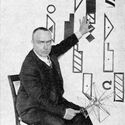
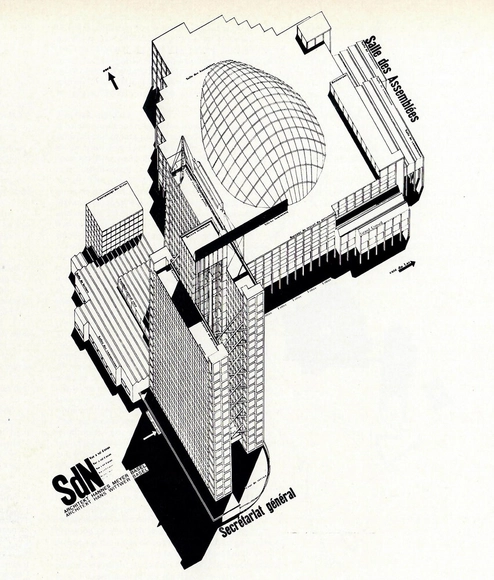
In March 2025, the actor Adrian Brody rose to the stage to collect his Academy Award for playing the role of László Toth in the acclaimed film, The Brutalist. The film is about a Bauhaus-educated architect who escaped Nazi Germany in the 1930s for the United States. Whilst the story is fictional, it reflects the lives of several émigré architects who left Central Europe in search of better working and intellectual conditions. These included the first three directors of Bauhaus, the renowned German school of design established in 1919. The first and third directors of the school, Walter Gropius and Mies van der Rohe respectively, ended up in the US where their careers in teaching and building both flourished. Lesser known is the second director, Hannes Meyer, who took a different path from his colleagues.

Hannes Meyer: Exploring the Legacy of a Former Bauhaus Director - Image 1 of 4Hannes Meyer: Exploring the Legacy of a Former Bauhaus Director - Image 2 of 4Hannes Meyer: Exploring the Legacy of a Former Bauhaus Director - Featured ImageHannes Meyer: Exploring the Legacy of a Former Bauhaus Director - Image 4 of 4Hannes Meyer: Exploring the Legacy of a Former Bauhaus Director - More Images+ 6

Modernism in Africa: Shedding Light on Nigeria’s Rich Heritage of Education Buildings

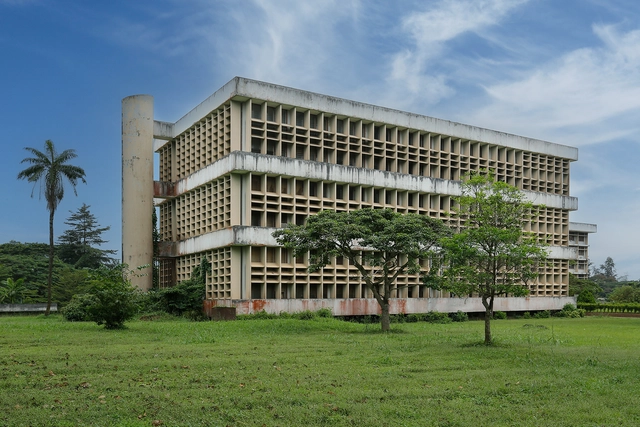
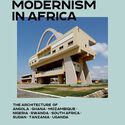
In late 2024, an important addition was made to the growing literature on Modern architecture in Africa. "Modernism in Africa: The Architecture of Angola, Ghana, Mozambique, Nigeria, Rwanda, South Africa, Sudan, Tanzania, Uganda" was published by Docomomo International and Birkhäuser, shedding light on multiple previously unpublished buildings. The book has a focus on education, although other building types are included. Amongst these are several university buildings in Nigeria which are explored here. Like other Modern buildings on the continent, they illustrate historical narratives of independence, decoloniality, international relations, and architectural education.

Modernism in Africa: Shedding Light on Nigeria’s Rich Heritage of Education Buildings - Image 1 of 4Modernism in Africa: Shedding Light on Nigeria’s Rich Heritage of Education Buildings - Featured ImageModernism in Africa: Shedding Light on Nigeria’s Rich Heritage of Education Buildings - Image 2 of 4Modernism in Africa: Shedding Light on Nigeria’s Rich Heritage of Education Buildings - Image 3 of 4Modernism in Africa: Shedding Light on Nigeria’s Rich Heritage of Education Buildings - More Images+ 10