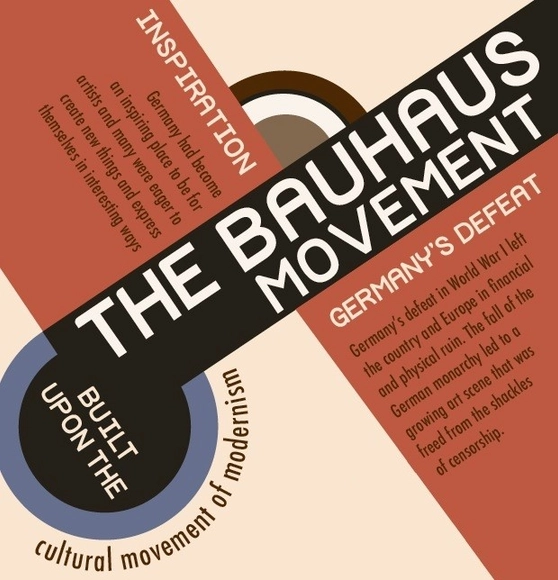
Bauhaus, the school of design established by Walter Gropius in Weimar in 1919, has arguably been the most influential of any institution in shaping the trajectory of modern architecture. Out of this single school came an entire movement that would have lasting effects on architectural pedagogy and the design of everything from buildings to road signs. Born out of a larger cultural movement following Germany’s defeat in World War I which left the country ripe for regrowth without the previous constraints imposed by censorship, the core of Bauhaus philosophy were the principles of craftsmanship and mass production, which allowed for the movement’s rapid proliferation and a production model that would later inform contemporary design companies such as Ikea. Check out the infographic from Aram below to learn more about the movement, tracking the school from its origins in Weimar, via its canonical Gropius-designed home in Dessau, to its continuing legacy today.
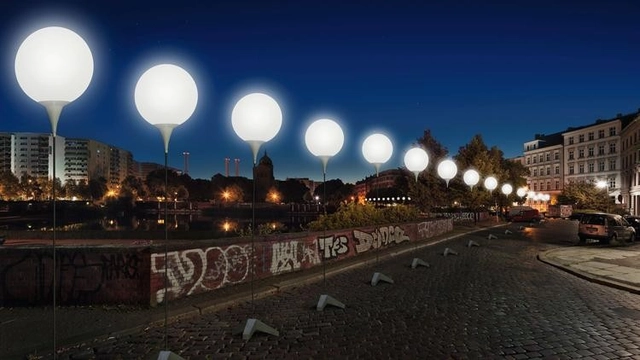
25 years ago on November 9, East German protesters torn down the Berlin Wall. To commemorate this moment, the German capital plans to line the wall’s original 9-mile stretch with 8,000 illuminated, white balloons. The installation, named lichtgrenze or “light frontier,” will be open November 7. On the 9th, the balloons will be simultaneously released into the air to music provided by the Staatskapelle Berlin orchestra.
In an interview with Shaunacy Ferro for FastCo Design, Daniel Libeskind looks back over his built works and discusses the significant 'emotional weight' imbued in many of his projects, from the Jewish Museum in Berlin to his masterplan for Ground Zero in New York City. When asked why he continually returns to projects such as Holocaust memorials - with the Canadian National Holocaust Memorial currently underway in Ottawa - Libeskind stated: "It’s not something that I choose very lightly, because it’s very difficult, but I believe that it’s very important." For him, creating these monuments is part of the act of doing "something that moves us beyond just the darkness and gives us something positive. [...] Even when it comes to the memory, you can’t just dwell on the irreversibility of the tragedy. You have to have something hopeful."
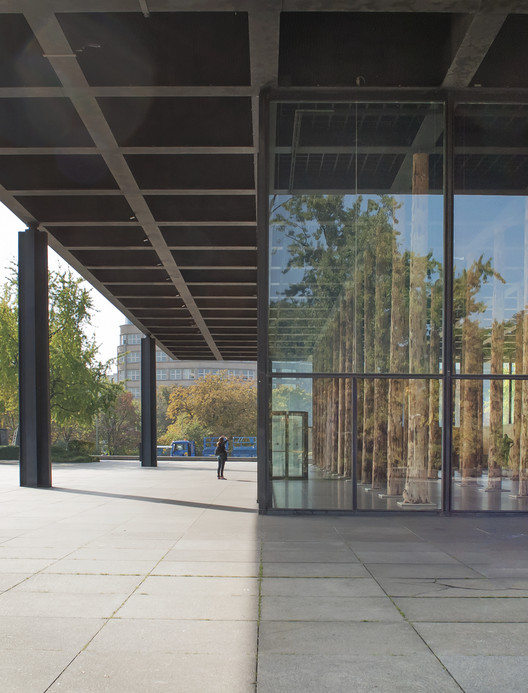
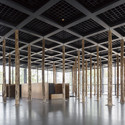
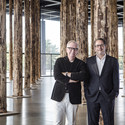
In Berlin, Mies van der Rohe’s Neue Nationalgalerie has begun a new phase today with the opening of David Chipperfield’s intervention, a prologue to the imminent restoration which the famed British architect is about to undertake. Completed in 1968, the gallery was Mies’ last project and his final masterpiece; for nearly fifty years, nobody dared to touch it - until now. Marking this event is a large, site-specific installation, created by Chipperfield as an attempt to engage Mies in a spatial experiment (or perhaps a last, apologetic tribute to the 20th-century master) moments before he is about to embark on a mission which will, inevitably, transform Mies’ ultimate legacy.
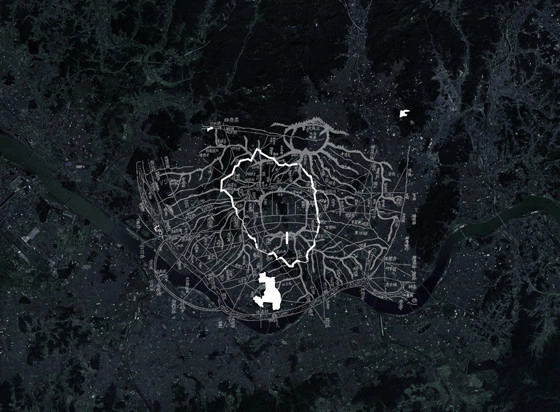
On Thursday, the Aedes Network Campus Berlin (ANCB) Metropolitan Laboratory hosted a symposium to mark the opening of the exhibition "Seoul: Towards a New City," in collaboration with the City of Seoul. The city has identified three key objectives to help them strike a balance between restoration and change when moving forward with future development: revival of history, restoration of nature, and renewal of people's lives. Seven projects that reflect these goals are on display at the exhibition. For more details, continue reading after the break.
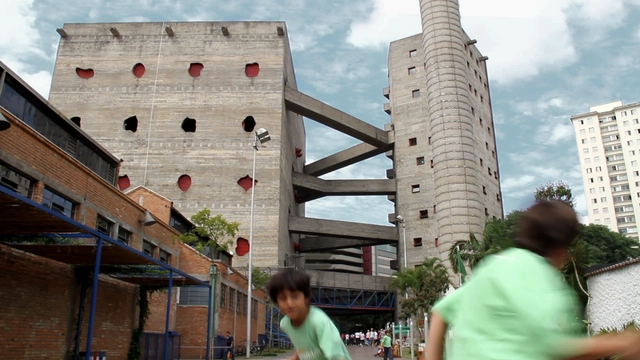
If you are in Berlin in August, make sure to check out the exhibition “Lina Bo Bardi: Together” at The Deutsche Architecture Zentrum, dedicated to the legacy of the famed Italian-born Brazilian architect, and focusing on her “capacity to engage with every facet of culture and to see the potential in all manner of people.” More on the exhibition after the break.
In a cultural capital like Berlin, where ‘pop-up’ stores appear in abandoned warehouses, local brands emerge from stores over-run with squatters, and nightclubs rave in power plants, it is only appropriate that an art gallery would find its home in a nearly indestructible concrete vessel. Such is the case with the “Berlin Bunker” in the heart of the fashionable “Mitte” district.
Monolithic and symmetrical, decorated only by thin strips of vertical windows on its four identical facades, this former Nazi air-raid shelter stands as a relic of Germany’s past. Yet a closer look beyond its sharp-edged cornice reveals something unexpected: luscious green gardens and a luxurious penthouse, completed in 2007. This is the home of Christian Boros, the art collector whose private collection is stored and exhibited in the depths of the fortified bunker below.
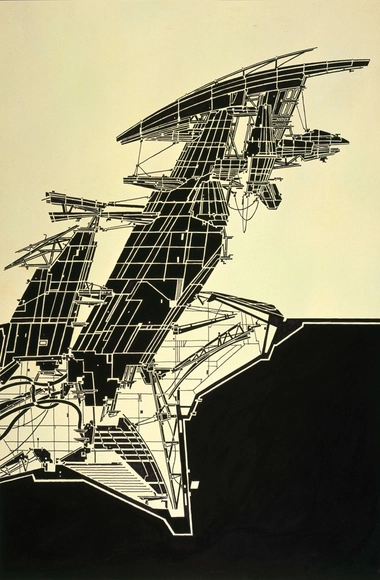
The Museum for Architectural Drawing presents Lebbeus Woods, ON-line, an exhibition of the finest works of architectural theorist, draftsman, educator and architect, Lebbeus Woods (1940–2012). Curated by his longtime friend and partner Christoph a. Kumpusch, the exhibition brings together a collection of Woods’ visionary works that have never been exhibited before. The intensely rendered architectural and urban environments produced early on in Woods’ career are exhibited together for the first time. These ink and pencil drawings cover a wide range of Woods’ research and re-imagination of cities both real and fictive and support Woods’ longstanding desire to show the capacity of architecture as a transformative and eloquent force.
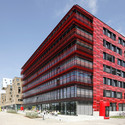
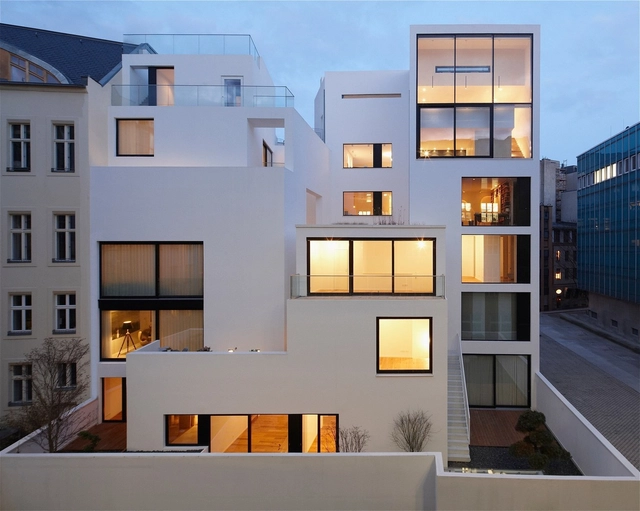
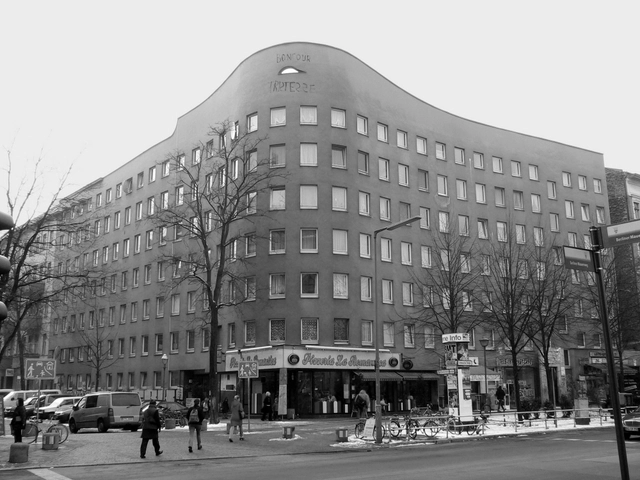
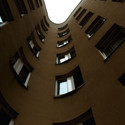
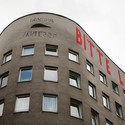
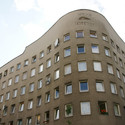
Bonjour Tristesse is a social housing project designed by Portuguese Architect Álvaro Siza Vieira. Located in Berlin, the project was Siza’s first built work outside of his native country. Siza’s design offers a meaningful precedent in urban densification, demonstrating a delicate balance between contextual awareness, creative freedom, and progressive vision.
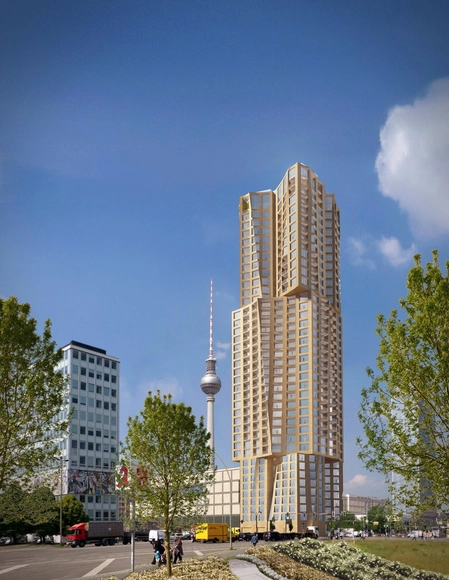
After winning the design competition for Germany's tallest apartment tower in January, Frank Gehry's project for the building on Alexanderplatz has already run into problems over fears that the 150-metre building could be too heavy for its site. The German edition of the Local is reporting that Berlin's Senate has placed the plans on hold because of the building's proximity to the U5 branch of the U-Bahn tunnel, which it fears could be crushed under the weight.
With no casualties, last week's fire at the Glasgow School of Art, which caused significant damage to parts of the building and gutted Charles Rennie Mackintosh's canonical library room, will be remembered as a tragic event that robbed us of one of the best examples of Art Nouveau of its time. The intention of the Glasgow School of Art is to restore the building in the hope that in generations to come, the fire will be all but forgotten, a strategy which has been largely well received by the profession.
However, in the case of other fires things have not gone so smoothly: for millennia, fire has played a big role in determining the course of architectural history - by destroying precious artifacts, but often also by allowing something new to rise from the ashes. Read on after the break as we count down the top 10 fires that changed the course of architectural history.