1. ArchDaily
  2. Containers

Containers: The Latest Architecture and News

MVRDV Transforms Shipping Containers into Sports and Community Hubs for Refugees

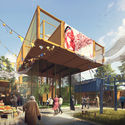
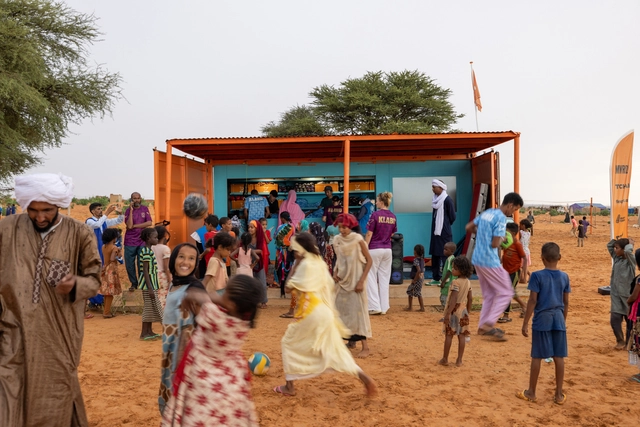
MVRDV has partnered with KLABU, a social enterprise based in Amsterdam, to design a modular, multi-functional clubhouse aimed at supporting refugees. This collaboration, which began in 2022, is founded on the belief that sports can play a pivotal role in helping individuals rebuild their lives, fostering joy, pride, and hope. KLABU's initiative involves constructing clubhouses within refugee camps, settlements, and urban areas, where they serve as community hubs offering access to sports equipment, activities, and connectivity through Wi-Fi and TV broadcasts.


MVRDV Transforms Shipping Containers into Sports and Community Hubs for Refugees - Image 1 of 4MVRDV Transforms Shipping Containers into Sports and Community Hubs for Refugees - Image 2 of 4MVRDV Transforms Shipping Containers into Sports and Community Hubs for Refugees - Image 3 of 4MVRDV Transforms Shipping Containers into Sports and Community Hubs for Refugees - Image 4 of 4MVRDV Transforms Shipping Containers into Sports and Community Hubs for Refugees - More Images+ 15

Shipping Container Architecture: Debunking the Design Trend of the Decade

Subscriber Access | 

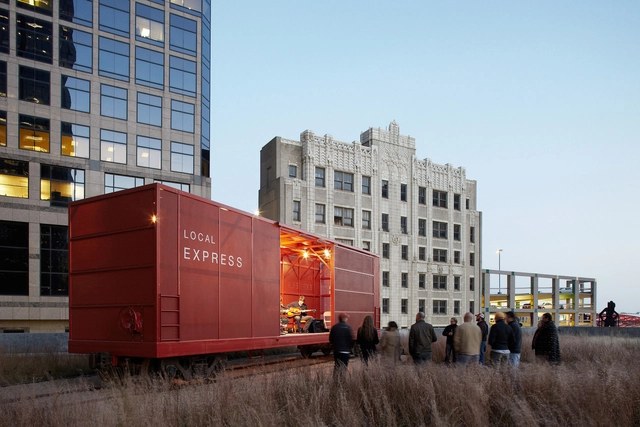
Almost 500,000 buildings have arrived at the Port of Los Angeles in 2021. Well- not exactly. Over 490,000 shipping containers have arrived, though. If there’s a design trend that has caught the world by storm over the past decade, it’s been the rise in transforming shipping containers into buildings as a form of architecture. But are shipping container buildings just a fad that was used to propel ideas about taking every day or is there more substance to creating giant Jenga-inspired structures?

Shipping Container Architecture: Debunking the Design Trend of the Decade - Image 1 of 4Shipping Container Architecture: Debunking the Design Trend of the Decade - Image 2 of 4Shipping Container Architecture: Debunking the Design Trend of the Decade - Image 3 of 4Shipping Container Architecture: Debunking the Design Trend of the Decade - Image 4 of 4Shipping Container Architecture: Debunking the Design Trend of the Decade - More Images+ 4

Workers Begin Dismantling Qatar’s Stadium 974, the First Temporary World Cup Stadium

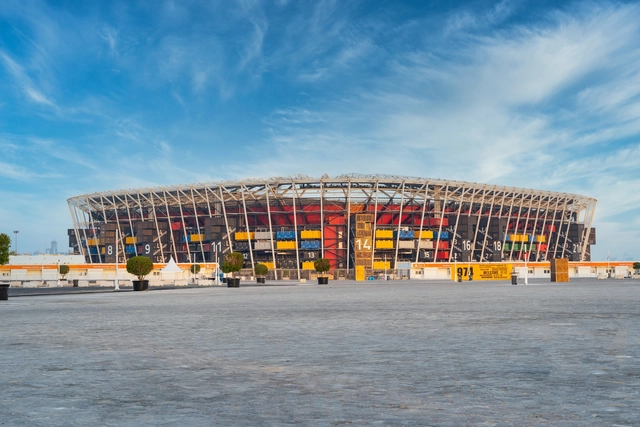
Reports show that authorities have begun dismantling Stadium 974 after it hosted seven matches during FIFA World Cup, with six group games and one Round of 16 knockout matches. It was also the only stadium built for the World Cup without air conditioning, so it only hosted evening matches. According to the BBC, construction workers moved on the site on 9 December to “take the stadium out of tournament mode.” The structure was designed to be the first FIFA-compliant stadium that can be fully dismantled and re-purposed after the tournament ends. While Qatar called this a “beacon of sustainability,” experts warn that the real sustainability of the scheme depends on several factors, including when and where the stadium will be reused.
Workers Begin Dismantling Qatar’s Stadium 974, the First Temporary World Cup Stadium - Image 1 of 4Workers Begin Dismantling Qatar’s Stadium 974, the First Temporary World Cup Stadium - Image 2 of 4Workers Begin Dismantling Qatar’s Stadium 974, the First Temporary World Cup Stadium - Image 3 of 4Workers Begin Dismantling Qatar’s Stadium 974, the First Temporary World Cup Stadium - Image 4 of 4Workers Begin Dismantling Qatar’s Stadium 974, the First Temporary World Cup Stadium - More Images+ 1

Steven Holl’s Architectural Archive Preserves His Firm’s Designs and the Landscape

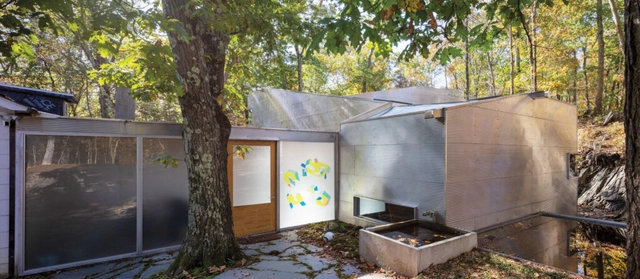
Steven Holl can often be found reading poetry and painting watercolors in a tiny cabin overlooking lotus flowers on the edge of a lake in Rhinebeck, New York. The cabin sits on a 28-acre reserve that Holl purchased in 2014 that now hosts Holl’s full-time office, and ‘T’ Space, a nonprofit arts organization offering creative exhibitions, environmental installations, and architectural residencies. Wrapping around several large trees and linking through a passageway to another existing 1959 cabin, the Steven Myron Holl Foundation’s Architectural Archive and Research Library, built in 2019, is the latest building to be carefully situated in the lush landscape.

Steven Holl’s Architectural Archive Preserves His Firm’s Designs and the Landscape - Image 1 of 4Steven Holl’s Architectural Archive Preserves His Firm’s Designs and the Landscape - Image 2 of 4Steven Holl’s Architectural Archive Preserves His Firm’s Designs and the Landscape - Image 3 of 4Steven Holl’s Architectural Archive Preserves His Firm’s Designs and the Landscape - Image 4 of 4Steven Holl’s Architectural Archive Preserves His Firm’s Designs and the Landscape - More Images+ 6

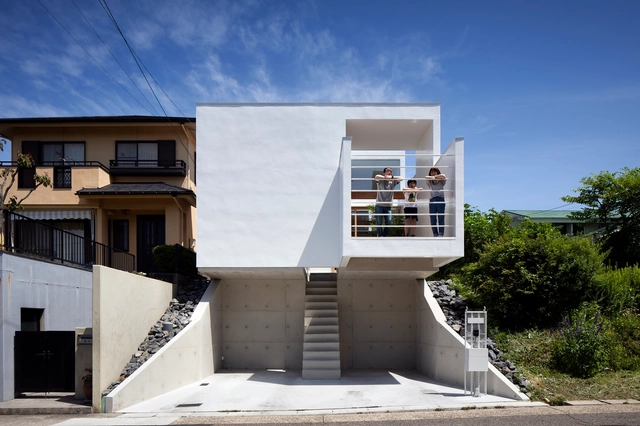
House in Umegaoka / Container Design

House in Umegaoka / Container Design - Interior Photography, Houses, Facade, DoorHouse in Umegaoka / Container Design - Interior Photography, HousesHouse in Umegaoka / Container Design - Interior Photography, HousesHouse in Umegaoka / Container Design - Exterior Photography, Houses, FacadeHouse in Umegaoka / Container Design - More Images+ 10

Setagaya City, Japan

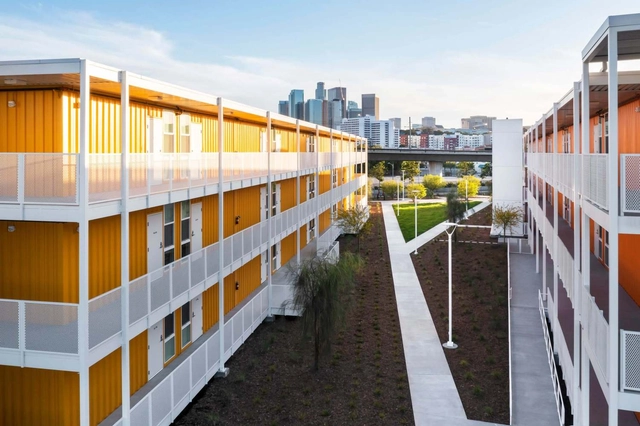
A Supportive Housing Complex in Downtown Los Angeles Rises in Repurposed Shipping Containers

The Hilda L. Solis Care First Village (HSCFV), a large-scale interim housing project providing a wide range of amenities for both the unhoused and those in transition, recently opened in Downtown Los Angeles.

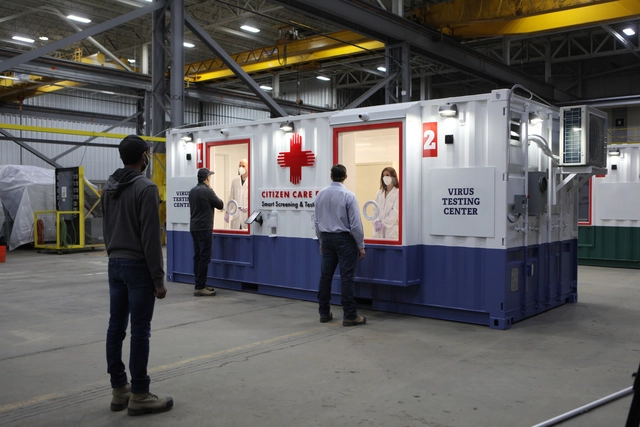
WZMH Architects Designs Smart Screening and Testing Pod for COVID-19

The Citizen Care Pod is a new initiative for COVID-19 smart screening and testing, combining intelligent technology with a modular design. Led by the Citizen Care Pods Corporation, the multi-disciplinary team, consisting of Toronto based WZMH Architects, PCL Construction, Insight Enterprises, and Microsoft, collaborated to bring the project from concept to reality in less than a month.

WZMH Architects Designs Smart Screening and Testing Pod for COVID-19 - Image 1 of 4WZMH Architects Designs Smart Screening and Testing Pod for COVID-19 - Image 2 of 4WZMH Architects Designs Smart Screening and Testing Pod for COVID-19 - Image 3 of 4WZMH Architects Designs Smart Screening and Testing Pod for COVID-19 - Image 4 of 4WZMH Architects Designs Smart Screening and Testing Pod for COVID-19 - More Images+ 2

Egyptian Architects Design Shipping Container Housing for Cairo

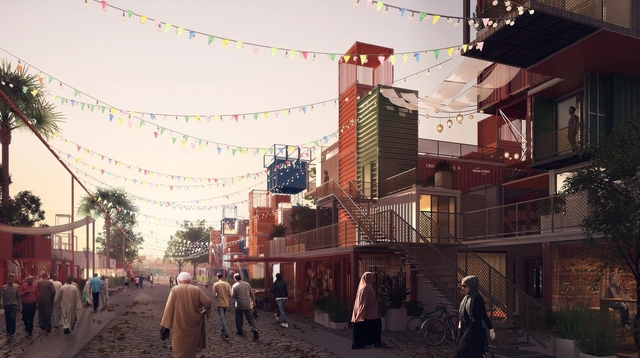
UAE based architects Mouaz Abouzaid, Bassel Omara and Ahmed Hammad have designed a shipping container housing project for Cairo, Egypt. Dubbed ‘Sheltainer’, the project aims to address a need for low-income, student and refugee housing. The design focuses on Egyptian life around a single house unit with all the necessary needs for a small family. Sheltainer aims to offer a flexible solution with new open spaces, activities and homes.

Egyptian Architects Design Shipping Container Housing for Cairo - Image 1 of 4Egyptian Architects Design Shipping Container Housing for Cairo - Image 2 of 4Egyptian Architects Design Shipping Container Housing for Cairo - Image 3 of 4Egyptian Architects Design Shipping Container Housing for Cairo - Image 4 of 4Egyptian Architects Design Shipping Container Housing for Cairo - More Images+ 5

NYC Plans On Designer Shipping Containers for Next Disaster

Subscriber Access | 
NYC Plans On Designer Shipping Containers for Next Disaster - Featured Image
Puma City Shipping Container Store © Danny Bright

Shipping container architecture has gained a lot of ground over the past few years for its simplicity, affordability and flexibility. Yes the very same containers that make transatlantic voyages and are carted around hitched to trucks have become a tool for architects to design restaurants, to serve as retail or pavilions and even homes. According to an article by Matt Chaban on the New York Observer, NYC plans to prepare for the next disaster with apartments built out of shipping containers to be used as disaster relief shelters.

Join us after the break for more.