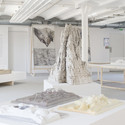
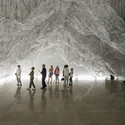
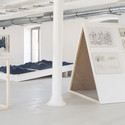
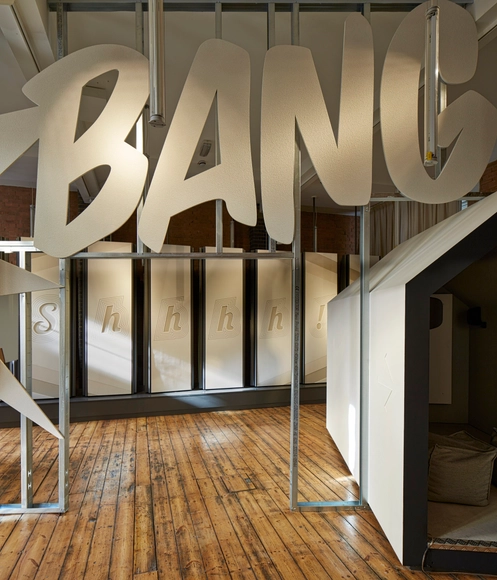
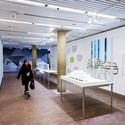
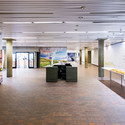
Starting June 10, the RIBA will present The Brutalist Playground - an exhibition that is part sculpture, part architectural installation, which invites people of all ages to come and play, the Brutalist way. Occupying the entire Architecture Gallery, the immersive landscape is a new commission by Turner Prize nominated design and architecture collective Assemble and artist Simon Terrill. It explores the abstract concrete playgrounds that were designed as part of Brutalist housing estates in the mid-twentieth century, but which no longer exist. They became playgrounds unsuitable for play.
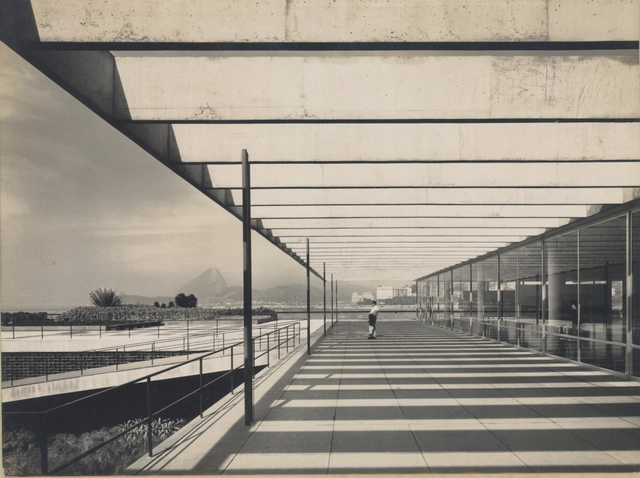
On display until July 19th, MoMA's exhibition "Latin America in Construction: Architecture 1955-1980" is an attempt to bring the architecture of this global region, and this time period, to a greater audience after decades of neglect by the architectural establishment. Curated by Barry Bergdoll, the exhibition effectively follows on from MoMA's last engagement with the topic of Latin American architecture, way back in 1955 with Henry-Russell Hitchcock's exhibition "Latin American Architecture Since 1945." In an intriguing interview, Bergdoll sits down with Metropolis Magazine to talk about why he is revisiting the topic after so many years (or, indeed, why MoMA took so long to do so), and explains his ambitions to elevate the featured works and to frame Latin America itself as "not simply as a place where the pupils of Le Corbusier went to build, but a place of origins of ideas." Read the full interview here.
From April 25 through July 25, 2015, the Graham Foundation will host an exhibition at its Madlener House showcasing the vision of Italian-Brazilian architect Lina Bo Bardi. Known for her emphasis on social modernism and expressive use of materials, Lina Bo Bardi: Togetherexplores her legacy through her collected works, as well as that of other artists paying homage to the architect and striving to generate new conversations about her designs. Curated by Noemi Blager, the exhibition features photographs, films, and artistic objects reflecting Bo Bardi's diverse work and immersion in Brazilian culture.
From April 10, the Frac Centre will host "Relief(s)— Designing the Horizon", a series of exhibitions, workshops, and meetings exploring the place of the relief in the timeline of modern art. Over five months the work of Yasuaki Onishi, Gérard Singer, and Aurélie Pétrel will be on display alongside a host of supplementary cultural and educational programs. Hoping to "[shed] new light on the way in which contemporary art can renew our reading of the landscape and, more broadly the environment", the exhibition will run until September 19. Learn more about the artists involved and view selected works after the break.
Look & Listen, a new sound responsive exhibition at the recently opened Sto Werkstatt gallery in London, explores "the often unnoticed, yet vital role acoustics play in our experience of place." Designed by The Klassnik Corporation, the exhibition offers a variety of "sonic experiences" which encourage the visitor to focus on the audible aspects of architecture. It creates a unique set of environments built using Sto’s range of acoustic systems, "utilising the perfect balance of design flexibility and technical leadership the acoustic materials offer." The installation also demonstrates the materials‘ capabilities in reducing reverberation and promoting clearer sound.
Pavilion "Transport", from the Exhibition of Achievements of the National Economy of USSR. Image Courtesy of Valentyn Shtolko
Around the globe, the post-war years were a period of optimism and extreme experimentation. On both sides of the cold war's ideological divide, this optimism found its greatest expression, architecturally speaking, in modernism - but of course, the particular circumstances of each city offered a unique spin on the modernist project. According to the curators of "Superstructure," an exhibition presented at Kiev's Visual Culture Research Center from January 28th to February 28th, the utopian architectural works of Kiev represented "an attempt to transform the city into the environment for materialization of artistic thinking – in contrast to the strict unification of city space by typical construction and residential blocks." Architects such as Edward Bilsky and Florian Yuriyev, often working in collaboration with artists such as Ada Rybachuk and Volodymyr Melnychenko attempted to create projects that were a complete synthesis of architecture and art - an approach to design that often didn't sit well with the Ukrainian authorities of the time.
Featuring research by Alex Bykov, Oleksandr Burlaka and Oleksiy Radynski, "Superstructure" examined the projects which were typical of this particular cultural moment in Kiev. After the break, we present this research, and a selection of images from the exhibition.
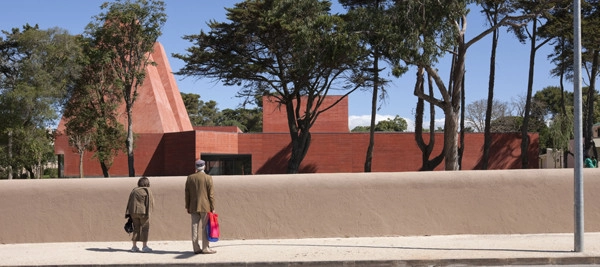
From April 18 until August 24, 2015, the Hombroich Foundation will showcase the work of Pritzker Prize-winning architect Eduardo Souto de Moura. Spanning from his early career in 1980 to the present, the exhibition will explore de Moura’s influential style through models, plans, sketches and photographs. Celebrating such dynamic works as the reconstruction of the Franciscan convent of Santa Maria do Bouro in Amares and the the football stadium Estádio Municipal de Braga, highlighted projects will tell the lifelong story of de Moura’s designs.
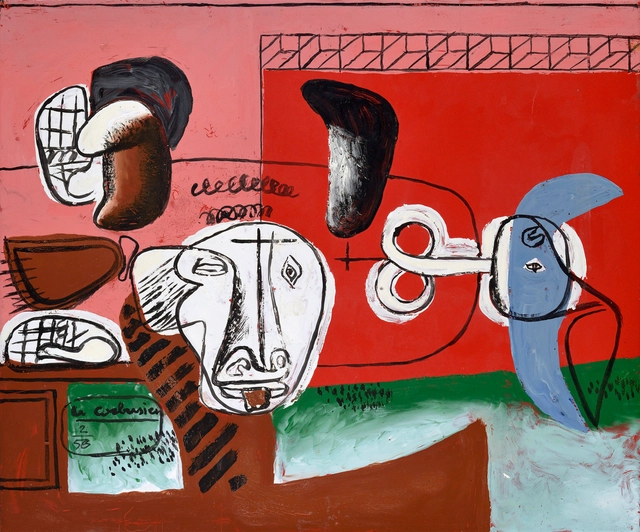
Marking the fiftieth anniversary of Le Corbusier’s death, Galerie Eric Mouchet is collaborating with Galerie Zlotowski to showcase Le Corbusier: Panorama of a Lifetime’s Work in Paris. The exhibition, opening April 23 and on view through July 25, will provide a comprehensive overview of paintings, drawings and engravings of the legendary Le Corbusier.
“Le Corbusier, who was never without a sketchbook in his pocket, devoted half of every day over a 45 year period to writing, painting and drawing - what he called his ‘Atelier de la recherché patiente,’” says the galleries. “His visual arts output was both highly original and prolific, stretching from 1917 to 1965. Up to the Second World War, this work was largely for his own personal research. Later, however, it helped drive the design and promotion of the Modulor, a ‘harmonious’ scale of proportions he devised in 1946.”
Take a look inside Le Corbusier’s mind and preview five of the prolific paintings that will be exhibited, after the break.
In 1955 the Museum of Modern Art staged Latin American Architecture since 1945, a landmark survey of modern architecture in Latin America. On the 60th anniversary of that important show, the Museum returns to the region to offer a complex overview of the positions, debates, and architectural creativity from Mexico and Cuba to the Southern Cone between 1955 and the early 1980s.
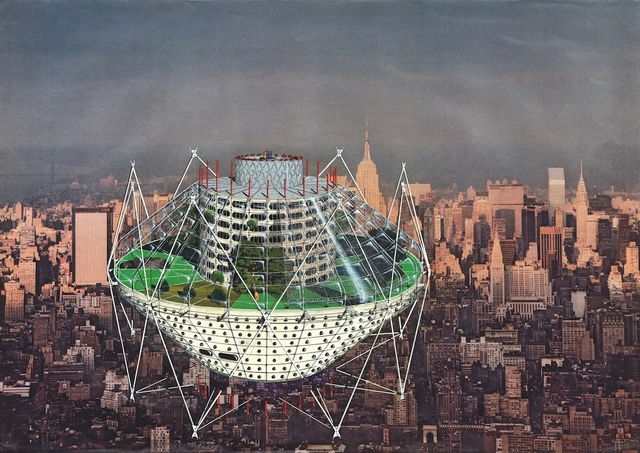
Now on view at London’s Architectural Association, Jan Kaplický Drawings presents work by the Czech architect Jan Kaplický (1937-2009) – a visionary designer with a passion for drawing as a means of discovering, describing and constructing. Through drawing he presented beguiling architectural imagery of the highest order.
The earliest projects date from the early 1970s when, for Kaplický, drawing was essentially a speculative pursuit. Whilst his days were spent working for other architects, during evenings and weekends he designed and drew at home. His architecture at this time was the plan and the finely detailed cross-section. Never satisfied, he constantly developed and honed his graphic language, perfecting the technique of the cutaway isometric which became his trademark.
A preview of Kaplický’s drawings, after the break.
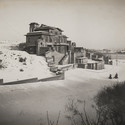
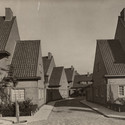
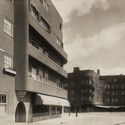
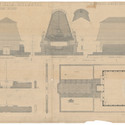
The Netherlands Builds in Brick is one of the latest exhibitions at Het Nieuwe Instituut (formerly the NAi) in Rotterdam. It seeks to modify the "assumed triumph of Modernism" in the interwar period, drawing upon two photographic collections from the Institute's extensive archives. The exhibition has been curated to highlight that brick remained the favoured construction material throughout the advocacy of the Modernist movement, even for experimental construction.
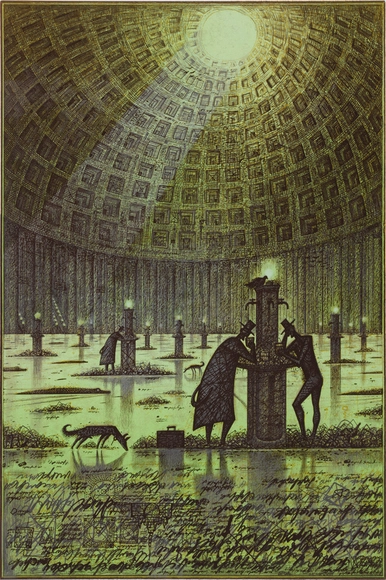
"Place of Overall Prosperity", Alexander Brodsky (1998). Image Courtesy of Tchoban Foundation. Museum for Architectural Drawing
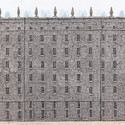
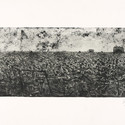
From March 13, Berlin's Tchoban Foundation Museum for Architectural Drawing will showcase the work of acclaimed Russian artist and architect Alexander Brodsky in the eponymous exhibition "Alexander Brodsky. Works."
Curated by Daria Paramonova, architect and co-curator of the Russian Pavilion at the 2014 Venice Biennale, the exhibition will feature a collection of Brodsky's new and old work and run until June 5.
Learn more about the exhibition and view selected works on display after the break.
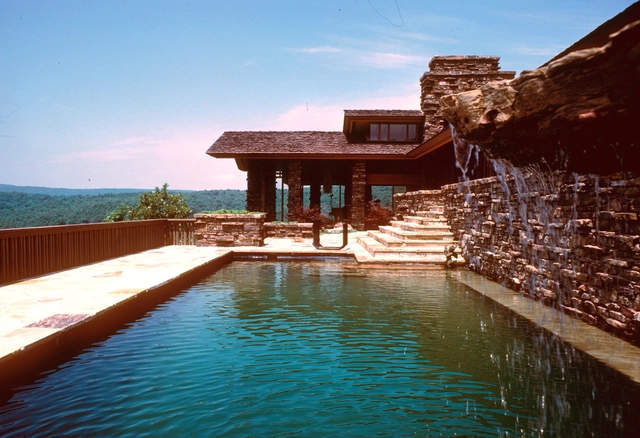
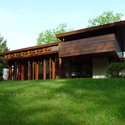
Yesterday afternoon, I was able to visit the University of Arkansas exhibition “Fay Jones and Frank Lloyd Wright: Organic Architecture Comes to Arkansas” - without purchasing a ticket or leaving my apartment. This extensive exhibition on the life and development of these two notable architects was made possible through a collaboration between University of Arkansas Libraries’ Special Collections and Crystal Bridges Museum of American Art Library and Archives. Exhibitions such as this are part of a broader movement in recent years towards making archived content more easily accessible to the public through web platforms. The concept of the online exhibition, however, is still in its infancy and there remains significant room for innovation.
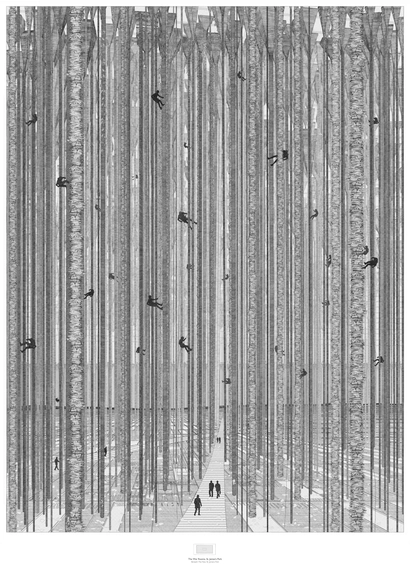
URBAN TALES will showcase three distinct architectural artwork series exploring visions of narrative based city redevelopments. Featuring RIBA Presidents Medal-winning work, these original and engaging threads of imagery from UCL architecture graduates Ned Scott, Nick Elias and Anja Kempa objectify fiction and challenge political reality. The exhibitors question the role of architecture in a changing world and use fictional narratives to design fantastical, but possible, cities. URBAN TALES will kick off with an opening party on Friday, March 6 and remain on view through April 10, 2015 at Carousel London. Read on to learn more.
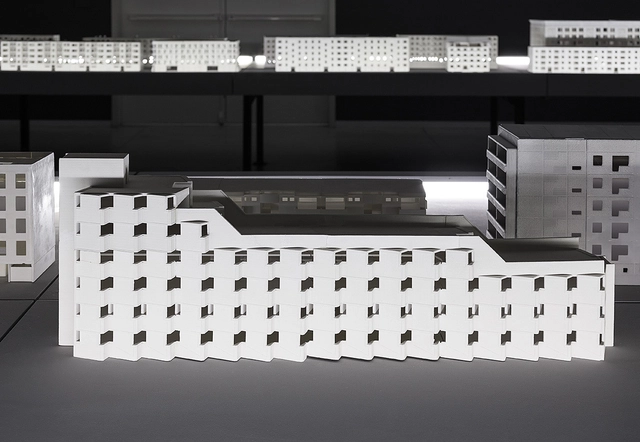
Between 1945 and 1981 around 170 million prefabricated (prefab) residential units were constructed worldwide. Now, as part of a study undertaken by Pedro Alonso and Hugo Palmarola of the Pontificia Universidad Católica de Chile between 2012 and 2014, an exhibition at the Tel Aviv Museum of Art features 28 large concrete panel systems from between 1931 and 1981.In so doing, it explores a transnational circulation of these objects of construction, "weaving them into a historical collage of ambitions and short-lived enthusiasm for utopian dreams."
This show, curated by Meira Yagid-Haimovici, is an attempt to reveal "how architecture and urbanism was charged with historical, social, and political narratives, and how the modernist vision promoted the fusion of aesthetics and politics." The models, which are being exhibited as part of the Production Routes exhibition, seek to highlight the richness embodied in 'generic' architecture through the lens of prefab construction methods.
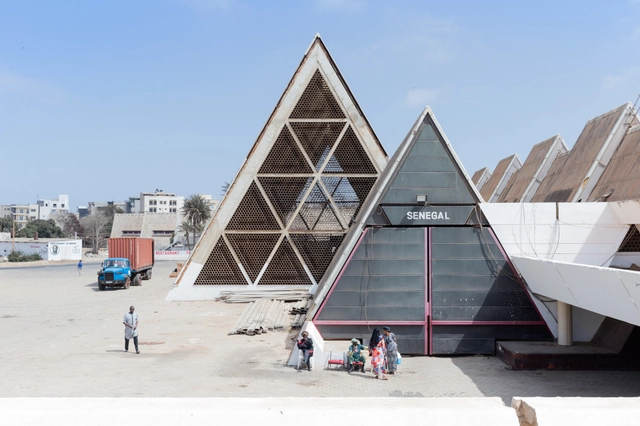
From February 20 the Vitra Design Museum will host "Architecture of Independence - African Modernism," an exhibition curated by architect and author Manuel Herz. Featuring numerous photographic contributions by Iwan Baan, "Architecture of Independence" explores the experimental and futuristic architecture produced in 1960s Central and Sub-Saharan Africa during the region's period of newfound independence.
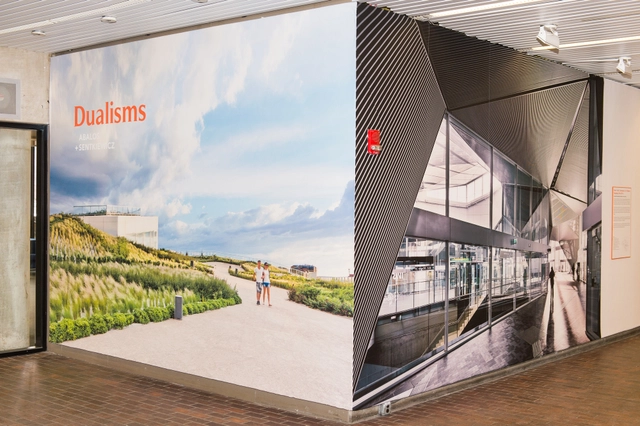
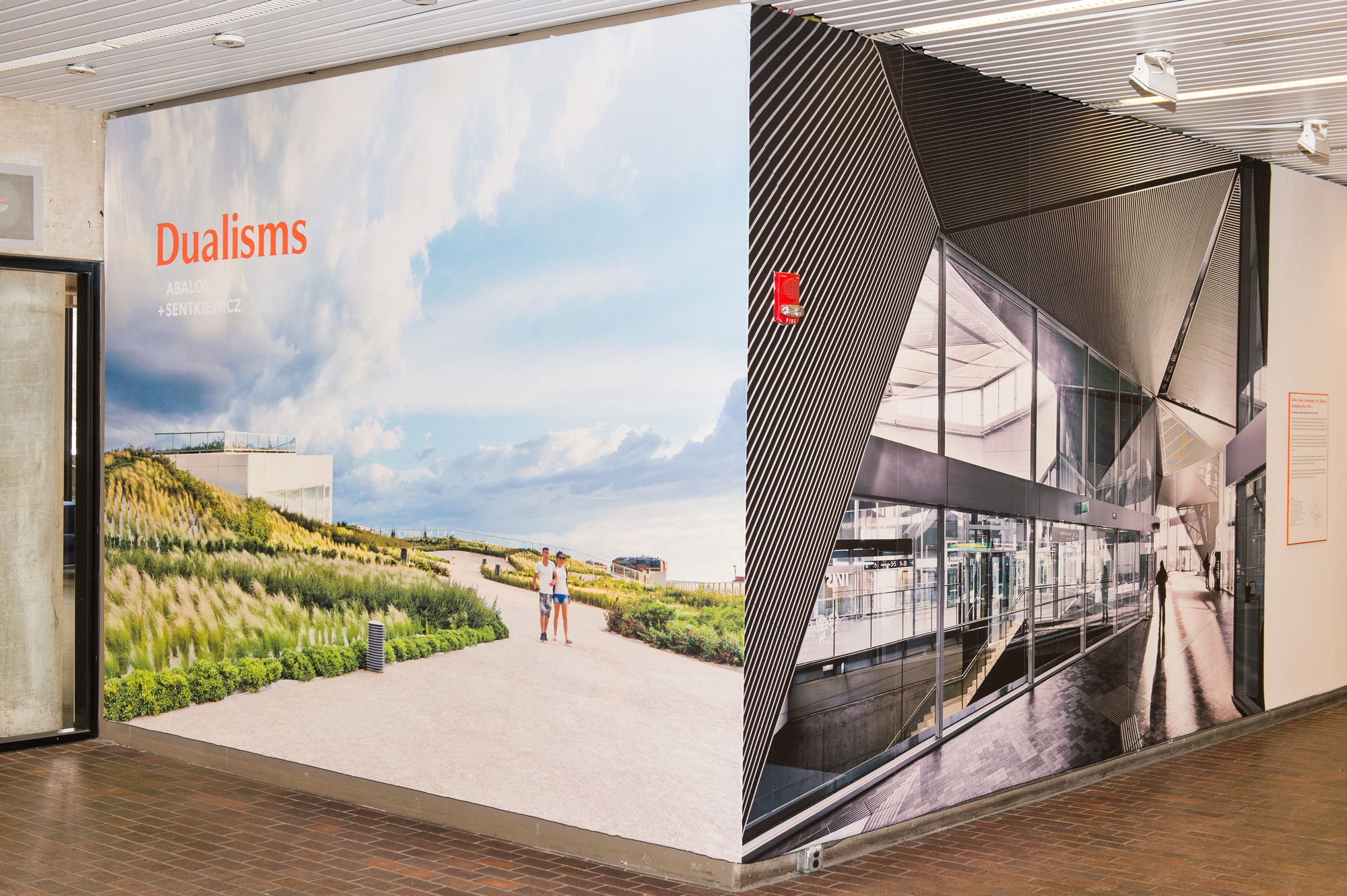
A new exhibition at the Harvard Graduate School of Design by Iñaki Ábalos and Renata Sentkiewicz (Ábalos+Sentkiewicz) will explore Dualisms in architecture: the notion that most historic architecture takes its "composite tension from two theoretically incompatible morphological organisations that correspond to different disciplines or languages." Suggesting that these organisations can possess elements of "compatibility and incompatibility" simultaneously, the appearance of "a kind of hybrid 'Frankenstein's monster'" is characterized by dualism in architecture. For the curators, Dualisms act not only performatively, but also in a creative and composite way. "They are, at once, constraints and formative opportunities."


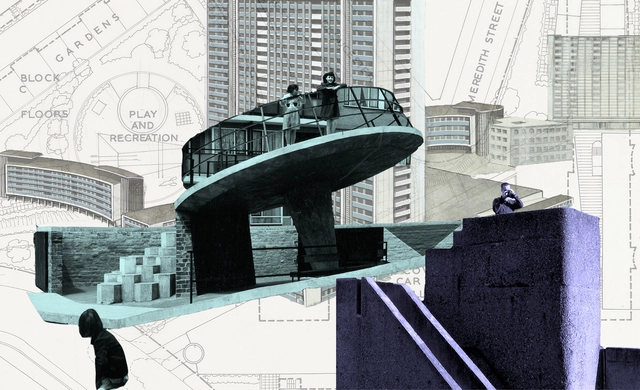
_Arch_Press_Archive_RIBA_Library_Photographs_Collection.jpg?1432159232 "Park Hill Estate, Sheffield - 1962. Image © Arch Press Archive RIBA Library Photographs Collection")


_John_Maltby__RIBA_Library_Photographs_Collection_(1).jpg?1432159169 "Churchill Gardens - 1956. Image © John Maltby RIBA Library Photographs Collection")