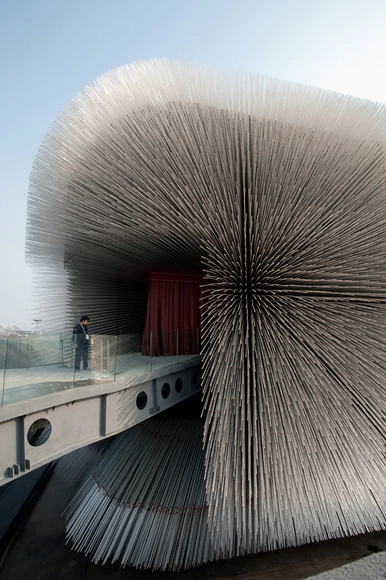
Thomas Heatherwick is set to expand his international reputation in the coming year, thanks to two exhibitions that will tour the United States and East Asia, reports the Architects' Journal. The US exhibition, titled "Provocations: The Architecture and Design of Heatherwick Studio" will tour Dallas, LA and New York from September 2014 to October 2015. The Asia exhibit is yet to be formally announced, although it is believed it will begin in Singapore in Spring 2015. Read on after the break for more details of the exhibitions.
To coincide with the opening of the Royal Institute of British Architects (RIBA)'s new Architecture Gallery at their headquarters in London's Portland Place, the first major retrospective of Edwin Smith will open next month. Smith, one of Britain's foremost 20th century photographers, was considered a master of capturing the essence of the places, landscapes and buildings he documented over an extensive career. The exhibition, entitled Ordinary Beauty, will display over a hundred carefully curated black and white images from a collection of over 60,000 negatives and 20,000 prints donated by Olive Cook, Smith's widow and collaborator, to the RIBA Library.
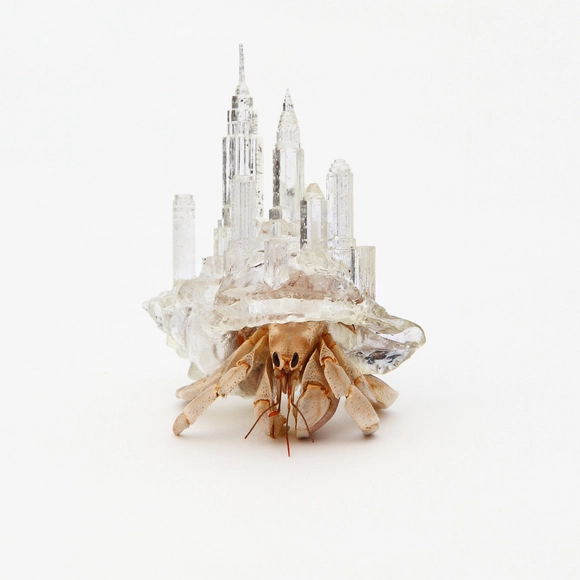
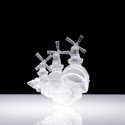
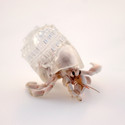
How could hermit crabs teach us a lesson about world peace? In her project, titled, "Why Not Hand Over a "Shelter" to Hermit Crabs?" Japanese media design artist Aki Inomata is inspired by hermit crabs' peaceable exchange of their shells, a metaphor for the peaceful exchange of land between countries. Exploring the theme further, she designs new shelters in the shape of world cities, and provides new homes for the crabs which represent the abstract perception of changing nationalities and identities.
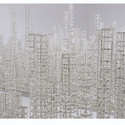
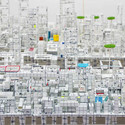
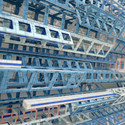
Japanese artist Katsumi Hayakawa's "Paperworks" exhibition explores the impression of architectural density through delicate three-dimensional installations. The intricate sculptures were all hand-crafted piece by piece out of paper and glue, creating an awe-inspiring assemblage of multi-layered urban conditions at different scales. For more information and images, keep reading after the break.
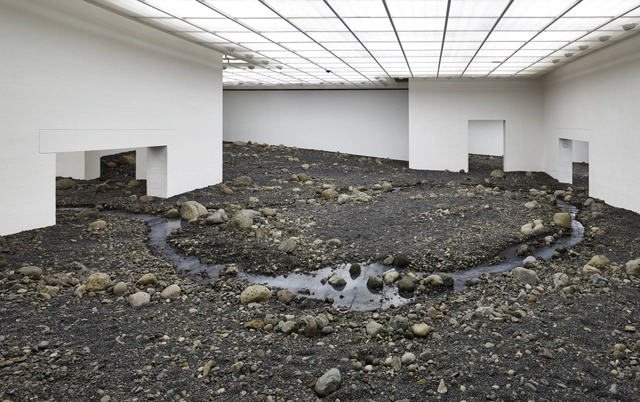
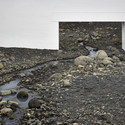
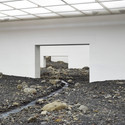
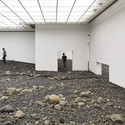
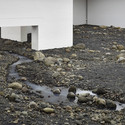
Blurring the boundaries between the Natural world and the Manmade in one wide, sweeping gesture, Danish-Icelandic artist Olafur Eliasson's first solo exhibit, aptly titled Riverbed, brings the Outdoors in.
Recreating an enormous, ruggedly enchanting landscape, complete with riverbed and rocky earth, the artist draws heavily from site-specific inspiration. The Louisiana Museum of Modern Art's location on the Danish coast lends a raw, elemental and powerful character that extends into the building as a major intervention, transforming into a work of art.
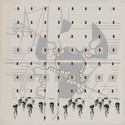
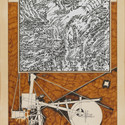
As a student of architecture, the formative years of study are a period of wild experimentation, bizarre use of materials, and most importantly, a time to make mistakes. Work from this period in the life of an architect rarely floats to the surface - unless you're Zaha Hadid or Frank Gehry, that is. A treasure trove of early architectural drawings from the world's leading architects has recently been unearthed from the private collection of former Architectural Association Chairman Alvin Boyarsky. The collection is slated to be shown at the Kemper Art Museum, Washington University, St. Louis, as a part of the exhibition Drawing Ambience: Alvin Boyarsky and the Architectural Association from September 12th to January 4th, 2015.
Take a look at the complete set of architects and drawings for the exhibition after the break.
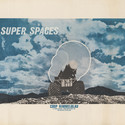
What influence do art and space have on the contemporary architectural design process? MoMA's most recent exhibition on architecture and designConceptions of Space strives to answer this question. Themed under the umbrella of spatial relations, Curator Pedro Gadanho ruminates on the subject in a broad and philosophical sense. The exhibition delves into the topic using an interdisciplinary approach, incorporating research from French philosopher Michel Foucault on the subject of the expanded field. The exhibition aims to explore the relationship between the development of space and its deep-seated roots in the creative arts.
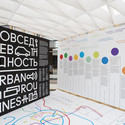
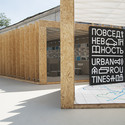
Over the course of nine months, graduate students at the Strelka Institute studied the urban landscape of Moscow and the daily routines of its inhabitants, focusing "on new, little-noticed, and as-yet unresolved contradictions." The main goal of the projects was to come up with solutions that could be applied in practice.
The research projects, collectively entitled "Urban Routines," were presented at the end of this past June at the graduate show. Program director David Erixon said that while the theme might seem naive, "when you start looking at seemingly trivial things in a new way they are not so trivial anymore." For details about the individual research projects - covering Cars, Retail, Dwelling, Offices, and Links - keep reading after the break.
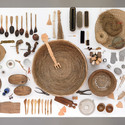
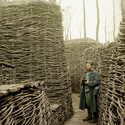
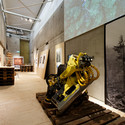
In our technology-obsessed age we tend to forget where materialsactually come from. But in their first exhibition on materials, WOOD, the Het Nieuwe Instituut in Rotterdam not only overviews wood's uses from World War I trenches to daily tools, but also reminds us where wood comes from, tracking wood's manmade and natural "cycles" of destruction and reconstruction. WOOD is curated by Dan Handel, in cooperation with exhibition designers Jannetje in ‘t Veld and Toon Koehorst and is showing until October 8th of this year - learn more at the website here.
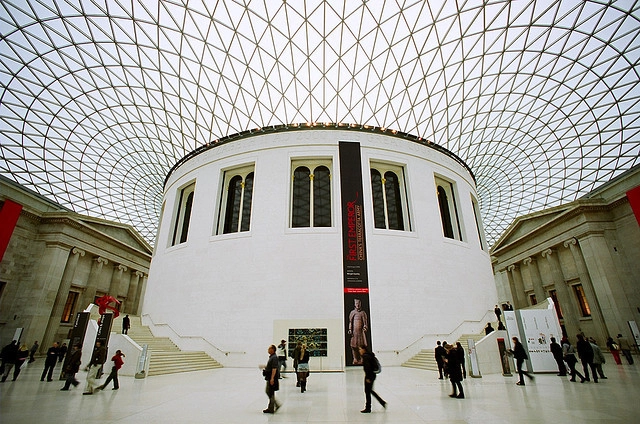
"They've got the mall. They've got the food court. Now they've got the multiplex." Rowan Moore's latest piece for the Guardian discusses the collaged plight of London's British Museum as Rogers Stirk Harbour + Partners (RSHP) complete a large extension of exhibition spaces. Describing it as a "composite Foster-Rogers" building, Moore argues that "a strange distribution of space" coupled with "an inattention to the cultural complexities of the modern museum" have led to "a void, wrapped in a void, with another void to the side." Although he states that "there are many things to like about RSHP's building", the total compilation of spaces, extensions and interventions have led to a museum more like a mall than a house of culture.
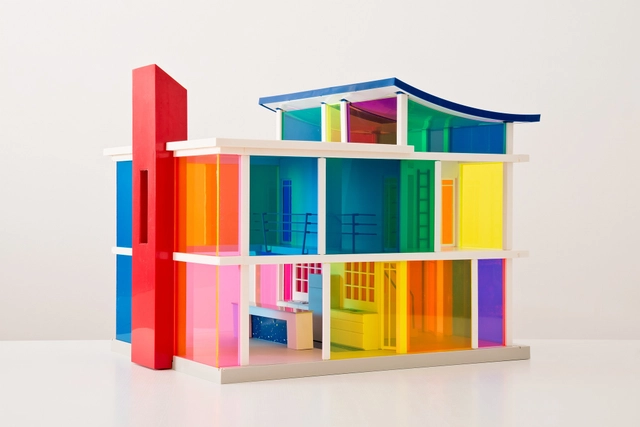
A new exhibition in Germany looks at the history of the architectural model in contemporary art. It begins with a legendary model by Charles Simonds, covers the 1990s with Ludger Gerdes, Hermann Pitz and Thomas Schütte, and ends up in the present day with Alicia Framis, Hinrich Sachs and Carlos Garaicoa.
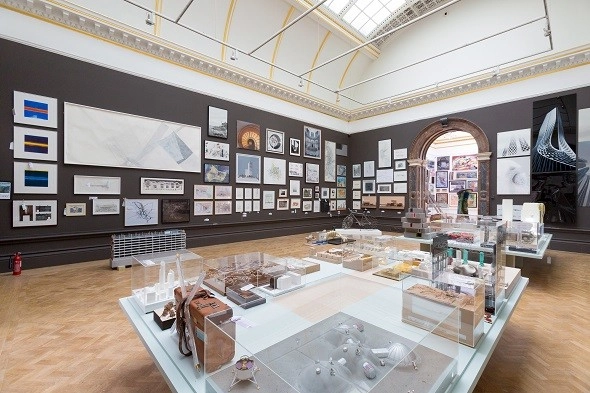
Live Work Play, an exhibition organised as part of the Hampshire Festival of Architecture 2014 (UK), showcases over 100 projects from "within the country, the UK, and beyond." Featuring a range of "thoughtful, robust, elegant and ingenious designs", the show will include designs from local practices such as PAD Studio, Design Engine, AR Design Studio, Design ACB and John Pardey Architects. The exhibition will be open seven days a week between the 14th June and the 16th July. Find out more from RIBA Hampshire.
This year at the 2014 Venice Architecture Biennale, KAAN Architecten will present a Collateral Event featuring PLANTA - a partially subterranean space that will be dedicated to multidisciplinary artistic production and built within the confines of the “La Plana del Corb” quarry in Balaguer (Lleida, Spain) by 2016. Designed for Grupo and Fundació Sorigué, PLANTA is not only a building, but a concept; a concept in which is the “culmination of the desire to give back, to return through a balanced tension between art, institution, knowledge, ecology and manufacturing.”
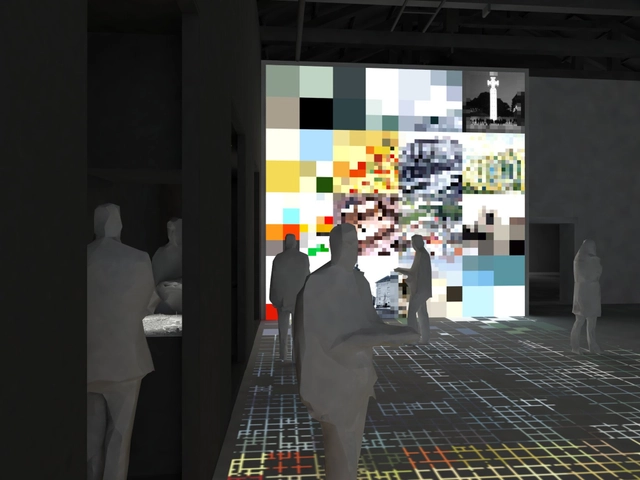
The rise of the internet has radically changed how we inhabit space. Thus, for the 2014 Venice Architecture Biennale, Estonia’s pavilion will focus on how this change is applied to the practice of architecture. Titled Interspace, the exhibition will be a single room that digitally showcases the physical act of placemaking.
This year at the 2014 Venice Architecture Biennale, the Collateral Event M9 / Transforming the City will unveil an influential urban regeneration project planned for the heart of Venezia Mestre. Envisioned by British-Berlin practice Sauerbruch Hutton, the competition-winning design will be a new “multifaceted and encyclopedic” cultural center of “international appeal” that showcases the “fundamental” 100 years that “revolutionized the world."
The exhibition will pair a complete architectural presentation of the project alongside the political motives behind it and an overview of the site's history as an attempt to spark a “theoretical digression on the links between cultural institutions and urban-regeneration projects.”
Apocalyptic panorama for “Ark-Stroy” booth, 2014, Evgeny Katin (Bang! Bang! Studio) / Courtesy — Strelka institute for media, architecture and design
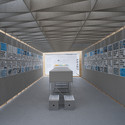
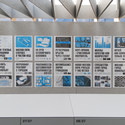
True to the country’s experimental past, Russia’s participation for the 2014 Venice Architecture Biennale will expose the continued relevance of historical urban ideas by applying them as solutions for contemporary needs. Titled Fair Enough, the exhibition will be presented as an international trade show of ideas, a “marketplace of urban invention” that is both “made in Russia and open to the world.”
This year for the 2014 Venice Architecture Biennale, Portugal will be officially represented by newspaper. This choice in media corresponds to the possibility of framing worldviews by revelling events, culture traits and socio-economic challenges of a country.
Extensively distributed in three different editions, over the six month period of the Biennale, Homeland, News from Portugal intends to report news about current architectural, social and economic life in Portugal, reflecting on and informing about a variety of aspects of the modernization of the country over the past 100 years.
___N_Ireland__1965_(c)_Edwin_Smith__RIBA_Library_Photographs_Collection.jpg?1408906178&format=webp&width=640&height=580)


.jpg?1408638052 "© Katsumi Hayakawa")









_%C2%A9_Armin_Linke_2012_(1).jpg?1401833201&format=webp&width=640&height=580)
_.jpg?1401660122&format=webp&width=640&height=580)

