1. ArchDaily
  2. Facades

Facades: The Latest Architecture and News

When Façades Become Habitats: Architecture Making Room for Other Species

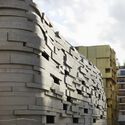
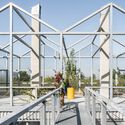
When we think of façades, we rarely think of them as habitats. We see them as the elements that separate interior from exterior, regulate temperature, reduce noise, and protect buildings from external conditions. They give architecture its visual language, but they are also expected to keep the outside world at a distance. In doing so, façades have often been understood as barriers: surfaces that define where human comfort begins and where the environment is meant to remain outside.

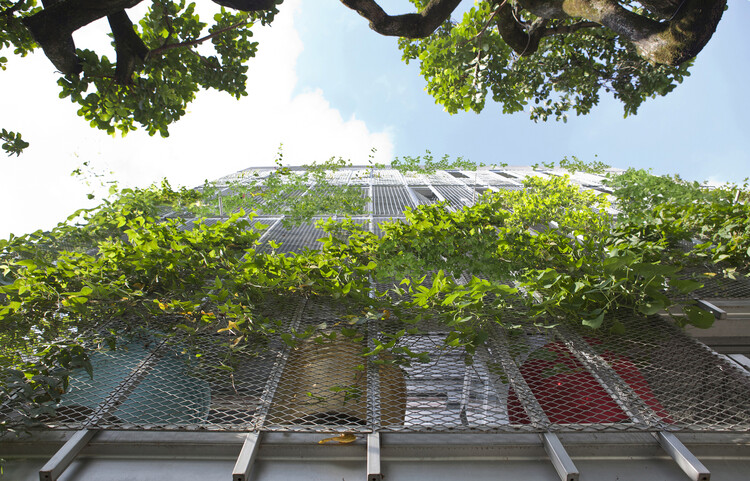
But the outside of a building is never empty. For centuries, architecture has unintentionally created opportunities for other forms of life. Birds nested beneath roof tiles, insects occupied cracks in masonry walls, and mosses or plants took root along ledges, gutters, and rough stone surfaces. These conditions were rarely designed with other species in mind, but they created small opportunities for life to inhabit them.
When Façades Become Habitats: Architecture Making Room for Other Species - Image 1 of 4When Façades Become Habitats: Architecture Making Room for Other Species - Image 2 of 4When Façades Become Habitats: Architecture Making Room for Other Species - Image 3 of 4When Façades Become Habitats: Architecture Making Room for Other Species - Image 4 of 4When Façades Become Habitats: Architecture Making Room for Other Species - More Images+ 21

200 Years of Innovation in Architectural Glass

 | In Collaboration

Scientifically, glass is defined as an amorphous solid, meaning its atoms are not arranged in a regular crystalline structure. This is why the material is often described as a "liquid frozen in time." This structural configuration explains one of its most distinctive qualities: transparency. Without a crystalline lattice capable of scattering light, radiation passes through the material with relatively little interference. Although it often appears delicate, this same structure also allows glass to achieve significant mechanical performance. With industrial processes such as tempering, lamination, and specialized coatings, the material can reach high levels of strength, safety, and environmental performance.

OMA’s Metropolitan Village Advances Toward Completion in Taipei’s Xinyi District

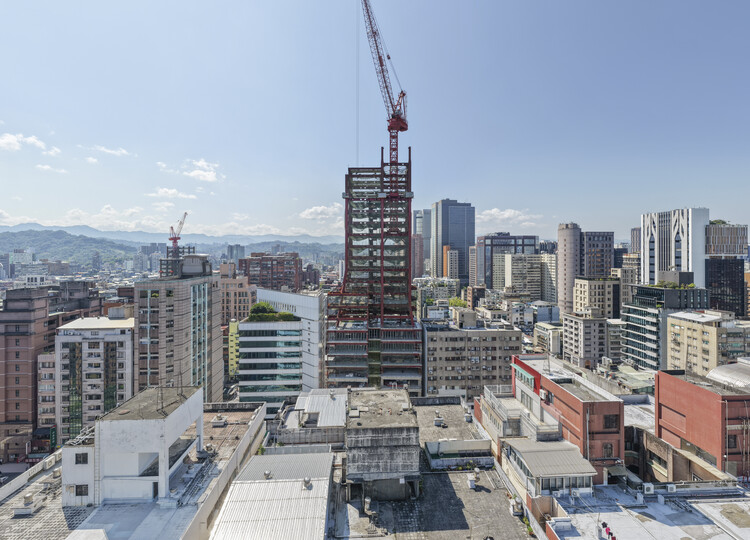
OMA's Metropolitan Village, also known as Taipei Xinyi–Wenchang Residence, is a new high-rise residential tower located in Taipei's Xinyi Central Business District. The project, led by David Gianotten and Chiaju Lin, with HCCH & Associates Architects Planners & Engineers as local collaborator, provides 11,961 m² of residential floor area on a 736 m² site. The 95 m, 23-storey building follows the concept of a "vertical village," reflecting the increasingly fluid boundary between living and working identified by the architects in post-pandemic Taipei. Commissioned by Continental Development Corporation, the project broke ground in 2024 and is scheduled for completion in 2027. Recent images show construction progress, with the highest structural element now being installed.

OMA’s Metropolitan Village Advances Toward Completion in Taipei’s Xinyi District - Image 1 of 4OMA’s Metropolitan Village Advances Toward Completion in Taipei’s Xinyi District - Image 2 of 4OMA’s Metropolitan Village Advances Toward Completion in Taipei’s Xinyi District - Image 3 of 4OMA’s Metropolitan Village Advances Toward Completion in Taipei’s Xinyi District - Image 4 of 4OMA’s Metropolitan Village Advances Toward Completion in Taipei’s Xinyi District - More Images+ 14

What Happens When Solar Is Treated as a Building Material?

 | In Collaboration

As environmental accountability becomes embedded in design culture, the building envelope is being reconsidered not just as a protective skin, but as an active energy-producing surface. Treating solar technology as a material rather than an attachment reshapes how architecture is conceived and detailed. Color, texture, rhythm, and assembly become inseparable from performance. Building-Integrated Photovoltaics (BIPV) operate within this expanded definition of materiality. By integrating solar technology into façades and rainscreens from the earliest project stages, architects can reduce redundancy, align energy goals with design intent, and rethink how envelopes are composed. Yet translating this ambition into buildable systems requires technical precision and construction intelligence.

What Happens When Solar Is Treated as a Building Material? - Image 1 of 4What Happens When Solar Is Treated as a Building Material? - Image 2 of 4What Happens When Solar Is Treated as a Building Material? - Image 3 of 4What Happens When Solar Is Treated as a Building Material? - Image 4 of 4What Happens When Solar Is Treated as a Building Material? - More Images+ 14

Can Shading Become Energy? From Passive Facades to Productive Envelopes

 | In Collaboration

As the primary interface between interior spaces and the external environment, facades play a central role in both the performance and architectural expression of buildings. Increasingly, they are no longer seen as static envelopes, but as active mediators between climate, energy, use, and aesthetic. In dense urban contexts, however, they are also gaining relevance for another reason: while roof surfaces are often limited, fragmented, or already occupied by technical equipment, vertical envelopes remain largely underutilized in terms of energy production.

Designing with What Exists: Rieder’s HQ Expansion Turns Residual Materials into Facade Design

 | In Collaboration

What if industrial leftovers weren't waste, but the start of architectural design? At Rieder's headquarters in Maishofen, Austria, over 1,300 cubic meters of timber, 180 ceiling elements, and hundreds of upcycled glassfiber-reinforced concrete fragments come together in a building shaped as much by reuse as by planning. The new production hall, designed by Kessler² Architecture, treats material leftovers as a design resource. Developed as part of a long-term investment in sustainable manufacturing, the timber-concrete hybrid building introduces a facade technique that inverts conventional architectural workflows: instead of designing first and producing components afterward, the building envelope is generated from the material remnants already available on site establishing a new language for industrial architecture.

Active Envelopes: Integrating Solar Energy into Architectural Design

 | In Collaboration

When developing an architectural project, there are multiple possible points of departure. Some architects begin with volume, gradually carving form in dialogue with its context. Others start from the longitudinal section, while some organize the project around the functional layout of the plan. There is no right or wrong method, but rather distinct approaches that reflect different ways of thinking about and making architecture. Since the widespread adoption of solar panels and photovoltaic energy, however, a recurring pattern has emerged: these systems are almost always introduced later in the process, framed as technical optimizations or responses to regulatory and energy-efficiency requirements. As a result, they tend to be treated as secondary elements, often relegated to rooftops or less visible areas and detached from the architectural language of the building.

MVRDV’s Schieblocks Office Complex Moves Forward with Construction Approval in Rotterdam

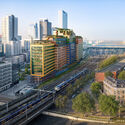
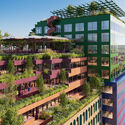
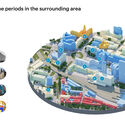
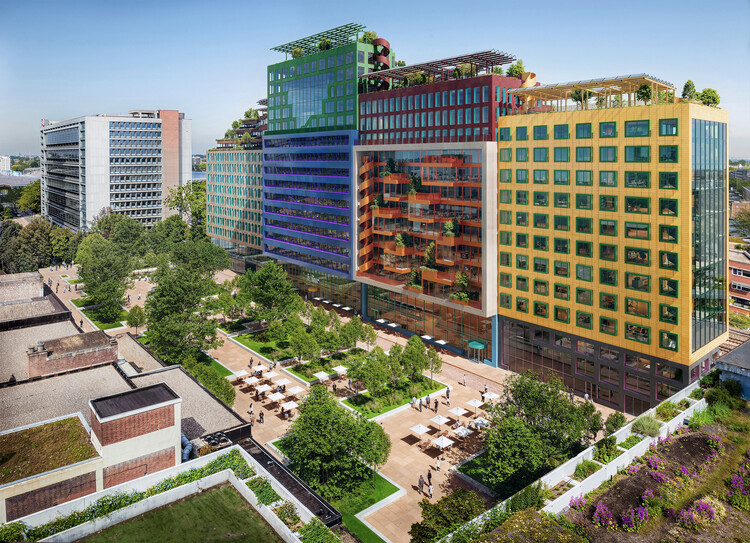
MVRDV and SYNRG have received approval to construct Schieblocks, a 47,000-square-metre office building in Rotterdam, the Netherlands. Designed for developer LSI, who markets the project as The Bluezone Offices, the building will occupy a narrow site along the railway line, reaching 61 metres in height and extending almost 150 metres in length. The programme includes commercial spaces at ground level, offices throughout, and a restaurant and event venue on the upper floors. Conceived as a "3D neighbourhood," the design breaks the large volume into a series of colourful, distinct blocks that incorporate numerous references to Rotterdam's architectural character.

MVRDV’s Schieblocks Office Complex Moves Forward with Construction Approval in Rotterdam - Image 1 of 4MVRDV’s Schieblocks Office Complex Moves Forward with Construction Approval in Rotterdam - Image 2 of 4MVRDV’s Schieblocks Office Complex Moves Forward with Construction Approval in Rotterdam - Image 3 of 4MVRDV’s Schieblocks Office Complex Moves Forward with Construction Approval in Rotterdam - Image 4 of 4MVRDV’s Schieblocks Office Complex Moves Forward with Construction Approval in Rotterdam - More Images+ 13

MVRDV Clads ADDP Architects' Modular Residential Towers with a Pixelated Facade in Singapore

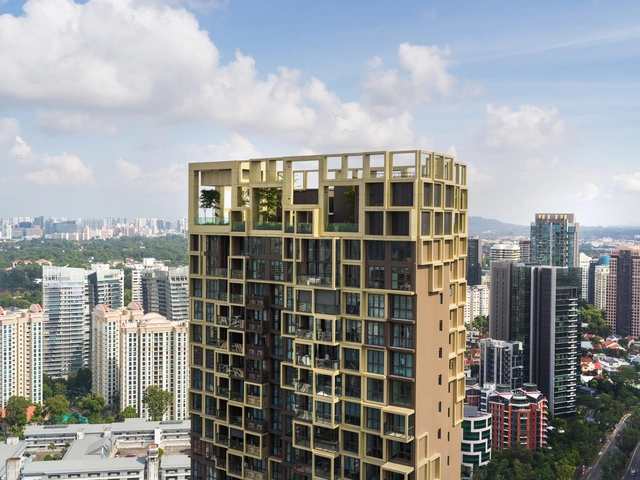
Two 36-storey residential towers have been completed on Irwell Bank Road in Singapore, featuring a pixelated facade designed by MVRDV. The scheme builds on the modular system developed by ADDP Architects, who designed the buildings using Prefabricated Prefinished Volumetric Construction (PPVC). MVRDV's facade introduces variation across the elevations and marks the locations of the communal green spaces on the 24th floor and the rooftop. Irwell Hill Residences, developed by City Developments Limited (CDL), is MVRDV's debut collaboration on a building in Singapore's urban core.

MVRDV Clads ADDP Architects' Modular Residential Towers with a Pixelated Facade in Singapore - Imagem 1 de 4MVRDV Clads ADDP Architects' Modular Residential Towers with a Pixelated Facade in Singapore - Imagem 2 de 4MVRDV Clads ADDP Architects' Modular Residential Towers with a Pixelated Facade in Singapore - Imagem 3 de 4MVRDV Clads ADDP Architects' Modular Residential Towers with a Pixelated Facade in Singapore - Imagem 4 de 4MVRDV Clads ADDP Architects' Modular Residential Towers with a Pixelated Facade in Singapore - More Images+ 22

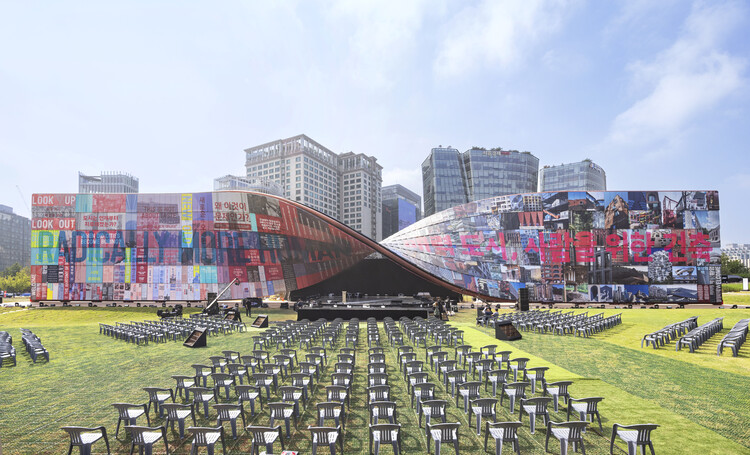
The 5th Seoul Biennale of Architecture and Urbanism Opens With Thomas Heatherwick as General Director

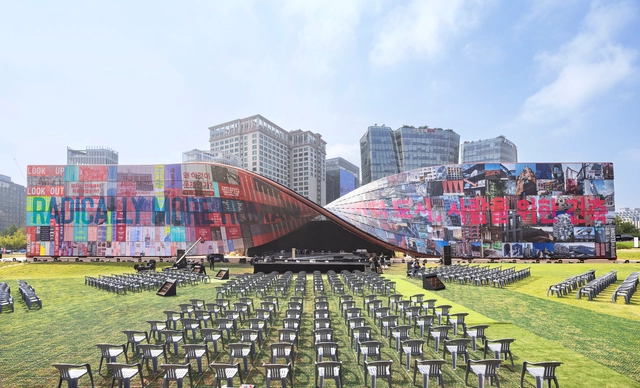
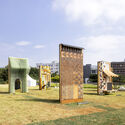
The 5th Seoul Biennale of Architecture and Urbanism opened on September 26 at Songhyeon Green Plaza in central Seoul. Recognized as the largest public architecture festival in Asia, this year's edition is directed by Thomas Heatherwick under the curatorial theme of how cities can become "radically more human." Running through November 18, the Biennale brings together exhibitions, global forums, and citizen-led projects to examine the role of architecture in shaping more inclusive and enduring urban environments.

The 5th Seoul Biennale of Architecture and Urbanism Opens With Thomas Heatherwick as General Director - Image 1 of 4The 5th Seoul Biennale of Architecture and Urbanism Opens With Thomas Heatherwick as General Director - Image 2 of 4The 5th Seoul Biennale of Architecture and Urbanism Opens With Thomas Heatherwick as General Director - Image 3 of 4The 5th Seoul Biennale of Architecture and Urbanism Opens With Thomas Heatherwick as General Director - Image 4 of 4The 5th Seoul Biennale of Architecture and Urbanism Opens With Thomas Heatherwick as General Director - More Images+ 3

The Windows of Venice: How History Inspired Modernity

Subscriber Access | 

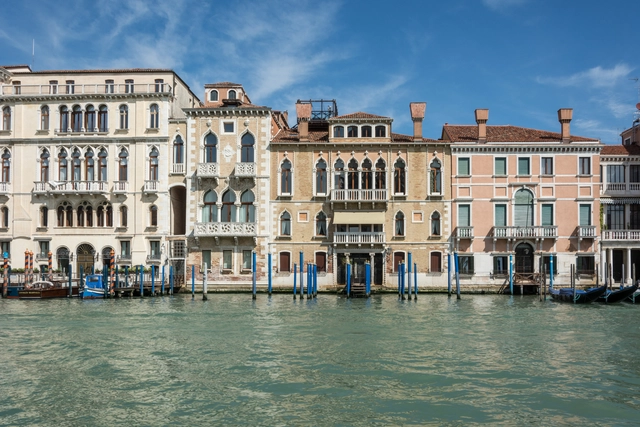
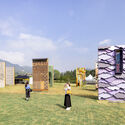
The ancient city of Venice, Italy, home to both the art and architecture editions of the Venice Biennale, is known for its unique geography as an island city of canals. Its naval and mercantile prominence now diminished, the city has found a new purpose as a center of learning, exhibiting, and tourism. However, its urban morphology and, indeed, most of its buildings are historic and have remained largely unchanged for hundreds of years. Their appearance exhibits a specific Venetian vernacular that has stood the test of time and stands as a backdrop for the city's contemporary activities. How do the facades of these buildings, particularly their windows, reflect this history? And how do the few modern buildings in the city, such as the Palazzo Nervi-Scattolin, respond to this weight of history?
The Windows of Venice: How History Inspired Modernity - Image 1 of 4The Windows of Venice: How History Inspired Modernity - Image 2 of 4The Windows of Venice: How History Inspired Modernity - Image 3 of 4The Windows of Venice: How History Inspired Modernity - Image 4 of 4The Windows of Venice: How History Inspired Modernity - More Images+ 30

Natural Slate Rainscreen Cladding: A Solution for Passive Houses

 | Sponsored Content

Inspired by experimental solar houses developed after the 1970s oil crisis, the Passive House certification emerged in the late 1980s as a response to growing concerns about energy efficiency and the environmental impact of the construction industry. Its goal is both simple and radical: to reduce heating and cooling demands to an absolute minimum through passive strategies, controlled mechanical ventilation, and an extremely efficient building envelope — eliminating the need for complex or expensive systems.

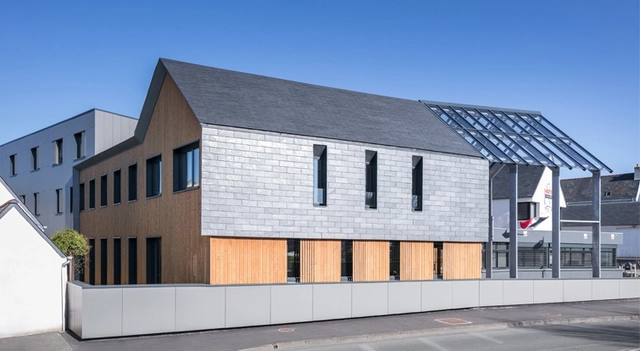
The choice of exterior cladding materials plays a strategic role in achieving this performance. Poorly designed surfaces, thermal bridges, or sealing failures can undermine the building's entire thermal logic, especially in demanding climates. This is where rainscreen systems stand out: by creating a ventilated air gap between the cladding and the structural wall, they promote continuous airflow, manage moisture, and enhance thermal stability. Materials that combine performance, durability, and visual appeal are rare — and natural slate from Spain's Cupa Pizarras is a standout solution.

The Power of Harmonious Inspiration in Transforming Façades

 | Sponsored Content

The façade of any building is more than just its exterior; it serves as a canvas that not only enhances the structure's appearance but also reflects its inner essence and character. The exterior façades category encompasses a broad variety of finishes and systems, including renders, and decorative coatings, designed to protect buildings while adding aesthetic value, blending functionality with visual appeal in perfect harmony. These finishes are crucial in defining the architectural character and energy efficiency of residential, commercial, and industrial structures.

The global exterior façade finishes and coatings industry is witnessing significant growth, driven by: increasing construction activities related to rapid urbanization and development; accelerated renovation projects; the adoption of energy-efficient building and sustainable construction practices; and the rising demand for aesthetically pleasing and durable building exteriors. It is projected to grow with a strong CAGR of 9% between 2023-2030, as per the Exterior Architectural Coating Market 2024 report by 360iResearch.

Safety with a View: How Transparent Guardrails and Windscreens Let You See It All?

 | Sponsored Content

Guardrails and windscreens play an essential role in contemporary architecture, combining safety, functionality, and aesthetic appeal. These systems are crucial for protecting elevated spaces like balconies, terraces, and staircases, incorporating materials such as tempered laminated glass, stainless steel, aluminum and innovative fastening systems. This allows for transparency and unobstructed views without compromising safety. They also feature customizable options, including top caps, handrails and integrated lighting, enabling architects to create unique, visually striking spaces that meet both practical and aesthetic goals.

Essentially, a guardrail system is a carefully designed assembly of components, each playing a vital role in ensuring safety and aesthetics. Beyond the desired visual impact, these systems must be highly reliable and safe to fulfill their primary function. At the core of the system is the guardrail components, providing support and guidance, with infill options, including, glass panels, bar/tube or cables balancing safety and style. Base shoes, a type of guardrail system, anchors glass infill panels to the structure, ensuring durability and precision. Optional handrails, can either be post mounted or mounted directly to the glass, while top rails provide an aesthetic touch while protecting the top edge of the glass and helping with glass alignment.