The biggest temptation is to jump right in. There are solutions that come to you. There are images that spontaneously appear. My method is rather to hold back as long as possible, to really imagine it spatially, so to be sure I have something to say.
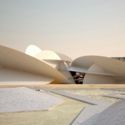
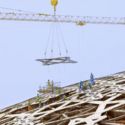
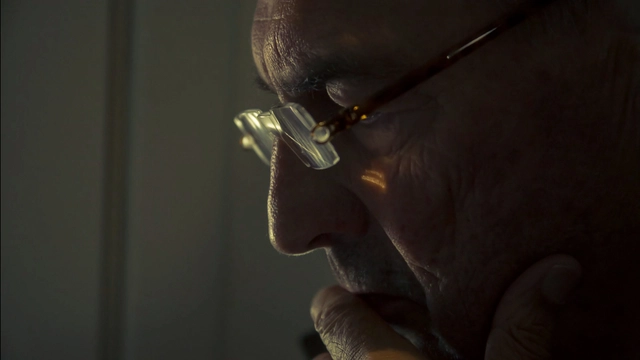
Award winning documentarian and critic Matt Tyrnauer (director of Valentino: The Last Emperor, Citizen Jane: Battle For The City) has released a new documentary taking a look into the mind of world-renowned architect Jean Nouvel and his design process.
The Dovrefjell mountain range, which divides the north and south of Norway, holds "a unique place in [the] Norwegian consciousness." A constellation of myths and legends are connected to these mountains which have, over recent years, born witness to hunting, mining and military activity. But it is also the home of a large wild reindeer population. At Hjerkinn, on the edge of the Dovrefjell National Park, Oslo-based Snøhetta have created an observation pavilion for the Wild Reindeer Foundation. In this film by Alejandro Villanueva, the building and the surrounding landscape are revealed through time-lapse and in astonishing detail.
https://www.archdaily.com/796263/lost-in-the-landscape-snohetta-wild-reindeer-center-pavilion-hjerkinn-4k-film-alejandro-villanuevaAD Editorial Team
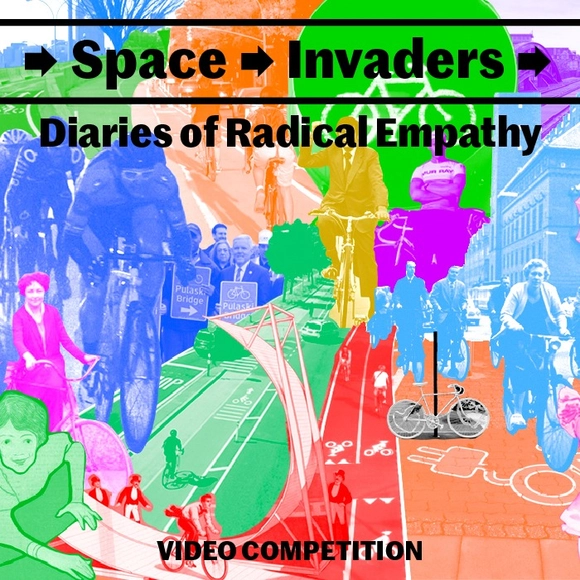
Simultaneous uses coexist, confound, and conflict. Each circulator tries to delegitimize the other by getting in the way, amounting to an all-out war. As more and more people seek alternate forms of travel, there is a need for empathy in how we move through the city. Far from creating enmity, a multiplicity of flows can encourage greater sensitivity. Walkers, runners, skateboarders, pedicabbers, bikers, limousine, bus, and truck drivers, drone operators, kayakers, and swimmers can find ways to share the city, while feeling that their space is free and respected.
Can a building help stem the tide of large epidemics?
In 2010, in the midst of the world’s worst cholera outbreak in over a century, MASS Design Group was challenged to design a cholera treatment center where the construction process, as well as the finished building, could address the underlying structural and social conditions that allow cholera to thrive.
This is the subject of Design that Heals, a new documentary that portrays the challenges, innovations, and triumph of the project, proving that, “Architecture and health are inseparable.” (Dr. Jean-William Pape, GHESKIO founder)
The 31-minute film, an official New York 2016 Architecture and Design Film Festival selection, will premiere September 29th at 6:30 and October 1st and 7:30. Screenings will be held at Cinépolis Chelsea, 260 West 23rd Street, New York, NY 10011.
In the canon of great Dutch architects sit a number of renowned practitioners, from Berlage to Van Berkel. Based on influence alone, Rem Koolhaas—the grandson of architect Dirk Roosenburg and son of author and thinker Anton Koolhaas—stands above all others and has, over the course of a career spanning four decades, sought to redefine the role of the architect from a regional autarch to a globally-active shaper of worlds – be they real or imagined. A new film conceived and produced by Tomas Koolhaas, the LA-based son of its eponymous protagonist, attempts to biographically represent the work of OMA by “expos[ing] the human experience of [its] architecture through dynamic film.” No tall order.
When it comes to expensive artforms, architecture undoubtedly tops the list (even if the artistic merits of some of the absolute priciest buildings are sometimes dubious). But what may not be so obvious is that many of architecture’s iconic works have been completed on budgets not so dissimilar to the work of another artistic industry: filmmaking. Each with their own set of merits, works from both categories have transcended time, confirming that (in most cases) they have more than returned on their initial investment.
To illustrate this point, we’ve complied a list of buildings from eras past, paired with movies of similar budgets completed in the same calendar year. Which buildings or movies have contributed the most based on their initial costs?
Filmed at the Vertou Cultural Center, designed by Atelier Fernandez & Serres, this video by filmmaker Lucas Bacle challenges the traditional conventions of cinematography, employing architectural drawings to provide context for the actions of the film’s protagonist. The cultural center itself becomes a central character to the short film, as Bacle layers video on top of orthographics, highlighting the character's relationship in space to the plans and sections.
Courtesy of New York Architecture and Design Film Festival
Following the burgeoning success of the 7th New York Architecture and Design Film Festival (ADFF), this year's incarnation—which will run September 28 through October 2 2016 at Cinépolis Chelsea—appears set to maintain its position as the nation's and most popular largest subject-focused film event. Over 30 feature-length and short films, curated by Festival Director Kyle Bergman, will be presented, including Eero Saarinen: The Architect Who Saw the Future, a film that examines the life of the eponymous modernist architect.
https://www.archdaily.com/793396/8th-new-york-architecture-and-design-film-festival-line-up-announcedAD Editorial Team
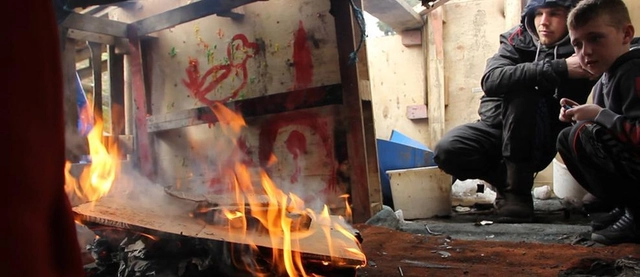
Featured in Extraordinary Playscapes, the summer exhibition at BSA Space, The Plas Madoc Adventure Playground in Northern Wales is one of the world’s newest adventure playgrounds. Fondly known as "The Land," it employs some of the play movement’s oldest "junk" philosophies.This new documentary explores a place where old tires and dumpster detritus take the place of swing sets and slides, and is “a must-see for anyone interested in play work, or play, period.” (Amy Fusselman, "Savage Park”)
The Brutalist high-rises in Ben Wheatley’s new film were inspired in part by Ernö Goldfinger’s Trellick and Balfron towers in London. Image Courtesy of Magnolia Pictures
For architects, if I may generalize an entire professional community, there are few novelists as cultishly beloved as J.G. Ballard. Borges or Calvino have their fair share of admirers, but to borrow an adjective more frequently applied to buildings, Ballard is the most iconic of literary figures—especially for readers of a concrete-expansion-joint persuasion. Witnessing war as a child, training in medicine, and thereafter writing from a rather bloodless middle-class patch of suburbia, Ballard spun tales of urban life that continue to be uncomfortably visceral.
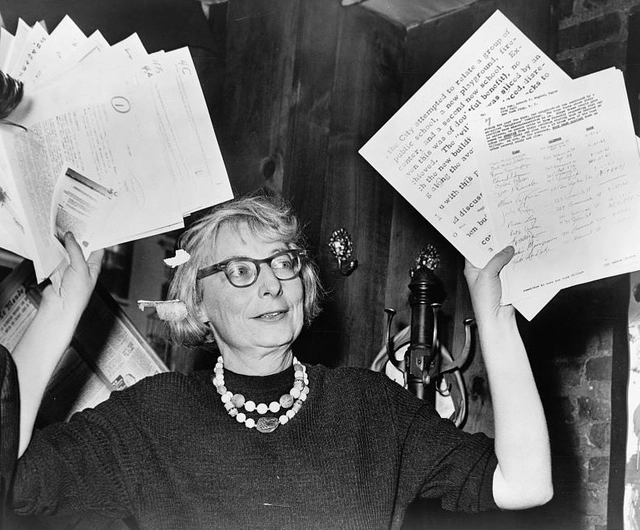
The Jane Jacobs Documentary - a feature length film focusing on the life and work of celebrated author and urban activist, Jane Jacobs - is set to be released Fall 2016. Coinciding with the author’s 100th birthday, Robert Hammond, Co-Founder and Executive Director of Friends of the High Line, and Matt Tyrnauer, producer/director of Valentino: The Last Emperor, plan to have the film tour festivals near the end of this year.
The love affair between architecture and film has been well documented. From huge breathtaking sets to small spaces for intimate conversations, the architecture in a film often plays as strong a role as any character in translating the director’s vision to his/her audience. In constructing the environments of their narratives, the great filmmakers could even be considered architects in their own right—that's the claim presented in this video from the British Film Institute, which looks at the work of celebrated director Jean-Luc Godard and how the architecture in his films transforms to suit their tone. In pictures such as À bout de souffle (1960), Le Mépris (1963) and Week End (1967), Godard uses streetscapes to convey optimism or pessimism, uses walls to emphasize the emotional distance between lovers, and even includes a cameo from the particularly photogenic Villa Malaparte. Watch the video to learn more about the techniques used to achieve these moods.
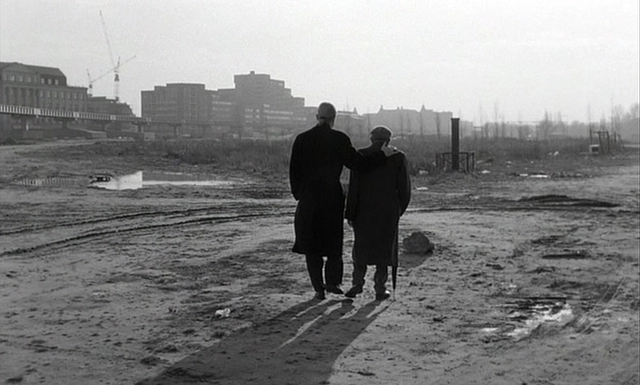
The city has been explored as a theme in movies since the early days of cinema, appearing as both a setting and a protagonist in films by renowned directors like Fritz Lang, Jean-Luc Godard, François Truffaut, Roberto Rossellini and Quentin Tarantino. In one of the first films ever made, Arrival of a Train at La Ciotat (1925), the Lumière brothers already show the modern urban environment as an important element and part of the contextualization.
Yet the cinema and the city have an extensive relationship, each influencing one another. The influence of architecture (especially modern) in the settings and cities of films can be seen in movies like Jacques Tati’s My Uncle (1958) and Ridley Scott’s Blade Runner (1982), while the influence of cinema in architecture and buildings can be seen in the work of architects like Rem Koolhaas, Jean Nouvel and Bernard Tschumi.
We have compiled a list of 10 films in which the city plays a much more important role than just the mere setting, acting as a true protagonist of the plot.
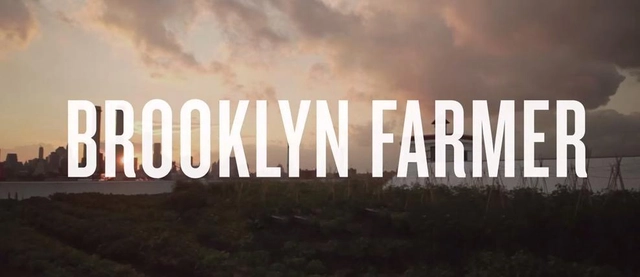
Explore the unique challenges faced by Brooklyn Grange, a group of urban farmers determined to run a commercially viable farm in New York City. The film Brooklyn Farmer follows the team as they set out to build the world’s largest rooftop farm within the constraints of the Big Apple.
In conjunction with the exhibition Global Citizen: The Architecture of Moshe Safdie on display at BSA Space, this portrait film celebrates the life and work of world-renowned Israeli-Canadian architect Moshe Safdie FAIA by highlighting his outstanding contribution to the field of architecture. From the Holocaust Museum, Yad Vashem, in Jerusalem to the masterplan for the city of Modi’in to the Peabody Essex Museum in Salem, Massachusetts, this personal documentary delves into some of Safdie’s most famous design projects and explores what makes each one unique.
Increasingly, more architecture professionals are breaking into the world of film, learning digital animation and design skills to engage non-specialists, as well as their peers. Architect-trained Kibwe Tavares, co-founder of creative studio Factory Fifteen, will explore the ways architects and designers can use digital representation to encourage imaginative thinking through a combination of architecture and film.
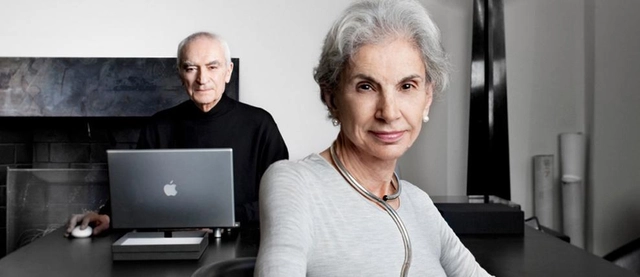
Explore the creative universe of Lella and Massimo Vignelli, two of the most influential and well-known designers of all times. With interviews from luminaries in the world of design—from architects Richard Meier and Peter Eisenman to graphic designers Milton Glaser, Michael Bierut, and Jessica Helfand—this film takes the viewer into the Vignellis’ world, capturing their intelligence and creativity as well as their humanity, warmth, and humor.
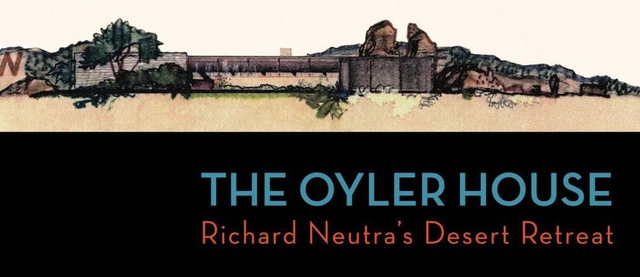
Join us for another portrayal of one of America’s greatest architects: Richard Neutra. The Oyler House: Richard Neutra’s Desert Retreat explores how Neutra, considered the “father of CaliforniaModern architecture,” came to befriend this modest small-town family and how he was inspired by the site’s stunning desert setting, which Neutra compared with the grandness of the mystical Gobi Desert.






.jpg?1471338590&format=webp&width=640&height=580)