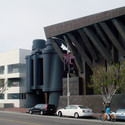
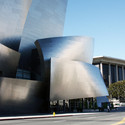
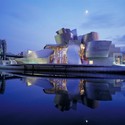
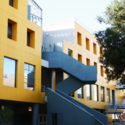
Frank Gehry has been bestowed with Spain's prestigious Prince of Asturias Award for the Arts. The Canadian-American architect was chosen as the award's 34th laureate “for the relevance and impact of his creations in numerous countries, via which he has defined and furthered architecture in the past half century.”
“His buildings are characterized by a virtuoso play of complex shapes, the use of unusual materials, such as titanium, and their technological innovation, which has also had an impact on other arts,” stated the jury. “An example of this open, playful and organic style of architecture is the Guggenheim Museum in Bilbao, which, in addition to its architectural and aesthetic excellence, has had an enormous economic, social and urban impact on its surroundings as a whole.”
More information about Gehry's selection, after the break...
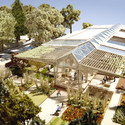
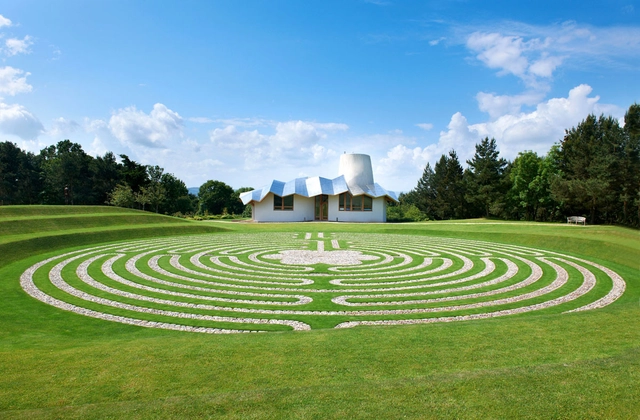
Dundee, Scotland, 2003 by Frank Gehry / Courtesy of Maggie's Centres. ImageThe third center was designed by Frank Gehry, a close friend of Maggie's. “Frank gave us so much publicity, and allowed us to raise the money,” Jencks says. Each center is self-financed through donations.
Maggie's Centres are the legacy of Margaret Keswick Jencks, a terminally ill woman who had the notion that cancer treatment environments and their results could be drastically improved through good design. Her vision was realized and continues to be realized today by numerous architects, including Frank Gehry, Zaha Hadid, and Snøhetta - just to name a few. Originally appearing in Metropolis Magazine as “Living with Cancer,” this article by Samuel Medina features images of Maggie's Centres around the world, taking a closer look at the organization's roots and its continued success through the aid of architects.
It was May 1993, and writer and designer Margaret Keswick Jencks sat in a windowless corridor of a small Scottish hospital, dreading what would come next. The prognosis was bad—her cancer had returned—but the waiting, and the waiting room, were draining. Over the next two years until her death, she returned several times for chemo drips. In such neglected, thoughtless spaces, she wrote, patients like herself were left to “wilt” under the desiccating glare of fluorescent lights.
Wouldn’t it be better to have a private, light-filled space in which to await the results of the next bout of tests, or from which to contemplate, in silence, the findings? If architecture could demoralize patients—could “contribute to extreme and mental enervation,” as Keswick Jencks observed—could it not also prove restorative?
Design of Facebook Campus by Frank Gehry. Image Courtesy of Facebook Corporate Communications
After Facebook assumed the former Sun Microsystems complex in Palo Alto in 2011, Facebook founder Mark Zuckerberg set out to find an architect capable of handling a grand design for its main main headquarters building. Zuckerberg chose world famous architect Frank Gehry for the job (amid major concessions to the city of Palo Alto).
Photos of the Gehry model that will become Facebook's new HQ have been floating around for a couple of years. But with the building slated for completion next year, Facebook provided these new, exclusive images to Business Insider of what the world can expect from Gehry's latest design:
https://www.archdaily.com/489171/new-images-of-the-frank-gehry-facebook-campus-releasedRobert Johnson, Business Insider
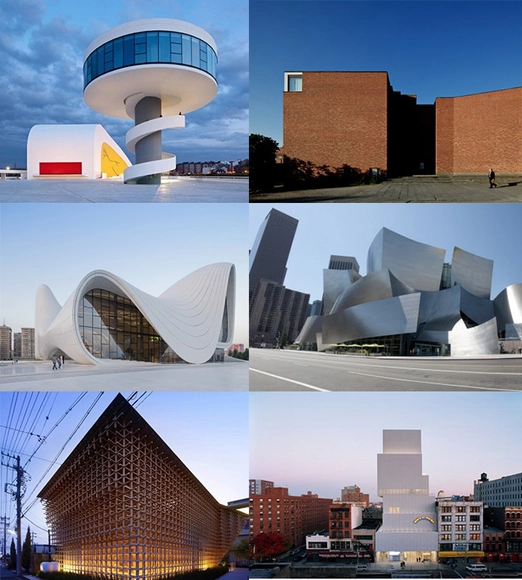
In case you missed it, we’re re-publishing this popular post for your material pleasure. Enjoy! To celebrate the recent launch of our US product catalog, ArchDaily Materials, we've coupled six iconic architects with what we deem to be their favourite or most frequently used material. From Oscar Neimeyer's sinuous use of concrete to Kengo Kuma's innovative use of wood, which materials define some of the world's best known architects?
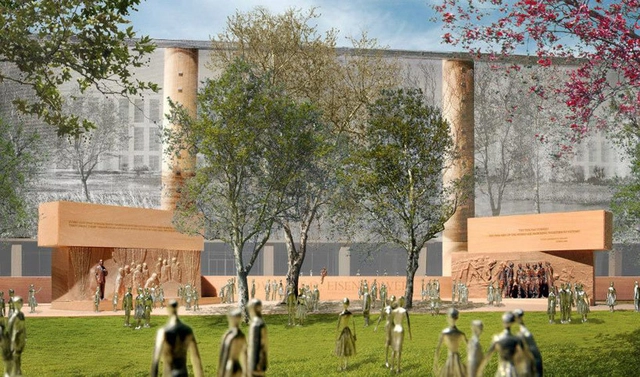
Congress budget cuts have officially stalled Frank Gehry’s controversial Eisenhower Memorial, according to a recent report, rejecting $49 million in construction funds and cutting the Eisenhower Memorial Commission’s annual budget in half. Unless the commission is able to raise a substantial amount of private funds, as well as win support from the Eisenhower family (which is doubtful), Gehry’s “grandiose” memorial is unlikely to ever break ground. Despite this, the commission’s director is optimistic, stating that the FDR Memorial took nearly 45 years to get built. You can read more about the controversy here.
Videos
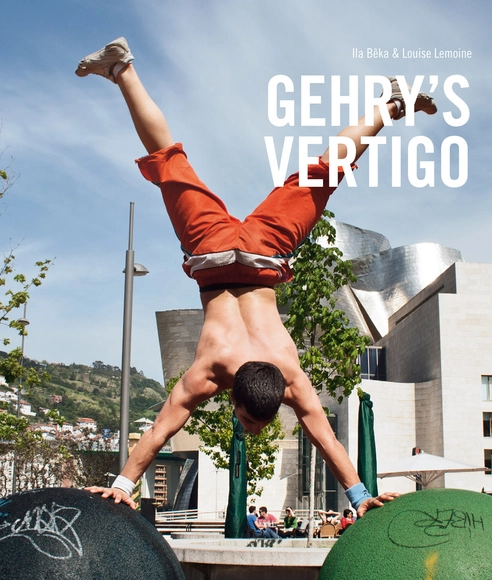
Gehry's Vertigo. Image Courtesy of Living Architectures
This time last year we published our 30 Architecture Docs to Watch in 2013featuring a fantastic range of films telling the tales of some of the world's greatest unsung architectural heroes. We now bring you eleven more for 2014, looking past the panoply of stars to bring you more of the best architectural documentaries which will provoke, intrigue and beguile.
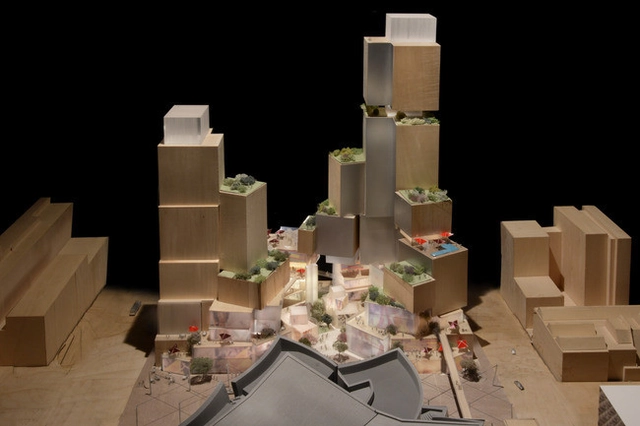
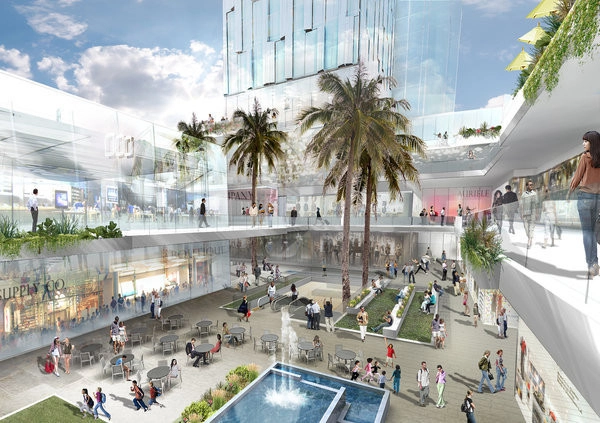
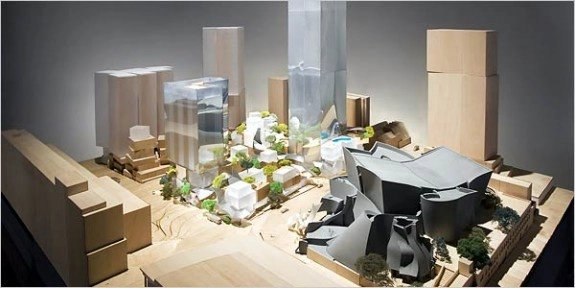
After being rejected for appearing too “boxy” and not appealing enough to pedestrians, Related Companies’ revamped Grand Avenue vision has finally won unanimous approval from county supervisors. The $750-million plan, which was abruptly halted back in September when Gensler’s toned-down version was deemed greatly “disappointing” by the city, will now move forward with a more playful (and pricey) design by the project’s original architect, Frank Gehry.
Related Cos. rendering of a conceptual plan for a retail and residential complex across Grand Avenue. Image Courtesy of Related Cos., via LA Times
"Will Grand Avenue finally turn around? Most likely not until they make it a two-way, add more trees, bike lanes, and pedestrian amenities. Buildings alone can’t do it, no matter how daring, novel (or expensive) the architecture." -- Guy Horton, The Indicator, "Ten Years Later, Has the Disney Concert Hall Made a Difference?"
The latest controversy surrounding the Grand Avenue re-design, the long-awaited project to develop the stretch of land east of the Walt Disney Concert Hall, is the re-instatement of Frank Gehry, a move which occurred after the city of LA rejected plans from mega-developers Related Cos. (designed by Gensler in collaboration with Robert A.M. Stern) for being "overly commercial."
Of course, while the Related Cos. plans may have failed to wow the city, the decision to bring Gehry back to the project hasn't exactly been embraced either. A must-see article in Zócalo Public Square asks four urban planning experts, "what would you do with Grand Avenue?" In his latest ArchDaily column, Guy Horton offers his opinion: any re-design must rely on activating life on the street-level, rather than on one architectural solution. Well, ArchDaily readers, now we'd like to know your thoughts on the matter.
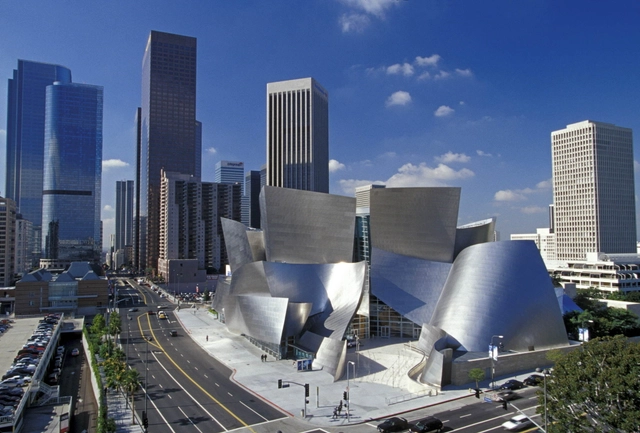
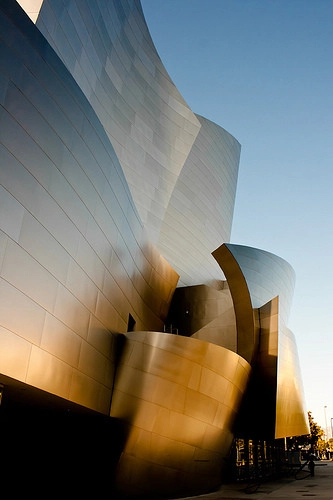
On October 23rd, the Walt Disney concert hall, the project that almost never was, will celebrate its ten-year anniversary. Throughout these ten years it has had all manner of transformative power attributed to it. But has it really transformed LA? What would the city have been like if it had never been built? Would it be fundamentally different?
The answer? No.The city wouldn’t even be that different in the immediate vicinity of Grand Avenue.
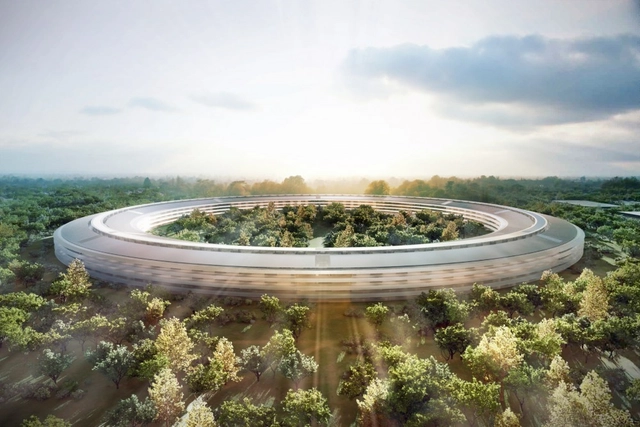
In a recent article for the Financial Times, Edwin Heathcote explores the 'Skyscraper Index', an informal term that suggests a correlation between the construction of a big company's ambitious headquarters and subsequent financial crisis: "Think of the Empire State Building opening into the Wall Street crash of 1929, the Twin Towers being completed as New York City was flirting with bankruptcy or the Petronas Towers in Kuala Lumpur taking the mantle of the world’s tallest building and presaging the Asian financial crisis." Heathcote goes on to describe the latest generation of headquarters being constructed for our current, tech-oriented goliaths - like Apple's monolithic "donut", by Foster + Partners, and Facebook's Gehry-designed Menlo Park campus - and wonders: "if skyscrapers can tell us something about the temperature of an overheating economy, what do these groundscraping new HQs say?" Read the full article here.
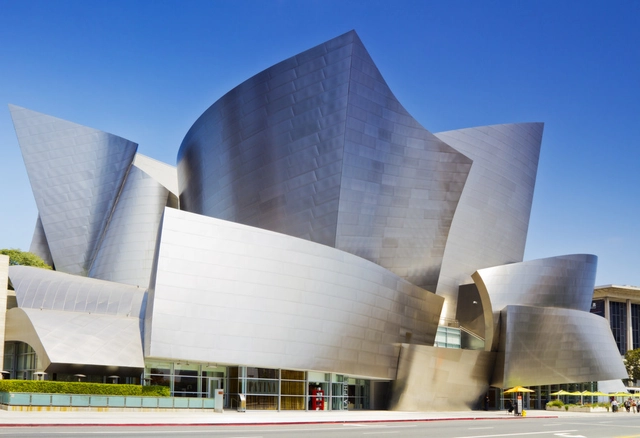
It's been called a "remarkable work of public architecture" that "engages [the city of] Los Angeles" like few others. With the 10 year anniversary of Frank Gehry's Walt Disney Concert Hall approaching, the LA Times, with some great, in-depth coverage, has been taking a look back at its architecture and what makes it such an important icon for both Gehry and LA. Oh, and don't forget to check out its soon-to-be neighbor on Grand Avenue, the Broad Museum by Diller Scofidio + Renfro!
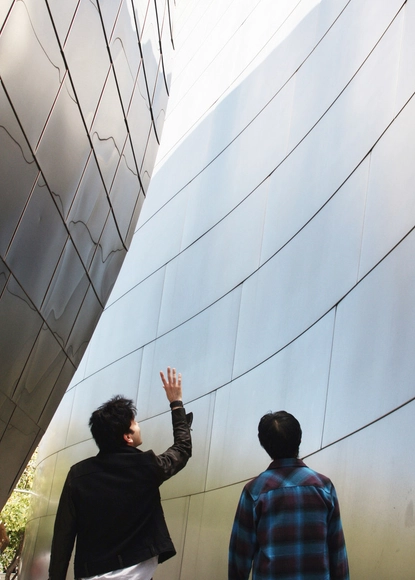
Iman Ansari with Edwin Chan at Walt Disney Music Hall. Image Courtesy of an-onymous.com
In this article, which originally appeared in Metropolis Magazine’s Point of View Blog as “Q&A: Edwin Chan,” Iman Ansari interviews Edwin Chan, a design partner at Frank Gehry architects for 25 years, about Gehry and the many significant cultural and institutional projects he worked on before starting his own practice, EC3.
Iman Ansari: When we look at the work of Frank Gehry or Thom Mayne, as LA architects, there is a certain symbolic relationship to the city evident in the work: the industrial character of these buildings and elements of the highway or automobile culture that tie the architecture to the larger urban infrastructure, the scale of the projects, as well as the conscious use of materials such as metal, glass or concrete. But as freestanding machine-like objects sitting at the heart of the city these buildings also embody certain ideals and values that are uniquely American, such as individualism, and freedom of expression. In your opinion how is Frank Gehry's work tied to Los Angeles or the American culture?
Edwin Chan: Absolutely. I think Frank's work definitely has DNA of LA as a city. We talk about the idea of a democratic city a lot, and coincidentally Hillary Clinton mentioned that in her speech recently saying: “We need a new architecture for this new world, more Frank Gehry than formal Greek,” because it's the expression of democracy. In that sense you could think about the building embodying certain type of values that are manifested architecturally.
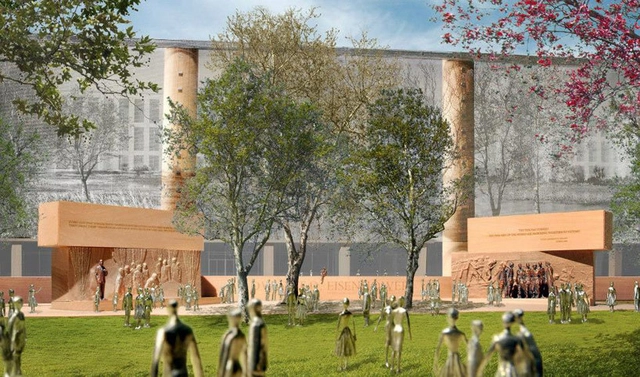
Frank Gehry’s revised design for the controversial Eisenhower Memorial has been approved by US Commission of Fine Arts in a 3-1 vote - a major step forward after the project’s funding was nearly scraped last year. Though Gehry’s redesign was welcomed by the commission, BDOnline reported that they’ve requested he removes the three woven metal tapestries that border the site, as they believe the scale “undermined Gehry’s attempt to convey the president’s humility.” Gehry accepted this request and now awaits re-authorization from Congress.


.jpg?1397700541 "Fife, Scotland, 2006 by Zaha Hadid Architects / © Werner Huthmacher. ImageAll sharp angles and painted a sinister black, Zaha Hadid's Fife center isn't the first thing you'd expect from a Maggie's Centre. The exterior invited comparisons to a bunker, despite the airy, humane spaces within. \"Zaha got a lot of criticism and her building is bloody good,\" Jencks says of his former student's design. The building was the architect's first in the UK.")