The Second Studio (formerly The Midnight Charette) is an explicit podcast about design, architecture, and the everyday. Hosted by Architects David Lee and Marina Bourderonnet, it features different creative professionals in unscripted conversations that allow for thoughtful takes and personal discussions.
A variety of subjects are covered with honesty and humor: some episodes are interviews, while others are tips for fellow designers, reviews of buildings and other projects, or casual explorations of everyday life and design. The Second Studio is also available on iTunes, Spotify, and YouTube.
This week David and Marina of FAME Architecture & Design discuss the local architecture, adobe buildings, and natural landscapes of the southwest region of the United States. The two cover the role nature has in cities, designing experiences, how architecture can co-exist with the natural landscape, craftsmanship, and more. Destinations included the Taos Pueblo in New Mexico, Monument Valley, Antelope Canyon, Frank Lloyd Wright’s Taliesin West, and Paolo Soleri’s Arcosanti.
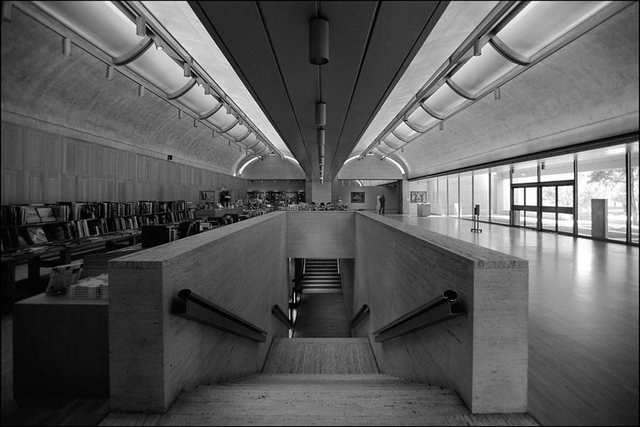
Kimbell Art Museum / Louis Kahn. Image Courtesy of Xavier de Jauréguiberry
AD Classics presents you with some of the greatest buildings of the past that have influenced and shaped architecture today. Throughout ArchDaily's 13 years, more than 200 classics were published, and for this edition, we have rounded up the top 20 most visited Architecture Classics to date.
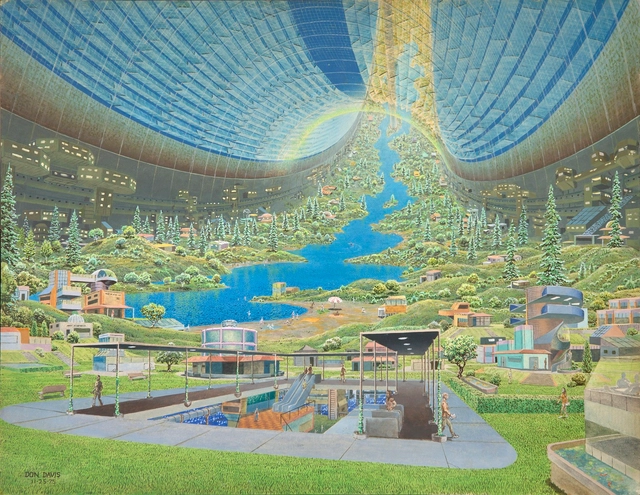
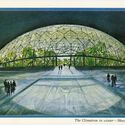
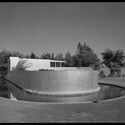
Don Davis (American, born 1952). Stanford torus interior view. 1975. Acrylic on board, 17 × 22″ (43.1 × 55.9 cm). Commissioned by NASA for Richard D. Johnson and Charles Holbrow, eds., Space Settlements: A Design Study (Washington, DC: NASA Scientific and Technical Information Office, 1977). Illustration never used. Collection Don Davis. Image Courtesy of The Museum of Modern Art
The Museum of Modern Art New York has announced the opening of an exhibition focused on the first realized and unrealized projects that address ecological and environmental concerns. Featuring works by architects who practiced mainly in the United States from the 1930s through the 1990s, the exhibition titled “Emerging Ecologies: Architecture and the Rise of Environmentalism” is on view from September 17, 2023, through January 20, 2024. The over 150 works showcased reveal the rise of the environmental movement through the lens of architectural practice and thought.
If you’ve been in the profession of architecture long enough, you come to know a certain rarified subset of fellow professionals: Those who call themselves “architects,” who have a degree, and who may even be licensed and members of the AIA, but who do not practice architecture. They simply like being an “architect.”
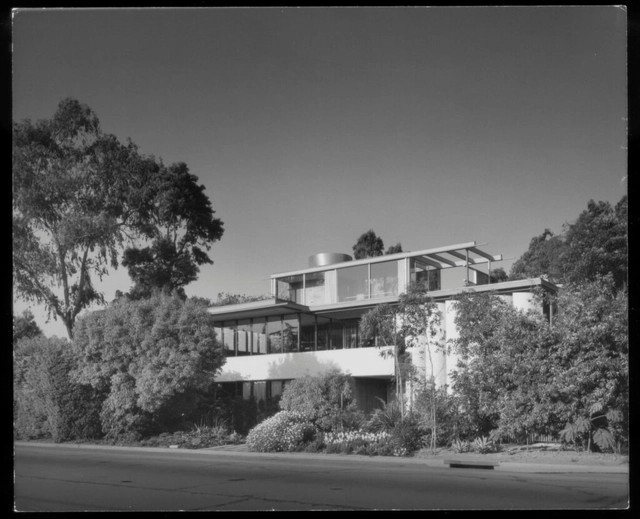
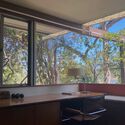
Courtesy of Raymond Neutra and the Neutra Institute, Photo by Julius Shulman | VDL Research House
It was, of course, Frank Lloyd Wright who set up the ground for modern architecture to happen in Los Angeles. Then came the Viennese, Rudolph Schindler in 1920 and Richard Neutra in 1925 at the invitation of Schindler. Both worked for Wright choosing to learn from him what they saw as essential—by focusing on spatial and formal clarity, transformability, restrained materiality, and the living environment to achieve a desirable quality of life within. Neutra and Schindler collaborated at first, and then each built a rich portfolio, mainly comprising houses and apartment blocks. Universal in principle, these abstract robust structures defined and led the development of a local building vernacular. These buildings, of which there are several hundred, are now strongly associated with the two architects’ adopted city.
It has been about 200 years since the École des Beaux-Arts in Paris created an academic discipline—and thus the profession—of architecture. The central role of the architect as the defining agent of creation transcended the Master Builder, a role that defined those who designed buildings not as experts or celebrities but as stewards of building traditions.
Carlson-Reges House (1992-1996). Image Courtesy of Michael Rotondi
Michael Rotondi’s buildings—museums, civic centers, education facilities, monasteries, restaurants, and residences—evoke kinetic mechanisms that fold, hinge, twist, and split open. They express the architect’s feelings, thinking, and mood at the time they had been designed, and, on some occasions, during their assembly and construction. Rotondi was born in 1949 in Los Angeles.
He established his RoTo Architects, a research-based firm in his native city, in 1991 after co-heading Morphosis for 16 years with Thom Mayne. Parallel to his practicing career, the architect has been teaching and lecturing at SCI-Arc, Southern California Institute of Architecture, which he co-founded in 1972, led its graduate program from 1978-1987, and was the school’s second director for a decade from 1987 to 1997.
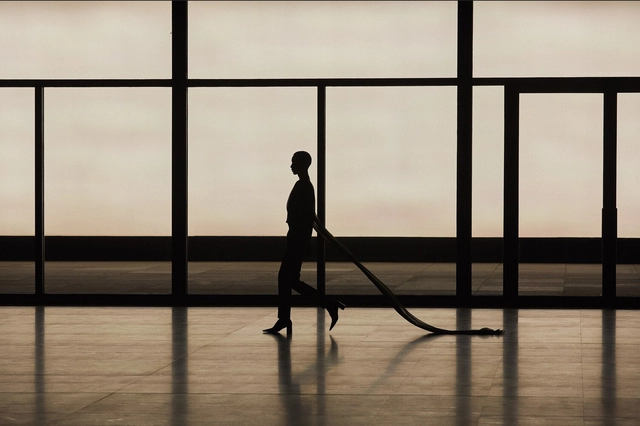
Saint Laurent Men’s Summer 24 at Mies van der Rohe’s Neue Nationalgalerie. Image Courtesy of Saint Laurent
Architecture and fashion share an interesting interplay in the formation of cultural expressions and identities. Both disciplines can become vehicles for creativity at different levels. Architecture is often described as the “third skin” of humans, while clothes represent the second skin, highlighting somewhat similar functionality of protecting the body while also allowing for self-expression and individuality.
The relationship between architecture and fashion can also be seen in the shared design principles, such as form, proportion, human scale, and materiality. More than a simple background for runway shows, architecture can contribute to setting the atmosphere, becoming a source of inspiration, and orienting the movement through space. Collaborations between architects and fashion houses, such as the renowned partnership between OMA/AMO and Prada, further blur the boundaries between the two disciplines, demonstrating the myriad of interconnections between the two creative fields.
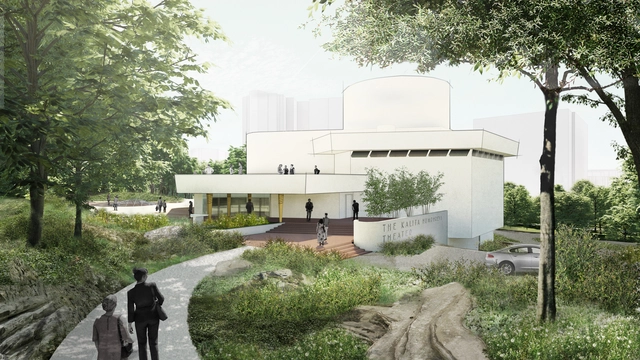
Kalita Humphreys Theater Restored, view from Katy Trail . Image Courtesy of Diller Scofidio + Renfro
Diller Scofidio + Renfro, in collaboration with Dallas Theater Center, unveiled the design proposal for the Kalita Humphreys Theater master plan, centered around one of Frank Lloyd Wright’s lesser-known buildings. Over the years, neglect and additions have compromised the building’s integrity. The project aims to restore the mid-century theater to its original state by applying a multifaceted approach. According to the architects, this includes surgical extraction, selective reconstruction, preservation, and a faithful reinterpretation of Wright’s design intent. The master plan also aims to transform the surrounding public green space into an active and attractive park connected to Turtle Creek and Katy Trail, some of the most visited destinations in Dallas.
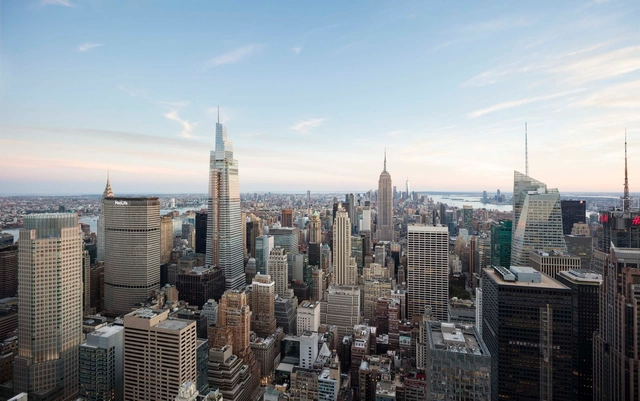
As the largest city in the United States, New York City is one of the most diverse and vibrant cities in the world, recognized by many as the center for global media, culture, fashion art, and finance. The city was founded in 1624 by settlers from the Dutch Republic and has since grown into “the city that never sleeps”.
While almost every style of architecture exists in New York City, the metropolis is most well known for its skyscrapers, both in historical styles such as Neoclassical and Art Deco and in their varied contemporary expressions. The first building to bring the world's tallest title to New York was the New York World Building, in 1890. Later, New York City was home to the world's tallest building for 75 continuous years, starting with the Park Row Building in 1899.
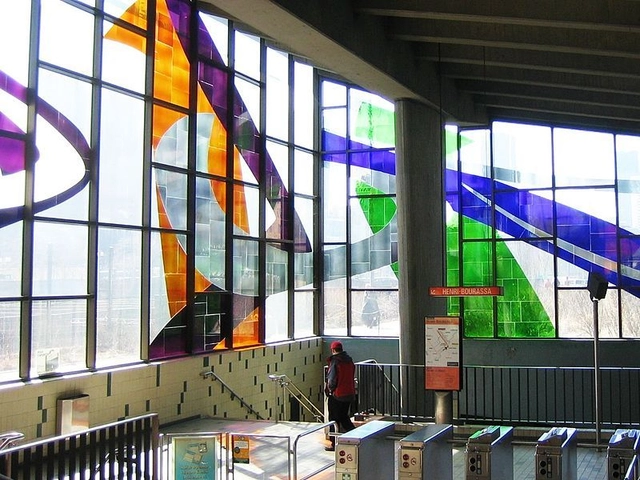
In terms of architectural enhancement, stained glass is often pieced together in order to produce depictions of decorative art, allowing light to filter and penetrate a particular structure or building. As a component it is both decorative and a variety of window, allowing a substantial and sufficient amount of light into a space, for atmospheric and beneficial effect.
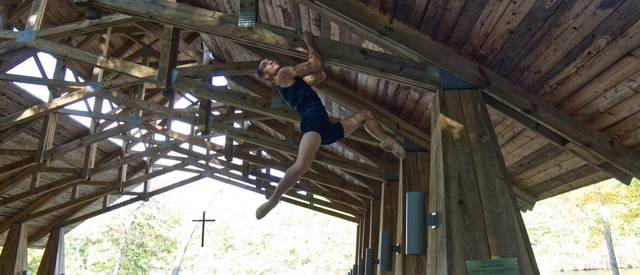
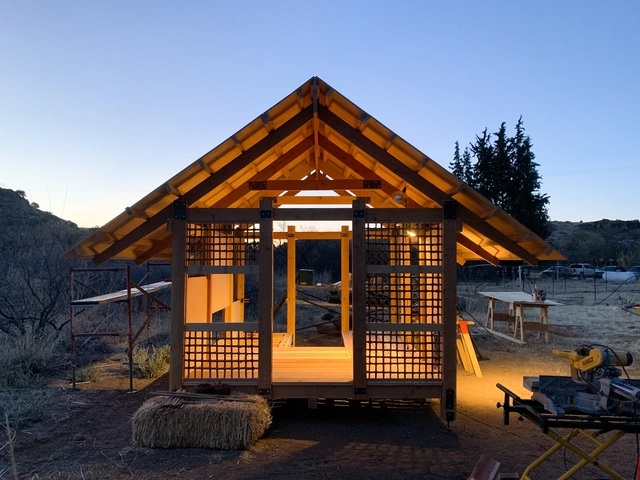
The School of Architecture, founded by Frank Lloyd Wright as the Taliesin Fellowship in 1932, is undergoing significant transformations. Two years after separating from the Frank Lloyd Wright Foundation, TSOA landed at Arcosanti, an experimental desert community in Arizona owned and operated by The Cosanti Foundation. In line with the school’s values, the program at Arcosanti seeks to provide students with a contemporary design education based on immersive, experimental, and experiential learning. The curriculum offers 2 and 3+ year NAAB-accredited Master of Architecture degrees and a 1.5-year Master of Science in Design-Build.
The Second Studio (formerly The Midnight Charette) is an explicit podcast about design, architecture, and the everyday. Hosted by Architects David Lee and Marina Bourderonnet, it features different creative professionals in unscripted conversations that allow for thoughtful takes and personal discussions.
A variety of subjects are covered with honesty and humor: some episodes are interviews, while others are tips for fellow designers, reviews of buildings and other projects, or casual explorations of everyday life and design. The Second Studio is also available on iTunes, Spotify, and YouTube.
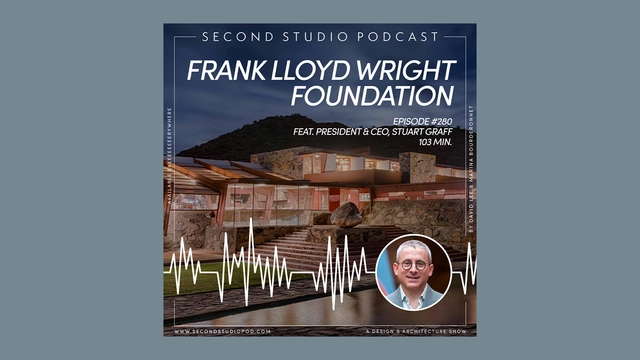
This week David and Marina are joined by Stuart Graff, President and CEO of the Frank Lloyd Wright Foundation to discuss the foundation’s mission; the role cultural institutions play in supporting creative professions; preserving and furthering Wright’s legacy through programs and collaborations; intellectual property; Stewart becoming CEO of the foundation; running a successful non-profit; Frank Lloyd Wright’s principles; and more.
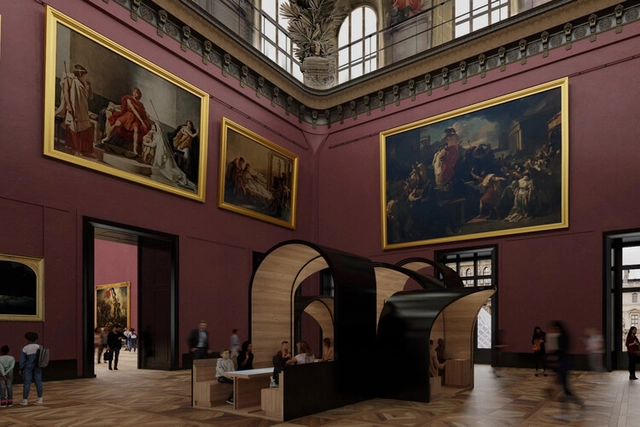
Louvre Museum Pavilions / France . Image Courtesy of Studio Malka Architecture
Housing objects of artistic, cultural, historical and scientific importance, the term ‘museum’ is derived from the Latin language. In regards to classical antiquity, in Ancient Greek ‘mouseion’, meaning ‘set of muses’ was a philosophical institution, a place for contemplation and thought. These muses refer to the 9 muses in Greek mythology, the goddesses of the arts and sciences, and patrons of knowledge. Early museums’ origins stem from private collections of wealthy families, individuals or institutions, displayed in ‘cabinets of curiosities’ and often temples and places of worship. Yet these ‘collections’ are predecessors of the modern museum, they did not seek to rationally categorize and exhibit their collections like the exhibitions we see today.
In definition, the modern museum is either a building or institution that cares for or displays a collection of numerous artifacts of cultural, historical, scientific or artistic importance. Through both permanent and temporary exhibits, most public museums make these artifacts available for viewing and often seek to conserve and document their collection, to serve both research and the general public. In essence, museums house collections of significance, whether these be on a small or large scale.
More than 60 years after his death, Frank Lloyd Wright's story remains relevant and arduously studied because of the great legacy he left to architecture. Considered the first truly American architect and the first superstar of his craft, Frank Lloyd Wright lives on through his buildings, his influence and his collective imagination. Surprisingly, more than half of Wright's 1171 architectural works were never erected.
Frank Lloyd Wright was one of the most internationally influential American architects and is considered the forefather of organic architecture as well as the Modern and Prairie School Movements. Throughout the years, Wright's works have been awarded even more importance, with 8 gaining entry into the UNESCO World Heritage Site registry.
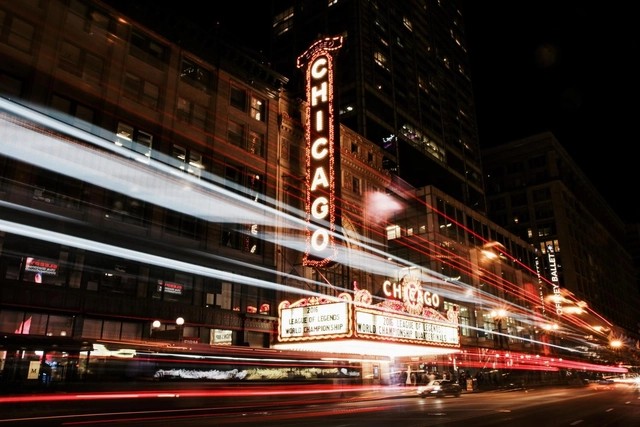
On August 12, 1833, the Town of Chicago had roughly 200 inhabitants. Four years later, in 1837, it was upgraded to The City of Chicago – an interesting fact given that there are still 19 incorporated towns in Illinois. The Great Chicago Fire of 1871 killed 300 people, destroyed about 3.3 square miles (9 km2), and left more than 100,000 residents homeless. However, by that time Chicago had become the world’s fastest-growing city and its population had risen over 300,000 inhabitants. The fire meant these ambitious citizens had to start again.
With admirable strength, the city was reborn from the ashes and some of Chicago’s best architecture was constructed immediately after. Structures like the Rookery Building (1888, Frank Lloyd Wright), the Auditorium Building (1889, Louis Sullivan) and the Monadnock Building (1893, Burnham & Root, Holabird & Roche) are a few examples of the high standards the city was aiming for.
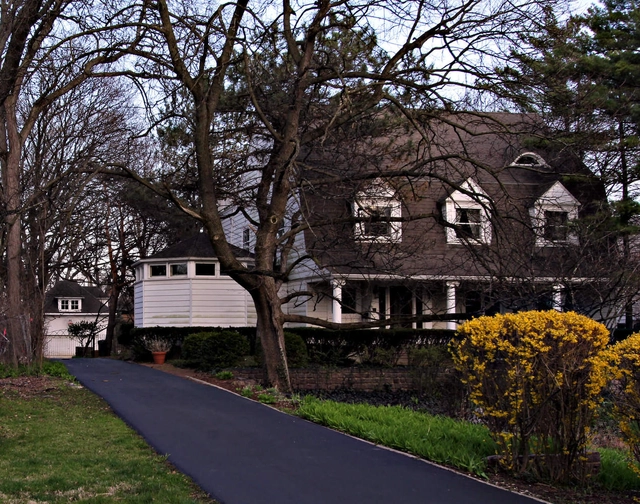
Contemporary view of the Bagley House. Image Courtesy of Patrick Mahoney, AIA
Less than two months ago, the future of an 1894 Dutch Colonial-style home designed by Frank Lloyd Wright wasn’t looking all that bright after it hit the market for $1.3 million in the Chicago suburb of Hinsdale, Illinois. As of this week, however, the historic Frederick Bagley House, described by the nonprofit Frank Lloyd Wright Building Conservancy as a “unique and irreplaceable” early work of Wright, has found a very happy ending—or, more aptly, a new beginning.





.jpg?1570002957 "La Muralla Roja / Ricardo Bofill. Image Courtesy of Ricardo Bofill")


























.jpg?1652479150 "The Solomon R. Guggenheim Museum / New York . Image © Laurian Ghinitoiu")