With the current economic volatility and a looming recession, this conference brings together the brightest business minds in our profession to provide you with insights, guidance and tactics to not only survive the next few months, but thrive. AIA Houston invites you to participate in an exciting two days of virtual learning. The conference will educate and inform architects on tools and strategies to navigate the current global crisis and anticipate the new normal beyond.
The disruption caused by the coronavirus may have opened doors that many have been waiting for. Preliminary studies support that we experienced a faster technological revolution during the last three months than ever before. Forced to adapt, and to ensure the liveability of urban fabrics, policymakers are reviewing data protocols and legislations, giving way to tech-powered urban health solutions. However, many of those amendments will stay post virus. The precedence gained as a legacy will offer cause for both wonder and worry for our urban future.
https://www.archdaily.com/938484/the-cause-of-wonder-and-worry-over-digital-cities-post-virusZaheer Allam, Gaetan Siew and Felix Fokoua
Yesterday, on the 20th of April, we passed the cap of 111 days of the pandemic. During this time, we’ve been busy fighting in supermarket aisles over toilet paper in Australia, lining up for marijuana purchases in Amsterdam and boosting gun demand in the USA. We are conscious none of those will help in fighting the virus, but we do it, nonetheless. Beyond the bizarre human psyche, this pandemic unveils interesting trends that will, whether we like it or not, impact on Architecture and Cities.
https://www.archdaily.com/937928/introducing-an-illustrated-series-architecture-and-cities-post-virusZaheer Allam, Gaetan Siew and Felix Fokoua
While technology and construction have progressed rapidly in recent years, allowing structures to be built taller and faster than ever, remnants of colossal ancient monuments remind us that construction techniques from as long as hundreds of years ago had enormous merit as well. In fact, many of the innovations of antiquity serve as foundations of modern construction, with the Roman invention of concrete serving as a cogent example. Other essential ancient construction techniques, such as the arch and the dome, are now often considered stylistic flourishes, with designs like the Met Opera House reinterpreting classical typologies in a modern context. Yet perhaps the most relevant reinterpretations of ancient construction today are those that do so in the interest of sustainability, renouncing high-energy modern construction methods in favor of older, more natural techniques.
https://www.archdaily.com/933010/the-future-of-the-old-how-ancient-construction-techniques-are-being-updatedLilly Cao
DesignTO’s fifth annual symposium brings nine multidisciplinary experts into one room for an inspiring discussion on a Future without Work, covering topics such as the Indigenous workforce, meaning of work, space of work, labour markets, economic systems, and other thought provoking topics. Hear from Jonas Altman, Antonio Cesare Iadarola, Komal Faiz, Carol Anne Hilton, Keith Jones, Symon Oliver, Heather Russek, Jessica Thornton, and Lexi Tsien. Supported by George Brown College School of Design and Gensler.
Population growth, increasing urbanisation and social change pose new challenges for architecture and urban planning. Reflecting these processes of change, Superscape opens a creative space for unconventional ideas meant to deliver new impulses to real-life architectural output and urban development. The biennial prize seeks to encourage innovative and visionary architectural concepts that explore new models of living and strategies for inhabiting an urban context over a broad expanse of 30 years.
Will architects be one of the professionals who will be replaced by AI in the near future? New York-based artist Sebastián Errázuriz recently opened the debate in one of his latest Instagram videos.
Errázuriz, also known for his critique/proposal of the reconstruction of the Notre-Dame church, says that it is very likely that the future of the profession as we know it might disappear. Thanks to technological advancements, only a small elite of architects who maintain architecture as an artistic practice might be the ones who will continue to practice the discipline as we know it.
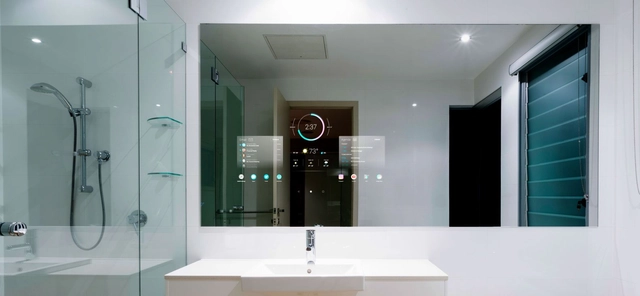
Home automation, from voice-controlled virtual assistants to app-controlled thermostats, has quickly and unexpectedly ushered the future into our own homes. As technology continues to progress, the way we interact with our environment will likely only grow more and more futuristic – even spaces as personal as our home bathrooms. While the prospect of such a highly digitized personal life may be daunting to some, others see this trend’s potential for improving not just comfort, but health and safety as well. Below, we outline some of the technologies that we hope to see in the bathrooms of the future.
https://www.archdaily.com/926022/what-will-bathrooms-look-like-in-the-futureLilly Cao
Never before have there been such fundamental uncertainties about our future. Obvious signs of climate change, a political landscape in flux, rapid advances in technology and their consequential societal changes are making us anxious about our personal life in the next decades.
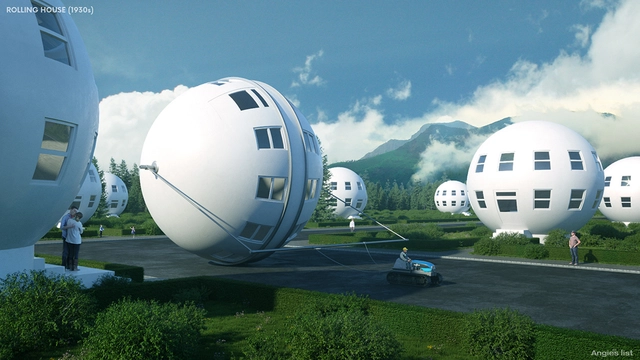
It is often claimed that “there is nothing more outdated than science fiction.” Indeed, history is awash with speculation on future ways of living, as futurists imagine how advancements in technology, trends, and social norms could alter how we live, and what we live in. The period between 1958 and 1963 could be described as “The Golden Age of American Futurism” where technological milestones such as the founding of NASA coincided with cultural icons such as The Jetsons. Some of this era’s wildest ideas centered on how the houses of the future would look.
Crime, whether we like it or not, is a driving force behind a large proportion of technological ‘progress’. In 1817, a burglary at a British dockyard led the government to start a competition, challenging locksmiths to invent an unpickable lock. The result was the Chubb detector lock, and it remained ‘unpicked’ for 33 years.
As our future megacities are defining themselves every day with bustling streets and soaring skyscrapers, a city still craves for many things but mostly - an identity. The 21st century from its onset is rapidly changing how we live and how we perceive the definitions of a city rampantly.
Architecture of the Future is the biggest architecture conference in Eastern Europe that brings together authorities, architects, engineers, developers, media – all who seek to change the city through the development of advanced technologies and the creation of iconic projects.
We live in a time of great change. As paradigmatic shifts in technology, social networks and the physical environment constantly reshape our way of living, we can foresee that the living space of the future in 10 or even 5 years will be drastically different from what it is today.
How will we live in 2025 with updated basic needs and redefined living spaces? Perhaps, physical space and distance will further give way to digital connectivity, while inter-personal relationships will be complicated by our latest affair with artificial intelligence. Or, unsustainable urban development and the celebration of all things virtual will come to a halt and humans will engage in a renewed conversation with each other and the environment.