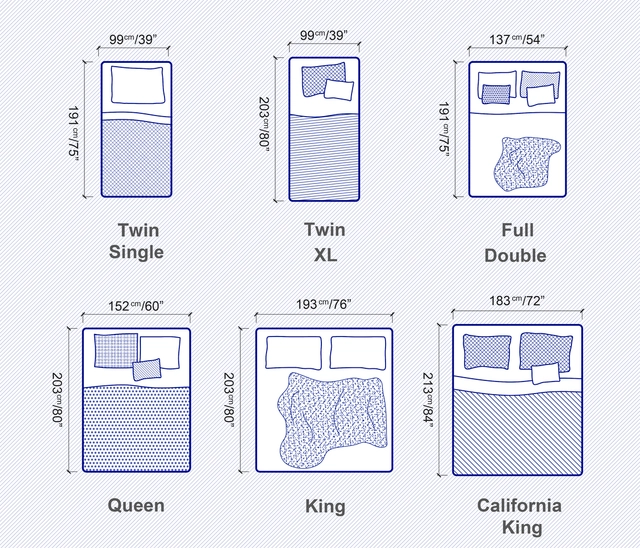
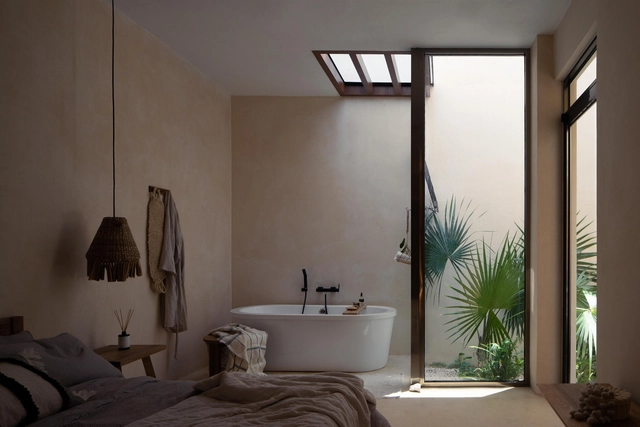
From an early age, we often hear phrases like “you must sleep a minimum of 8 hours a day.” It’s common knowledge that this brings invaluable health benefits, from reducing stress levels and keeping the immune system strong, to improving concentration, memory and decision-making skills. To guarantee a good night’s rest, having a comfortable bed that suits users’ needs is pivotal, especially considering that humans spend one-third of their entire life sleeping. Thus, when architects, designers and homeowners are faced with different bed options available in the market, the decision must be carefully thought-out and take a number of factors into account, whether related to aesthetics or functionality. But before any stylistic or material decision is made, it is crucial to start with the basics: defining the size of the mattress.
In the architectural conversations we are having in today’s world, conversations on materials are widespread. There is discussion on the viability of concrete in the contemporary context, how timber can be more sustainably sourced, and on how biodegradable materials such as bamboo should be more common sights in our urban environments.
But we also need to be talking about what goes into these buildings – that is, the furniture that decorates, enhances, and makes habitable the buildings around us. The materials used to craft these objects have constantly evolved over centuries, and as we approach the end of 2022, it’s worth asking – what does the future hold for what our furniture will be made from?
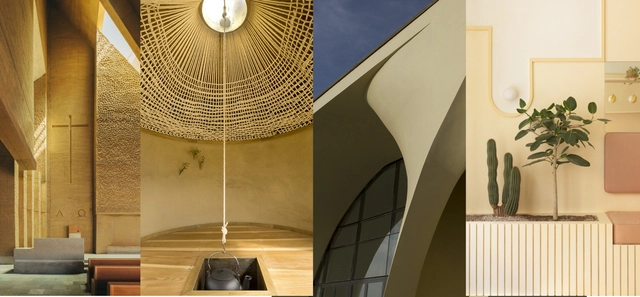
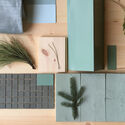
Inspired by the warm tones of harvested crops, Wild Wonder was selected as Color of the Year 2023 by AkzoNobel. Extensive research conducted by AkzoNobel, including color experts and international design professionals, identified the "Wonders of the Natural" swatch at the heart of global social and design. This trend is inspired by nature as people are re-evaluating their relationship with the environment as the source of everything in their lives. # d0c599, or pale yellow/ olive green, captures the moment's mood and conveys serenity and positivity after these recent years of uncertainty and despair.
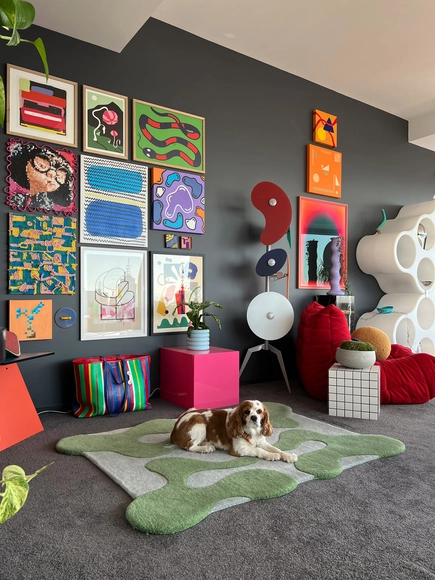
Josh and Matt's apartment embodies their "curated maximalism" style. Image Courtesy of Josh and Matt Design
With the onset of the 2020s, Gen Z is noticeably claiming their place in the world with bold perspectives and even bolder aesthetics. Gen Z proudly experiments with their identities, having grown up on an opinionated internet and through confusing lockdowns. They're bringing in a culture shift with organic shapes, colorful elements, and clashing patterns dominating art, media, fashion, and interior design. The trend is pushing away once-reigning minimalism, shouting Venturi's Less is a Bore.
At sunrise and sunset, the low sun bursts into interior spaces to flood them with joy like no ceiling or wall fixture can. Those times, however, are fleeting and difficult to catch amongst a heavy schedule.
Whether for large multi-generational families, cohabiting cohorts, or retired couples, the kitchen is the heart of our homes. It’s where we spend most of our time and, therefore, where we keep all our stuff. Along with the usual food and cookware, kitchens are also resting places for household utility essentials like cleaning products, laundry facilities, and the infamous ‘everything drawer’.
It is possible, however, to achieve organizational nirvana in the kitchen without living the monk-like lifestyle of an extreme minimalist. Here’s how to design a kitchen that’s well organized and, more importantly, stays that way.
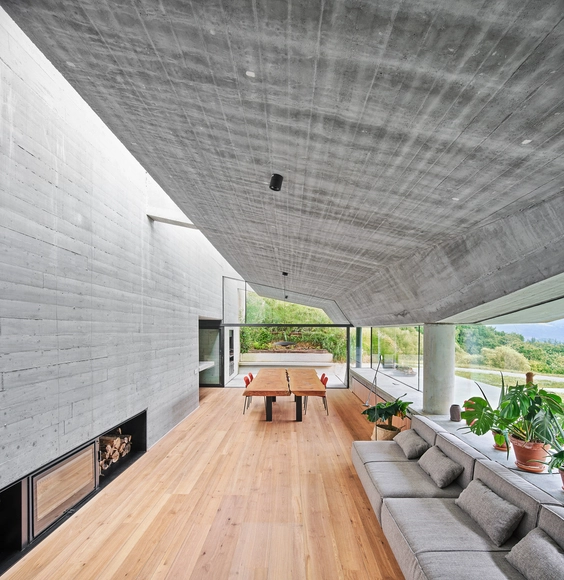
Architects are constantly diving into design strategies that aim to select the best products to create outstanding atmospheres inside their projects. The solutions adopted in projects, especially in interiors, are highly influenced by trends that mirror what society values most at the time. But how are interiors being designed nowadays? With a focus on natural interiors and the interaction with their context, architecture is prioritizing local materials and textures, natural light and the use of minimal furniture that allows continuity throughout space.
Below we present a selection of inspiring projects that, using products from Spanish brands, showcase these modern trends, from the use of natural materials to maximizing natural light.
In large cities, it is becoming increasingly common to find buildings that are capable of admitting different configurations and layouts in their internal spaces. Towards the end of the 1960s, duplex typologies began to appear in buildings in the city of Buenos Aires, when the Building Code allowed them to be located in the obligatory setbacks of the upper floors.
Usually, refurbishments are to completely change a space or, in a more surgical way, to bring about improvements in mobility and privacy issues. No matter the number of walls to be demolished, coatings to be replaced and joinery to be designed, the result is always looking for a more functional and beautiful space. In the case of apartments that usually have standard floor plans, intervening in them is also a way of bringing a unique and more personal character to each home.
https://www.archdaily.com/987607/before-and-after-10-refurbishments-in-brazilian-apartmentsArchDaily Team
The rise of co-living has begun to radically shape interior design. In residential projects and commercial developments, co-living is tied to the emergence of the Kitchenless Home idea. Began by Spanish architect Anna Puigjaner, this idea is tied to a range of innovations in interior design and co-living that have been built over the last five years. In turn, these new interiors began to tell a story of housing and spatial experience rooted in modern life.
When thinking of marble, we often associate the material with ancient Greek sculptures, Classical architecture, or the Italian Renaissance. Monumental landmarks such as the St. Peter’s Basilica or the Taj Mahal, have positioned marble as an elite and timeless material that stands the test of time. And in today's conversations about the future of construction materials, amid sustainability, feasibility, and affordability, the natural stone remains high-caliber. In this interior focus, we’re taking a look at marble between the past, present, and future.
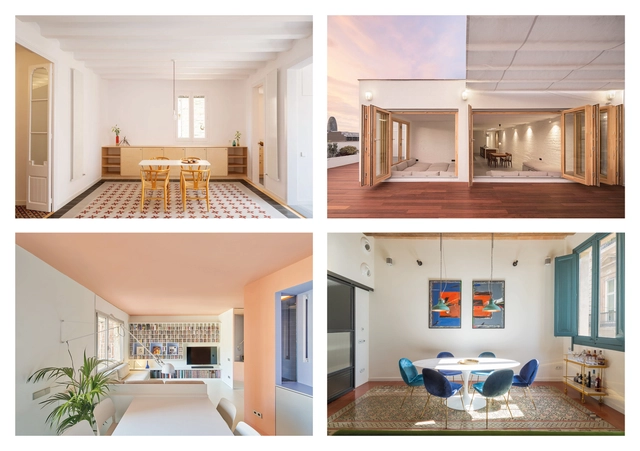
Reforma en Sants, Un oasis en el corazón del Poblenou, Departamento THE DUKE, Reforma de vivienda en la calle Calabria. Montaje con fotografías de reformas en Barcelona. Image via ArchDaily
Nowadays, the integral reform of flats in Barcelona is one of the most common activities for both freelance architects and local architectural studios. This is not surprising in a city with more than 4,000 years of history in which there is a lot of buildings and little room for new construction.
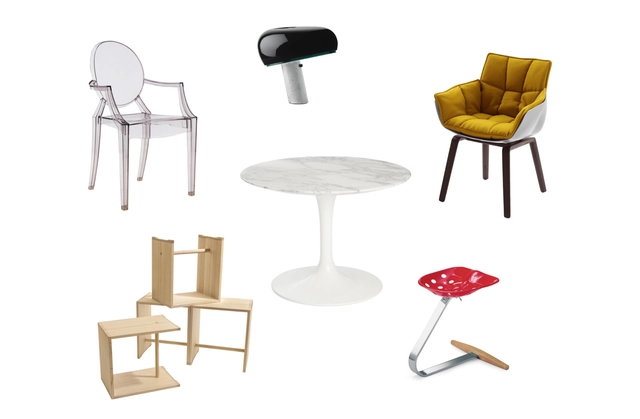
Never not en vogue: Philippe Starck’s Ghost chair by Kartell, the Snoopy lamp by Achille Castiglioni for Flos, Patricia Urquiola’s Husk Chair by B&B Italia, the iconic Zanotta Mezzadro stool by Castiglioni, Eero Saarinen’s Tulip table as part of the Pedestal Collection for Knoll International and Max Bill’s Ulmer stool, produced by wg form
Sustainability is on everyone's lips these days – but mostly with a view to the future and the question of how it is possible to use fewer resources, produce more sustainably and reduce waste. However, sustainability can also be lived with a view to the past or the present – namely with a domestic environment that consists of durable furniture designs that outlast trends and never go out of fashion. In the third part of our series on design icons, we put Philippe Starck, Eero Saarinen, Achille Castiglioni, Patricia Urquiola and Max Bill in the spotlight with their evergreen furniture icons, which can be found on architonic.com.
Beyond the traditional boundaries of Scandinavian minimalism and Japanese wabi-sabi, the aesthetics from the far north and the far east have more parallels than one might think at first glance –it is not for nothing, after all, that they are so popularly combined with each other, creating the term Japandi.
Although the design and layout of bathrooms we use nowadays date back millennia, they are still considered as one of the most difficult to design and renovate. During the earliest stages of planning a bathroom, there are plenty of rules of thumb to follow, especially since it involves a lot of association and "pre-planning" with plumbing, electrical circuits, angular or uniquely-shaped fittings, and small floor areas. We will explore the basics of bathroom plumbing and where to allocate each fixture to optimize the bathroom's layout, facilitating your DIY remodel project or creating the space from scratch.
With all of the strange residential interior design trends that are making a comeback, conversation pits are probably one that you wouldn’t expect. This well-known 1970s design feature feels both very retro and modern, providing a comfortable place to lounge and a complete escape from the distractions of television and cinema. Instead of a design that supports and enhances a digital connection, having a large area to sit, and quite literally conversate, might be the space that we all need.
Over the years, interior design has evolved according to the needs that arise, but above all according to the experiences it seeks to evoke in the user. In the last two years we have witnessed a radical change and a special interest in this subject because the pandemic forced us to pay specific attention to the configuration of the places we inhabit. This brought about much more holistic designs that seek to address the wellbeing of the user, combining colours, sensory experiences, technology and natural elements that promote health.
The past couple of decades introduced the world to new ways of living as a result of different social, economic, and ecological changes. Naturally, these changes found their way into the architecture and urban practice, provoking new concepts within traditional typologies. Designing a space, regardless of its function, has always prioritized users' needs and ensured practicality and functionality, but recently, keywords like flexibility, privacy, inclusivity, and eco-consciousness have become driving forces behind design processes. In this interior focus, we will look at how current cities and living trends across the world have reshaped interior design and introduced modifications to typical typologies.