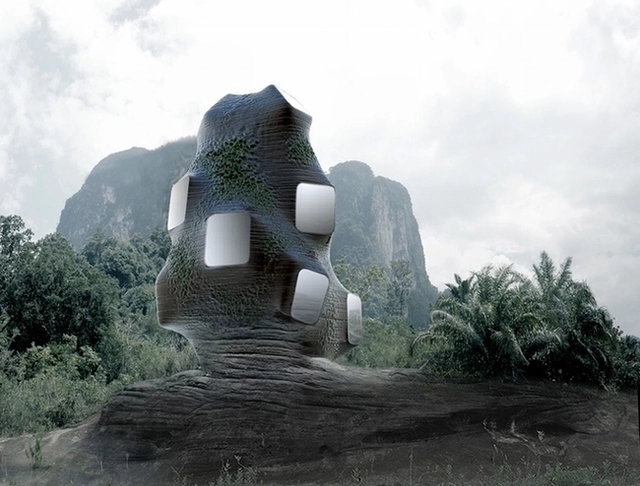
New-Territories/ M4 has launched a Kickstarter campaign to fund MMYST, a hybrid architecture project that combines a hotel with a manufactured habitat for Swiftlets, a bird native to Thailand. Located in Krabi, the building will be used almost exclusively by backers of the project and will be set for removal in 10 years. In order to be realized, the project requires $200,000 in funding before October 25, 2015. Read more about this experimental project after the break.
Architect and engineer, Werner Sobek, is urging cities to become emissions-free by the year 2020 – for all cars and buildings to be entirely powered by renewable energy. Sobek shared this goal during his acceptance speech of the Fritz Leonhardt Prize in July 2015, saying that this goal is achievable, but only with the full support of automotive and construction industries. Although seven leading, industrialized nations have agreed to de-carbonization by the end of the century, Sobek believes that that would be too late. Read more about Werner Sobek’s vision of the future after the break.
Participating in the What Can Design Do conference in Amsterdam, Ole Scheeren took time, along with several other creators, to discuss the impact of the working environment. Playfully dubbed, “Pod Sessions,” each talk takes place in De Vorm’s contemporary Pod chair, the PET plastic improving acoustics and signature Dutch felt providing comfort. In his Pod Session, Ole Scheeren, founder of Buro OS and lead designer on the CCTV Building in China, talks about the nature of a transitional workplace, the importance of collaboration, offices as a creative tool and the necessity of having a personal presence in a project. Having participated in projects across the world, Scheeren frequently moves to the site of his latest projects, as was the case with the CCTV Building.
Created by the Union International des Architects (UIA)in 2005, World Architecture Day is celebrated on the first Monday of October with the aim of reminding the world about the collective responsibility of architects in designing our future cities and settlements.
This year, the UIA has selected “Architecture, Building, Climate” as the theme of the day, seeking to highlight the essential role that architecture, design and urbanism have in the reduction of greenhouse gas emissions. With international climate treaty negotiations set to happen later this year, the “UIA members, working bodies and partners will mobilize on 5 October to promote actions and solutions that apply the enormous power of architecture and urban design in coping with global climate change, one of the greatest challenges of our time.”
Through small actions architects can collectively make a big difference and create significant changes. To celebrate World Architecture Day, we have rounded up a selection of projects that have taken steps towards the challenge of protecting our environment.
Text description provided by the architects. Following up a year of development, Penda has unveiled their installation for Beijing Design Week (BJDW) 2015 – Rising Canes, a structural system made entirely of bamboo and ropes. Meant to be a speculation system for larger developments, the installation is fully modular, ecological and easy to expand in every direction. Bamboo was chosen as the main construction material for its long traditional roots in China and fantastic structural capability, as well as part of a desire to fight its current obscurity as a construction material.
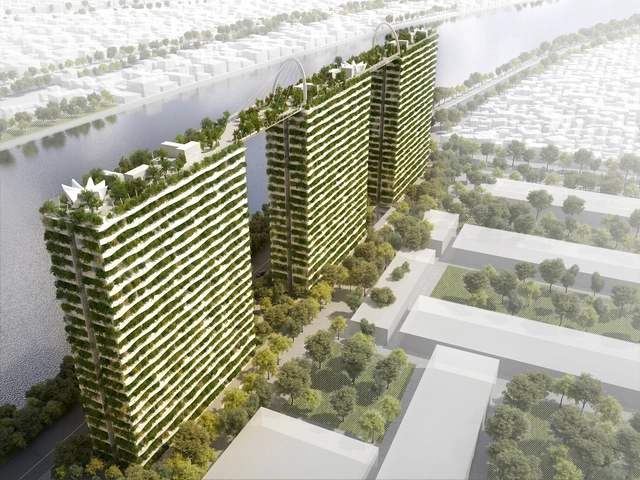
Aerial Rendered View. Image Courtesy of Vo Trong Nghia Architects
Known for their work in adding greenery to the cities of Vietnam, Vo Trong Nghia Architects have unveiled their latest set of condominiums for Ho Chi Minh City – three towers covered in bamboo. Located 3.5km from the centre of Ho Chi Minh City, their project “Diamond Lotus” has enough units for 720 families, with a total floor space of 67,240 square meters across its three buildings. Read more about this project after the break.
Skidmore, Owings & Merrill LLP (SOM) has unveiled their design for the U.S. Department of Energy’s Oak Ridge National Laboratory (ORNL): a 3D-printed building powered by a 3D-printed vehicle developed by ORNL. Dubbed AMIE, the project was developed in collaboration with ORNL, University of Tennessee (UT), Clayton Homes, General Electric, Alcoa, NanoPore and Tru-Design. SOM was able to take the design from concept to completion in less than a year.
Combining mobile power with energy-efficient design and photovoltaic (PV) panels, the AMIE presents possibilities for human shelter off-the-grid. Following previous work by SOM, demonstrating the use of 3D printing for complex, organic geometries, the new building combines structure, insulation, air and moisture barriers, and exterior cladding into one shell.
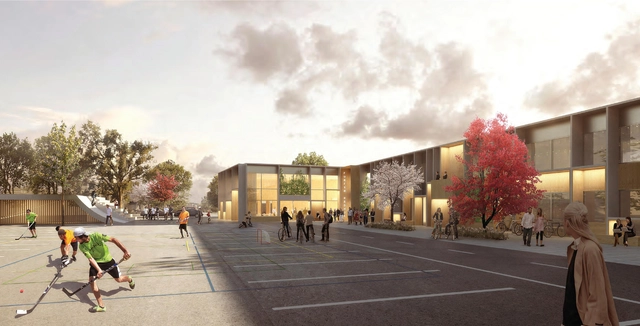
Following a turnkey competition, NORD Architects was awarded the contract for their design of the new FuresøCity Hall in Denmark. The project, consisting of 2,000 square meters of renovation and 3,400 square meters of new space, is set to finish by 2017 and will house 300 employees. Driven by sustainable and democratic design, the new city hall is estimated to reduce annual operating costs by 8 million DKK for the Furesø government. Read more about this upcoming project after the break.
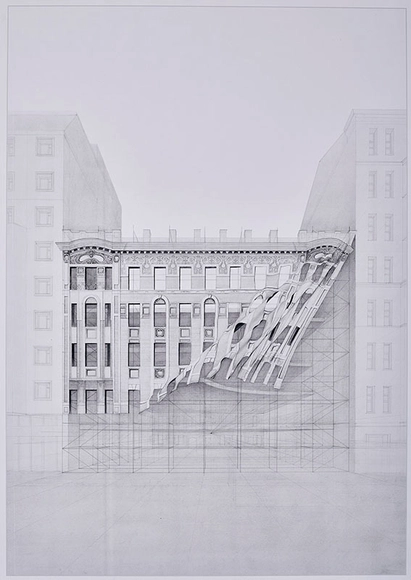
Students worldwide are invited to submit drawings “that inspire, communicate, and engage” with the theme of Sustainability Through Architecture. Thus, drawings “should focus on sustainability and architecture’s ambition to take an active part in the change of our society,” and “should address architecture’s ability to contribute to a sustainable environment on all scales—concepts, utopias, buildings, landscapes, and cities.”
Dubbed Smog Free Tower, the 7-meter-tall vacuum acts as a filter that uses patented “ozone free ion technology” to clean 30,000 cubic meters of air per hour using only minimal wind and electrical energy.
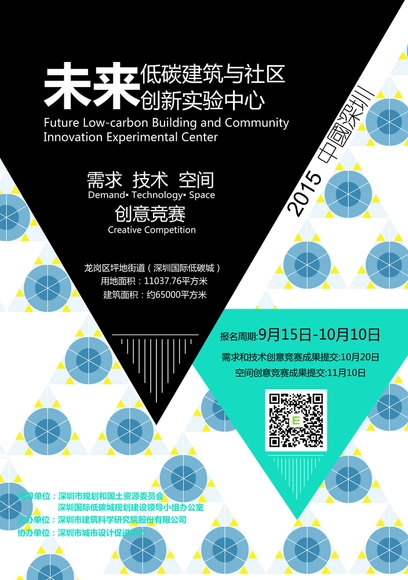
Located in the underdeveloped Pingdi Subdistrict of Shenzhen, the project site is a part of the Shenzhen International Low Carbon City, a roughly 53 square kilometer area less than two hours away from Hong Kong with the goal of utilizing low-carbon and carbon-zero technologies in order to significantly boost sustainable development.
IBR is calling for submissions from individuals, teams, and even research institutes, design institutions, and any others, to participate in one, two, or all three of the competition’s categories.
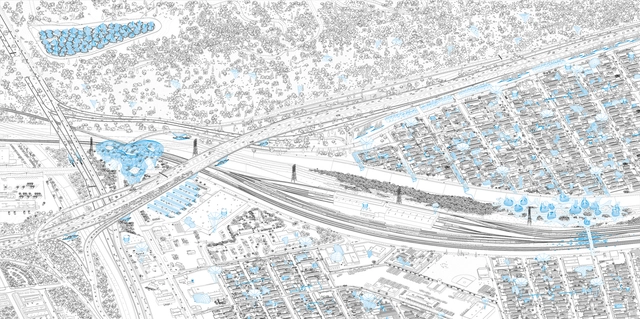
Lorcan O’Herlihy Architects (LOHA) has designed a speculative system of interventions for the Los Angeles River that “examines the relationship between urbanization and water use to develop new models of densification that recognize and tap into existing ecological and infrastructural patterns.” Called WATERshed, the design is part of the A+D Museum’s ongoing “Shelter: Rethinking How We Live in Los Angeles” exhibition that explores new typologies of housing in Los Angeles.
With their model for urban regeneration, LOHA hopes to address issues like the ongoing California drought, as well as the United Nation’s prediction that by 2030, nearly half of the world’s population will be living in areas of high water stress. Thus, the plan utilizes the Los Angeles River as a resource for water use and management in order to provide a path for sustainable growth in Los Angeles, and an example for other cities.
Utah-based community project Summit has announced Mountain Architecture Prototype (MAP), an SPM Design Competition, "to select the design of a cabin prototype in an effort to push forward the conversation around what it means to build responsibly at 8,400 feet in the Wasatch [Mountain] Range.”
The competition seeks submissions for a structure of up to 2,500 square feet, which will be located on a 12 degree sloped site at SummitPowder Mountain. Sustainable designs are highly encouraged, particularly with the use of natural materials.
“I think that [sustainability education] is a massive responsibility of ours: to go beyond what we’re being asked to do, and to teach our clients what a good building is, and to get them to look at buildings in different ways, and get them to do […] the right thing.”
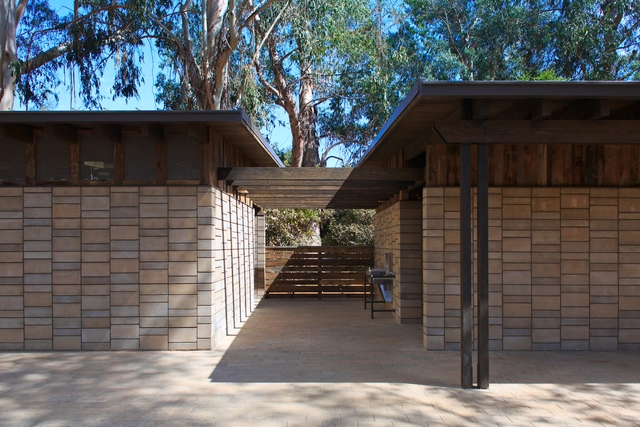
Concrete blocks. Ever since manufacturers developed techniques to make them cheaper than traditional clay-fired bricks, concrete blocks have been one of our most ubiquitous construction materials. However, this ubiquity comes at a price: worldwide, the production of concrete accounts for around 5% of all man-made carbon dioxide emissions, and concrete blocks (as opposed to in-situ concrete or concrete panels) contributes a significant portion of these emissions.
To curb these runaway carbon emissions, a California-based company called Watershed Materials is developing alternatives to the traditional concrete block which uses less cement, dramatically reducing the amount of carbon dioxide produced; they even have a product in the works which they hope will offer a widely applicable concrete block alternative which uses no cement at all.
Over the past eight years, Make It Right has not only helped to rebuild the Lower Ninth Ward in New Orleans—the area struck the hardest by the disaster—but has also began to spread its work to Missouri, Montana, and New Jersey, with more projects coming soon. While the non-profit organization has had success in its endeavors, it has simultaneously faced a great deal of criticism.
In a recent interview with NOLA, Pitt discusses some of these criticisms, reflecting on the growth of the organization, and the changes it has made. Find out about Pitt’s evolving perspective, after the break.
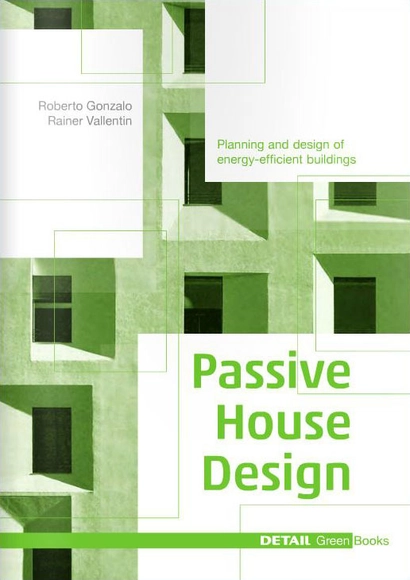
The passive house standard is developing more and more into the international key currency of energy-efficient construction. Passive houses are being erected in almost all parts of the world and for all types of users. “Plus energy” buildings and entire zero-energy districts show that the passive house standard is also a sound basis for advanced efficiency strategies. At the same time, many architects are unsure about the specifics: What do passive houses really deliver, and what errors need to be avoided during planning?
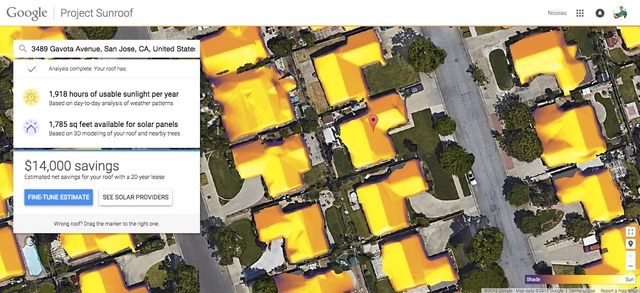
Google is in the unique position to truly understand what people want. As millions key in their questions, the search giant is actively working to provide better answers. When it comes to questions about solar energy, Google wondered, “If people are lost trying to get answers about solar, why don’t we give them a map?” And so, the tech company announced the beta launch of Project Sunroof: a tool “to make installing solar panels easy and understandable for anyone.”
In a post on Google’s Green Blog, engineer Carl Elkin addressed common misconceptions about the viability of solar energy for the average owner by saying “many of them are missing out on a chance to save money and be green.” Sunroof hopes to be the answer that gives people clear, easy to understand answers.



.jpg?1443794805&format=webp&width=640&height=580)
.jpg?1443795381 "Speculation of Future Developments. Image Courtesy of Penda")
.jpg?1443795335 "Speculation of Future Developments. Image Courtesy of Penda")
.jpg?1443794787 "© Hua Su")
.jpg?1443794843 "© Xia Zhi")
.jpg?1443794805)
.jpg?1443463602&format=webp&width=640&height=580)