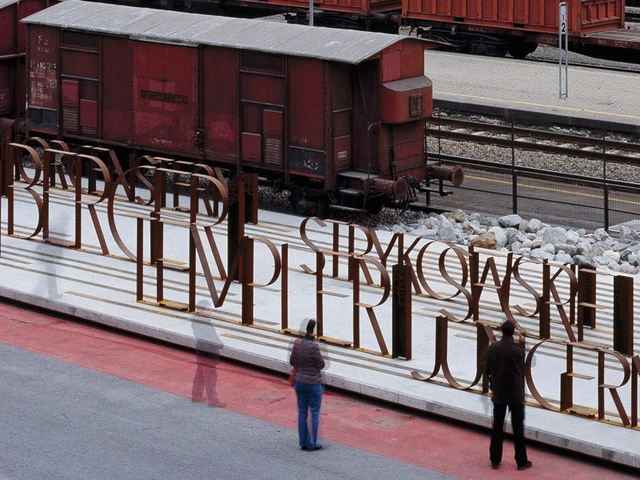
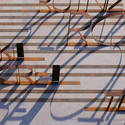
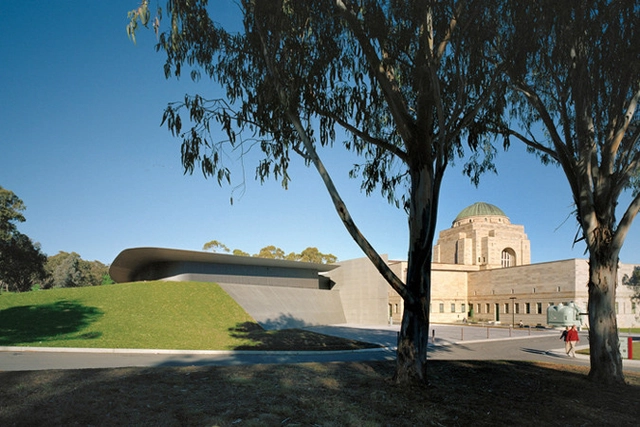
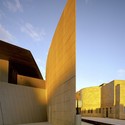
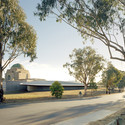
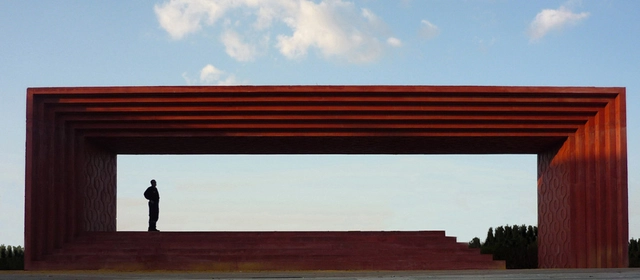
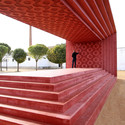
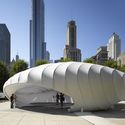
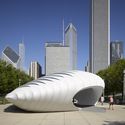
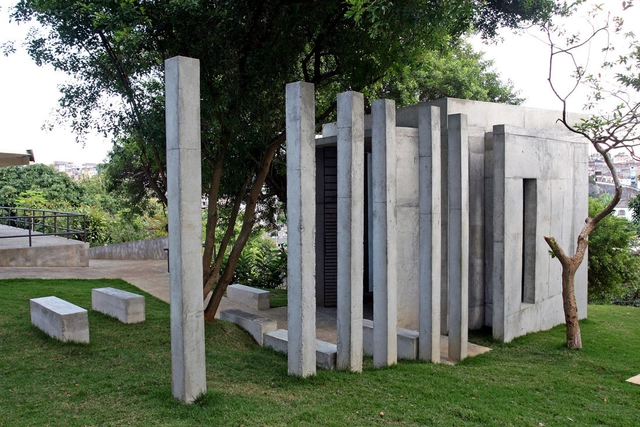
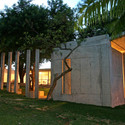
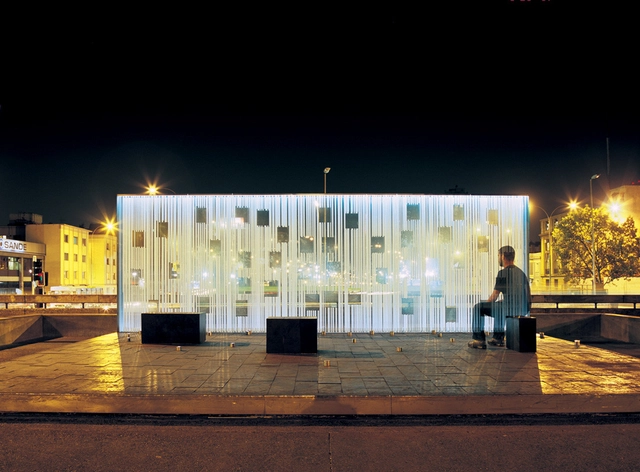
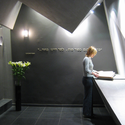
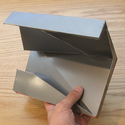
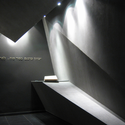
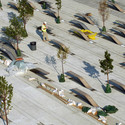
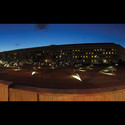
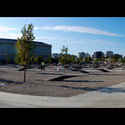
Our friends from NRJA (be sure to view previous NRJA projects on AD, especially their 2009 Building of the Year House) shared their finished competition entry for a cemetery in Järva Common, Stockholm with us. Designing a cemetery is a difficult challenge as it is a place filled with symbolic importance and infused with a commitment to offering hope. The architects decided that this new cemetery will provide a place where the identity of the site is defined not only by the environmental quality of the space and its historical importance, but also by the project’s emphasize on concentration on the memory of the deceased.
More images and more about the project after the break.
Although the field of architecture continually changes with advances in technology and shifts in society and culture, there rest a few names that seem frozen in time, as their ideas will continually influence generations of architects to come. Of them, Louis Kahn has been revered as a master of the 20th century and soon, his memorial park design of the 1970s will finally be completed in New York. The memorial is named after FDR’s Four Freedoms speech from 1941 where he declares that “In the future days,….we look forward to a world founded upon four essential human freedoms. The first is freedom of speech and expression–everywhere in the world. The second is freedom of every person to worship God in his own way–everywhere in the world. The third is freedom from want–which, translated into universal terms, means economic understandings which will secure to every nation a healthy peacetime life for its inhabitants–everywhere in the world. The fourth is freedom from fear–which, translated into world terms, means a world-wide reduction of armaments to such a point and in such a thorough fashion that no nation will be in a position to commit an act of physical aggression against any neighbor–anywhere in the world.”
For their competition design for the Tsunami Memorial, VeeV Design has blended the built and natural environments to produce a reflective atmosphere. Contrasting the horrific magnitude of the tsunami, the memorial provides a calming essence for those who visit. “We intentionally propose a gentle recasting of memorial conventions: discrete sites of contemplation modestly submit to the power of the land itself,” explained the architects.
Last year Frank Gehry won the design competition for the Eisenhower Memorial, which included six other firms (Perkins & Will, Krueck & Sexton, Rogers Marvel Architects, Moshe Safdie & Associates, Natoma Architects and PWP Landscape Architecture). After that, the firm was asked to produce three options for the members of the Eisenhower Memorial Commision to choose from, from which the final design was chosen a few days ago.
The design, which Gehry and his colleagues will flesh out in the months to come, combines a grove of oak trees, two parallel colonnades of limestone pillars and loosely piled limestone walls carved with sculptural reliefs — elements common to all three proposals — with a series of woven steel-mesh tapestries that will feature images of Eisenhower and his presidency. There is a gap in the colonnade as it runs along Independence, creating an opening framing views of the Capitol and also marking an informal pedestrian entry into the memorial site.
While the oak trees should provide plenty of shade — along with pockets of contemplative space — the tapestries will give much of the memorial the feeling of an expansive outdoor stage set. Gehry came up with the idea for the steel-mesh panels while exploring the tapestry collection at the Philadelphia Museum of Art, where his firm has been working on an expansion.
London-based architecture firm ACMEwas awarded third prize in a recent competition to design a United Nations memorial. Initiated by the city of Chungju in South Korea, the selected memorial will rest in the city’s UN Peace Park. ACME’s proposal is comprised of a 1,500 seating assembly, two conference halls, a theater and exhibition spaces. The organization of the memorial is metaphorically modeled similarly to the United Nations, where many parts make up the whole.
The design team of L. Tuleikis, R. Antinis, K. Vaikšnoras, K. Lanauskas, and P. Vaitiekūnas shared their competition entry for the renovation of Lukishkiu Square in Vilnius, Lithuania. The competition highlighted “freedom” as the square was established for a memorial space. The team’s proposal consists of a gently carved out central Freedom Field, surrounded by sculptural compositions and an external flame along the perimeter of the site.
Paul Murdoch Architects, with Nelson Byrd Woltz Landscape Architects, won the 2-stage competition for a national memorial and park to occur at the site where United Airlines Flight 93 crashed on September 11, 2001, in Somerset County, Pennsylvania. The memorial will honor the passengers and crewmembers of Flight 93.