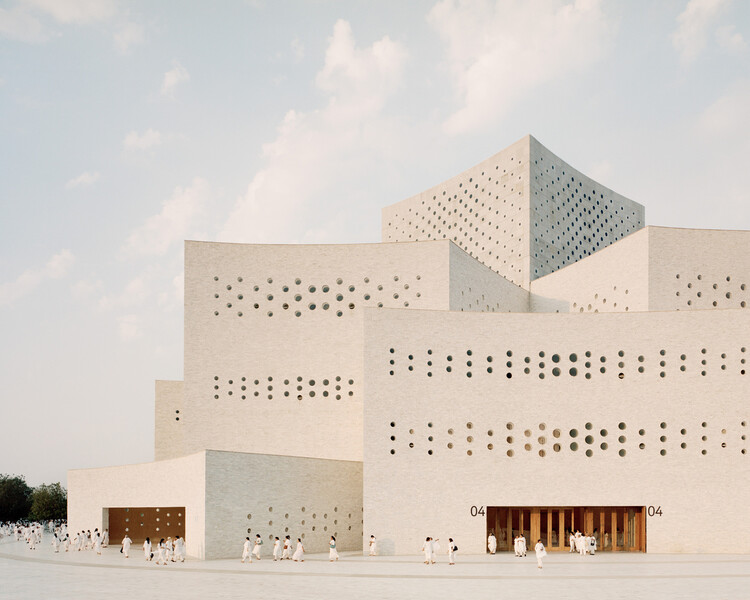
1. ArchDaily
  2. OODA

OODA: The Latest Architecture and News

MVRDV and OODA Reveal Landscape-Led Masterplan for Lisbon’s Marvila Riverfront Regeneration

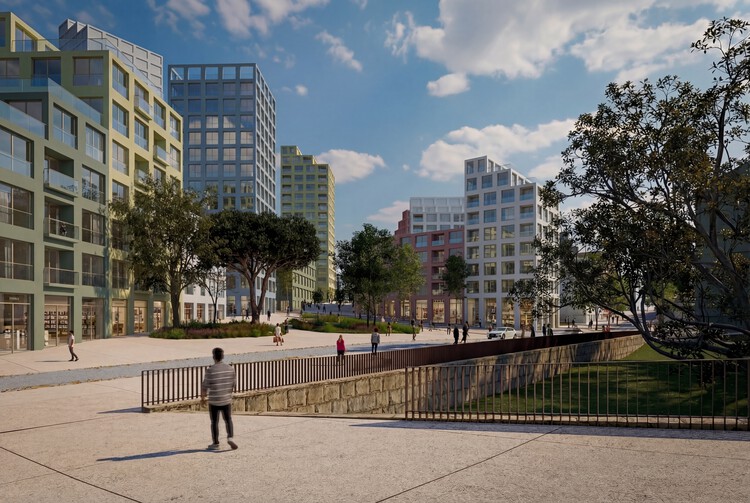
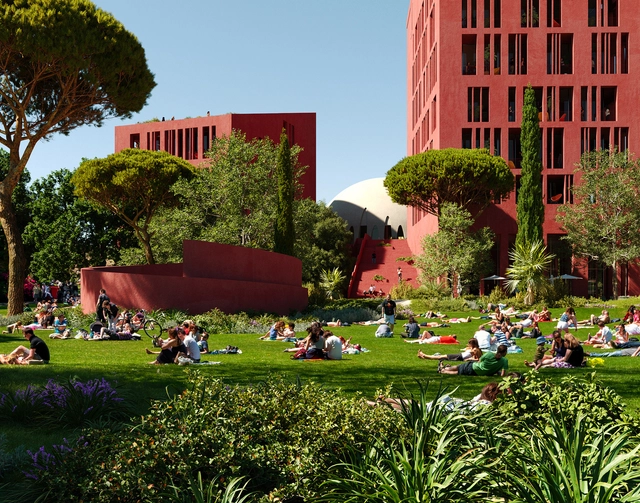
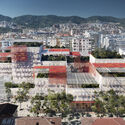
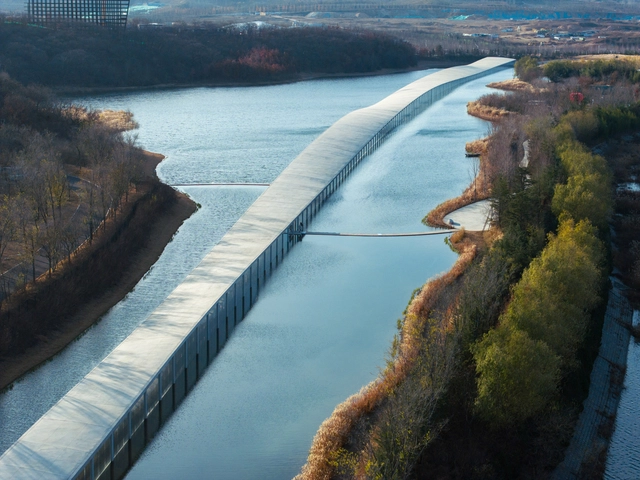
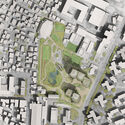
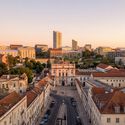
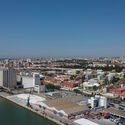
MVRDV and OODA have revealed a new masterplan for the regeneration of a vacant 28-hectare site between Marvila and Beato on Lisbon's riverfront. Recently approved by the Lisbon City Council, the project was developed in collaboration with LOLA Landscape Architects and Thornton Tomasetti to transform the area into a landscape-led urban district. Titled The Marvila Masterplan, the proposal establishes a framework for introducing 1,400 homes alongside public facilities, commercial spaces, and services within a fragmented and largely abandoned territory. The project is a private initiative led by the principal landowner and developed in coordination with the Lisbon City Council and Infraestruturas de Portugal.
MVRDV and OODA Reveal Landscape-Led Masterplan for Lisbon’s Marvila Riverfront Regeneration - Image 1 of 4MVRDV and OODA Reveal Landscape-Led Masterplan for Lisbon’s Marvila Riverfront Regeneration - Image 2 of 4MVRDV and OODA Reveal Landscape-Led Masterplan for Lisbon’s Marvila Riverfront Regeneration - Image 3 of 4MVRDV and OODA Reveal Landscape-Led Masterplan for Lisbon’s Marvila Riverfront Regeneration - Image 4 of 4MVRDV and OODA Reveal Landscape-Led Masterplan for Lisbon’s Marvila Riverfront Regeneration - More Images+ 18

Imported Futures: Global Architecture Shaping Albania’s Urban Transformation

Subscriber Access | 

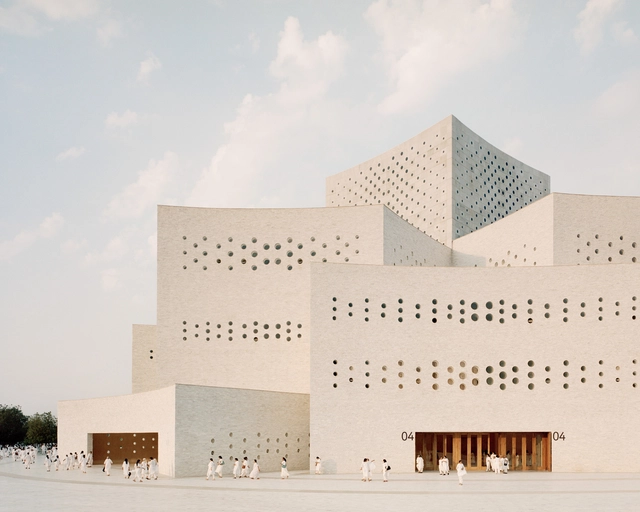
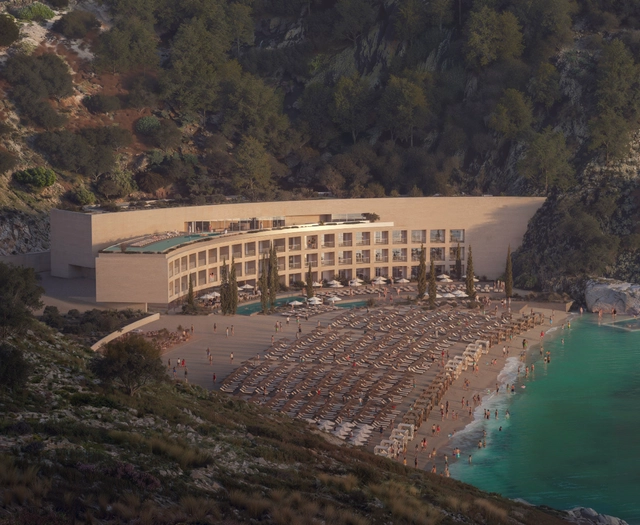
In recent years, Albania has undergone a rapid and visible transformation, emerging as one of the most active urban environments in Southeast Europe. This growth is not only reflected in the expansion of its built fabric but also in the scale and ambition of new architectural interventions that seek to redefine the country's image. Across its territory, a series of large developments, cultural institutions, and infrastructural projects are being introduced as part of a broader effort to reposition Albania and its capital, Tirana, within regional and international networks.

A significant number of these interventions are being designed by internationally recognized architectural offices, whose presence has become a defining characteristic of the city's current phase of development. Rather than relying primarily on incremental or locally embedded processes, Tirana's transformation is increasingly shaped through externally authored visions that introduce new formal languages, typologies, and urban strategies. These projects often operate as singular objects or large-scale fragments, contributing to a landscape where the city is assembled through distinct and highly visible gestures.

Imported Futures: Global Architecture Shaping Albania’s Urban Transformation - Image 1 of 4Imported Futures: Global Architecture Shaping Albania’s Urban Transformation - Image 2 of 4Imported Futures: Global Architecture Shaping Albania’s Urban Transformation - Image 3 of 4Imported Futures: Global Architecture Shaping Albania’s Urban Transformation - Image 4 of 4Imported Futures: Global Architecture Shaping Albania’s Urban Transformation - More Images+ 26

Meet the 15 Winning Projects of the 2026 ArchDaily Building of the Year Awards

A revitalized canning factory in a coastal Portuguese city, a memorial park in Ethiopia, a small-town Brazilian home, a wooden pavilion evoking Bahrain's heritage, and 11 other visionary projects comprise the winners of the 2026 ArchDaily Building of the Year Awards. Chosen over three weeks of public voting, the winners are representative of the current architectural landscape, reflecting a diversity of approaches, materialities and aesthetics, while also showcasing common threads across cultures.

In its 17th edition, this year's Building of the Year Awards received more than 120,000 votes from over 100 countries, marking a record-breaking year for the world's largest community-driven architecture award. The winners represent 14 different countries, cultures and perspectives, coming from Brazil, Canada, Chile, Colombia, Denmark, Ethiopia, Germany, India, Indonesia, Japan, Portugal, South Korea, United States and Vietnam.

Introducing the 75 Finalists of the 2026 ArchDaily Building of the Year Awards

Two weeks and over 85,000 nominations later, the finalists of this year's Building of the Year Awards are in. The selection is much like the ArchDaily audience that chose it: diverse in geography, generous in ideas, and precise in intent. With projects from 46 countries, in a variety of typologies and scales, they present a beautiful snapshot of the current architectural moment.

We invite you to sit back, browse, and vote for your ultimate favorites. Below, you will find all of the 75 finalists in their respective categories. Voting is open until February 18th at 18:00 EST. Thank you—your participation is key to making this the world's largest community-driven architecture award.

From Housing Policy in Europe to Large-Scale Master Planning in Mongolia: This Week’s Review

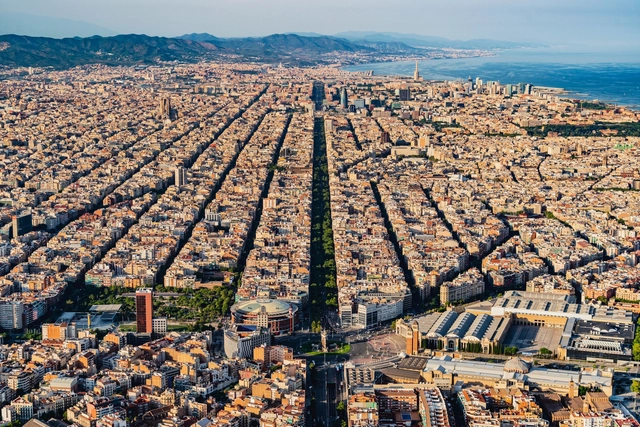
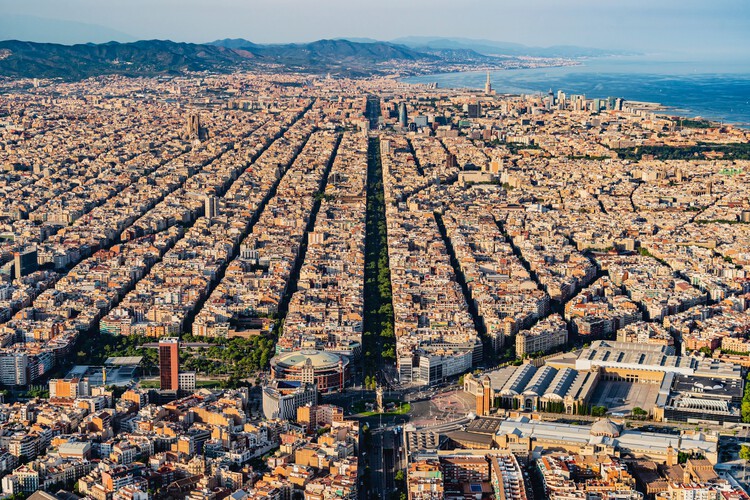
This week's review focuses on concrete responses to shared urban challenges, including housing affordability, long-term resilience, and the role of cultural and material innovation in shaping cities. The selection spans regulatory measures affecting housing markets in European cities, high-density residential and mixed-income proposals in New York, and major renewal and planning efforts in London, Barcelona, Ulaanbaatar, and Drammen. It also highlights research-driven and built projects in Chicago, Buenos Aires, Las Vegas, and Riyadh that explore circular construction, adaptive reuse, and new models for cultural and public infrastructure. Together, these worldwide projects offer a snapshot of how architecture and urban planning are addressing immediate pressures while laying the groundwork for more resilient and inclusive urban futures across diverse geographic and cultural contexts.

From Housing Policy in Europe to Large-Scale Master Planning in Mongolia: This Week’s Review - Image 1 of 4From Housing Policy in Europe to Large-Scale Master Planning in Mongolia: This Week’s Review - Image 2 of 4From Housing Policy in Europe to Large-Scale Master Planning in Mongolia: This Week’s Review - Image 3 of 4From Housing Policy in Europe to Large-Scale Master Planning in Mongolia: This Week’s Review - Image 4 of 4From Housing Policy in Europe to Large-Scale Master Planning in Mongolia: This Week’s Review - More Images+ 17

OODA Unveils House of Nassr Sports Complex, Its First Realized Project in Saudi Arabia

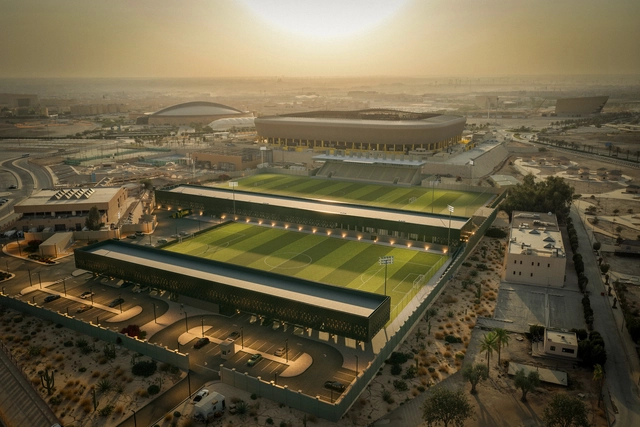
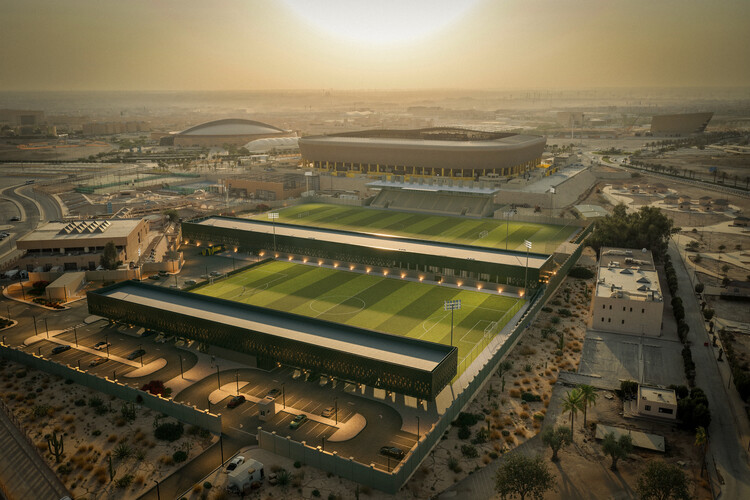
OODA announces the House of Nassr, a new integrated sports complex designed for Al Nassr FC in Riyadh, Saudi Arabia. Planned as a comprehensive facility supporting both athletic performance and club operations, the project brings together a high-performance training centre, administrative and media spaces, athlete support facilities, and social areas, with a hotel scheduled for a second phase of development. The complex occupies an area of approximately 4,000 square meters. While the overall project remains ongoing, the first phase has been completed in 2025, marking OODA's first realized project in Saudi Arabia.

OODA Unveils House of Nassr Sports Complex, Its First Realized Project in Saudi Arabia - Image 1 of 4OODA Unveils House of Nassr Sports Complex, Its First Realized Project in Saudi Arabia - Image 2 of 4OODA Unveils House of Nassr Sports Complex, Its First Realized Project in Saudi Arabia - Image 3 of 4OODA Unveils House of Nassr Sports Complex, Its First Realized Project in Saudi Arabia - Image 4 of 4OODA Unveils House of Nassr Sports Complex, Its First Realized Project in Saudi Arabia - More Images+ 11

ArchDaily's Best Architectural Projects of 2025

As the year culminates, it's once again time for the ArchDaily team of curators to reflect on the best-performing projects of 2025 and consider what readers were most interested in. Through this diverse overview, we assess the cross-continental similarities and differences in trends and construction development. This year brought us many grand cultural and public spaces by Lina Ghotmeh, BIG, Zaha Hadid Architects, DnA, and Serie Architects, who populated events like Expo Osaka and the Venice Biennale, as well as a surprising number of museums and public or landscape works in China and the rest of the Asian continent. However, while these were sought-after projects, the leading works remained, unsurprisingly, residential projects.

More specifically, the houses that were most viewed on the ArchDaily global site were concrete houses that bore considerable injections of greenery and landscape focus. They propose layouts highlighting voids and double heights, as well as inner courtyards or large openings to the exterior. While some references did suggest traditional or vernacular elements, modernist revivals were still predominant. Material trends are much more tame, with a recurrence of raw concrete use, as wood and stone were common accent elements. Still, the more interesting thing about the works this year is the efforts brought by architects in situating and setting the projects within their surroundings, bringing special attention to landscape and how projects merged with nature.

ArchDaily's Best Architectural Projects of 2025 - SustainabilityArchDaily's Best Architectural Projects of 2025 - SustainabilityArchDaily's Best Architectural Projects of 2025 - SustainabilityArchDaily's Best Architectural Projects of 2025 - SustainabilityArchDaily's Best Architectural Projects of 2025 - More Images+ 96

RIBA Stirling Prize Winner and Faith Park in Albania: This Week’s Review

This week's architectural developments highlighted how design operates as a form of social and cultural infrastructure, linking care, community, and context across scales. From London's reinterpretation of the almshouse model to the transformation of urban gateways in Phnom Penh and Tirana, architecture reflected a shared interest in spaces that foster connection and adaptability. Parallel to these urban and infrastructural works, new cultural projects in Paris and Hanoi explored how museums and performance spaces can renew public institutions through material experimentation and spatial flexibility.

RIBA Stirling Prize Winner and Faith Park in Albania: This Week’s Review - Image 1 of 4RIBA Stirling Prize Winner and Faith Park in Albania: This Week’s Review - Image 2 of 4RIBA Stirling Prize Winner and Faith Park in Albania: This Week’s Review - Image 3 of 4RIBA Stirling Prize Winner and Faith Park in Albania: This Week’s Review - Image 4 of 4RIBA Stirling Prize Winner and Faith Park in Albania: This Week’s Review - More Images+ 3

Eduardo Souto de Moura and OODA Reveal Design for a New High-Rise Tower in Tirana, Albania

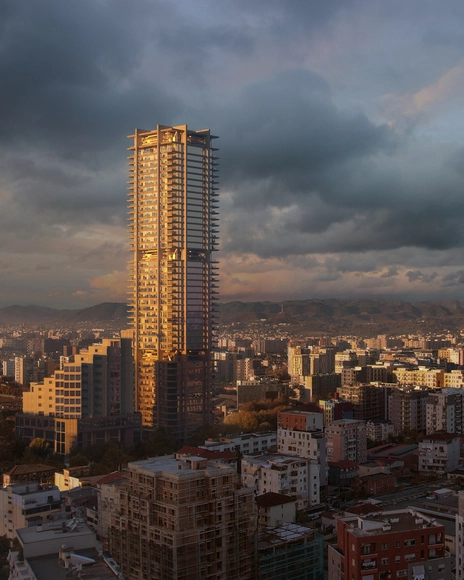
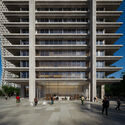
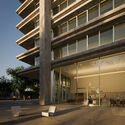
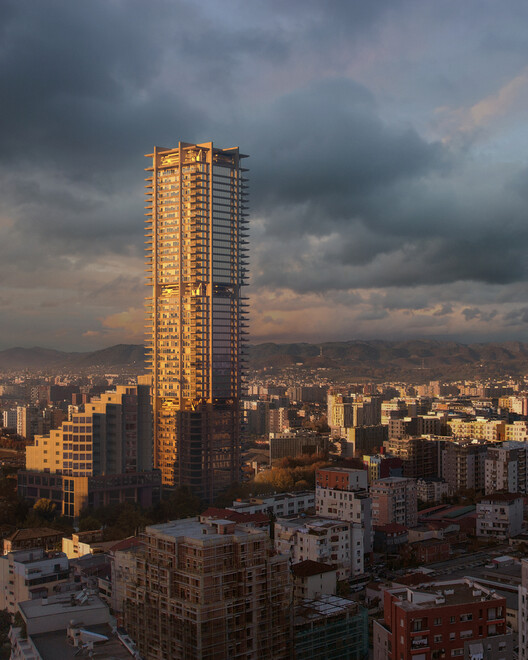
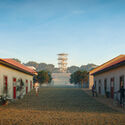
Eduardo Souto de Moura and OODA have unveiled the design of the Oricon Tower, a 180-meter mixed-use skyscraper planned for Tirana, Albania. Located near OODA's recently completed Bond Tower, the project is part of the city's ongoing transformation under the Tirana 2030 Masterplan, which envisions a denser and more connected urban core. The tower will house offices, residences, retail areas, and a hotel, contributing to the city's evolving skyline and serving as a new urban gateway between Tirana's historic center and its expanding western districts.

Eduardo Souto de Moura and OODA Reveal Design for a New High-Rise Tower in Tirana, Albania - Image 1 of 4Eduardo Souto de Moura and OODA Reveal Design for a New High-Rise Tower in Tirana, Albania - Image 2 of 4Eduardo Souto de Moura and OODA Reveal Design for a New High-Rise Tower in Tirana, Albania - Image 3 of 4Eduardo Souto de Moura and OODA Reveal Design for a New High-Rise Tower in Tirana, Albania - Image 4 of 4Eduardo Souto de Moura and OODA Reveal Design for a New High-Rise Tower in Tirana, Albania - More Images+ 14

Albania Pavilion Explores the Intersections of Architecture, History, and Identity at the 2025 Venice Biennale

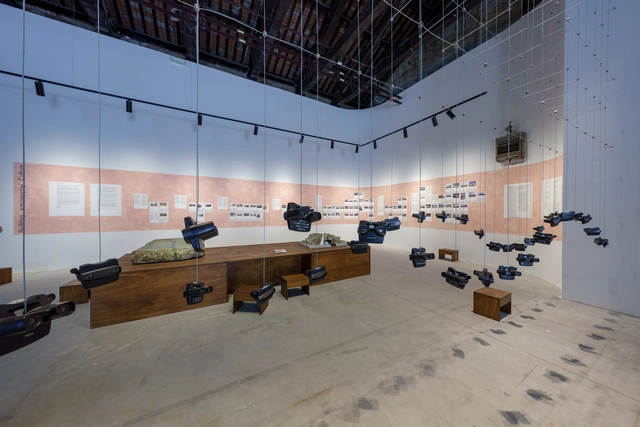
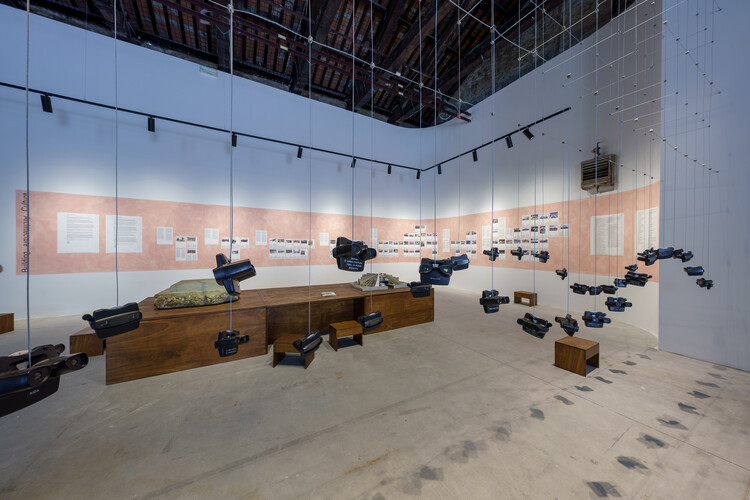
Curated by Anneke Abhelakh, the Albania Pavilion at the 2025 Venice Architecture Biennale, titled "Building Architecture Culture", explores how the country's architecture embodies its political, cultural, and social transformations. Albania's built environment reflects a layered history, from Ottoman and Italian rule to communist isolation and post-socialist transformation, each leaving visible marks on its cities and public spaces. The pavilion examines how architecture both responds to and shapes collective memory, public space, and civic engagement, framing these questions through past, present, and future perspectives.

Albania Pavilion Explores the Intersections of Architecture, History, and Identity at the 2025 Venice Biennale - Image 1 of 4Albania Pavilion Explores the Intersections of Architecture, History, and Identity at the 2025 Venice Biennale - Image 2 of 4Albania Pavilion Explores the Intersections of Architecture, History, and Identity at the 2025 Venice Biennale - Image 3 of 4Albania Pavilion Explores the Intersections of Architecture, History, and Identity at the 2025 Venice Biennale - Image 4 of 4Albania Pavilion Explores the Intersections of Architecture, History, and Identity at the 2025 Venice Biennale - More Images+ 25

From Helsinki’s Landmark Bridge to London’s Urban Regeneration: Recent Updates from Knight Architects, Foster + Partners, and More

In recent weeks, a series of notable architectural projects have been announced, reflecting a broad spectrum of design approaches aimed at enhancing urban life, infrastructure, and environmental sustainability. From cultural venues to large-scale masterplans and infrastructural advancements, these developments highlight how architecture continues to shape cities and communities. Among them, Knight Architects' Kruunusillat Bridge in Helsinki marks a milestone as Finland's tallest and longest bridge, designed to support sustainable mobility. Meanwhile, Unibail-Rodamco-Westfield's masterplan for Croydon sets out a vision for a vibrant mixed-use district, integrating historic preservation with contemporary urban renewal. At Kew Gardens, Mizzi Studio's Carbon Garden introduces a new permanent installation that explores carbon cycles through landscape design. This collection of recent announcements underscores the evolving priorities in architecture, from connectivity and urban regeneration to climate-conscious interventions.

Tirana Reimagined: Architectural Projects Transforming Albania's Capital through Public Engagement

Subscriber Access | 

Tirana, the capital of Albania, is undergoing a remarkable transformation fueled by an ambitious vision for the future outlined in the Tirana 2030 (TR030) Master Plan. This plan, devised by renowned Italian architect Stefano Boeri, aims to reshape the city into a sustainable, green, and inclusive urban hub, with a focus on increasing density while enhancing the quality of life for its residents. Central to this vision are projects such as the creation of an "orbital forest" with two million trees, the revitalization of rivers with green corridors, and the redesign of public spaces like Skanderbeg Square, which has become the largest pedestrian area in the Balkans. According to The Guardian, these initiatives aim to reverse the sprawling urban chaos that followed the fall of communism and accommodate a population that has quadrupled since 1992, while prioritizing quality of life and accessibility.

At the heart of Tirana's transformation is a renewed focus on architecture as a tool for connection, combining cultural identity with contemporary design to create spaces that invite public interaction and engagement. Recent projects announced by renowned architects and international firms including Coldefy, OODA, Oppenheim Architecture, and CHYBIK + KRISTOF showcase a common thread of reimagining the rejuvinated city for the public. These designs emphasize social sustainability, cultural references, and accessible public spaces, redefining how residents and visitors experience Tirana's urban fabric. From mixed-use vertical villages and pedestrian-friendly streets to eco-conscious campuses and civic hubs, these new developments collectively highlight the city's ambition to position itself as a progressive model for urban renewal in the Balkans.

Tirana Reimagined: Architectural Projects Transforming Albania's Capital through Public Engagement - Image 1 of 4Tirana Reimagined: Architectural Projects Transforming Albania's Capital through Public Engagement - Featured ImageTirana Reimagined: Architectural Projects Transforming Albania's Capital through Public Engagement - Image 2 of 4Tirana Reimagined: Architectural Projects Transforming Albania's Capital through Public Engagement - Image 3 of 4Tirana Reimagined: Architectural Projects Transforming Albania's Capital through Public Engagement - More Images+ 2

ArchDaily's Best Architectural Projects of 2024

Throughout the year, ArchDaily's team of curators works on expanding and populating our project library. Located all around the world, each curator carefully considers the best works emanating from their respective regions in an effort to have a diverse representation of the most inspiring and innovative built works. The team looks to new rising practices, new technologies, and the vernacular revival of traditional construction techniques. Seeking socially driven initiatives, as well as major works by renowned architects, the overall offers a holistic view of the built world today and is relayed through the yearly project review.

ArchDaily's Best Architectural Projects of 2024 - Image 1 of 4ArchDaily's Best Architectural Projects of 2024 - Image 2 of 4ArchDaily's Best Architectural Projects of 2024 - Image 3 of 4ArchDaily's Best Architectural Projects of 2024 - Image 4 of 4ArchDaily's Best Architectural Projects of 2024 - More Images+ 96

From Modernism to Multiculturalism: The Historical Evolution of Student Housing

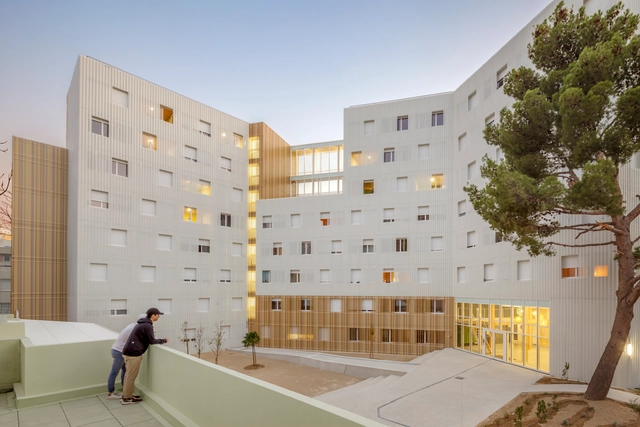
Student housing has undergone a remarkable transformation over the last century. Once seen as a utilitarian necessity, providing shelter and basic amenities for students, this architectural typology has evolved to address increasingly complex societal, cultural, and urban demands. Starting with Le Corbusier's modernist approach at the Cité Universitaire in Paris, student housing has reflected broader trends in architecture, urbanism, and social change.

Today, these buildings must cater to a highly diverse and transient population, navigating the pressures of affordability, density, and the evolving living standards of young adults. With rapid urbanization and increasing student mobility, universities now face the challenge of designing housing that is not only functional but also adaptable to different cultural and social contexts. This has led to more flexible, innovative solutions that promote both privacy and community living.

From Modernism to Multiculturalism: The Historical Evolution of Student Housing - Image 1 of 4From Modernism to Multiculturalism: The Historical Evolution of Student Housing - Image 2 of 4From Modernism to Multiculturalism: The Historical Evolution of Student Housing - Image 3 of 4From Modernism to Multiculturalism: The Historical Evolution of Student Housing - Image 4 of 4From Modernism to Multiculturalism: The Historical Evolution of Student Housing - More Images+ 55

OODA Unveils Mixed-Use Fragmented Towers in Tirana, Albania

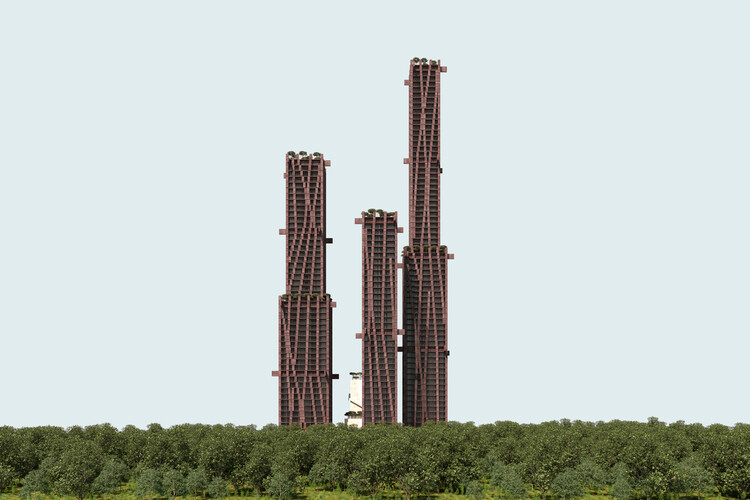
OODA has just revealed its design for a new mixed-use urban development in central Tirana, Albania. Located in the central district of Tirana on Myslym Street, the Ndarja building, represents a new approach to mixed-use urban development, incorporating residential, hospitality, office, and commercial functions within a single structure. The building comprises two distinct sections positioned along their narrow sides, creating a central square that serves as a gathering spot, contrasting the busy surroundings.

OODA Breaks Ground on Tetris-Like Mixed-Use Development in Tirana

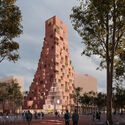
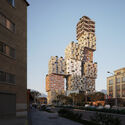
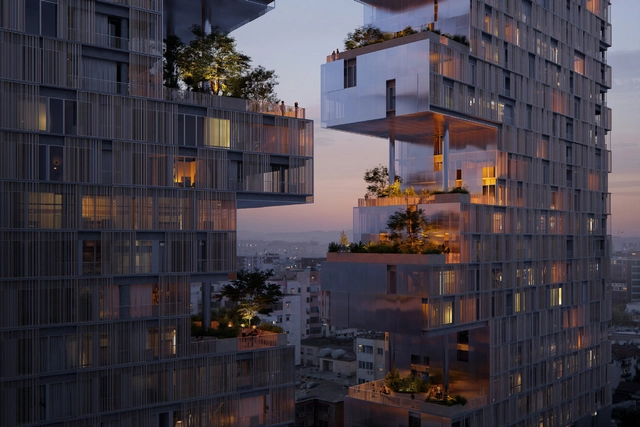
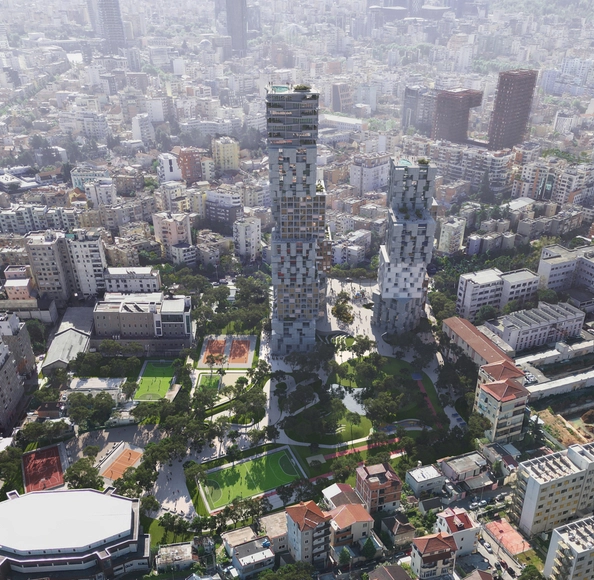
Portuguese architecture studio OODA has commenced construction on the Hora Vertikale Towers in Tirana, a city renowned for its urban revitalization and architectural innovation. The project aims to contribute to this dynamic landscape as a multi-functional, 55,000-square-meter "vertical village" rising 140 meters tall. The project is designed to also integrate a large-scale green public space, also designed by OODA. The project was first announced earlier this year.

OODA Breaks Ground on Tetris-Like Mixed-Use Development in Tirana - Image 1 of 4OODA Breaks Ground on Tetris-Like Mixed-Use Development in Tirana - Image 2 of 4OODA Breaks Ground on Tetris-Like Mixed-Use Development in Tirana - Image 3 of 4OODA Breaks Ground on Tetris-Like Mixed-Use Development in Tirana - Image 4 of 4OODA Breaks Ground on Tetris-Like Mixed-Use Development in Tirana - More Images+ 7

Porto Architecture City Guide: 24 Sites Showcasing the Essence of Portugal's Invincible City

Subscriber Access | 

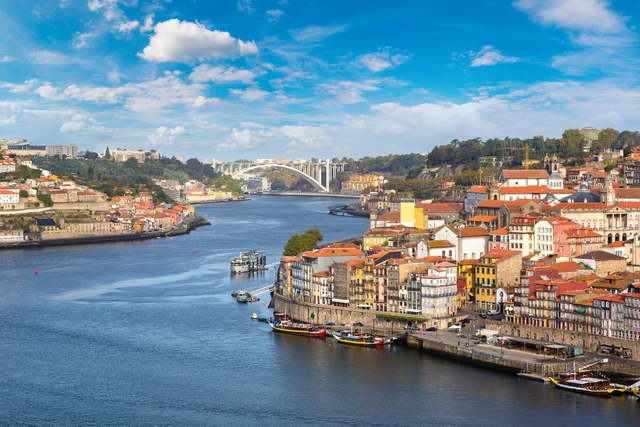
Porto, Portugal's second-largest city, is a captivating blend of historical charm and contemporary innovation. Perched along the Douro River, this UNESCO World Heritage site boasts a rich architectural tapestry that spans centuries. Porto's urban landscape is a testament to its evolving identity from its medieval Ribeira district with narrow cobblestone streets to the iconic Luís I Bridge. The city's skyline is punctuated by Baroque churches, neoclassical palaces, and modernist structures, creating a visually striking contrast that reflects its dynamic history.

Porto has undergone a remarkable architectural renaissance in recent years, becoming a magnet for local and international talent. The city has evolved into a dynamic canvas where bold contemporary designs seamlessly integrate with its rich historical fabric. The influence of renowned architects like Álvaro Siza Vieira and Eduardo Souto de Moura, both Pritzker Prize laureates and native to Porto, has solidified the city's status as a key player on the global architectural stage. Among the city's most striking contemporary landmarks is the Casa da Música, a futuristic, diamond-shaped cultural center designed by Dutch architect Rem Koolhaas, which stands as a testament to Porto's forward-thinking spirit. This sophisticated blend of tradition and modernity, coupled with a strong commitment to urban regeneration, has transformed Porto into a vibrant hub of architectural innovation, making it a must-visit destination for architecture enthusiasts and cultural explorers

Porto Architecture City Guide: 24 Sites Showcasing the Essence of Portugal's Invincible City - Image 1 of 4Porto Architecture City Guide: 24 Sites Showcasing the Essence of Portugal's Invincible City - Image 2 of 4Porto Architecture City Guide: 24 Sites Showcasing the Essence of Portugal's Invincible City - Image 3 of 4Porto Architecture City Guide: 24 Sites Showcasing the Essence of Portugal's Invincible City - Image 4 of 4Porto Architecture City Guide: 24 Sites Showcasing the Essence of Portugal's Invincible City - More Images+ 21

OODA and MassLab Win Competition for a “Building without Devastating” Master Plan in Portugal

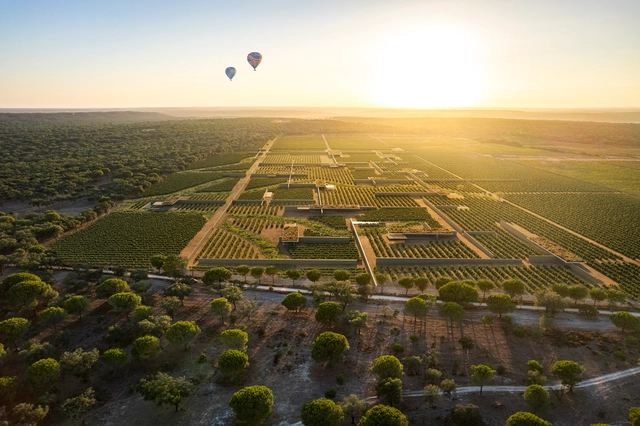
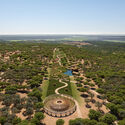
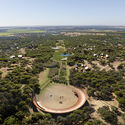
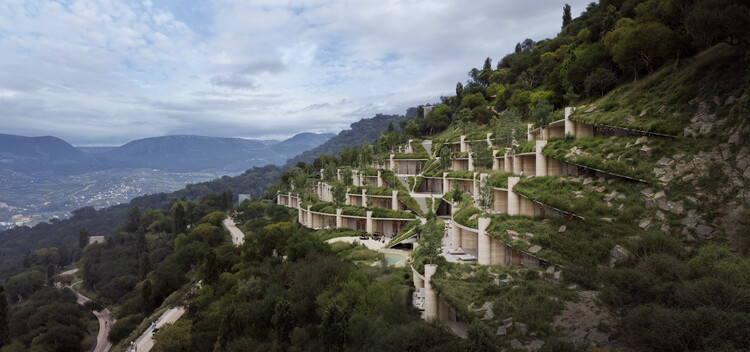
In collaboration with MassLab, OODA has been awarded first place in the Barrosinha Agricultural Company competition, aimed at creating a 2,000-hectare development seamlessly integrated into the agro-forestry heritage of Alcácer do Sal, Portugal. The master plan, covering a variety of functions for tourism, housing, commerce, and leisure, is designed in harmony with the United Nations Sustainable Development Goals, striving to transform Herdade da Barrosinha into a model of sustainable renewal.

OODA and MassLab Win Competition for a “Building without Devastating” Master Plan in Portugal - Image 1 of 4OODA and MassLab Win Competition for a “Building without Devastating” Master Plan in Portugal - Image 2 of 4OODA and MassLab Win Competition for a “Building without Devastating” Master Plan in Portugal - Image 3 of 4OODA and MassLab Win Competition for a “Building without Devastating” Master Plan in Portugal - Image 4 of 4OODA and MassLab Win Competition for a “Building without Devastating” Master Plan in Portugal - More Images+ 13