1. ArchDaily
  2. Public Spaces

Public Spaces: The Latest Architecture and News

Designing for Presence: When Architecture Invites Us to Stay

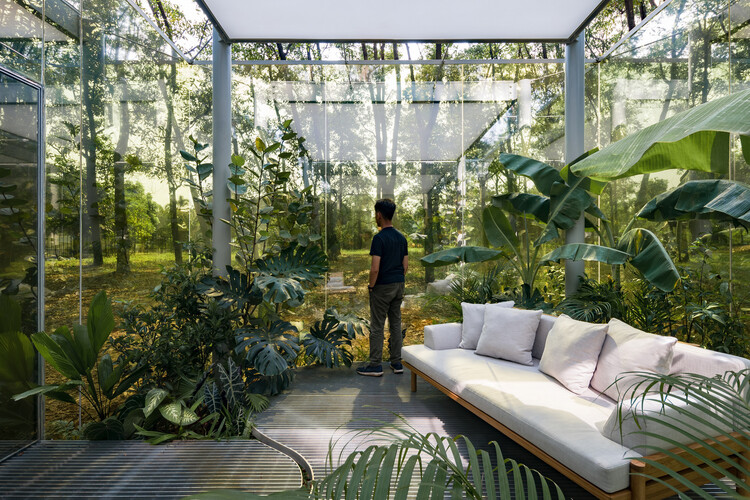
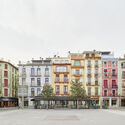
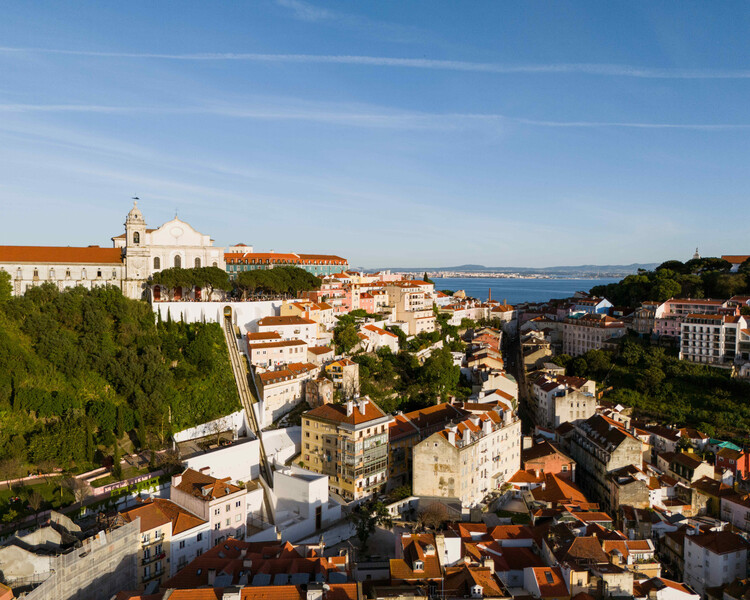
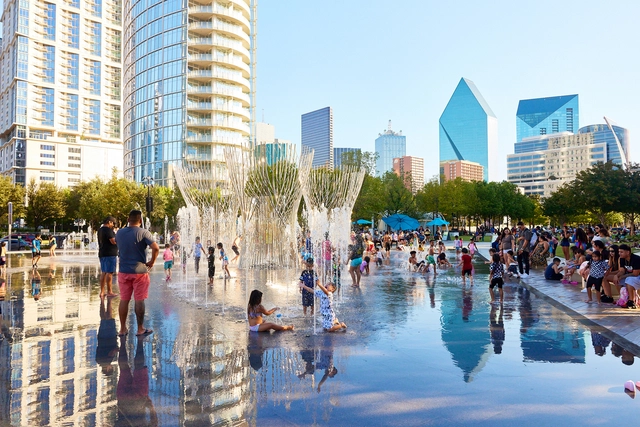
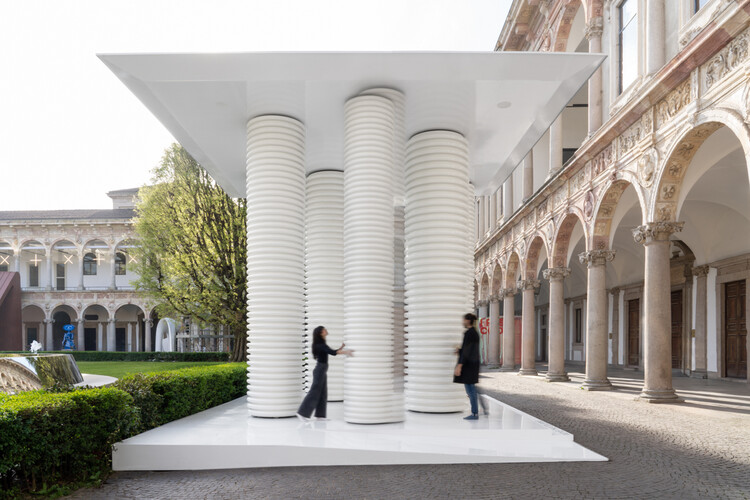
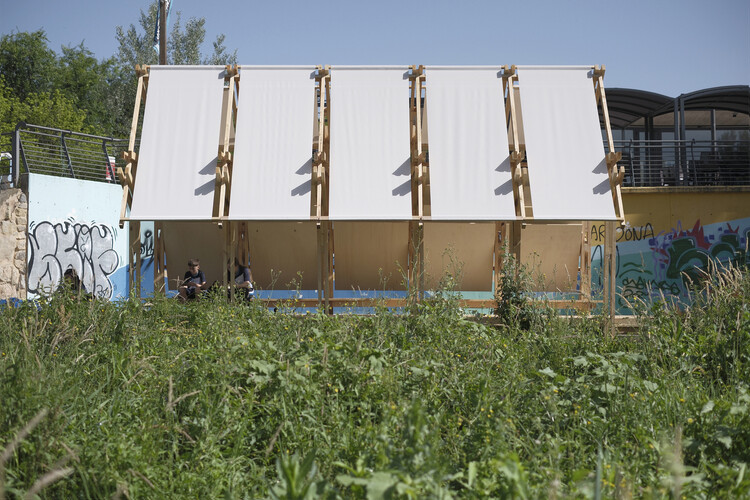
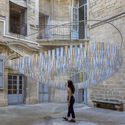
Architecture is increasingly asked to do less, not more. In environments shaped by constant movement, noise, and expectation, spaces that allow people to stay, pause, and be present have become both rarer and more necessary. Many public and semi-public places are designed to keep people moving, consuming, or reacting, leaving little room for lingering, observation, or simply being without a reason.

In response, a growing body of work is shifting attention away from activation and toward presence. Rather than asking users to interact or participate, these spaces create conditions that support staying. Comfort, continuity, and openness allow people to remain without pressure or obligation, making presence a spatial quality rather than an activity.
Designing for Presence: When Architecture Invites Us to Stay - Image 1 of 4Designing for Presence: When Architecture Invites Us to Stay - Image 2 of 4Designing for Presence: When Architecture Invites Us to Stay - Image 3 of 4Designing for Presence: When Architecture Invites Us to Stay - Image 4 of 4Designing for Presence: When Architecture Invites Us to Stay - More Images+ 25

The Chromatic Canvas: 10 Vibrant Courts Activating Community Space

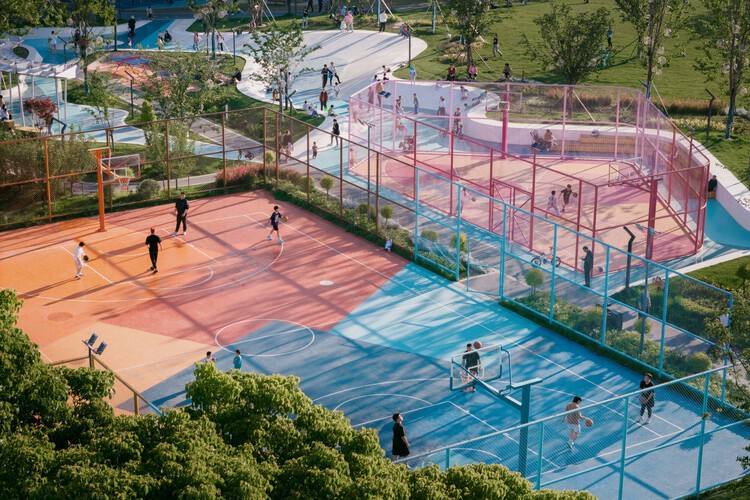
Unlike most popular sports, the origin of basketball has a precise year and creator: it was invented in 1891 in the United States by Canadian physical education instructor James Naismith as an indoor sport for athletes at Springfield College during the winter, after the end of the football season. The sport quickly expanded beyond U.S. borders, being included in the Olympic Games in 1936 and achieving international popularity after the Second World War. As basketball became more widespread, it also left the controlled environment of gymnasiums and began occupying a wide range of locations: playgrounds, public plazas, school courtyards, driveways, and backyard patios became informal courts for play and community life, reinforcing the role of physical activity as a catalyst for social interaction and neighborhood regeneration.

The Chromatic Canvas: 10 Vibrant Courts Activating Community Space - Image 1 of 4The Chromatic Canvas: 10 Vibrant Courts Activating Community Space - Image 2 of 4The Chromatic Canvas: 10 Vibrant Courts Activating Community Space - Image 3 of 4The Chromatic Canvas: 10 Vibrant Courts Activating Community Space - Image 4 of 4The Chromatic Canvas: 10 Vibrant Courts Activating Community Space - More Images+ 6

Nobel Foundation Reveals Design for New Nobel Center in Stockholm by David Chipperfield Architects

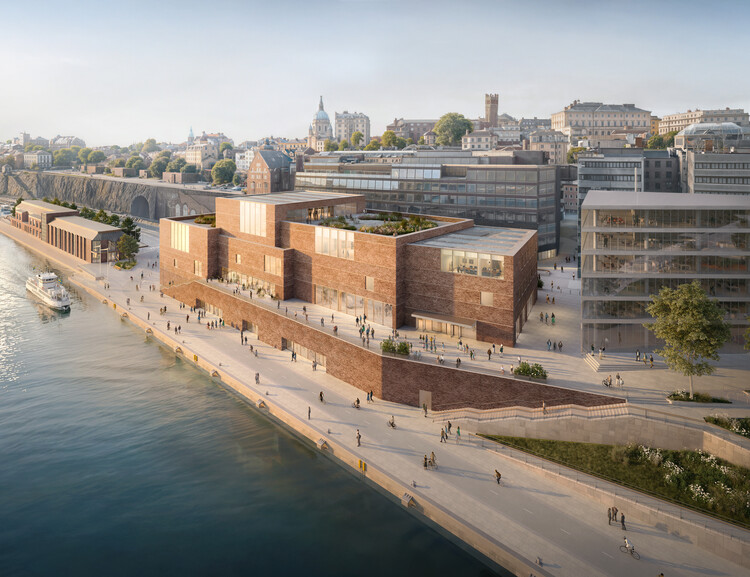
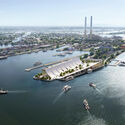
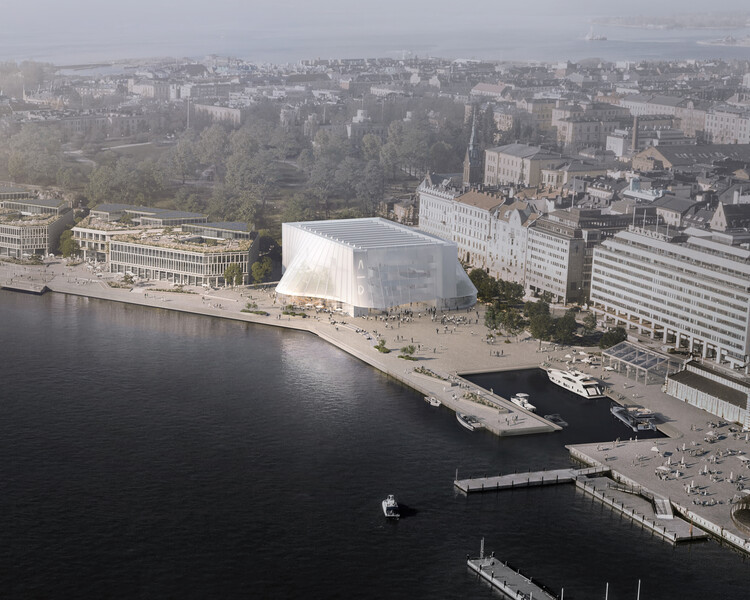
The Nobel Foundation has revealed the first design proposal for the new Nobel Center, a public cultural and educational institution dedicated to science, literature, and peace. Designed by David Chipperfield Architects Berlin, the project will be constructed along Stadsgårdskajen at Slussen in Stockholm, with construction scheduled to begin in 2027 and completion planned for 2031. Conceived as a permanent home for the activities surrounding the Nobel Prize, the building aims to make the work of Nobel Prize laureates accessible to a broad public through exhibitions, public programs, and interdisciplinary exchange, positioning the center as both a civic landmark and an international point of reference.

Nobel Foundation Reveals Design for New Nobel Center in Stockholm by David Chipperfield Architects - Featured ImageNobel Foundation Reveals Design for New Nobel Center in Stockholm by David Chipperfield Architects - Image 2 of 4Nobel Foundation Reveals Design for New Nobel Center in Stockholm by David Chipperfield Architects - Image 3 of 4Nobel Foundation Reveals Design for New Nobel Center in Stockholm by David Chipperfield Architects - Image 4 of 4Nobel Foundation Reveals Design for New Nobel Center in Stockholm by David Chipperfield Architects - More Images+ 1

Leisure Architecture: 13 Projects Shaping Togetherness Across Generations

Leisure spaces are often where different generations cross paths. Without formal programs or assigned roles, they allow people to move, pause, and remain together, each engaging space in their own way. In a built environment increasingly shaped by specialization and separation, these shared spatial grounds have become less common, giving leisure-oriented architecture a renewed relevance.

Discussions around public space have repeatedly pointed to the value of openness and flexibility in supporting collective life. As architect Herman Hertzberger has noted, "the more a space can be interpreted in different ways, the more people it can accommodate." Rather than attempting to create interaction, architecture shapes the conditions that make togetherness possible.

Leisure Architecture: 13 Projects Shaping Togetherness Across Generations - Image 1 of 4Leisure Architecture: 13 Projects Shaping Togetherness Across Generations - Image 2 of 4Leisure Architecture: 13 Projects Shaping Togetherness Across Generations - Image 3 of 4Leisure Architecture: 13 Projects Shaping Togetherness Across Generations - Image 4 of 4Leisure Architecture: 13 Projects Shaping Togetherness Across Generations - More Images+ 10

EU Mies Awards Shortlist and MVRDV’s Fluid Facade in Beijing: This Week’s Review

Spanning multiple geographies and scales, this week's architecture news reflects ongoing discussions around long-term planning, institutional frameworks, and the public role of architecture. National-scale urban initiatives and large civic developments point to how planning and infrastructure are being used to reorganize cities and territorial systems, while parallel attention to stadiums, cultural facilities, and mixed-use projects highlights the expanding civic ambitions of large-scale architecture. Alongside these, interviews and heritage-focused projects foreground participatory practices and the careful reuse of existing structures, highlighting architecture's capacity to operate within complex social and political conditions. Recognition platforms and professional programs further situate these practices within a broader architectural discourse, offering insight into how contemporary work is evaluated and shared across regions.

EU Mies Awards Shortlist and MVRDV’s Fluid Facade in Beijing: This Week’s Review - Image 1 of 4EU Mies Awards Shortlist and MVRDV’s Fluid Facade in Beijing: This Week’s Review - Image 2 of 4EU Mies Awards Shortlist and MVRDV’s Fluid Facade in Beijing: This Week’s Review - Image 3 of 4EU Mies Awards Shortlist and MVRDV’s Fluid Facade in Beijing: This Week’s Review - Image 4 of 4EU Mies Awards Shortlist and MVRDV’s Fluid Facade in Beijing: This Week’s Review - More Images+ 8

From Wenzhou to Nürnberg: 7 Unbuilt Cultural Projects Imagining Public Life

Subscriber Access | 

Cultural institutions represent an active field for unbuilt architectural exploration, reflecting how architects continue to question the role of public buildings in shaping urban life. In this Unbuilt edition, submitted by the ArchDaily community, the selected proposals bring together a range of projects that engage with museums, exhibition centers, and diplomatic buildings as sites of public encounter. Rather than treating these programs as fixed types, these projects approach them as evolving spatial settings through which cities engage with history, knowledge, and representation.

Across varied geographies, from Wenzhou and Helsinki to Belgrade, Debrecen, Mexico City, and Nürnberg, the proposals explore different responses to contemporary cultural architecture. They range from adaptive reuse of industrial and ideological structures to new buildings embedded in waterfronts, parks, and residential neighborhoods. While some emphasize continuity with historical contexts, others experiment with lighter structures, environmental strategies, or new relationships between interior programs and the public realm. Together, they offer a snapshot of how cultural institutions are being reimagined in diverse urban conditions.

From Wenzhou to Nürnberg: 7 Unbuilt Cultural Projects Imagining Public Life - Image 10 of 4From Wenzhou to Nürnberg: 7 Unbuilt Cultural Projects Imagining Public Life - Image 13 of 4From Wenzhou to Nürnberg: 7 Unbuilt Cultural Projects Imagining Public Life - Image 26 of 4From Wenzhou to Nürnberg: 7 Unbuilt Cultural Projects Imagining Public Life - Image 12 of 4From Wenzhou to Nürnberg: 7 Unbuilt Cultural Projects Imagining Public Life - More Images+ 37

When Eating Becomes Spatial: 14 Projects Built Around Shared Meals

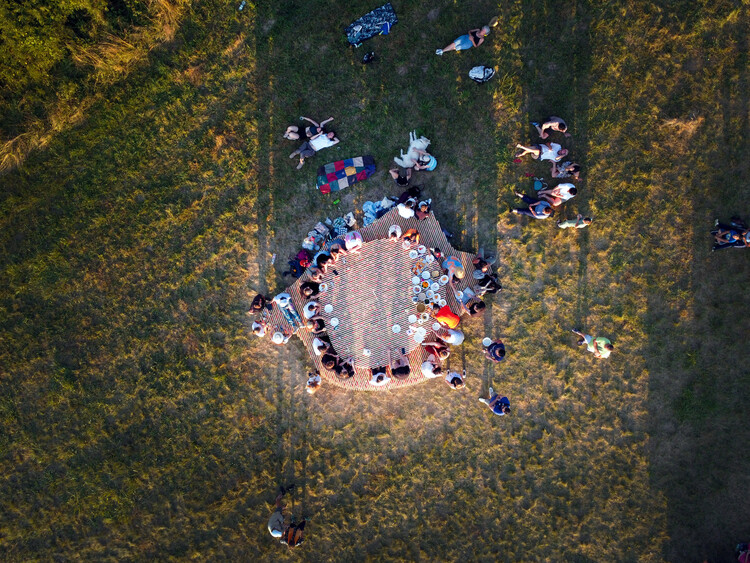
In recent years, food has taken on a renewed role within architecture, not simply as a program or typology, but as a shared spatial practice. Beyond restaurants or dining design, communal eating spaces are increasingly understood as environments where presence, ritual, and time intersect, allowing people to gather, stay, and coexist. In these settings, eating does not just happen within space; it actively shapes it, temporarily transforming ordinary, borrowed, or improvised environments into places of exchange.

This shift is visible across a wide range of built projects, installations, and community spaces that use shared meals as a way of bringing people together. Initiatives such as Fondo Supper Club frame dining as a social platform, using food to connect artists, designers, and local communities through conversation and collaboration. Similarly, sit.feast, presented during Milan Design Week 2024, approached the table as a spatial installation, one where sitting and eating together became the primary means of collectively producing space.

When Eating Becomes Spatial: 14 Projects Built Around Shared Meals - Image 1 of 4When Eating Becomes Spatial: 14 Projects Built Around Shared Meals - Image 2 of 4When Eating Becomes Spatial: 14 Projects Built Around Shared Meals - Image 3 of 4When Eating Becomes Spatial: 14 Projects Built Around Shared Meals - Image 4 of 4When Eating Becomes Spatial: 14 Projects Built Around Shared Meals - More Images+ 16

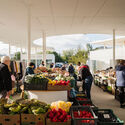
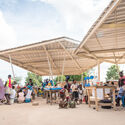
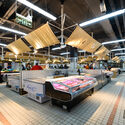
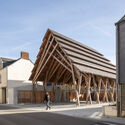
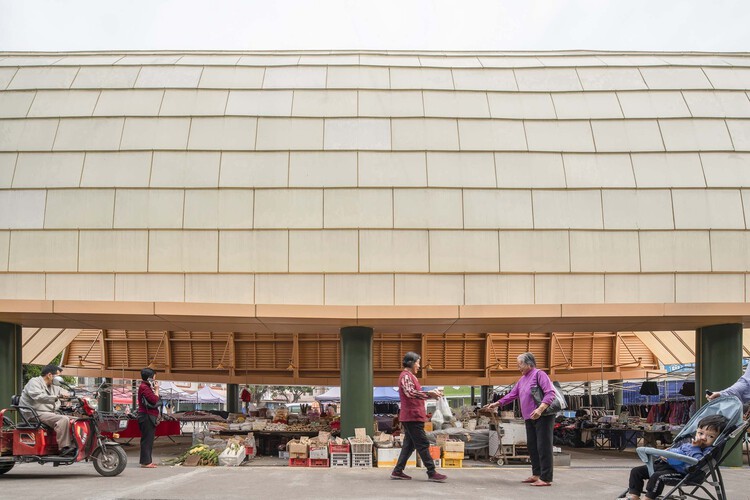
Designing the Public Market: Architecture for Gathering, Trading, and Belonging

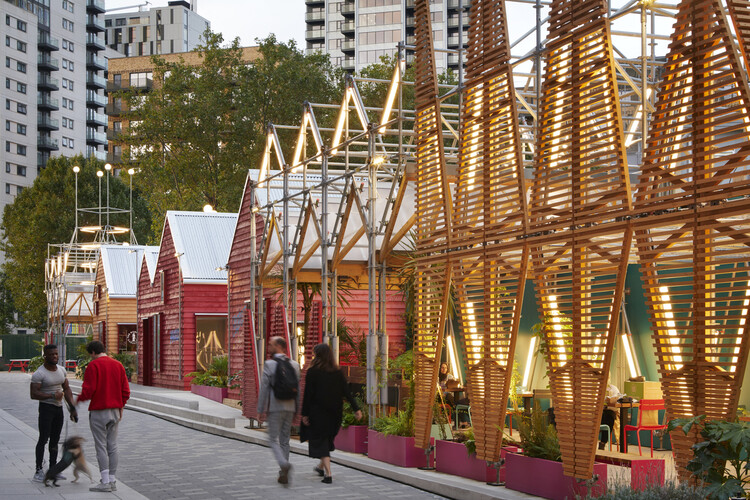
The making of a place is not a difficult thing in principle; it is enough for people to come together in a regular set location for a purpose or activity, and a space becomes. This does not disregard the fact that a physical element needs to accompany this gathering for a space to become sheltering, accommodating, and alluring. This idea of the space that emerges from intent can most definitely be seen in one of the most ancient of functions, which is food or produce markets.

For a market to become, the architectural element can be as simple as a light roof, which would harbor merchants and offer a non-spoken boundary to the place, or it can be as resourceful as adaptively reusing an existing building or site to fit new needs. Finally, it can be a temporary and lightweight structure pitched for certain events or needs and then removed to be used elsewhere, or for other means.

Designing the Public Market: Architecture for Gathering, Trading, and Belonging - SustainabilityDesigning the Public Market: Architecture for Gathering, Trading, and Belonging - SustainabilityDesigning the Public Market: Architecture for Gathering, Trading, and Belonging - SustainabilityDesigning the Public Market: Architecture for Gathering, Trading, and Belonging - SustainabilityDesigning the Public Market: Architecture for Gathering, Trading, and Belonging - More Images+ 15

3XN’s Sydney Fish Market to Open as Blackwattle Bay’s First Completed Project

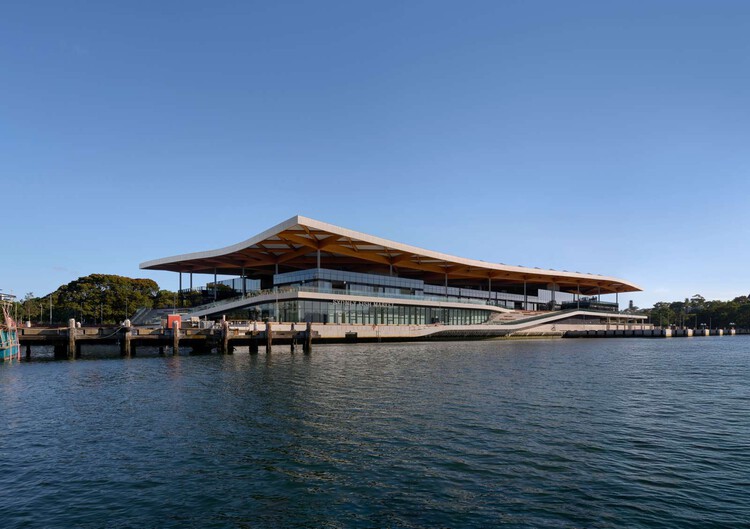
Set to open on January 19, 2026, the Sydney Fish Market marks the first completed project within the broader renewal of Blackwattle Bay on Sydney's inner harbour. Designed by 3XN in collaboration with BVN and Aspect Studios, and delivered by Multiplex, the purpose-built facility replaces the former market with a contemporary structure that combines an operating wholesale fish market with retail, dining, and publicly accessible waterfront spaces. Positioned approximately one mile southwest of Sydney's central business district, the project reframes one of the world's largest fish markets by volume as both working infrastructure and a civic destination.

3XN’s Sydney Fish Market to Open as Blackwattle Bay’s First Completed Project - Image 1 of 43XN’s Sydney Fish Market to Open as Blackwattle Bay’s First Completed Project - Image 2 of 43XN’s Sydney Fish Market to Open as Blackwattle Bay’s First Completed Project - Image 3 of 43XN’s Sydney Fish Market to Open as Blackwattle Bay’s First Completed Project - Image 4 of 43XN’s Sydney Fish Market to Open as Blackwattle Bay’s First Completed Project - More Images+ 10

Who Owns Public Space? Three Active Models of Shared Management Shaping Urban Commons in Europe and New York

Public space is often understood as belonging to no one in particular, collectively accessible yet institutionally maintained, yet a growing number of initiatives are challenging this assumption by testing shared management and distributed ownership models. In Paris, Adoptez un banc introduces a sponsorship-based approach, allowing individuals and groups to support temporarily and symbolically claim responsibility for historic public furniture without compromising its collective use. Elsewhere in the city, community gardens operating under the Main Verte framework demonstrate a self-managed model, in which public and private landowners retain ownership while delegating day-to-day control to citizen associations for food production and shared use. In New York, Common Corner represents a third pathway, based on institutional collaboration and participatory design, where public agencies, nonprofits, designers, and residents co-produce public space within a public housing context. Taken together, these three cases suggest that care, authorship, and responsibility can be distributed across citizens and institutions, producing more resilient, locally grounded urban environments.

"Build Something That Disappears": Gabriela Carrillo on Public Space Design in Louisiana Channel Interview

In this interview with Louisiana Channel, Mexican architect Gabriela Carrillo introduces us to the challenges that drive her work, particularly the projects carried out as a member of Colectivo C733, in which she currently participates alongside Carlos Facio, José Amozurrutia, Eric Valdez, and Israel Espin. Through an exploration of her definition of architecture, she offers reflections on the design of public spaces, the relationship between architecture and land art, and the role of the preexisting in the transformation of space. She defends architecture as a "powerful tool" for fostering connections between people and their environment, defining her practice as optimistic.

"Build Something That Disappears": Gabriela Carrillo on Public Space Design in Louisiana Channel Interview - Image 1 of 4"Build Something That Disappears": Gabriela Carrillo on Public Space Design in Louisiana Channel Interview - Image 2 of 4"Build Something That Disappears": Gabriela Carrillo on Public Space Design in Louisiana Channel Interview - Featured Image"Build Something That Disappears": Gabriela Carrillo on Public Space Design in Louisiana Channel Interview - Image 3 of 4Build Something That Disappears: Gabriela Carrillo on Public Space Design in Louisiana Channel Interview - More Images

Zaha Hadid Architects’ OPPO Headquarters in Shenzhen Advances with Facade Installation

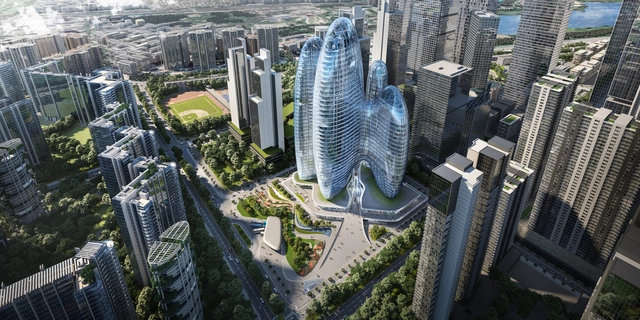
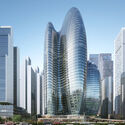
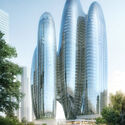
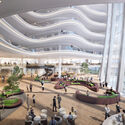
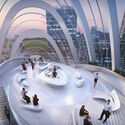
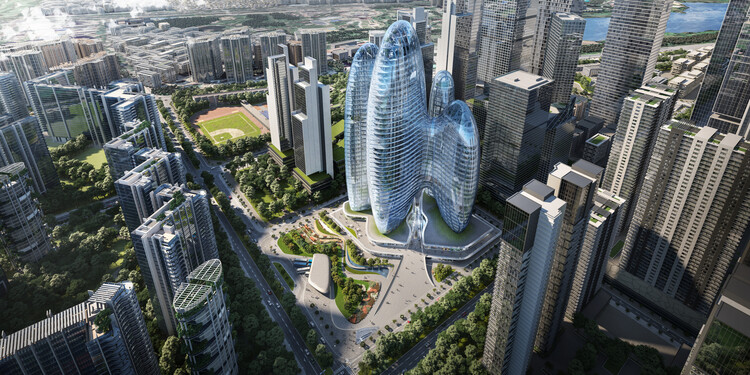
Facade installation has commenced at the construction site of OPPO's new headquarters campus in Shenzhen's Greater Bay Area, indicating visible progress on the project designed by Zaha Hadid Architects. Planned as a consolidated workplace for a China-based technology company, OPPO, the campus is situated within a rapidly developing urban context. The headquarters is intended to accommodate the company's expanding workforce while integrating office functions with publicly accessible spaces. Current construction activity involves the assembly of the external envelope, which reflects the project's established massing, tower configuration, and overall spatial organization.

Zaha Hadid Architects’ OPPO Headquarters in Shenzhen Advances with Facade Installation - Image 1 of 4Zaha Hadid Architects’ OPPO Headquarters in Shenzhen Advances with Facade Installation - Image 2 of 4Zaha Hadid Architects’ OPPO Headquarters in Shenzhen Advances with Facade Installation - Image 3 of 4Zaha Hadid Architects’ OPPO Headquarters in Shenzhen Advances with Facade Installation - Image 4 of 4Zaha Hadid Architects’ OPPO Headquarters in Shenzhen Advances with Facade Installation - More Images+ 1

“Coming Together” Exhibition in Washington Explores Post-Pandemic Transformations of Community and Public Spaces

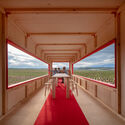
The exhibition Coming Together: Reimagining America's Downtowns, held at Washington, D.C.'s National Building Museum, explores the transformations underway in the United States' downtowns and the ways communities have organized to shape alternative urban scenarios. Curated by Uwe S. Brandes, Professor at Georgetown University, and designed by Reddymade and MGMT., it is the first of three major exhibitions within the Museum's Future Cities initiative, an interdisciplinary project examining the city as a hub, catalyst, essential building block, and reflection of society. Coming Together features examples from more than 60 U.S. cities, both large and small, highlighting lessons learned and opportunities embraced in the wake of the COVID-19 pandemic as communities adapt to lasting changes in work, housing, mobility, entertainment, and recreation. The exhibition is currently open to the public and will remain on view through Fall 2026.
“Coming Together” Exhibition in Washington Explores Post-Pandemic Transformations of Community and Public Spaces - Image 1 of 4“Coming Together” Exhibition in Washington Explores Post-Pandemic Transformations of Community and Public Spaces - Image 2 of 4“Coming Together” Exhibition in Washington Explores Post-Pandemic Transformations of Community and Public Spaces - Image 3 of 4“Coming Together” Exhibition in Washington Explores Post-Pandemic Transformations of Community and Public Spaces - Image 4 of 4“Coming Together” Exhibition in Washington Explores Post-Pandemic Transformations of Community and Public Spaces - More Images+ 18

Best Articles of 2025: Plural Practices, Environmental Responses, and an Architecture of Care

Across recent years, architectural discourse has been shaped by the emergence of new voices, rediscovered territories, and a growing commitment to shared forms of knowledge. These concerns remain fully present in 2025 as ongoing debates that continue to gain density and nuance. Questions of who produces architecture, from which contexts, and under what conditions remain central, increasingly informed by practices that operate collectively, across disciplines, and beyond singular authorship.

This continuity is reflected in how architecture is understood less as a finished object and more as an ongoing process embedded in social, cultural, and environmental systems. Discussions around agency, participation, and knowledge production persist, alongside sustained attention to rural, peripheral, and historically marginalized contexts. Rather than privileging a single scale or geography, architecture is approached as a practice that moves between territories, acknowledging the unequal conditions that shape how spaces are designed, built, maintained, and inhabited.

Best Articles of 2025: Plural Practices, Environmental Responses, and an Architecture of Care - Image 1 of 4Best Articles of 2025: Plural Practices, Environmental Responses, and an Architecture of Care - Image 2 of 4Best Articles of 2025: Plural Practices, Environmental Responses, and an Architecture of Care - Image 3 of 4Best Articles of 2025: Plural Practices, Environmental Responses, and an Architecture of Care - Image 4 of 4Best Articles of 2025: Plural Practices, Environmental Responses, and an Architecture of Care - More Images+ 31

In the Blink of an Eye: 60 Light Installations Illuminate a Citywide Gallery for Noor Riyadh 2025

 | Sponsored Content

Noor Riyadh 2025 brought large-scale light installations to public sites across the Saudi Arabian capital, temporarily transforming transit hubs, historic districts, and significant landmarks into illuminated urban environments. From November 20 to December 6, 2025, Riyadh became a citywide gallery of light, motion, and shifting perception. The festival's fifth edition featured 60 artworks by 59 artists from 24 countries, including more than 35 new commissions, responding to the theme "In the Blink of an Eye." Through light as both medium and concept, the installations reinterpreted the capital's rapidly evolving architectural landscape and reflected how perception shifts in spaces shaped by heritage and ambitious urban development.

From Ecologies to Everyday Life: Reflecting on Architectural Exhibitions in 2025

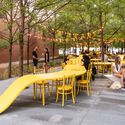
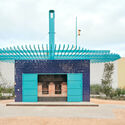
This past year marked a period of introspection for architecture. As 2025 unfolded, the discipline, confronted with evolving environmental and social realities, entered a broader turning point in how it understands its role and how users engage with it. Throughout the year, exhibitions shifted focus away from buildings as isolated objects toward a broader understanding of relationships between ecology, equity, everyday life, and collective imaginaries. Across institutions and cities, they operated less as showcases and more as discursive platforms: places where architecture was not only presented, but also imagined, questioned, and collectively redefined.

While exhibitions have long functioned as sites of discourse, politics, and community, this role became more explicit in 2025. As Carlo Ratti noted in an ArchDaily interview during the pre-opening of the Venice Architecture Biennale 2025, exhibitions today can "hybridize the way that people come together," an ambition that echoed across cities and institutions as exhibitions evolved into spaces for debate, experimentation, and collective reflection. Exhibitions are places where architects and designers meet, where conversations unfold openly with the public, and where ideas emerge through spontaneous exchanges among passersby. Exhibitions became spaces where architectural discourse extended beyond professional circles, opening conversations to broader publics through everyday encounters, shared experiences, and informal exchanges.
From Ecologies to Everyday Life: Reflecting on Architectural Exhibitions in 2025 - Image 1 of 4From Ecologies to Everyday Life: Reflecting on Architectural Exhibitions in 2025 - Image 2 of 4From Ecologies to Everyday Life: Reflecting on Architectural Exhibitions in 2025 - Image 3 of 4From Ecologies to Everyday Life: Reflecting on Architectural Exhibitions in 2025 - Image 4 of 4From Ecologies to Everyday Life: Reflecting on Architectural Exhibitions in 2025 - More Images+ 35

Beyond Universal Models: The Turn Toward Situated Architecture

Subscriber Access | 

Specificity has re-emerged as a central language in architectural discourse. In an increasingly globalized field, where projects often follow familiar models regardless of context, architects are now turning toward approaches rooted in the particularities of each site. This renewed attention to context reflects broader social, climatic, and political pressures: cities are facing extreme heat, ecological challenges, shifting demographics, and new forms of collective life that demand responses grounded in their immediate conditions.

Situated architecture describes this shift. It refers to design approaches in which form, program, and materiality emerge from the specific environment that produces them: its microclimates, cultural structures, and everyday rituals. Rather than beginning with universal templates, these practices start with observation, prototyping, and direct engagement with local dynamics. This logic is visible in the climatic and material experiments of TAKK in Spain, such as Portable Garden and 10k House, which operate as lightweight prototypes tuned to thermal and ecological gradients; in Studio Ossidiana's Art Pavilion M, shaped by layered soils and ecological cycles in the Netherlands; in Izaskun Chinchilla's reinterpretations of vernacular objects and her later experiments with 100 Sillas and 3 Salones Urbanos; in the narrative-driven domestic spaces explored by Common Accounts; and in Raumlabor's urban interventions that respond directly to the specificities of post-industrial Berlin.

Beyond Universal Models: The Turn Toward Situated Architecture - Image 1 of 4Beyond Universal Models: The Turn Toward Situated Architecture - Image 2 of 4Beyond Universal Models: The Turn Toward Situated Architecture - Image 3 of 4Beyond Universal Models: The Turn Toward Situated Architecture - Image 4 of 4Beyond Universal Models: The Turn Toward Situated Architecture - More Images+ 56

Cities Need Care, Not Perfection: Rethinking How We Build the Urban Future

Subscriber Access | 

What does optimism feel like in cities that can no longer rely on perfection as their ultimate ambition? Across the world, urban environments bear the weight of overlapping pressures: climate volatility, spatial inequality, political fragmentation, public distrust, and chronic infrastructural disinvestment. These realities render the idea of an ideal city increasingly detached from lived experience. Yet the hope for building better systems persists. While utopian visions may seem like an escape from the growing complexities of the modern world, the greater challenge for contemporary city-making is to confront those complexities rather than avoid them.

Cities Need Care, Not Perfection: Rethinking How We Build the Urban Future - Image 1 of 4Cities Need Care, Not Perfection: Rethinking How We Build the Urban Future - Image 2 of 4Cities Need Care, Not Perfection: Rethinking How We Build the Urban Future - Image 3 of 4Cities Need Care, Not Perfection: Rethinking How We Build the Urban Future - Image 4 of 4Cities Need Care, Not Perfection: Rethinking How We Build the Urban Future - More Images+ 16