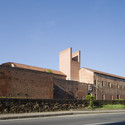
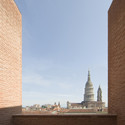
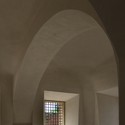
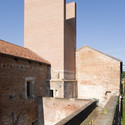
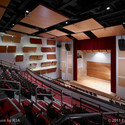
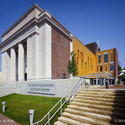
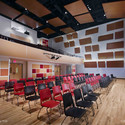
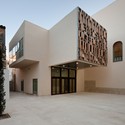
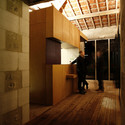
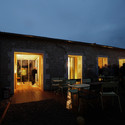
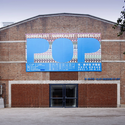
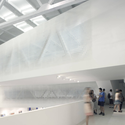
London and Barcelona-based practice AZPA (Alejandro Zaera-Polo Architecture) has been announced as winner of an international competition aimed to establish a permanent residence for the Locarno International Film Festival in Switzerland. Breaking away from the starchitect notion of public architecture needing to make an “extravagant gesture”, AZPA’s innovative proposal partakes in an act of “urban recycling” by reusing the pre-existent, nineteenth century structure of Piazza Castello and transforming its interior courtyard into three sizable theaters. Additionally, a complimentary renovation will take place on the surrounding Piazza Remo Rossi, which will be repaved with red natural stone that essentially provides a “permanent red carpet” qualified to host an array of festival related events.
As Architect Alejandro Zaera-Polo describes: "I do not want to redraw the city, but keep the city."
AZPA’s winning design not only preserves and capitalizes on the existing integrity of the city, but the strategies employed makes this an economically viable solution. With an estimated price tag of 28 million Swiss Francs, this renovation is said to be no more than the cost of a complete demolition.
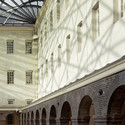
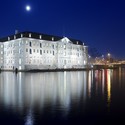
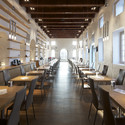
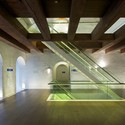
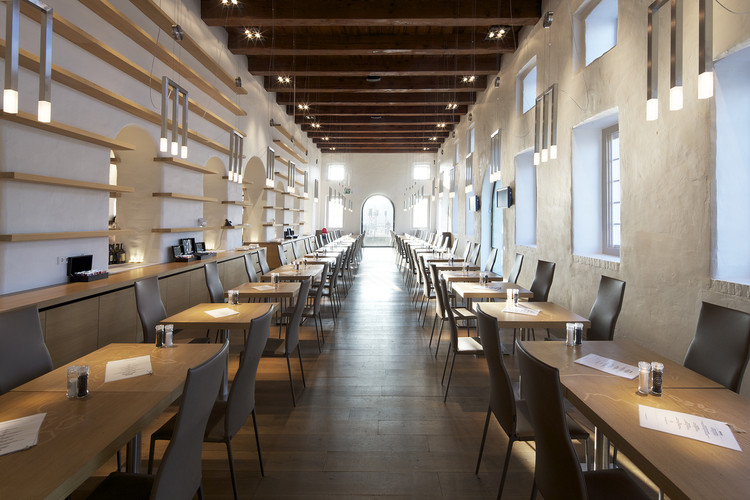
Architect: Dok Architecten: Liesbeth van der Pol, Jan Jaap Roeten, Sonja Müller, Ellen Wolse, Christina Patz, Mirthe Kooy, Ieke Koning Location: Amsterdam, The Netherlands Programme: Museum, Library, Restaurant and Retail Facilities Client: Rijksgebouwendienst, Haarlem Construction Costs: €28.000.000 miljoen Dome Design and Construction: Ney & Partners, Brussels (BE): Laurent Ney, Eric Bodarwé, Kenny Verbeeck and others Project Year: 2011 Photographs: Arjen Schmitz photographer
One of the main idea’s behind the 2012 Venice Biennale’s “Common Ground” theme, as stated by director David Chipperfield, is “to reinforce our understanding of architectural culture, and to emphasize the philosophical and practical continuities that define it”. With the exhibition “Culture Under Construction | The Collectivity of Cultural Space”, Mexico aims to develop an understanding of the distinct contribution that architecture can make to define the collectivity of cultural spaces while strengthening the connection between existing buildings and emerging architecture.
Mexico will exhibit thirteen projects that reveal the significance of contemporary Mexican culture of architecture in one of the most emblematic buildings in Venice, the Church of San Lorenzo, which they will restore as a contribution to Venice’s built heritage.
This year’s Venice Biennale will kick off on August 29th and run through November 25th and for the first time, the Institut Ramon Llull will be presenting an exhibition dedicated to Catalan and Balearic architecture entitled “Vogadors”, featuring nine projects from nine different architects that epitomize the contemporary and avant-garde works from the regions. The exhibition is inspired by the Mediterranean Sea, which is the main geographical feature of the regions, and by the words of Jorge Oteiza, “He who forges ahead creating something new does so like an oarsman, moving forward but back-paddling, looking behind him, towards the past, towards what exists, so as to be able to reinvent its underpinnings.”
Follow us after the break to see the projects to be featured at the exhibit.
With an arrival sequence that starts at curbside with a new canopy system providing both shelter and a new architectural image for the building, the renovations for Terminal 1 at Raleigh-Durham International Airport have been carefully considered and addressed. Designed by Pearce Brinkley Cease + Lee, their main challenge was the transformation of the existing building in support of the passenger travel experience. As the canopy extends the length of the building and transforms itself at the crosswalk linking the commercial curb canopy, both arrival and departure experienced are emphasized. More images and architects’ description after the break.
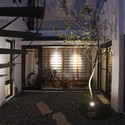
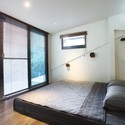
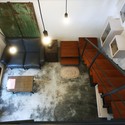
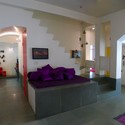
This residential project in Ahmedabad, India by Vatsu Shilpa Consultantsfollows the metamorphosis of an old vacant rowhouse into a renovated townhouse into a final fusion with the adjoining building. The project began in 2004 and went through several modifications and additions. By 2010, the adjoining house was purchased and 56+55 Sumeru was created.
A powerful and expressive design it itself, Ludwig Mies van der Rohe’s Neue Nationalgalerie in Berlin is still admired as a concrete, steel, and glass landmark today. Dedicated to culture and the fine arts, the building will be going through a major renovation, which will be overseen by British architect, David Chipperfield who has recently worked extensively in Berlin, finishing work on the war-ravaged Neues Museum on the Museum Island complex in 2009. The renovation will start in 2015 and last three years, during which time the museum will be closed. The building, completed in 1968, is Mies van der Rohe’s only work in Germany after World War II and is in need of thorough modernization after 40 years. Restoration of the glass facade, stone terrace and concrete and steel structure, along with new security and fire technology are included in the project.



.jpg?1413934920)
.jpg?1413934905 "© Josh Partee")
.jpg?1413934911 "© Josh Partee")
.jpg?1413934928 "© Josh Partee")
.jpg?1413934936 "© Josh Partee")