In honor of the 50th anniversary of the 1967 International and Universal Exposition or Expo 67 in Quebec, Canada Post, and renowned architect Moshe Safdie have revealed a celebratory stamp depicting Safdie’s iconic Habitat 67, which was unveiled as the Canadian Pavilion for the world fair.
The housing complex, commissioned by the Canadian government and the city of Montreal, now holds the status as a National Heritage Site and its commemorative stamp is the first of ten to be issued by Canada Post in celebration of the country’s 150th anniversary. Each stamp highlights a key moment in Canada’s history since its centennial in 1967.
https://www.archdaily.com/870317/canada-post-commemorates-canadas-150th-anniversary-with-habitat-67-stampOsman Bari
In conjunction with the exhibition Global Citizen: The Architecture of Moshe Safdie on display at BSA Space, this portrait film celebrates the life and work of world-renowned Israeli-Canadian architect Moshe Safdie FAIA by highlighting his outstanding contribution to the field of architecture. From the Holocaust Museum, Yad Vashem, in Jerusalem to the masterplan for the city of Modi’in to the Peabody Essex Museum in Salem, Massachusetts, this personal documentary delves into some of Safdie’s most famous design projects and explores what makes each one unique.
In It’s A Wonderful Life the film’s protagonist George Bailey, facing a crisis of faith, is visited by his guardian angel, and shown an alternate reality where he doesn’t exist. The experience gives meaning to George’s life, showing him his own importance to others. With the increasing scale of design competitions these days, architectural “could-have-beens” are piling up in record numbers, and just as George Bailey's sense of self was restored by seeing his alternate reality, hypothesizing about alternative outcomes in architecture is a chance to reflect on our current architectural moment.
Today marks the one-year-anniversary of the opening of Phase 3 of the High Line. While New Yorkers and urbanists the world over have lauded the success of this industrial-utility-turned-urban-oasis, the park and the slew of other urban improvements it has inspired almost happened very differently. Although we have come to know and love the High Line of Diller Scofidio + Renfro and James Corner Field Operations, in the original ideas competition four finalists were chosen and the alternatives show stark contrasts in how things might have shaped up.
On this key date for one of the most crucial designs of this generation, we decided to look back at some of the most important competitions of the last century to see how things might have been different.
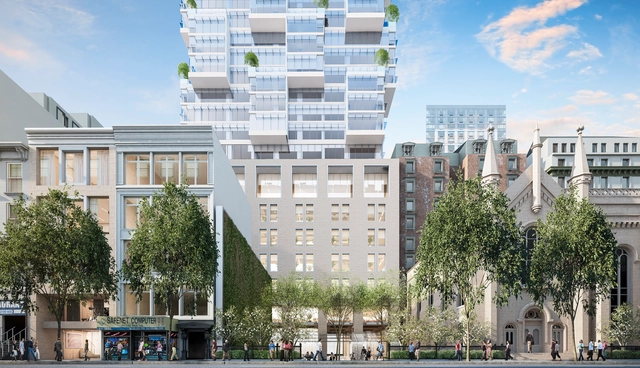
Images of Moshe Safdie's first New York project has been released. Planned to rise on a Manhattan site at West 30th Street, between Broadway and 5th Avenue, the 64-story mixed-use tower will feature a limestone base that compliments and serves its historic neighbor: the Marble Collegiate Church, one of the Collegiate Churches’ five ministries.
The building "will be distinguished by its vertical massing, which breaks down the scale of the tower into a series of three-story-high, offset projections," says Safdie Architects. "The offset projections also provide energy efficiency by self-shading the tower’s facade, further enhanced by additional sun shading at the south facade."
Safdie Architects’ 2015 ResearchFellowship will center on the theme of “dense urbanism,” and the ways in which the field of architecture can rethink its approach to vital issues such as materiality, construction, environmental conditions, and the demographic realities of rapidly growing populations. This year, Moshe Safdie and his team invite exceptional individuals to attack the challenges of the contemporary urban landscape head-on by proposing new tools and solutions to create a better functioning and humane city. Accepted candidates will spend one year in residence at Safdie Architects’ Boston office, during which they will receive support from the practice and have access to the firm’s resources and consultants.
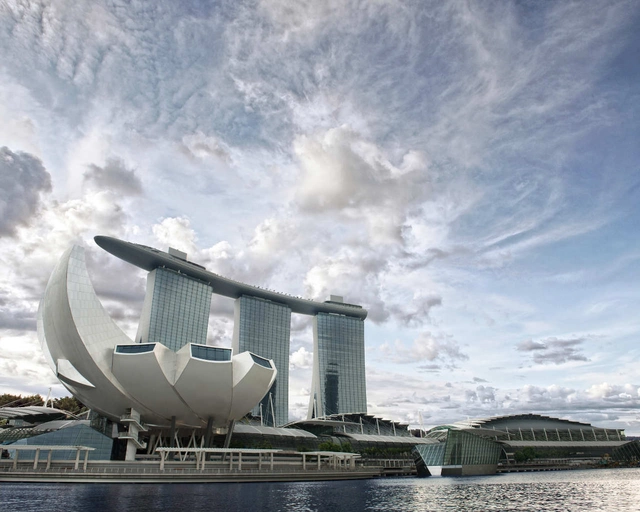
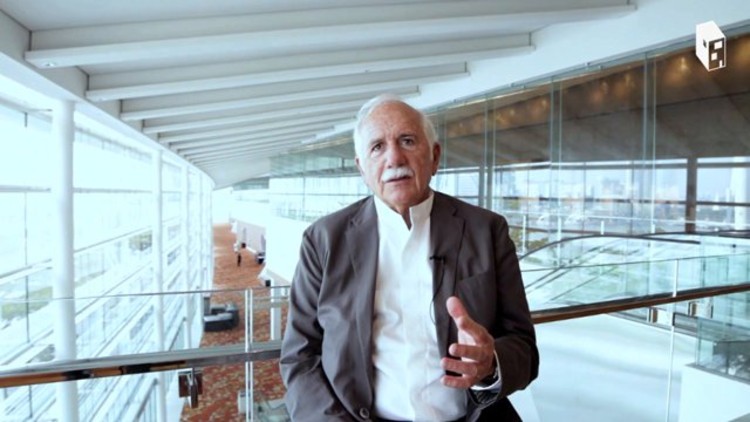
During this year’s World Architecture Festival (WAF) held in Singapore, we had the chance to talk with keynote speakerMoshe Safdie. Standing inside the Marina Bay Sands, a massive mixed-use project by Safdie Architects and an example of the firm’s ongoing research on density, Safdie talked to us about Asia's urban environment and the challenges of working there. As the world's growth is happening in dense areas, this subject is utterly important, and Safdie has proven that these kind of mega-urbanism projects can be functionally integrated into the city. “Working in Asia at the intensity and scale that we do has been a paradigm shift for our practice because much of our work in the United States and Israel and elsewhere in recent years has been focused on institutions - on libraries, museums, airports - here we are involved with urban place, mixed-use mostly, extremely dense, working for the private sector, and having to reconcile the market forces with the architectural environmental demands, which is no mean task,” he said.
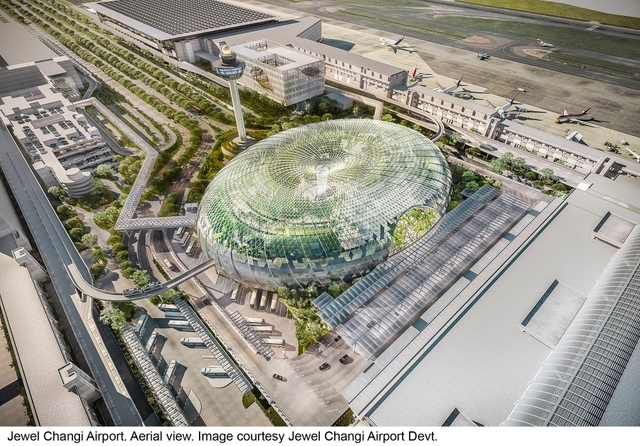
Today, Safdie Architects revealed plans for a glass, spherical “air hub” that will be built at the center of the Singapore’s Changi Airport, the world’s sixth busiest airport. The “jeweled” biodome was presented as a “new paradigm” for international airports that will boost Singapore’s stopover appeal and become a “lifestyle destination” for both travelers and local residents.
Learn more about the design and a word from Moshe Safdie, after the break.
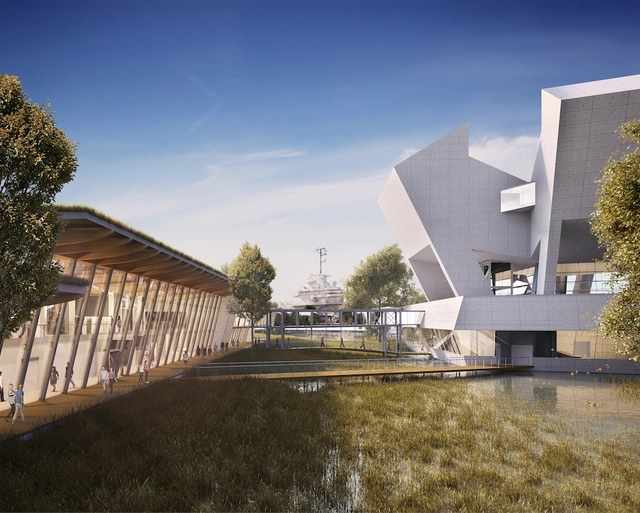
The Medal of Honor was created in 1861 and is the nation’s highest military honor. It is awarded by the President of the United States on behalf of the United States Congress for valor in combat. The Museum is the first part of a multi-phase development of the site on the eastern shore of Charleston Harbor and will become an iconic destination in the region.
Safdie Architects was recently selected to design a new mixed-use development in Colombo, Sri Lanka. The 69-storey mixed-use project will be the first for Moshe Safdie in Sri Lanka, and is expected to be the tallest residential building in Colombo when it is completed. The design includes expansive family and community space amenities such as community gardens, shared outdoor spaces within the upper levels of the building, and individual roof gardens or terraces for every residence, a hallmark of Safdie’s design philosophy to provide access to outdoor spaces in high density urban housing. More images and architects’ description after the break.


.jpg?1493587707&format=webp&width=640&height=580)