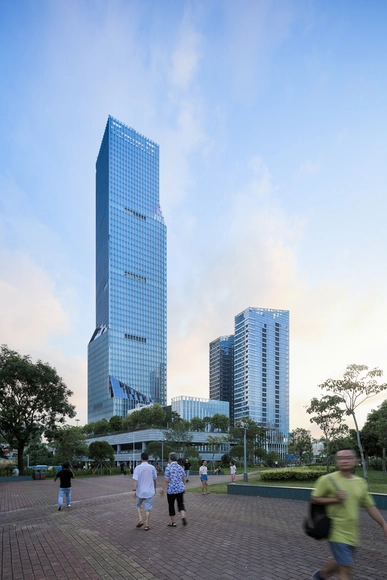
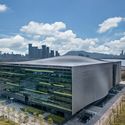
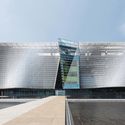
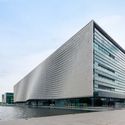
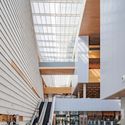
This announcement is hereby issued for International Tender for the Architectural Design of the First Projects in Shenzhen Park of Shenzhen-Hong Kong Science and Technology Innovation Cooperation Zone (Shenzhen-Hong Kong Innovation Integrated Service Center), and excellent design agencies at home and abroad are invited to join. We desire to solicit the most creative design scheme with the international vision and high standards.
https://www.archdaily.com/930929/call-for-entries-international-tender-for-the-architectural-design-of-the-first-projects-in-shenzhen-park-of-shenzhen-hong-kong-science-and-technology-innovation-cooperation-zone-shenzhen-hong-kong-innovation-integrated-service-centerMilly Mo
What happens when the sensor-imbued city acquires the ability to see – almost as if it had eyes? Ahead of the 2019 Shenzhen Biennale of Urbanism\Architecture (UABB), titled "Urban Interactions," ArchDaily is working with the curators of the "Eyes of the City" section at the Biennial to stimulate a discussion on how new technologies – and Artificial Intelligence in particular – might impact architecture and urban life. Hereyou can read the “Eyes of the City” curatorial statement by Carlo Ratti, the Politecnico di Torino and SCUT.
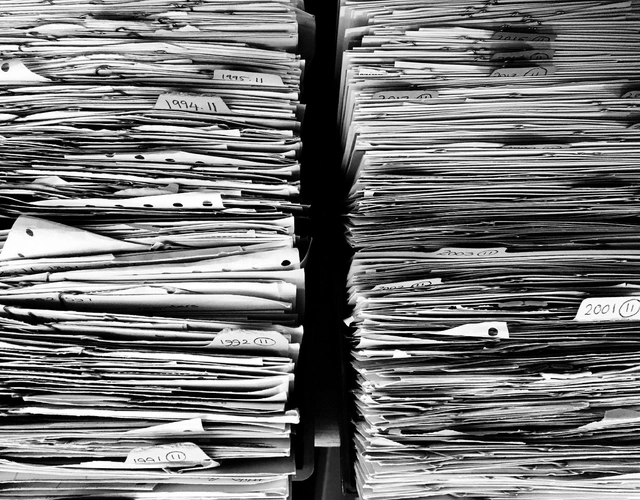
Architectural practice naturally results in an extraordinary accumulation of visuals and archival media that demand sorting, cataloguing, and organizing at a certain moment in time in order to avoid their amorphous accumulation to invade the working order of a firm. Tagging, numbering and classifying the accumulated traces of architectural creativity and data, has become a way of organizing the log of creative options and scenarios developed in practice, a directory of successful examples and of failures, all arranged to be used as a self-referential working catalogue of options that may be mobilized at any moment in time.
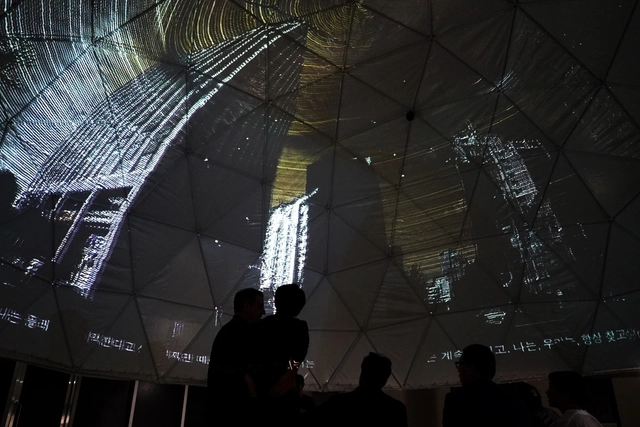
Example of pedestrian pattern heatmaps, as produced by software-translated timelapse recordings in our project Co-Creating Responsive Urban Spaces, transmitting interaction installations in the practice of urban design to activate public spaces. See www.responsiveurbanspaces.amsterdam
What happens when the sensor-imbued city acquires the ability to see – almost as if it had eyes? Ahead of the 2019 Shenzhen Biennale of Urbanism\Architecture (UABB), titled "Urban Interactions," Archdaily is working with the curators of the "Eyes of the City" section at the Biennial to stimulate a discussion on how new technologies – and Artificial Intelligence in particular – might impact architecture and urban life. Hereyou can read the “Eyes of the City” curatorial statement by Carlo Ratti, the Politecnico di Torino and SCUT.
Cities, as Goethe had already pointed out, should be understood as continuously developing 'forms in motion' (see Batty 2018). In the past, technological developments and our hopeful, as well as our dystopian imaginations of them, have been one of the main sources of kinetic energy to kick-off the shapeshifting processes of urban transformations. Most of the time with unexpected side-effects, evolving center stage in retrospect.
https://www.archdaily.com/930040/from-the-city-as-a-service-to-the-city-as-a-license-martijn-de-waal-and-frank-suurenbroek-for-the-shenzhen-biennale-uabb-2019Martijn de Waal and Frank Suurenbroek
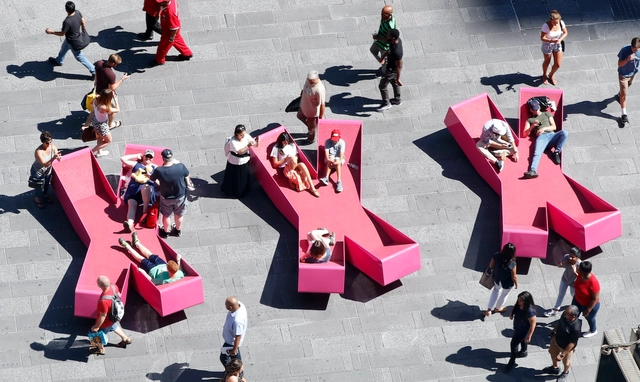
XXX TIMES SQUARE WITH LOVE, Photographs by Rob Kassabian @ RK Films
What happens when the sensor-imbued city acquires the ability to see – almost as if it had eyes? Ahead of the 2019 Shenzhen Biennale of Urbanism\Architecture (UABB), titled "Urban Interactions," ArchDaily is working with the curators of the "Eyes of the City" section at the Biennial to stimulate a discussion on how new technologies – and Artificial Intelligence in particular – might impact architecture and urban life. Hereyou can read the “Eyes of the City” curatorial statement by Carlo Ratti, the Politecnico di Torino and SCUT.
The history of Times Square and 42nd street is a history of the human gaze. Broadway theaters and X-rated shows used to enjoy a neighborly relationship of “looking at” and “being looked at” in musical theaters, peep shows and x-rated cinemas. Voyeurism was the business that is lost since for an urban context which by now transformed into an almost aseptic shopping and entertainment district.
https://www.archdaily.com/929807/xxx-times-square-with-love-jurgen-mayer-h-for-the-shenzhen-biennale-uabb-2019Jürgen Mayer H.
Based on the unified arrangements of Shenzhen Municipal Government, Shenzhen is advancing the construction of the “New Top Ten Cultural Facilities”; wherein, Guoshen Museum (tentative name) has been determined to settle in the coastal area of Qianhai New City Center. The international tender for the architectural scheme of the project will be conducted soon for the relevant construction to be implemented.
https://www.archdaily.com/929781/call-for-entries-international-tender-for-conceptual-and-schematic-design-of-guoshen-museumMilly Mo
In December 2019, the Chinese city of Shenzhen will host the world’s only Biennale focused exclusively on the topics of urbanism and urbanization. The 2019 Bi-City Biennale of Urbanism\Architecture will explore new phenomena brought about by the digital revolution, and the ability of citizens to become involved in shaping cities. The Biennale curator, Carlo Ratti, exemplifies this intersection between natural and artificial, championing the power of new technologies to transform how we live and design through his work at Carlo Ratti Associati and the MIT Senseable City Lab. In the “Eyes of the City” section of the Biennale, he is joined by MVRDV, and its co-founder Winy Maas, in shaping an experience that invites visitors and observers to question how technologies such as facial recognition can be integrated into urban life.
https://www.archdaily.com/928595/carlo-ratti-and-winy-maas-discuss-facial-recognition-and-the-shenzhen-biennaleNiall Patrick Walsh
Xili Integrated Transport Hub is positioned as one of the master hubs among the “three-master four-auxiliary” of Shenzhen City. It is a major construction project of Shenzhen's building a pilot demonstration zone of socialism with Chinese characteristics.We sincerely seek forward-looking and innovative design concepts and schemes both domestically and internationally.
https://www.archdaily.com/928437/call-for-entries-solicitation-of-the-conceptual-design-of-shenzhen-xili-integrated-transport-hub-and-the-architectural-design-scheme-of-the-main-buildingMilly Mo
What happens when the sensor-imbued city acquires the ability to see – almost as if it had eyes? Ahead of the 2019 Shenzhen Biennale of Urbanism\Architecture (UABB), titled "Urban Interactions," ArchDaily is working with the curators of the "Eyes of the City" section at the Biennial to stimulate a discussion on how new technologies – and Artificial Intelligence in particular – might impact architecture and urban life. Hereyou can read the “Eyes of the City” curatorial statement by Carlo Ratti, the Politecnico di Torino and SCUT.
Media Architecture is a merging of new technologies and the built form in order to explore narrative and to imbue character, to engage people and create new dialogues through a layer of meaningful experience.
It isn’t a new concept - telling a story about a building through its form, particularly the facade of a building, has been around throughout history;- just think of York Minster’s stained glass windows, St Mark’s Basilica in Venice, and the Meenakshi Temple in Tamil Nadu. What is exciting now is the opportunities brought about by technology to create new narratives and new forms of human interaction.
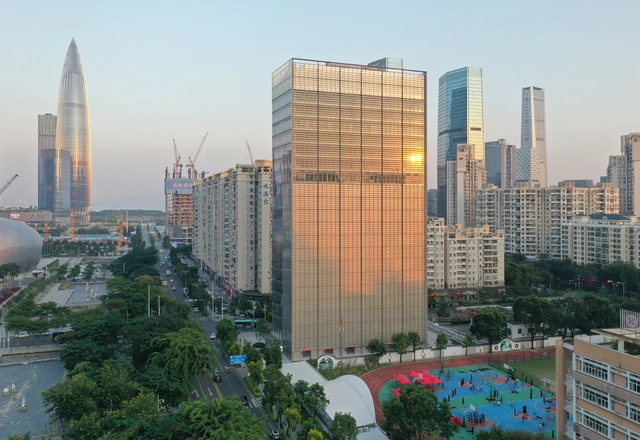
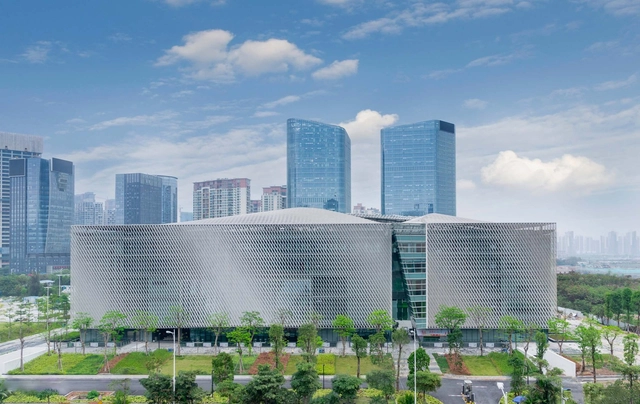
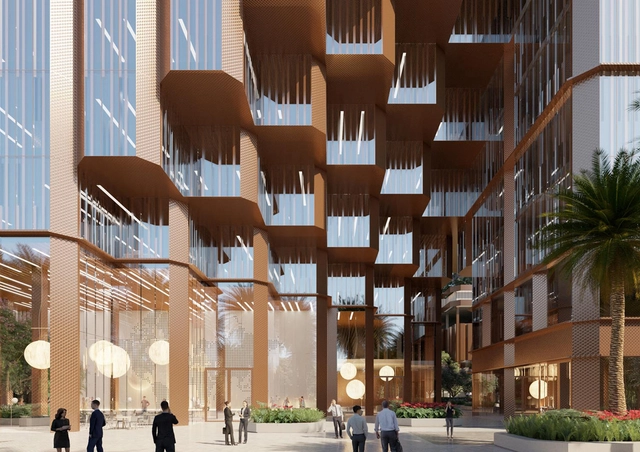
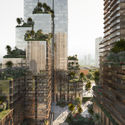
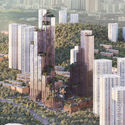
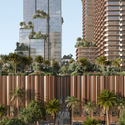
Dutch design practice Mecanoo has revealed their design for the Konka mixed-use project in Shenzhen, China. As the team states, Shenzhen is searching for new models for urban and architectural innovation to replace the traditional model of large-scale indoor shopping malls and focus on flexible development. The new Kang Qiao Jia Cheng development was made to provide an urban regeneration paradigm and a new icon for the Shenzhen skyline.
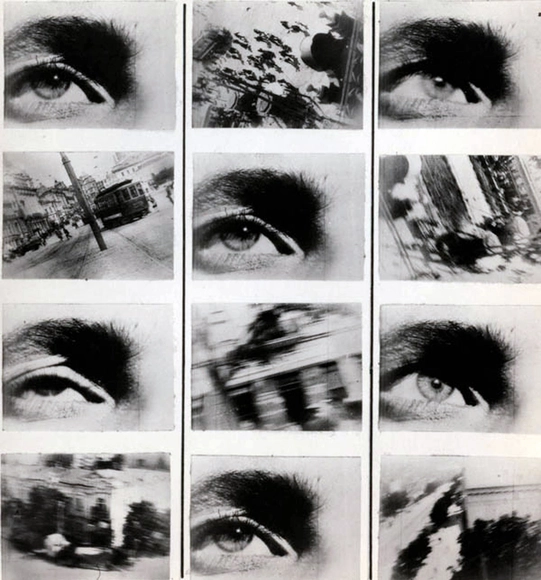
The Man with the Movie Camera (Dziga Vertov, USSR, 1929)
What happens when the sensor-imbued city acquires the ability to see – almost as if it had eyes? Ahead of the 2019 Shenzhen Biennale of Urbanism\Architecture (UABB), titled "Urban Interactions," ArchDaily is working with the curators of the "Eyes of the City" section at the Biennial to stimulate a discussion on how new technologies – and Artificial Intelligence in particular – might impact architecture and urban life. Hereyou can read the “Eyes of the City” curatorial statement by Carlo Ratti, the Politecnico di Torino and SCUT.
Ever since the Lumière brothers trained their camera on La Place des Cordeliers in Lyon in 1895, cinema has shaped our collective urban imagination. For 125 years, film has relentlessly recorded the deaths and lives of not just great American cities but of all great – and not so great – cities the world over. Film-makers have observed, expressed, characterized, interpreted and portrayed hundreds of thousands of city streets. By charting the cities’ evolution across the 20th century to present days, films are the quintessential Eyes on and of the City.







.jpg?1576062728)








.jpg?1572487908&format=webp&width=640&height=580)
.jpg?1572489309 "© Schran Image")
.jpg?1572487444 "© Schran Image")
.jpg?1572486968 "© Schran Image")
.jpg?1572488830 "© Schran Image")
.jpg?1572487908)