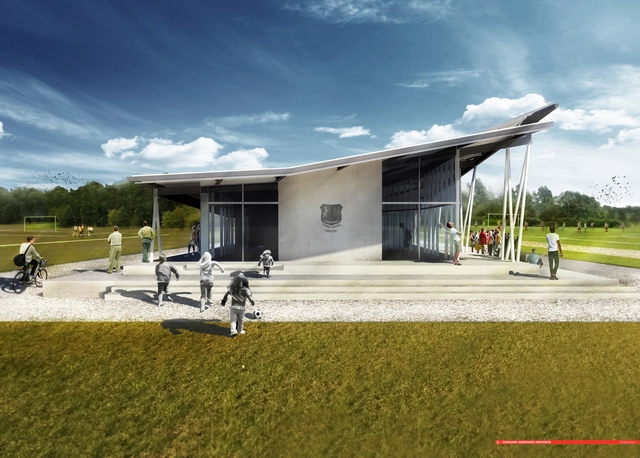
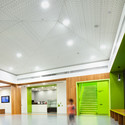
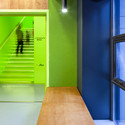
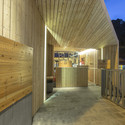
The largest football club in New Zealand, the Three Kings United Football Club, is set to receive a new headquarter and community center at Keith Hay Park in Auckland. Designed by Copeland Associates Architects (CAA), the single storey pavilion sits on a raised plinth to elevate it from the flood plain and gives spectators a greater vantage point over the surrounding sports fields. Comprised of predominantly lightweight, prefabricated elements, the building has a sense of lightness which increases in accordance with its greater transparency at the northern end.
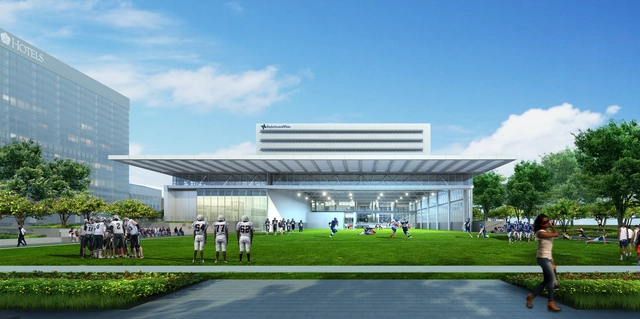
Perkins+Will designed a sports therapy and research centre for a new collaboration between the Dallas Cowboys and healthcare provider Baylor Scott & White. To sit within the Cowboy's new 91-acre campus, the mixed-use medical facility will provide necessary care and training facilities to athletes of all levels, including the Dallas Cowboys themselves.
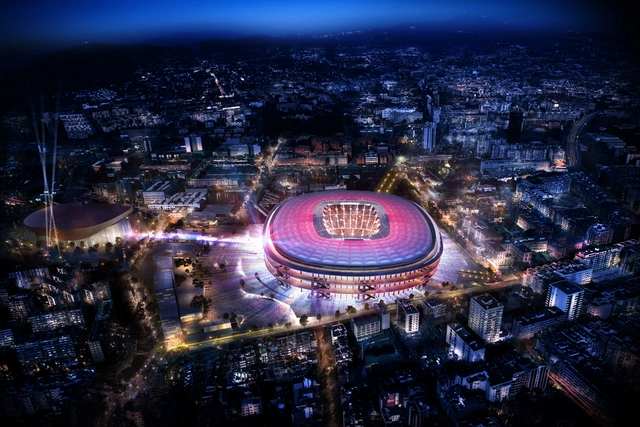
Alongside the team's players, the board of directors chaired by Josep Maria Bartomeu presented the model of the project, which will begin construction in mid-2017 to expand the stadium's capacity to 105,000 spectators. In addition, the organization published a series of videos about the project, including an explanation of how the expansion will take place without affecting a single football match.
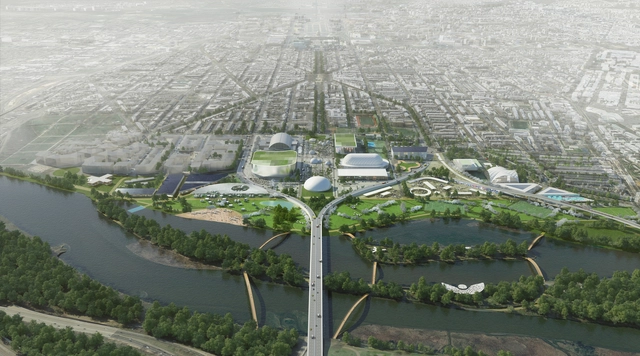
Two conceptual plans designed by OMA have been unveiled for the redevelopment of Washington DC's 190-acre Robert F. Kennedy (RFK) Stadium-Armory Campus site. Released by Events DC, theofficial convention and sports authority for the District of Columbia, the phased design concepts aim to "leverage the District's waterfront, provide neighborhood serving amenities and connect the current site with increased and sustainable green space, flexible recreational fields and natural access to pedestrian-friendly paths."
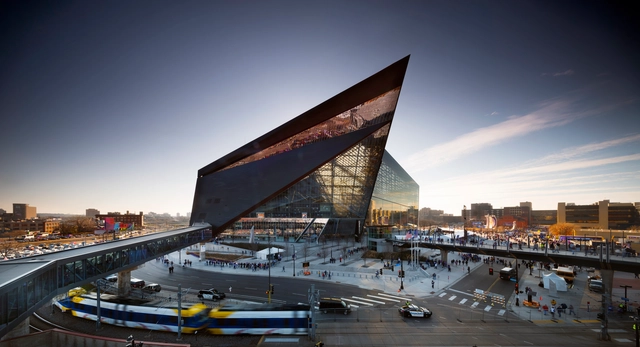
Architecture's ability to bring people together is perhaps one of its greatest, awe-inspiring traits. And while the "bringing people together" part is usually meant figuratively, there is no building type quite as marvelous as the stadium, a place that literally gathers tens of thousands of individuals in one place, at the same time. Though the legacy of the stadium as a building type is already rich and storied, a new chapter in the history of American sports architecture will surely begin with the imminent opening of the U.S. Bank Stadium in Minneapolis, Minnesota.
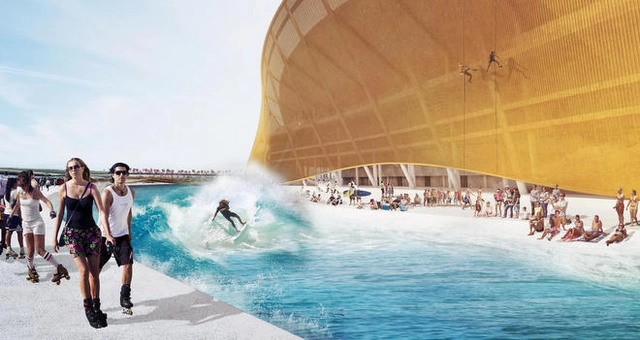
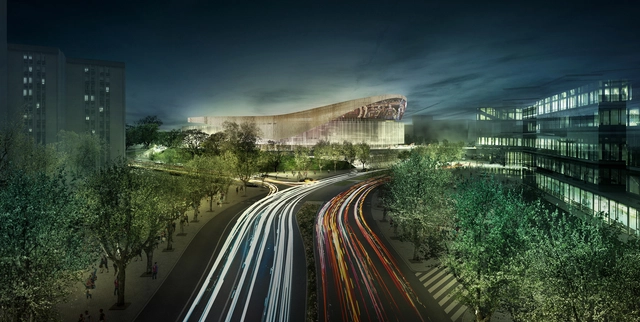
BIG has revealed their concept for the Redskins new stadium complex. Complete with a moat, the semi-transparent, undulating structure was designed to redefine the American stadium. Rather than being (mostly) preserved for game-day, BIG envisions the stadium to be a year-round destination used for more than just football.
“The stadium is designed as much for the tailgating, like the pre-game, as for the game itself,” Bjarke Ingels said on 60 Minutes. “Tailgating literally becomes a picnic in a park. It can actually make the stadium a more lively destination throughout the year without ruining the turf for the football game.”
Design of the new Camp Nou. Image Courtesy of FC Barcelona
Japanese practice Nikken Sekkei, in collaboration with Joan Pascual-Ramon Ausió Arquitectes, has been chosen to design the new Camp Nou stadium for FC Barcelona, according to Spanish newspaper La Vanguardia. The winning team was chosen over three other finalists: HKS + COX + Batell i Roig Arquitectes; BIG + IDOM + BAAS Arquitectes; POPULOUS + Mias Arquitectes + RCR Arquitectes.
The new design intends to compliment the recently unveiled New Palau Blaugrana, FC Barcelona's main basketball arena that will be designed by HOK and TAC Arquitectes. All this is happening alongside the Espai Barça remodel that is expected to begin in 2017 and complete by 2021.
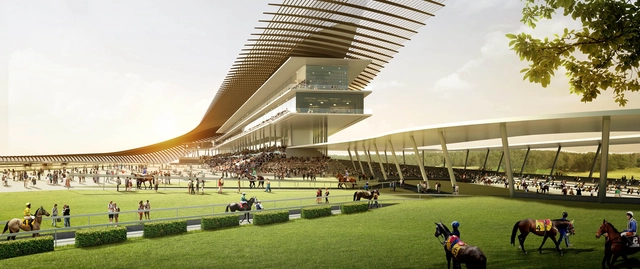
NOW Architects and Grimshaw have been selected to design "LetsRun Park" - a new home for horseracing in the South Korean city of Yeongcheon. Selected through an international competition by the Korea Racing Authority and International Union of Architects, the team's masterplan calls for new racecourse and equine-themed family park on the 148 hectare site.
After an international design competition, sports venue specialists HOK and Barcelona-based TAC Arquitectes have been selected to design the new 10,000 seat arena for FC Barcelona, the New Palau Blaugrana. Replacing the old arena which was built in 1971, the building is estimated to open for the 2019-2020 FC Barcelona Lassa basketball season. The redevelopment of the Palau Blaugrana is part of a larger scheme by the football team to refresh their entire campus - including the famous Camp Nou stadium for which a shortlist including BIG, Populous and HKS was announced in September, with a winner expected to be announced in March. Read on for the architects' description of their Palau Blaugrana design.
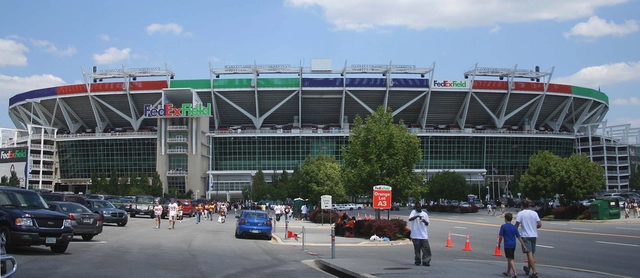
Reports indicate BIG will design the Washington Redskins new stadium. Details have yet to be released, however according to Sports Business Daily the practice's head of communications, Daria Pahhota confirmed BIG is working on an NFL stadium. The Redskins currently play at the 80,000-seat FedEx Field in Maryland; it is said that they are considering moving back to Washington DC or relocating to Virginia.
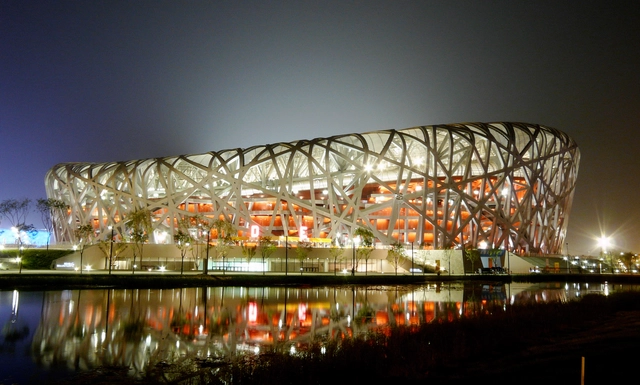
The International Association for Sports and Leisure Facilities (IAKS) has created an All-Time Award to celebrate their 50th anniversary. The Award highlights outstanding examples of sports and leisure facilities that have become both landmark and influential projects over the last few decades. See the eight winners after the break.
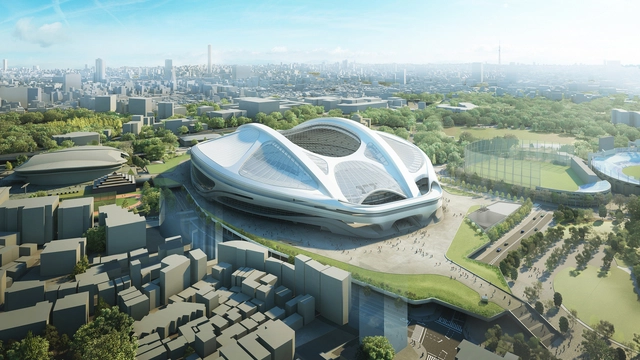
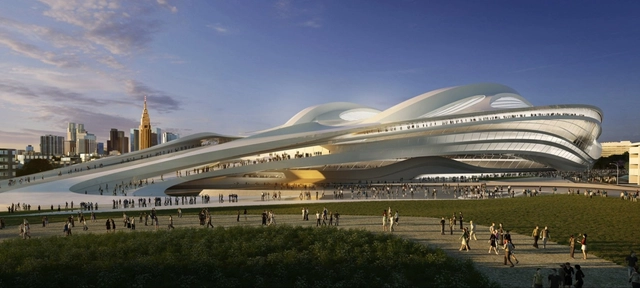
Now, British architect Richard Rogers, who served on the jury that selected ZHA's stadium design, has joined the conversation claiming Japan has "lost their nerve" and warning that their decision to "start over from zero" will harm Japan's "reputation as a promoter of world-class architectural design."
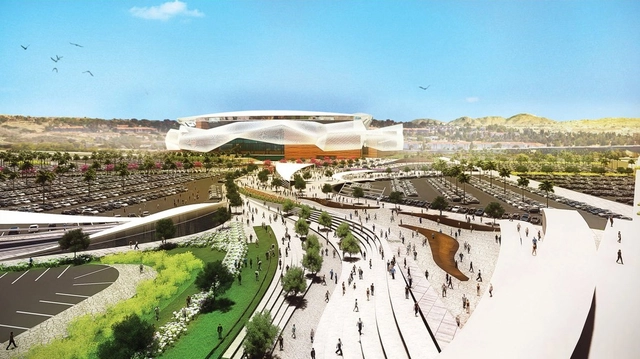
Populous has unveiled plans for a new Chargers football stadium that is meant to capture the "essence of San Diego," California. The 68,000-seat stadium, planned to be built on the Qualcomm Stadium site in Mission Valley, will feature a "kinetic skin" that will mimic the sound of the ocean as it sways in the wind.
"We wanted to make sure as a team that we were making this a really authentic place and people who see it will say, 'That represents our city - that represents where the Chargers should be. They've been here over 50 years and they should stay here.' This stadium represents that. This is an expression of San Diego," Populous senior principal Scott Radecic told the San Diego Union Tribune.
Gould Evans has unveiled its newest project: the DeBruce Center for the Original Rules of Basketball, a 32,000 square-foot museum that will house the 1891 original typed rules of basketball by James Naismith.
The museum will serve as an addition to the University of Kansas’ Allen Fieldhouse, and seeks not only to provide an exhibition place for the historical document, but also to tell a three-dimensional history of the evolution of basketball through various points along a linear path.
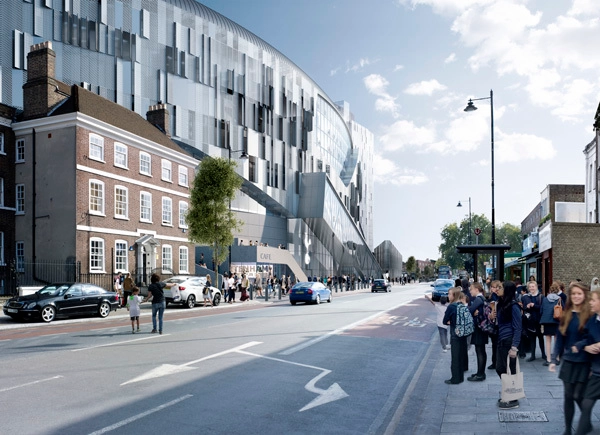
British football club Tottenham Hotspur has released plans for a new stadium designed by Populous. Planned to be built in the London borough of Haringey, the "visually dramatic" 61,000-seat proposal is designed to host both English and American football. If approved, it will feature a state-of-the-art retractable pitch and a 17,000 capacity single tier end stand that will be the UK's largest.
Beyond the field, the new stadium will feature a permanent visitors center and arrivals hub with an interactive museum to celebrate club history and local heritage, a cinema, the club megastore, ticket office and café. At the top of the stadium will be a "Sky Walk" showcasing vistas of London.
Despite harsh criticism for being too large and costly, Tokyo's 2020Zaha Hadid-designed National Stadium will be realized. As USA Today reports, the Japanese government has announced its decision to move forward with the design, saying any major modifications would lead to construction delays.
The 80,000-seat stadium has already undergone some design changes, due to backlash led by Pritzker laureatesToyo Ito and Fumihiko Maki; it's most recent design is said to be more "efficient, user-focussed, adaptable and sustainable." However controversy continues as the city and central government must now decide how to split the stadium's estimated $2 billion bill.