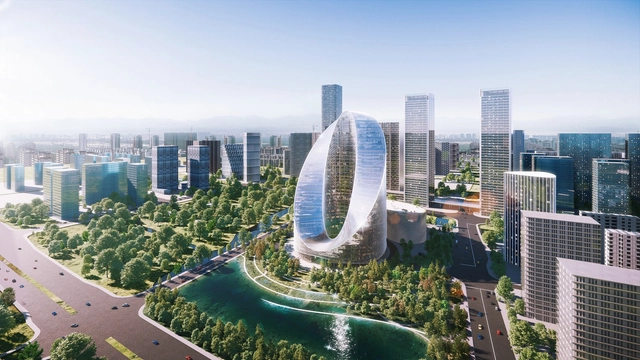
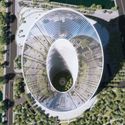
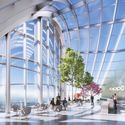
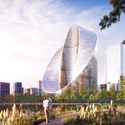
Nestled in the heart of Yuhang District, Bjarke Ingels Group’s design for the new OPPO R&D Headquarters, China’s largest smartphone company, combines aesthetics and innovative technology in a building that will be an environmental, economical, and socially sustainable hub for innovation.
After winning an international competition at the end of 2019, UNStudio has designed the new office of international software development company JetBrains in Saint Petersburg, promoting interaction and sustainability through its architecture, and focusing on the project's three keywords: Connective, Comfortable, and Versatile. UNStudio further developed the design in 2020 and construction is expected to start later this year.
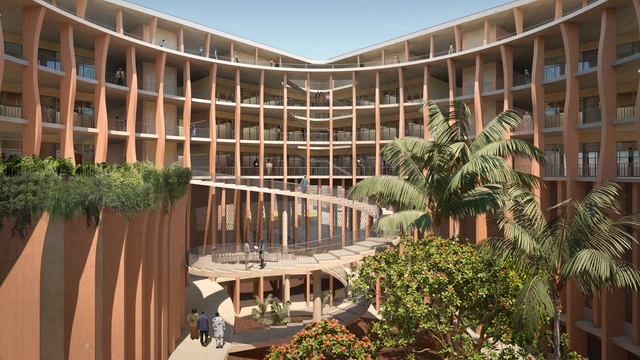
Benin's National Assembly in Porto-Novo Proposal. Image Courtesy of Kéré Architecture
Founder of the Berlin-based firm Kéré Architecture, Francis Kéré, has won the 2021 Thomas Jefferson Foundation Medal in Architecture. Presented by the University of Virginia and the Thomas Jefferson Foundation at Monticello, the award is one of four honors recognizing achievements in architecture, citizen leaderships, global innovation, and law. The Thomas Jefferson Foundation Medals recognize the exemplary contributions of recipients to the endeavors in which Jefferson excelled and held in high regard.
In many cases, I haven't been able to decide whether a building full of trees fits into the "sustainable" category. In fact, I've often had to make the argument that such a building is far from it.
It seems that the vast majority of contemporary marketing for sustainable architecture operates under the guise of greenwashing. What's more, the line between what truly creates healthier and more sustainable living spaces and what doesn't is often a blurred one.
The principles of bio-climatic architecture, when applied with an understanding of the surrounding climate and geography, can simultaneously increase a building's efficiency and create a more comfortable living space. Passive measures like solar panels, rainwater and grey water harvesting, openings for natural light, and cross-ventilation are all low-cost, high yield methods of increasing a home's thermal comfort and efficiency and decreasing its carbon footprint.
In a Common Edge article, I briefly discussed a concept that I call the “Triple Bottom Lie,” which posits that more people, plus more consumption by each person, plus an economic system completely dependent on the aforementioned items, can just keep working forever, without consequences. Historically, the United States has accepted the economic shibboleth of endless growth because it reduced class conflict; a rising tide (supposedly) lifted all boats, rafts and yachts included. We are, however, approaching the limits of growth, from both a resource standpoint (we’re running out of raw materials) and a technological standpoint (our inventions are progressively less revolutionary).
https://www.archdaily.com/956080/endless-sustainable-growth-is-an-oxymoronChristopher L. Cosper
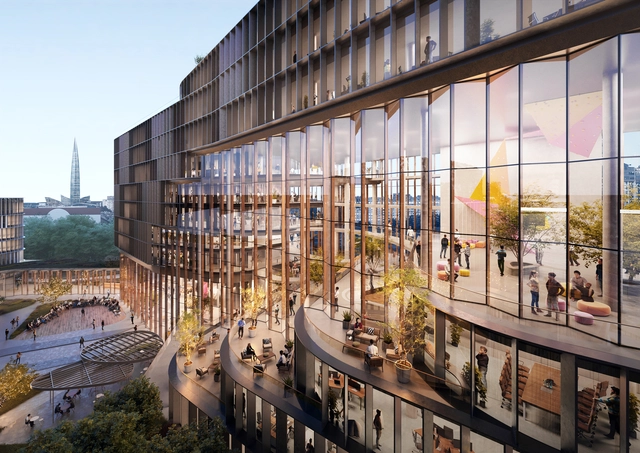
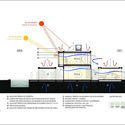
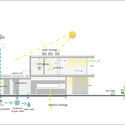
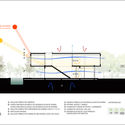
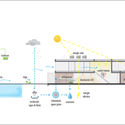
Construction has begun on MVRDV’s six-story sustainable office and laboratory complex. Located in the heart of Amsterdam Science Park, in the eastern part of the city, the project, designed for the Matrix Innovation Center, “will be virtually energy neutral and uses demountable construction techniques”.
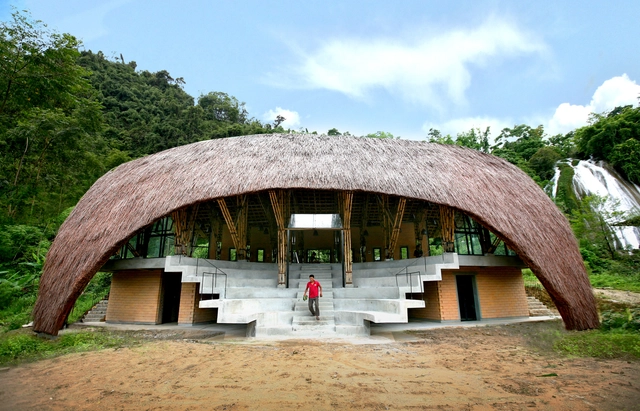
This year the United Nations World Tourism Organization (UNWTO) has been looking at tourism as a way to create jobs and opportunities in rural areas under the banner of Tourism and Rural Development.
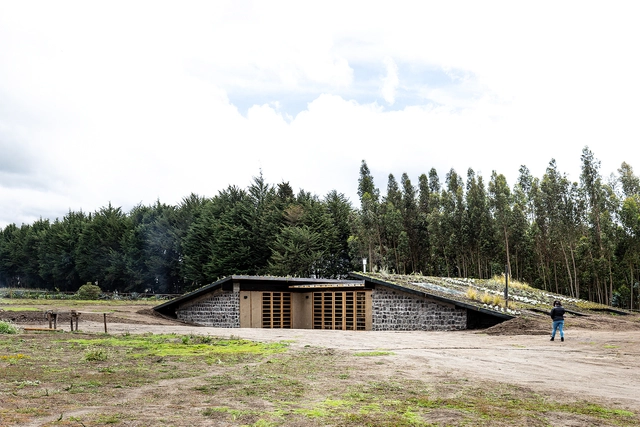
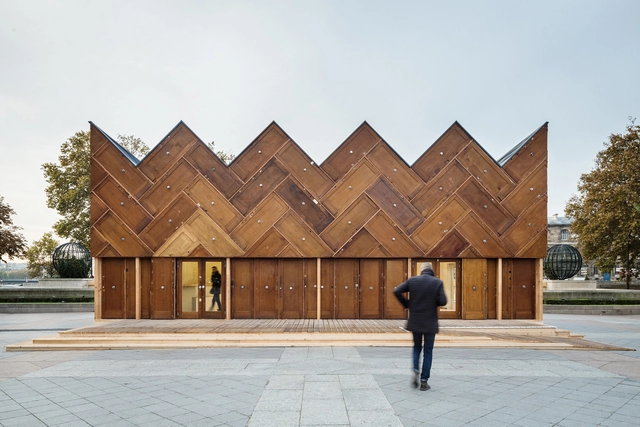
Rural based Architecture and traditional edifices play an important role in showcasing local heritage building and craftsmanship. It can also offer jobs and prospects outside of big cities particularly for the communities that might otherwise be left behind.
As levels of pollutant emissions have increased over the years, awareness has also grown regarding actions that can be taken to minimize the damage caused to the planet. As a way to promote waste reduction or prevention, the 3 R's rule is created: reduce, reuse and recycle. These actions, together with sustainable consumption standards, have been promoted as a means to protect natural resources and minimize waste.
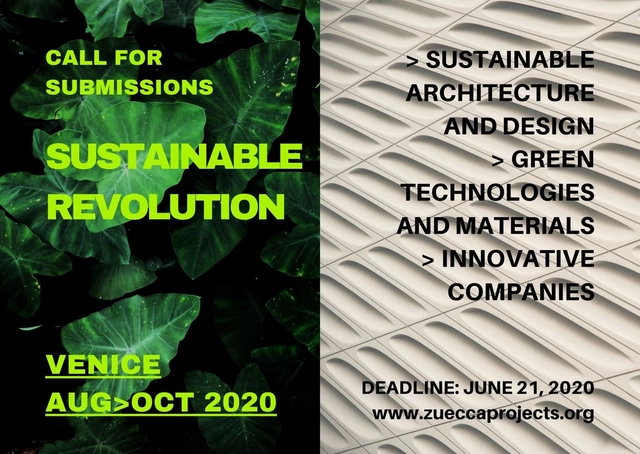
As a reaction to the unprecedented moment that we are all experiencing, Zuecca Projects has decided to launch its first-ever Open Call, on the theme of Sustainable Architecture and Design.
Sustainable design is more than water, energy and carbon. For architecture, it is deeply rooted in an understanding of life cycles and systemic cultural change. Over the last thirty years, the word "sustainability" began to lose its weight as it transformed into a loosely defined buzzword. But the ideas behind the umbrella term have grown and expanded, and in turn, iconic new buildings are being designed to rethink what the future holds.
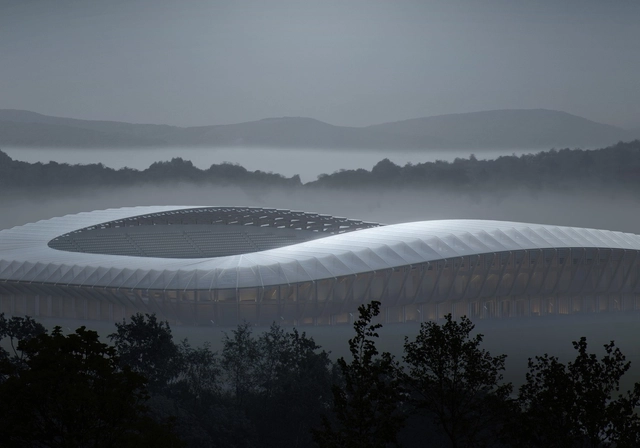
The world’s greenest football stadium, designed by Zaha Hadid Architects will be built in Gloucestershire, England after planning permissions were finally granted by the local council.
In a study recently published by AIA, less than 13% of architectural firms have incorporated building performance as part of their practice. With buildings contributing 40% of total carbon emissions leading to climate change, just 25 projects are roughly equivalent to planting 1 million trees each year. In addition to that, teams that are able to showcase data-driven and performance-driven decision-making and feature an energy analysis in every pursuit are able to increase fees and generate more revenue. Although integrating building performance sounds like a no-brainer, it proves to be difficult at many firms, because in addition to the practical changes, it requires a culture shift. That culture shift can only happen if the tools are easy to use, accurate, and mesh well with current workflows. Right now is the perfect time to tackle these culture changes due to a few reasons:
European children spend approximately 200 days a year at primary school. Even though the academic year in most parts of the world is not as long as in Europe, the place where children and adolescents spend the most time, following their own homes, is usually in educational institutions. These can be places for learning, playing and socializing, and as sad as it may be, they can also be safer places for children living in environments of abandonment, hunger, and violence, providing them with opportunities and even meals. A United Kingdom-wide survey found that the differences in physical characteristics of classrooms accounted for 16% of the variations in learning progress over the course of a year. In other words, the better a classroom is designed, the better children perform academically. According to the study, the factors that most affect children are sunlight, indoor air quality, acoustic environment, temperature, the design of the classroom itself and the stimulation within it.
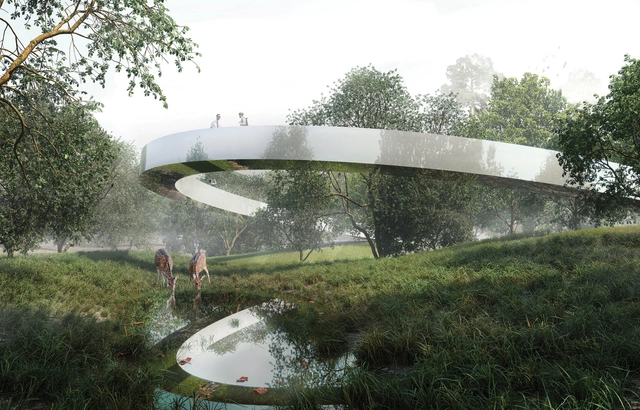
Emmi Keskisarja & Janne Teräsvirta Arkkitehtitoimisto & Company Architects have designed a futuristic green vision for an island in Finland. Titled “Emerald Envisioning for Luonnonmaa 2070,” the scheme is set on Luonnonmaa island on the Finnish West archipelago coast, close to the city of Turku. The vision for the island is one where climate change and biodiversity decline are combated through a reimagination of the urban connection with nature.
It is expected that within the next few of decades, Earth will have absolutely nothing left to offer whoever/whatever is capable of surviving on it. Although the human race is solely responsible for the damages done to the planet, a thin silver lining can still be seen if radical changes were to be done to the way we live on Earth and how we sustain it.
Since architects and designers carry a responsibility of building a substantial future, we have put together an A-Z list of every sustainability term that you might come across. Every week, a new set of letters will be published, helping you stay well-rounded on everything related to sustainable architecture and design. Here are the terms that start with letters D, E, and F.












.jpg?1606909402&format=webp&width=640&height=580)
.jpg?1606909307 "Courtesy of MVRDV")
.jpg?1606909282 "Courtesy of MVRDV")
.jpg?1606909168 "Courtesy of MVRDV")
.jpg?1606909250 "Courtesy of MVRDV")
.jpg?1606909402)






.jpg?1560778703&format=webp&width=640&height=580)