1. ArchDaily
  2. Sustainable Construction

Sustainable Construction: The Latest Architecture and News

Is Concrete Ruining the Promise of Mass Timber?

 | In Collaboration

Mass timber has shifted from an experimental niche to a central part of the contemporary debate surrounding sustainable construction. The combination of lower embodied carbon, prefabricated systems, and faster construction timelines has helped position solutions such as CLT (cross-laminated timber) and DLT (dowel-laminated timber) as viable alternatives to concrete and steel in residential buildings, offices, schools, and public facilities around the world. Added to this are the predictability of construction processes and the environmental qualities associated with wood, often linked to user comfort and spatial experience.

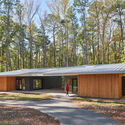
Dogtrot House: Vernacular Knowledge and Climate-Responsive Design

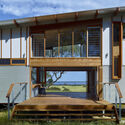
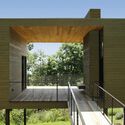
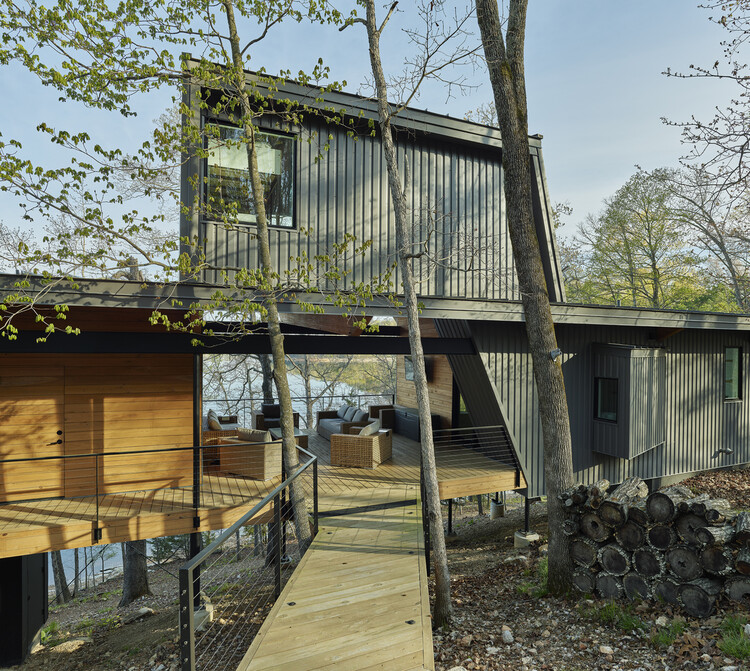
The dogtrot house emerged across the South of the United States during the late nineteenth century as a direct response to humid climates, material availability, and patterns of rural habitation. Found throughout the Appalachian Mountains, coastal Carolinas, and lowlands of Louisiana, the dogtrot house appeared in numerous regional variations, yet its fundamental spatial logic remained remarkably consistent. Two enclosed living masses are separated by an open central passage and unified beneath a continuous roof, creating a dwelling that is simultaneously economical and responsive to long, hot summers. Although architectural historians continue to debate the precise geographic origins of the dogtrot, the typology represents a broader vernacular intelligence that emerged through the convergence of environmental necessity, local construction practices, and rural living.

Dogtrot House: Vernacular Knowledge and Climate-Responsive Design - Image 1 of 4Dogtrot House: Vernacular Knowledge and Climate-Responsive Design - Image 2 of 4Dogtrot House: Vernacular Knowledge and Climate-Responsive Design - Image 3 of 4Dogtrot House: Vernacular Knowledge and Climate-Responsive Design - Image 4 of 4Dogtrot House: Vernacular Knowledge and Climate-Responsive Design - More Images+ 36

Rethinking Architecture at the Scale of Planetary Systems

Architecture has traditionally been described as a discipline concerned with space, form, and material presence. Yet this understanding becomes increasingly limited when confronted with the conditions that shape contemporary construction. Buildings no longer emerge from a stable relationship between site, program, and material. Instead, they are produced within a dense web of technological systems that operate across territorial, ecological, and temporal scales. Energy networks, data infrastructures, extraction processes, and global logistics shape architecture as decisively as climate or urban context.

Seen from this angle, architecture is less a discrete object than a moment within a larger technical field. Supply chains, data systems, automated maintenance, and energy grids do not sit "behind" the built environment. In a certain way, they influence what can be built, what is affordable, how buildings perform over time, and what kinds of waste they produce. When architecture is assessed primarily through form, it risks overlooking the systems that condition its production and afterlife.

Rethinking Architecture at the Scale of Planetary Systems - Image 1 of 4Rethinking Architecture at the Scale of Planetary Systems - Image 2 of 4Rethinking Architecture at the Scale of Planetary Systems - Image 3 of 4Rethinking Architecture at the Scale of Planetary Systems - Image 4 of 4Rethinking Architecture at the Scale of Planetary Systems - More Images+ 30

Designing With Living Systems: Discover the Works of Yong Ju Lee Architecture

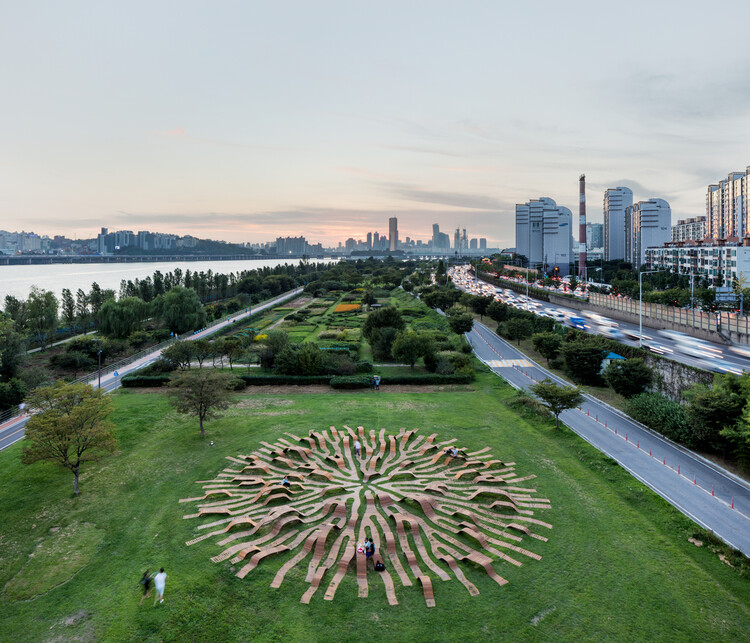
What does it mean to practice ecological responsibility beyond performance metrics or carbon calculations? How can fabrication become a design method rather than a final outcome? Founded in Seoul, Yong Ju Lee Architecture is a practice led by architect and researcher Yong Ju Lee. Across installations, research-driven proposals, and cultural projects, the studio positions architecture as an experimental discipline rooted in making: a process in which design emerges from material behavior, prototyping, and fabrication logic as much as from drawing or representation. Bridging professional practice and academia, his work consistently expands the architectural toolkit through computational design, experimental material research, and an evolving commitment to ecology as a responsibility and a design driver. In 2025, the studio was selected as a winner of the ArchDaily Next Practices Awards.

Designing With Living Systems: Discover the Works of Yong Ju Lee Architecture - Image 1 of 4Designing With Living Systems: Discover the Works of Yong Ju Lee Architecture - Image 2 of 4Designing With Living Systems: Discover the Works of Yong Ju Lee Architecture - Image 3 of 4Designing With Living Systems: Discover the Works of Yong Ju Lee Architecture - Image 4 of 4Designing With Living Systems: Discover the Works of Yong Ju Lee Architecture - More Images+ 21

"Learning in Contact With Nature": In Conversation With 2025 Holcim Award Winner Urko Sánchez Architects

Subscriber Access | 

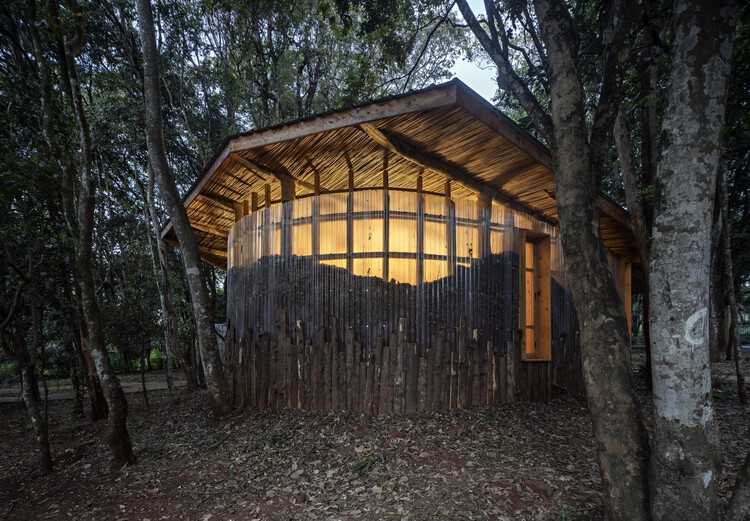
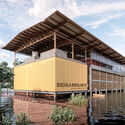
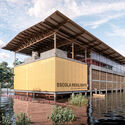
The Waldorf School Nairobi, designed by Urko Sánchez Architects, has been selected among the 20 winning projects of the 2025 Holcim Foundation Awards, which recognize contributions to sustainable design and construction worldwide. Located within a forested site in Nairobi, the project was awarded in the Middle East and Africa region, acknowledging its sensitive response to site conditions, educational needs, and local culture. Developed in close dialogue with its surroundings and community, the school explores low-impact construction methods, the use of locally sourced materials, and participatory design processes.

"Learning in Contact With Nature": In Conversation With 2025 Holcim Award Winner Urko Sánchez Architects - Image 1 of 4"Learning in Contact With Nature": In Conversation With 2025 Holcim Award Winner Urko Sánchez Architects - Image 2 of 4"Learning in Contact With Nature": In Conversation With 2025 Holcim Award Winner Urko Sánchez Architects - Image 3 of 4"Learning in Contact With Nature": In Conversation With 2025 Holcim Award Winner Urko Sánchez Architects - Image 4 of 4Learning in Contact With Nature: In Conversation With 2025 Holcim Award Winner Urko Sánchez Architects - More Images+ 7

Circular by Tradition: India’s Vernacular Building Practices for a Warming World

Across India's varied geographies, from coastal backwaters to desert fortress cities, architecture evolved with a deep, instinctive connection to climate. These were not isolated craft traditions but complete ecological systems in which material cycles, thermal comfort, and community knowledge were interdependent. As COP30 turns global attention toward the links between heritage and climate resilience, India's vernacular practices appear less as historical artifacts and more as climate technologies refined over centuries.

India's timber, lime, mud, and bamboo building traditions all share a common thread: they relied on local materials, passive cooling, and construction systems designed to be repaired, renewed, and reused. In an era dominated by cement, steel, and demolition-driven redevelopment, these earlier material cultures demonstrate a quiet circularity that feels radical again.

Circular by Tradition: India’s Vernacular Building Practices for a Warming World - Image 3 of 4Circular by Tradition: India’s Vernacular Building Practices for a Warming World - Image 5 of 4Circular by Tradition: India’s Vernacular Building Practices for a Warming World - Image 4 of 4Circular by Tradition: India’s Vernacular Building Practices for a Warming World - Image 1 of 4Circular by Tradition: India’s Vernacular Building Practices for a Warming World - More Images+ 4

Grand Prize Winners Announced for the 2025 Holcim Foundation Awards

The Holcim Foundation for Sustainable Construction has announced the Grand Prize Winners of the 2025 Holcim Awards, selecting one project from each global region to represent the most impactful approaches to sustainable design in this cycle. This edition marks the introduction of the Grand Prize format, replacing the previous tiered distinctions to better acknowledge diverse regional contexts and avoid hierarchical rankings. Evaluated by juries chaired by Sou Fujimoto (Asia Pacific), Kjetil Trædal Thorsen (Europe), Sandra Barclay (Latin America), Lina Ghotmeh (Middle East and Africa), and Jeanne Gang (North America), the winning projects reflect the Foundation's principles of holistic, transformational, and transferable design.

Grand Prize Winners Announced for the 2025 Holcim Foundation Awards - Image 1 of 4Grand Prize Winners Announced for the 2025 Holcim Foundation Awards - Image 2 of 4Grand Prize Winners Announced for the 2025 Holcim Foundation Awards - Image 4 of 4Grand Prize Winners Announced for the 2025 Holcim Foundation Awards - Image 3 of 4Grand Prize Winners Announced for the 2025 Holcim Foundation Awards - More Images+ 10

Watch Live the 2025 Holcim Foundation Awards Ceremony and Discover the 5 Grand Prize Winners

Watch live the Holcim Foundation Awards 2025 Ceremony on November 20, broadcast from Venice, Italy, during the closing week of the 19th International Architecture Exhibition, to discover the regional Grand Prize winners. The Holcim Foundation for Sustainable Construction has announced the 20 winning projects of this cycle, selected across five regions: Asia Pacific, Europe, Latin America, the Middle East and Africa, and North America. This edition introduces a new Grand Prize format, replacing the Gold, Silver, and Bronze distinctions to highlight excellence without comparison and reflect the varied contexts in which sustainable design operates.

Khudi Bari: Architecture for Climate Displacement

Subscriber Access | 

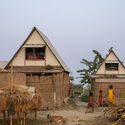
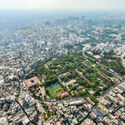
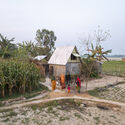
In the low-lying deltas of Bangladesh, water defines both life and loss. Every year, millions are forced to rebuild after floods wash away their homes, crops, and livelihoods. In these precarious territories, the act of building has become an act of resilience. It is here that Khudi Bari emerges as a modest yet radical proposal. Designed by Marina Tabassum Architects, the project provides a lightweight, modular, and affordable dwelling for communities displaced by climate change. Recognized as one of the winners of the 2025 Aga Khan Award for Architecture, it represents a form of architecture that empowers rather than imposes.
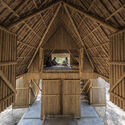
Khudi Bari: Architecture for Climate Displacement - Image 1 of 4Khudi Bari: Architecture for Climate Displacement - Image 2 of 4Khudi Bari: Architecture for Climate Displacement - Image 3 of 4Khudi Bari: Architecture for Climate Displacement - Image 4 of 4Khudi Bari: Architecture for Climate Displacement - More Images+ 27

Holcim Foundation for Sustainable Construction Reveals 20 Winning Projects of the 2025 Holcim Awards

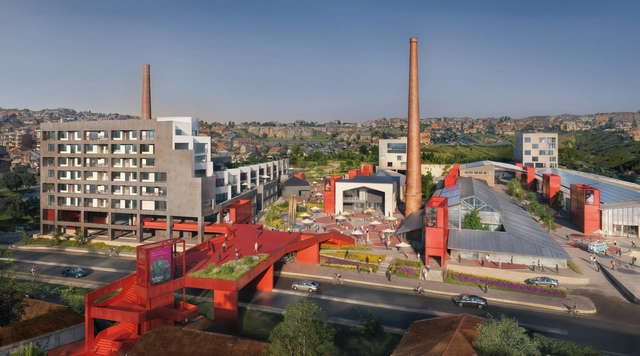
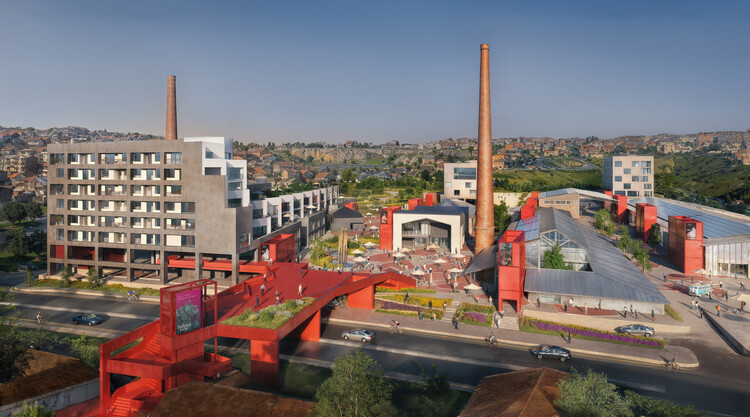
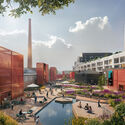
The Holcim Foundation for Sustainable Construction has announced the 20 winning projects of the 2025 Holcim Foundation Awards, recognizing contributions to sustainable design and construction across five regions: Asia Pacific, Europe, Latin America, the Middle East and Africa, and North America. This year's selection spans a broad range of scales, from a 200-square-meter semi-permanent school in a Kenyan forest to major urban regeneration initiatives in Madrid, Dhaka, and Shenzhen, reflecting the diversity and reach of sustainable architecture today. This year introduces a new Grand Prize format, replacing the traditional Gold, Silver, and Bronze rankings. Each region will now honor one Grand Prize winner, emphasizing excellence without comparison and acknowledging the diverse approaches to sustainability.

Holcim Foundation for Sustainable Construction Reveals 20 Winning Projects of the 2025 Holcim Awards - Image 1 of 4Holcim Foundation for Sustainable Construction Reveals 20 Winning Projects of the 2025 Holcim Awards - Image 2 of 4Holcim Foundation for Sustainable Construction Reveals 20 Winning Projects of the 2025 Holcim Awards - Image 3 of 4Holcim Foundation for Sustainable Construction Reveals 20 Winning Projects of the 2025 Holcim Awards - Image 4 of 4Holcim Foundation for Sustainable Construction Reveals 20 Winning Projects of the 2025 Holcim Awards - More Images+ 17

Creating Cities for Tomorrow: The Future of Sustainable Construction

 | Sponsored Content

Rapid urbanization, driven by population growth, is among the powerful megatrends transforming how cities are built. The world is adding a city the size of Madrid every single week and will do so for decades to come. To meet this demand sustainably, a collaborative, systems-thinking approach to construction is needed.

From Scaffolds to Structures: India’s Unfinished Journey with Bamboo

Subscriber Access | 

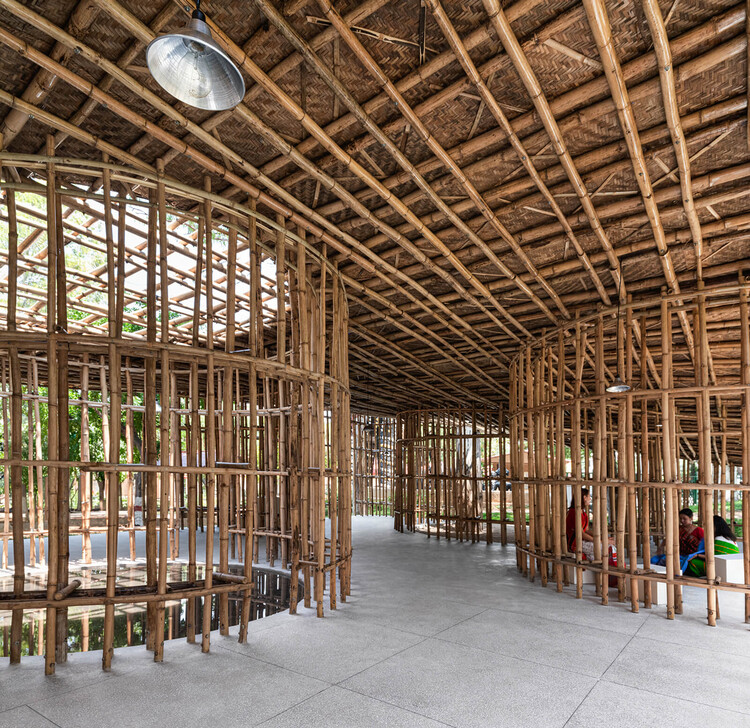
Across Asia, bamboo scaffolding has symbolized an intersection of traditional knowledge and modern construction. Hong Kong's skyline is shaped by intricate bamboo scaffolding, yet this time-honored craft is steadily vanishing from the region. Moving east, Indian cities still utilize bamboo scaffolding on building sites throughout the subcontinent, revealing a different kind of paradox.

From Scaffolds to Structures: India’s Unfinished Journey with Bamboo - Image 1 of 4From Scaffolds to Structures: India’s Unfinished Journey with Bamboo - Image 2 of 4From Scaffolds to Structures: India’s Unfinished Journey with Bamboo - Image 3 of 4From Scaffolds to Structures: India’s Unfinished Journey with Bamboo - Image 4 of 4From Scaffolds to Structures: India’s Unfinished Journey with Bamboo - More Images+ 4

Built to (Not) Last: How Reversible Architecture Is Redefining the Way We Build

What if we imagined buildings as living systems, designed for assembly and disassembly with minimal impact? A form of open, modular, and adaptable architecture designed to evolve with its surroundings, responding to seasonal changes and on-demand needs instead of remaining static. At first glance, the idea seems paradoxical, as many buildings were constructed to last, designed to endure, resist the effects of time, and avoid demolition. Because of this, reversing or undoing could be seen as a setback. But what if that way of thinking no longer fits every scenario?

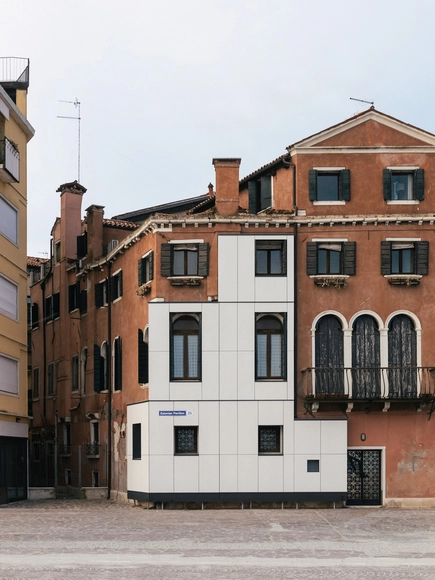
The Estonian Pavilion at the 2025 Venice Biennale Questions Massive Insulation Projects Through a Façade Installation

The installation and exhibition representing Estonia at the 19th International Architecture Exhibition of La Biennale di Venezia is curated by architects Keiti Lige, Elina Liiva, and Helena Männa. Titled Let Me Warm You, the national exhibition explores different dimensions of sustainability by questioning whether insulation-driven renovations in Estonia are simply compliance measures to meet European energy targets or whether they can also serve as opportunities to enhance the spatial and social quality of mass housing districts. To make this point, the Estonian installation covers the façade of a Venetian building with insulation panels, replicating how they are commonly installed in Estonia for mass housing renovations.

The Estonian Pavilion at the 2025 Venice Biennale Questions Massive Insulation Projects Through a Façade Installation - Image 1 of 4The Estonian Pavilion at the 2025 Venice Biennale Questions Massive Insulation Projects Through a Façade Installation - Image 2 of 4The Estonian Pavilion at the 2025 Venice Biennale Questions Massive Insulation Projects Through a Façade Installation - Image 3 of 4The Estonian Pavilion at the 2025 Venice Biennale Questions Massive Insulation Projects Through a Façade Installation - Image 4 of 4The Estonian Pavilion at the 2025 Venice Biennale Questions Massive Insulation Projects Through a Façade Installation - More Images+ 50

Understanding Soft Architecture: The Shift from Monument to Moment

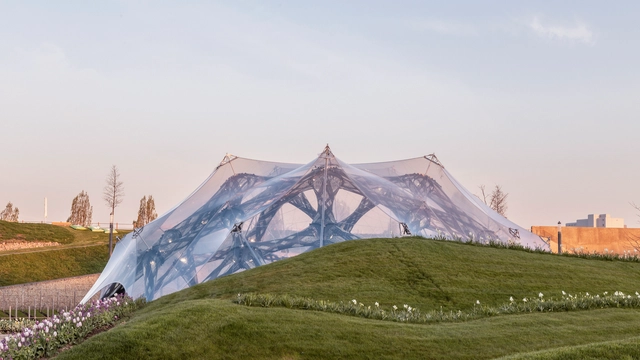
In recent years, architecture has increasingly embraced adaptability, flexibility, and responsiveness as core design principles. This evolution reflects a shift from traditional notions of static, permanent structures to dynamic environments that can adjust to changing needs and conditions. Central to this transformation is the concept of "soft architecture", which leverages pliable materials and innovative systems to create spaces that are functional, sustainable, and user-centric. Soft architecture takes shape through membranes that breathe, façades that move, structures that inflate or fold, and surfaces that bend rather than break. It involves designing for transformation — not only in how a building performs environmentally, but also in how it can accommodate shifting functions, user interactions, or temporary occupations. This approach to building challenges traditional notions of durability and control, proposing instead a more responsive and open-ended architecture. It reflects a growing awareness that buildings, like the societies they serve, must be able to evolve.

Understanding Soft Architecture: The Shift from Monument to Moment - Image 1 of 4Understanding Soft Architecture: The Shift from Monument to Moment - Image 2 of 4Understanding Soft Architecture: The Shift from Monument to Moment - Image 3 of 4Understanding Soft Architecture: The Shift from Monument to Moment - Image 4 of 4Understanding Soft Architecture: The Shift from Monument to Moment - More Images+ 53

Embracing Material Intelligence: How the Pacific Northwest is Promoting Timber Innovation

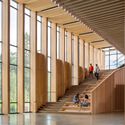
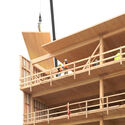
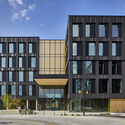
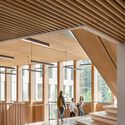
Material intelligence refers to how materials perform, adapt, and interact with ecological and cultural systems. It considers how stone, steel, or timber respond to intertangled forces, how those materials are sourced and assembled, and how they persist after demolition. Designers are centering material intelligence in constructing our cities in a generation of environmental uncertainty and strained supply chains.

Embracing Material Intelligence: How the Pacific Northwest is Promoting Timber Innovation - Image 1 of 4Embracing Material Intelligence: How the Pacific Northwest is Promoting Timber Innovation - Image 2 of 4Embracing Material Intelligence: How the Pacific Northwest is Promoting Timber Innovation - Image 3 of 4Embracing Material Intelligence: How the Pacific Northwest is Promoting Timber Innovation - Image 4 of 4Embracing Material Intelligence: How the Pacific Northwest is Promoting Timber Innovation - More Images+ 24

More than a Classroom: The Multifunctionality of Educational Spaces in Global South Communities

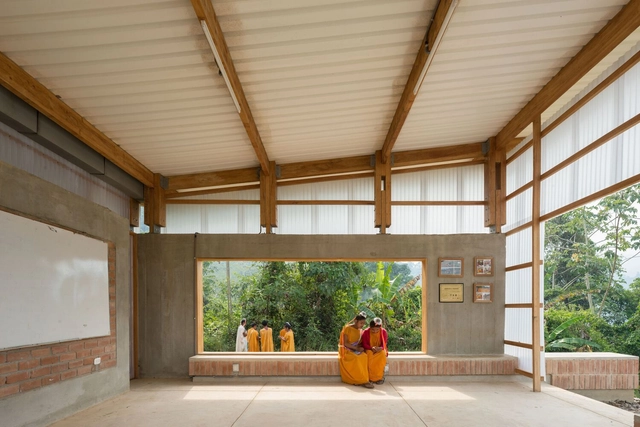
Educational infrastructure is key to any community. The better the quality of these spaces, the better the learning experience for those who use them. However, these facilities often serve a much broader purpose than just education. In Global South communities, in countries like Peru or Vietnam, where a significant portion of the population lives in rural areas far from urban centers, there are few educational spaces and a lack of places where the entire community—not just the students—can come together.

More than a Classroom: The Multifunctionality of Educational Spaces in Global South Communities - Image 1 of 4More than a Classroom: The Multifunctionality of Educational Spaces in Global South Communities - Image 2 of 4More than a Classroom: The Multifunctionality of Educational Spaces in Global South Communities - Image 3 of 4More than a Classroom: The Multifunctionality of Educational Spaces in Global South Communities - Image 4 of 4More than a Classroom: The Multifunctionality of Educational Spaces in Global South Communities - More Images+ 23

Earth Day 2025: Our Agency in Rethinking Sustainability Across Cities, Scales, and Sectors

Subscriber Access | 

On Earth Day 2025, observed annually on April 22, we are once again reminded of the urgent environmental and sustainability challenges that face our planet—challenges that continue to evolve alongside global economic, political, and cultural shifts. The building and construction industry remains one of the most critical sectors in the effort to manage and reduce global carbon emissions. This year, these issues are being addressed through increasingly diverse lenses, calling for more holistic and integrated approaches. It's vital that we view sustainability not as a one-size-fits-all solution, but as a multi-scalar effort—one that spans from large-scale urban development and strategic planning, to the advancement of sustainable materials, and even to temporary, thought-provoking interventions like exhibitions and installations. In doing so, we reaffirm our commitment to reducing our collective carbon footprint, while shaping a built environment that promotes human well-being and planetary health.

Earth Day 2025: Our Agency in Rethinking Sustainability Across Cities, Scales, and Sectors - Image 1 of 4Earth Day 2025: Our Agency in Rethinking Sustainability Across Cities, Scales, and Sectors - Image 2 of 4Earth Day 2025: Our Agency in Rethinking Sustainability Across Cities, Scales, and Sectors - Image 3 of 4Earth Day 2025: Our Agency in Rethinking Sustainability Across Cities, Scales, and Sectors - Image 4 of 4Earth Day 2025: Our Agency in Rethinking Sustainability Across Cities, Scales, and Sectors - More Images+ 23