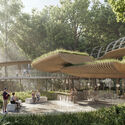
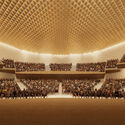
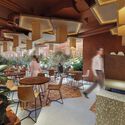
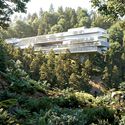
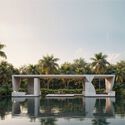
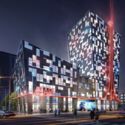
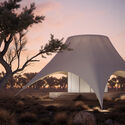
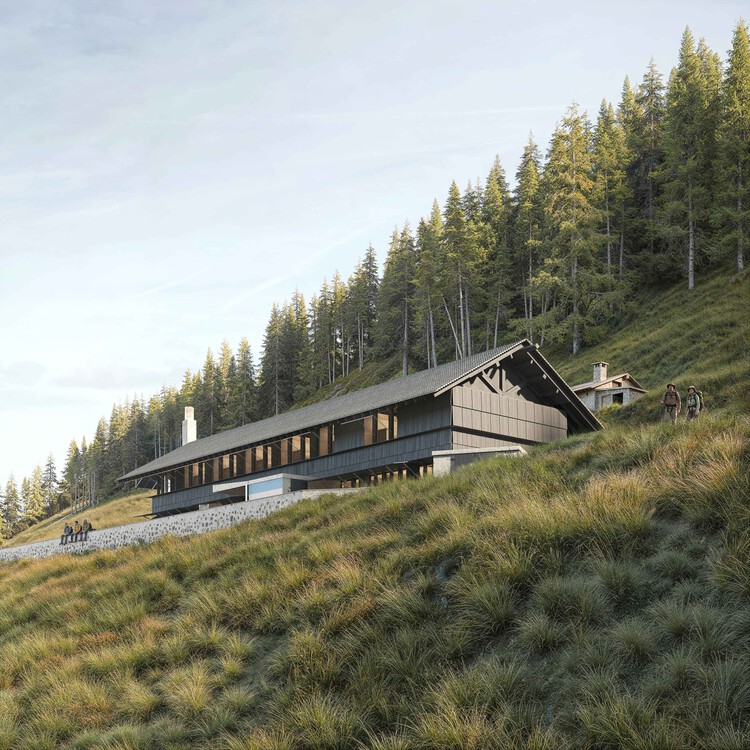
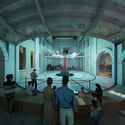
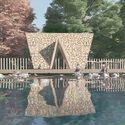
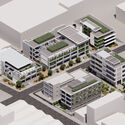
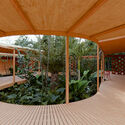
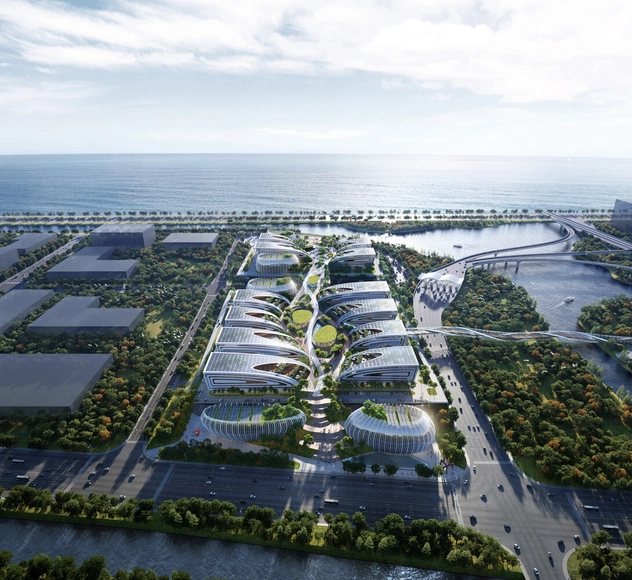
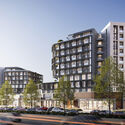
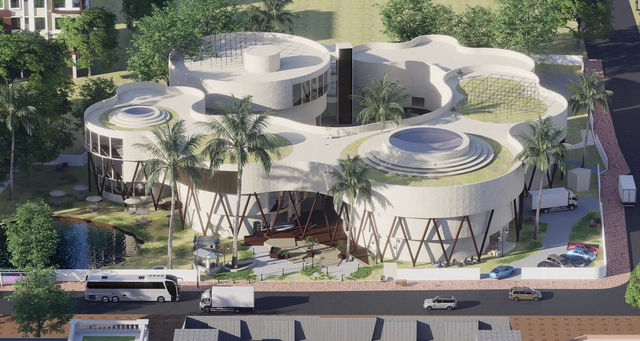
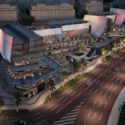
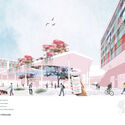
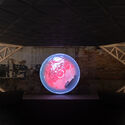
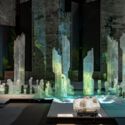
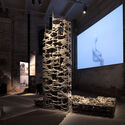
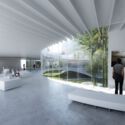
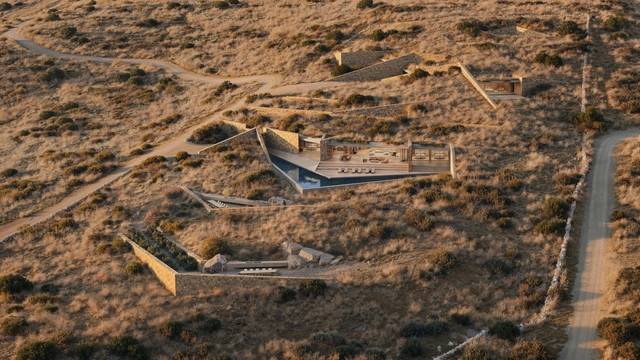
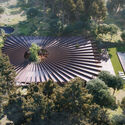
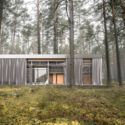
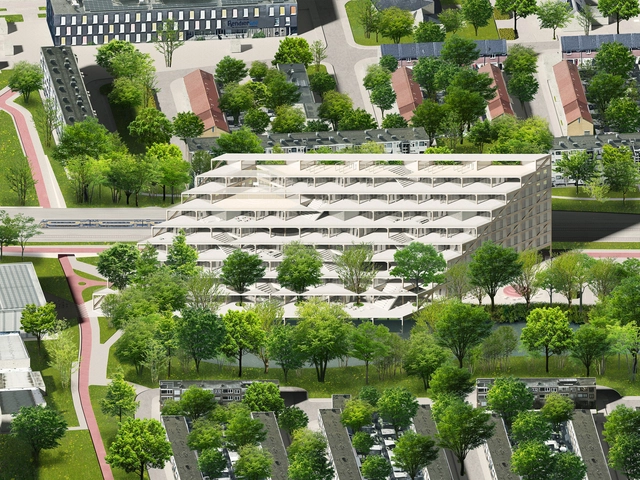
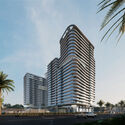
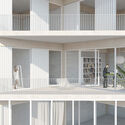
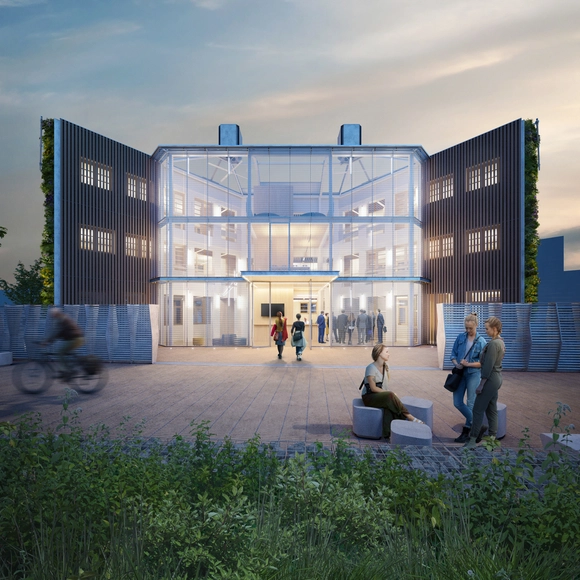
Small Scale Category Winner + Student Winner: Architecture as Resilient Machine. Image Courtesy of Buildner
Buildner has launched the Unbuilt Award 2026, the third edition of its annual competition, offering a €100,000 prize fund. At the same time, the results of the Unbuilt Award 2025 have been announced, marking the second competition in a series that celebrates architectural designs that have yet to be realized. The initiative provides a global platform for architects and designers to showcase their most compelling unbuilt projects—whether conceptual, published, unpublished, or fully developed.
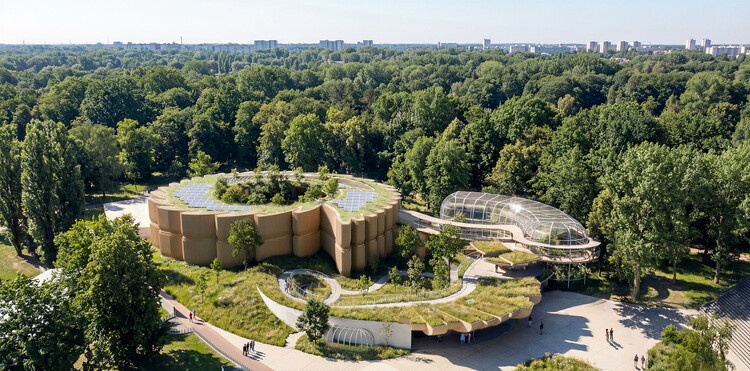
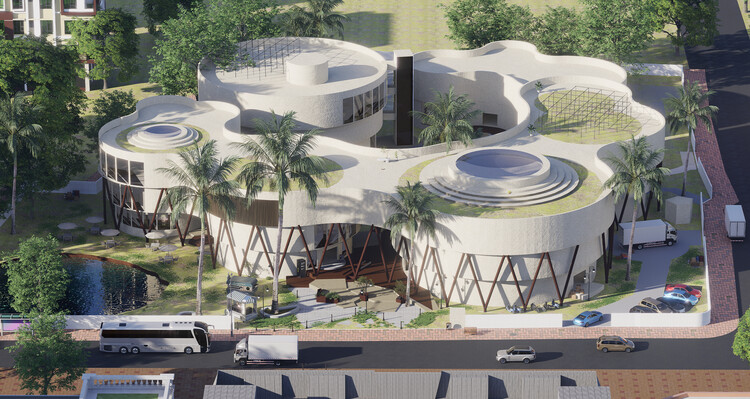
Cultural centers continue to serve as a productive ground for unbuilt architectural exploration, reflecting how architects are rethinking the role of public institutions in relation to landscape, experience, and program hybridity. In this Unbuilt edition, submitted by the ArchDaily community, the selected projects bring together a range of proposals that expand the definition of the cultural center beyond a singular building. These works position architecture as a spatial framework that mediates between research, exhibition, retreat, and public life, often embedded within or distributed across natural and urban contexts.
Across varied geographies, from northern Norway and Oslo to Łódź, Vienna, Marrakech, and New Tashkent, the projects demonstrate diverse responses to cultural infrastructure. They include landscape-integrated complexes shaped by topography and climate, bridges that combine gallery and public circulation, zoological pavilions structured as immersive sequences, adaptive reuse of military buildings into performance spaces, courtyard-based environments rooted in local traditions, and climate-responsive institutions informed by environmental analysis. Together, these proposals explore how cultural programs can be organized through movement, spatial layering, and relationships between interior and exterior conditions.
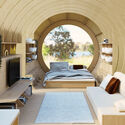
Spaces of retreat continue to offer fertile ground for unbuilt exploration, revealing how architecture can support rest, reflection, and immersion in nature amid shifting environmental and cultural conditions. In this Unbuilt edition, submitted by the ArchDaily community, the selected projects assemble a diverse range of proposals that reconsider hospitality through the lens of refuge. These works position accommodation not as spectacle or excess, but as spatial frameworks shaped by landscape, climate, material restraint, and shared experience.
Across distinct geographies, from Southeast Asian hillsides and Indonesian coastlines to African wilderness, Alpine terrain, Middle Eastern landscapes, and North American forests, the proposals demonstrate varied architectural responses to sensitive sites. They include elevated structures that hover lightly above steep ground, temporary lodge systems embedded in remote ecologies, reconstructed mountain shelters grounded in memory and reuse, courtyard-centered communal stays shaped by lifestyle cultures, contemplative desert retreats, and inclusive woodland camps designed for accessibility and environmental balance.
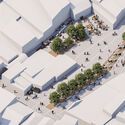
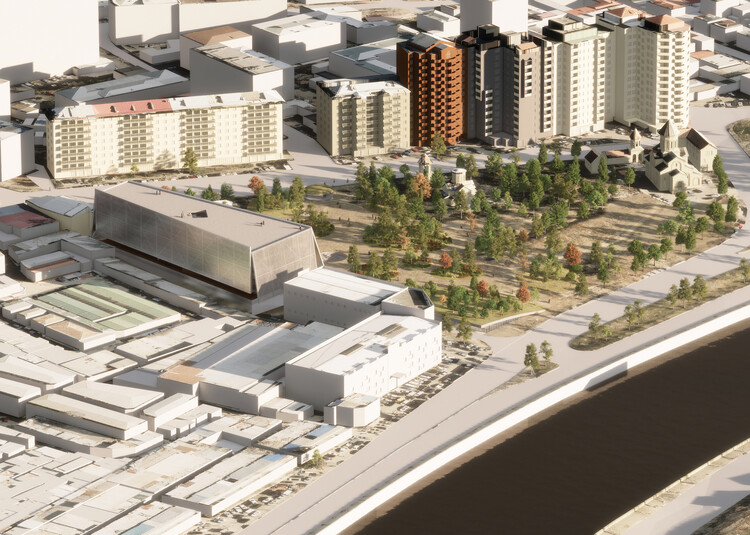
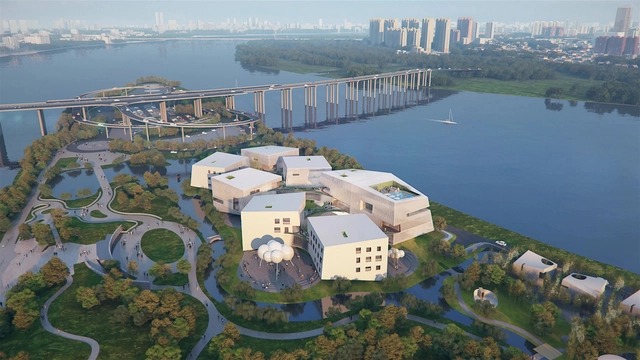
Urban masterplans remain an exploratory ground for unbuilt speculation, offering insight into how cities might recalibrate mobility, ecology, and collective life in response to accelerating environmental and social pressures. In this Unbuilt edition, submitted by the ArchDaily community, the selected projects bring together a range of large-scale proposals that examine urban centers, waterfront districts, infrastructural corridors, and cultural landscapes as spatial frameworks for reconnection and resilience. Rather than treating the masterplan as a rigid blueprint, these projects approach urbanism as an adaptive system shaped by climate, topography, infrastructure, and public space.
Across varied geographies, from Northern European town centers and Mediterranean coastal districts to Central Asian polycentric hubs and Gulf megacities, the proposals explore diverse architectural and urban strategies. They range from park-led civic transformations built over highway tunnels to elevated pedestrian networks above active transport systems, mixed-use blocks structured by historic planning logics, marina developments integrating environmental stewardship, and research-driven models for equitable landscape urbanization.
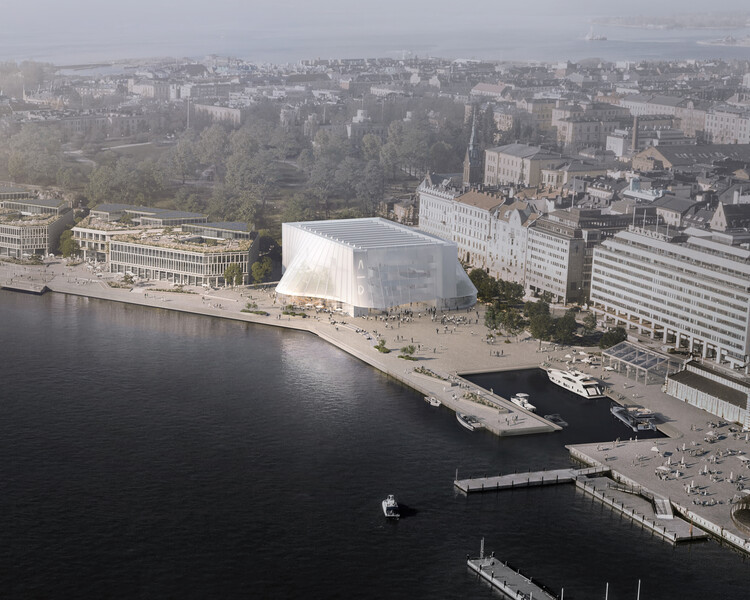
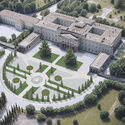
Cultural institutions represent an active field for unbuilt architectural exploration, reflecting how architects continue to question the role of public buildings in shaping urban life. In this Unbuilt edition, submitted by the ArchDaily community, the selected proposals bring together a range of projects that engage with museums, exhibition centers, and diplomatic buildings as sites of public encounter. Rather than treating these programs as fixed types, these projects approach them as evolving spatial settings through which cities engage with history, knowledge, and representation.
Across varied geographies, from Wenzhou and Helsinki to Belgrade, Debrecen, Mexico City, and Nürnberg, the proposals explore different responses to contemporary cultural architecture. They range from adaptive reuse of industrial and ideological structures to new buildings embedded in waterfronts, parks, and residential neighborhoods. While some emphasize continuity with historical contexts, others experiment with lighter structures, environmental strategies, or new relationships between interior programs and the public realm. Together, they offer a snapshot of how cultural institutions are being reimagined in diverse urban conditions.
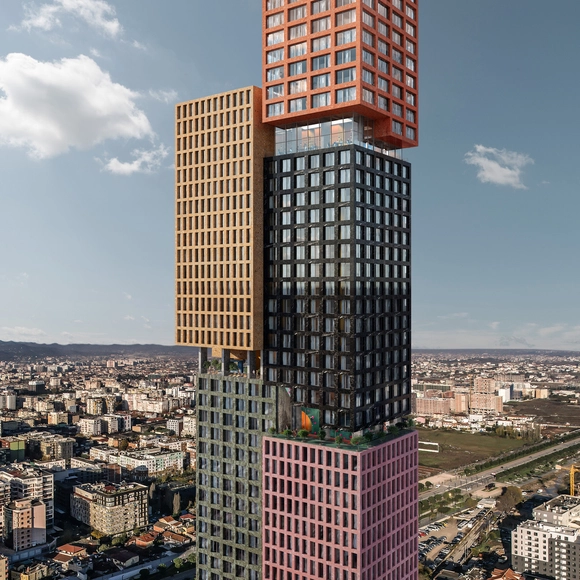
Collective housing remains one of the most active areas for unbuilt architectural exploration, revealing how architects are rethinking domestic life, density, and shared living across different cultural and environmental contexts. In this curated Unbuilt edition, submitted by the ArchDaily community, the selected proposals investigate new forms of dwelling that span mobile units, vertical developments, adaptive reuse, and landscape-driven residential clusters. Rather than treating housing as a purely functional container, these projects position it as a social and spatial framework that shapes everyday life, community ties, and long-term urban resilience.
Across varied geographies, from Tirana and Athens to Monterrey, Chaloos, Roatán, Bhola, and the DRC, these proposals explore multiple approaches to collective living: transforming industrial shells into residential structures, extending existing masterplans through landscape integration, reimagining verticality in dense urban centers, and developing modular prototypes that can adapt to changing climates or patterns of mobility. Some projects prioritize ecological strategies and local materials, while others test new models for accessibility, community well-being, or incremental urban growth. Together, they reflect a broad spectrum of architectural responses to contemporary housing pressures.
Public spaces remain some of the most dynamic sites for unbuilt architectural experimentation, revealing how cities and architects can imagine accessibility, gathering, and civic identity. In this curated Unbuilt edition, submitted by the ArchDaily community, the selected proposals examine parks, pedestrian corridors, cultural landscapes, and open-access urban environments that invite people to meet, move, rest, and participate in collective life. Rather than treating public space as leftover terrain, these projects position it as essential infrastructure—shaping urban health, memory, and social interaction.
Infrastructure has long defined the backbone of cities by linking people, landscapes, and economies through systems that often go unnoticed until they fail. Today, as global challenges demand more adaptive and human-centered responses, architects are rethinking what infrastructure can be: not just a framework for movement and utility, but a catalyst for ecological restoration, cultural continuity, and civic imagination. The following unbuilt projects, submitted by the ArchDaily community, explore this expanded role of infrastructure, where airports, bridges, industrial parks, and pedestrian networks become architectural expressions of connection and care.
As cities continue to expand upward, the office tower remains one of the most visible symbols of architectural ambition and urban evolution. No longer defined solely by efficiency or corporate image, contemporary workplace architecture is being reimagined as a hybrid ecosystem, one that balances density with daylight, productivity with well-being, and technology with material and spatial integrity. The following unbuilt projects, submitted by the ArchDaily community, reveal how architects across continents are rethinking the typology of the tower, turning verticality into an opportunity for connection, adaptability, and sustainability.
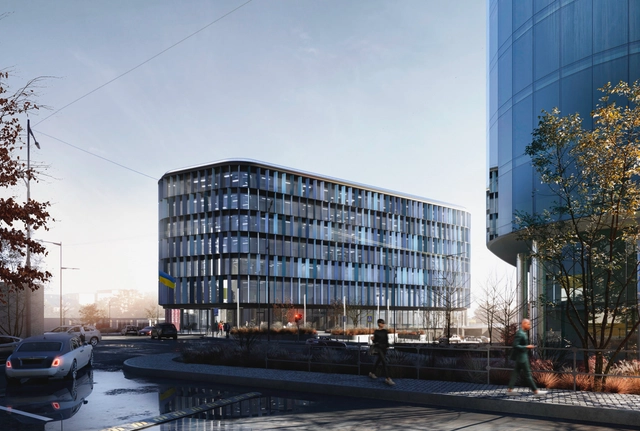
From India's Shivalik Curv and Embassy Zenith, where form and movement are combined to redefine skyline identity, to Dungen in Sweden, a low-rise timber office that mirrors the calm of a forest grove, each project explores how workplaces can become more flexible, humane, and environmentally conscious. In Kyiv, APEX Business Center positions itself as a catalyst for urban vitality, while Jakarta's BNI Tower PIK 2 transforms the corporate tower into a crystalline symbol of growth. In Munich and Ankara, mixed-use concepts like Highrise Hufelandmark and Rhythm Ankara explore the office as part of a broader civic landscape, where work, leisure, and public life intersect.
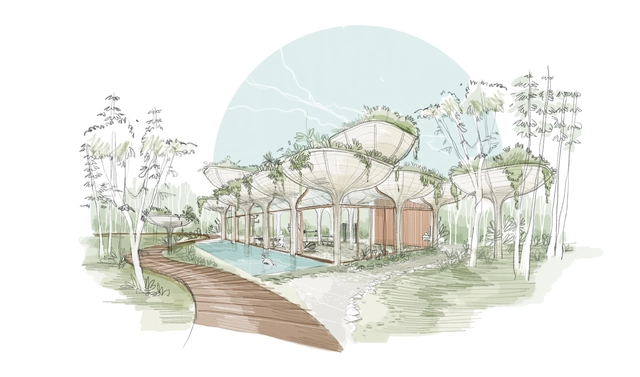
From forest-inspired offices in Sweden to jungle-nest clubhouses in Tulum, mixed-use architecture continues to evolve as a tool for integrated living. As cities grow and our expectations of public, private, and commercial space shift, designers are increasingly rethinking how different functions including work, play, rest, learning, can coexist in a single architectural language. These projects suggest that buildings and projects no longer need to silo activities, but rather choreograph them to reflect the rhythms of everyday life.
This collection, submitted by the ArchDaily community, presents a global spectrum of approaches to mixed-use design, from large-scale masterplans to conceptual theses. What ties them together is a commitment to spatial overlap, ecological sensitivity, and reimagined programs that prioritize user experience. Whether it's a student dormitory in Tehran, a public plaza in Cairo, or a community hub in Texas, each project embraces complexity to create spaces that are alive with interaction, transformation, and meaning.
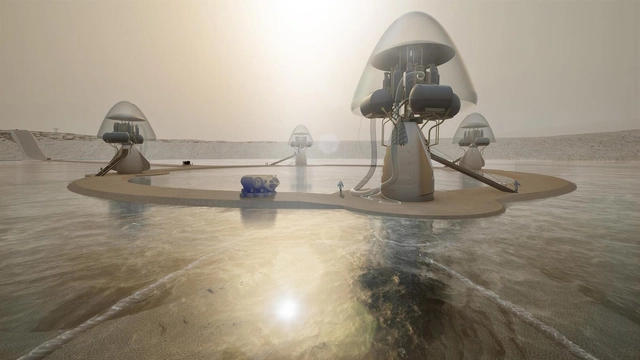
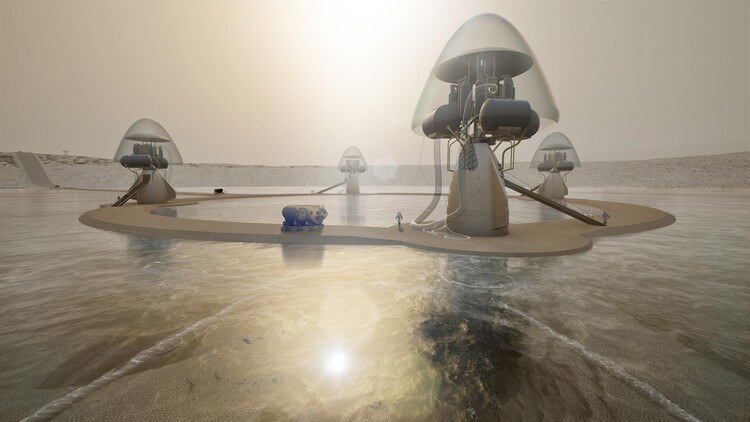
Cities today are being reimagined as living, evolving organisms, combining digital intelligence, ecological systems, and new materials to shape radical futures. At Carlo Ratti's "Intelligens. Natural. Artificial. Collective." biennial, over 750 participants challenge established boundaries between architecture, landscape, and technology. Several conceptual projects showcased in the main exhibition challenge conventional boundaries between architecture, landscape, and technology. From bio-adaptive urban systems and Martian water-based settlements to immersive symphonies of satellite data, these works collectively envision new models for cohabitation, resilience, and planetary awareness.
This month's Unbuilt selection presents six speculative projects, presented as part of the 2025 Venice Architecture Biennale exhibition, as provocations for rethinking the future of cities and human settlement. While some proposals transform architecture into self-sustaining, living infrastructures, others explore how data and sensory interfaces can redefine our relationship with natural and urban environments. Together, they offer a cross-section of how architects and designers are using unbuilt work to imagine new possibilities for life on Earth and beyond.
Collective living continues to be a central theme in contemporary housing discourse, one that extends beyond questions of density or typology to engage broader concerns of land use, social cohesion, and spatial identity. This selection of conceptual unbuilt projects, submitted by the ArchDaily community, explores the potentials of shared living environments, not only as functional housing solutions but as frameworks for interaction, environmental integration, and cultural continuity. Whether in urban or remote settings, they reflect a growing interest in rethinking how domestic space can support both individual privacy and communal life.
At a time when architectural practice is increasingly tied to climate and context, the boundary between the built and the natural has become a critical site of experimentation. This month's unbuilt selection gathers eight conceptual projects that work with the edges of landscape. In Ramia by João Teles Atelier, the architecture draws directly from the metaphor of a seed breaking through soil, using wood, concrete, and water to create a sensorial route through Tulum's ecology. Meanwhile, Mobius Pier by X Atelier loops gently over the river edge, becoming both infrastructure and observation point. Similarly, Il mare degli Umbri approaches the threshold differently, restoring the historic shoreline of Lake Trasimeno and reintroducing local wetland ecologies. Each project in this collection reflects a unique position: some treat the edge as a spatial experience, others as a regulatory line, and others still as a point of cultural or ecological return.
Hotels are increasingly being designed as more than just places for accommodation. As expectations around travel shift, architects are approaching hospitality projects as opportunities to explore ideas of context, experience, and identity. Whether integrated into remote landscapes or inserted into dense urban environments, these proposals examine how architecture can shape the guest experience through spatial organization, material selection, and connection to place. The hotel becomes a framework not only for rest, but for interaction with the surroundings, with others, and with the design itself.
Each month, ArchDaily's editors curate a selection of unbuilt projects around a shared typology or theme. Submitted by firms of all scales from around the world, these proposals represent the diversity of approaches within our global architecture community. This month's selection focuses on hotels, ranging from the sculptural Pistachio Villas in Ubud to the modular Dubai Edition Hotel and the vineyard-rooted Terra Dionysia in Santorini. Together, they reflect a wide spectrum of architectural thinking around hospitality, from landscape integration and cultural references to questions of density and public space. Submissions are open to everyone.
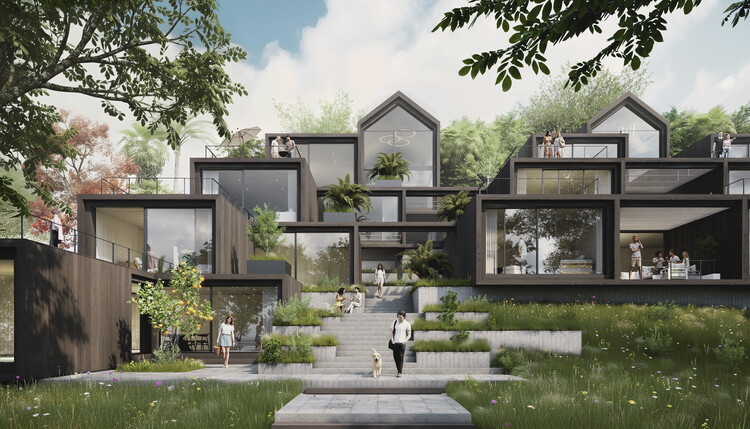
Residential houses, villas, and retreats are increasingly being designed as places of pause—spaces where architecture supports rest, reflection, and stronger connections to nature. Rather than focusing solely on urban living or compact efficiency, these homes are set in remote, scenic, or rural locations, where the landscape becomes an essential part of daily life. Through careful siting, use of natural materials, and open layouts, they offer an elevated standard of living that is both intentional and grounded in place.
Symbiosis, a Prototype for Living and Working. Image Courtesy of contexo
The future of urban life is increasingly being imagined as collective, layered, and adaptable. As cities grow denser and the boundaries between work, home, and leisure blur, architects are rethinking the traditional notion of residential living, shifting from isolated units to integrated, community-driven environments. This collection of unbuilt projects, submitted by the ArchDaily community, reflects this shift: a global exploration into how design can shape more resilient, inclusive, and connected ways of living.
As educational institutions around the world adapt to shifting societal needs, the architecture of learning is also evolving. This curated selection brings together projects submitted by the global ArchDaily community, highlighting how architects are rethinking the future of schools and universities through design. These proposals reflect pressing global concerns: the importance of community-centerededucation, the revitalization of historical buildings and neighborhoods, the integration of natural systems, and the search for spatial expressions that accommodate both formal instruction and informal exchange. Whether situated in dense urban centers, rural villages, or coastal landscapes, these projects respond to specific cultural and environmental contexts while engaging with broader architectural questions about sustainability, access, and identity.
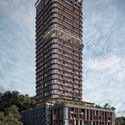
As cities grow and available land becomes more limited, high-rise architecture plays an important role in addressing urban density while shaping new ways of living and working. Tall buildings are evolving beyond their traditional functions to integrate environmental strategies, enhance public engagement, and contribute to the urban fabric. Architects are exploring new materials, energy-efficient technologies, and spatial configurations that make towers more adaptable to their surroundings. Some projects incorporate green spaces and shared amenities to create a stronger connection between the built environment and its users, while others introduce innovative construction techniques to improve sustainability and efficiency.
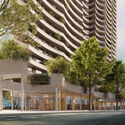
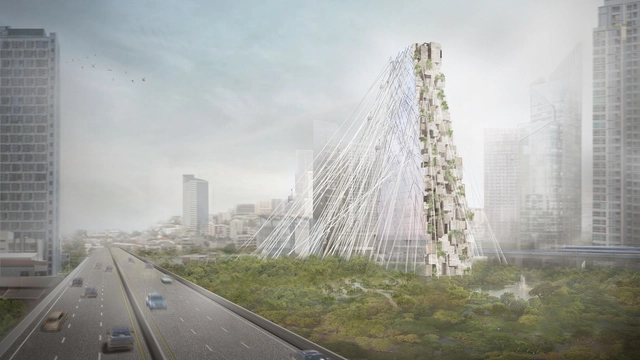
Among this selection of projects submitted by the ArchDaily community, The Residences at 1428 Brickell by Arquitectonica in Miami, United States introduces a solar-powered facade that contributes to the building's energy needs. In Dubai, UAE, AVA by SOMA creates a transition from the city into a more enclosed, water-defined environment with a focus on luxury living. In Bangkok, Thailand, HAS Design and Research proposes the Bangkok Civic Center Tower as a new type of public space, combining green landscapes with mirrored surfaces to connect the city with nature. These projects reflect different approaches to vertical architecture and highlight how designers are responding to the challenges and opportunities of dense urban environments.