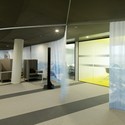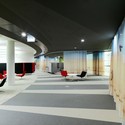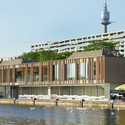


-
Architects: ad2 architekten ZT KG
- Area: 400 m²
- Year: 2016
-
Professionals: RWT plus ZT GmbH


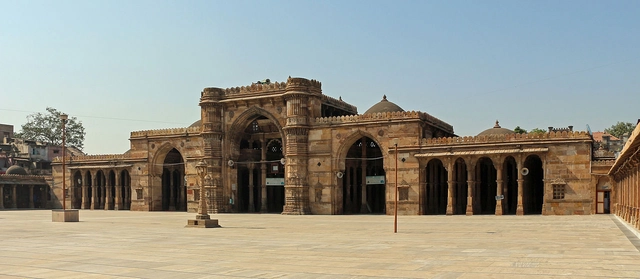
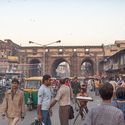
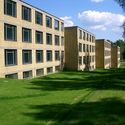
UNESCO’s World Heritage Committee, currently holding its forty-first annual session in the Polish city of Krakow, inscribed twenty new cultural sites on its World Heritage List, including the historic city of Ahmedabad in India, archaeological sites in Cambodia and Brazil, and a “cultural landscape” in South Africa. The Committee also added extensions to two sites already on the list: Strasbourg in France, and the Bauhaus in Germany. On the other hand, the historic center of Vienna was inscribed on the List of World Heritage in Danger as the Committee examined the state of conservation of one-hundred-and-fifty-four of its listed sites.

Described by Richard Meier as an architect whose "groundbreaking ideas" have "had a major impact on the thinking of designers and architects," Austrian artist, architect, designer, theoretician and Pritzker Prize laureate Hans Hollein worked in all aspects of design, from architecture to furniture, jewelry, glasses, lamps—even door handles. Known in particular for his museum designs, from the Abteiberg Museum in Mönchengladbach to the Museum of Modern Art in Frankfurt to Vienna's Modernism.
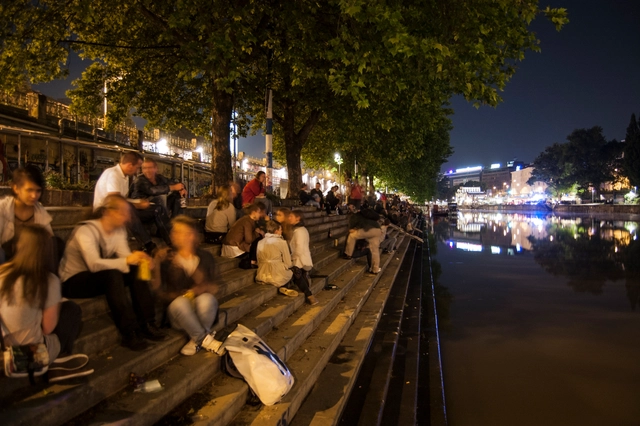
This article by Gabu Heindl, an Austrian architect and urbanist, was first published by Volume in their 50th issue, Beyond Beyond, the editorial of which is available to read here. Here, Heindl introduces the concept of "powerfully (precariously) positioned planning propositions" (PPPP) based on the Donaukanal project in Vienna.
In a certain sense, looking at the beyond is something that we cannot do today, other than from the vantage point of a beyond the ‘beyond’. Looking at the connections between progressive political movements and planning/building practices in modernity and their ways of departing into ever new ‘beyonds’, beyond the boundaries of historically given urban and social formations – today, we are certainly beyond these dynamics. And it is not so much postmodernism that needs to be invoked here, but rather two reflections on politics, planning/building related and otherwise, that are bound for the beyond. One reflection concerns how progressive, modernist, avant-garde politics, even at their height, were compromised by, or even complicit in, affinities with paternalistic, top-down governance (Red Vienna) or even with totalitarian rule (fascism). The second reflection, more pertinent to our present moment, concerns the extent to which the dynamics of going beyond have, since the late 1970s, shifted to a regime of (self-)government and accumulation which is addressed and theorized under labels such as neoliberalism, Post-Fordism or new spirit of capitalism.

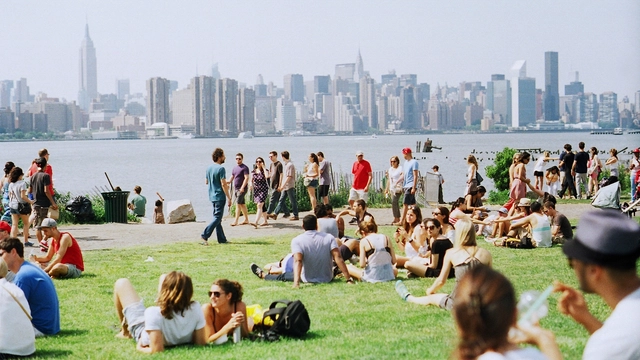
For the latest episode of The Urbanist, Monocle 24's weekly "guide to making better cities," the team explore the role of bilateral inspiration between metropolises across the world. Examples of cities relying on one another to draw lessons from and progress can be seen across the world: from the ways in which London and New York City tackle similar urban problems, to how a bike-sharing scheme in Paris has proven to be contagious. The show also visits Vienna, where its Imperial heritage is being imitated the world over, and the show ponders whether the fact that every continent "claiming to have its own Venice" is actually a good thing?

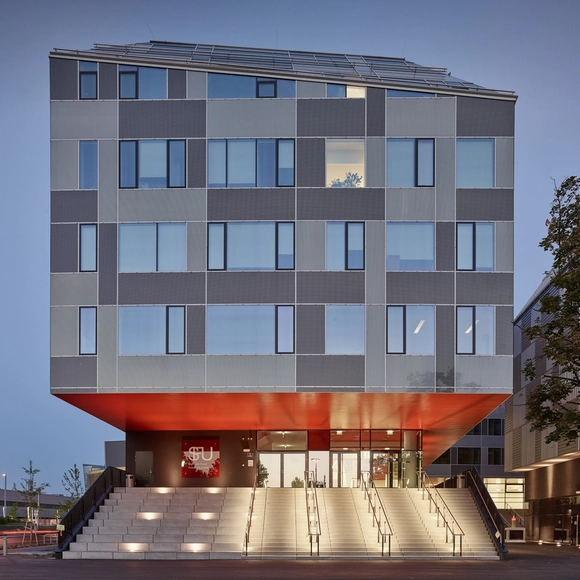
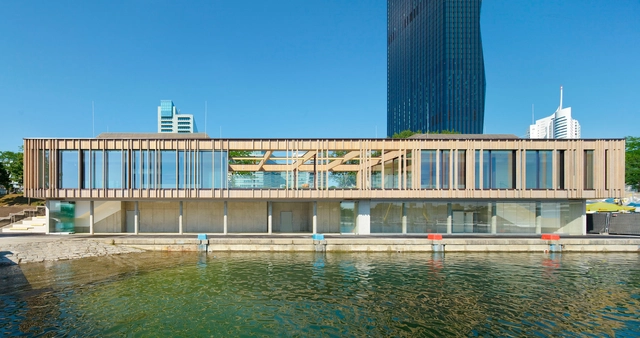
For this edition of The Urbanist, Monocle 24's weekly "guide to making better cities," the team investigate politics in global "power cities." Visiting Brussels, capital of Belgium and administrative capital of the European Union, they explore how politics have changed the city over the last four decades. Further south, they travel to Vienna which, "diplomatically remains very important and wields power." Yet even though the UN have an outpost there, is the Austrian capital still a stage for international diplomacy? The episode also makes a quick stop at Embassy Row in Washington D.C. to examine the architecture of diplomatic design.

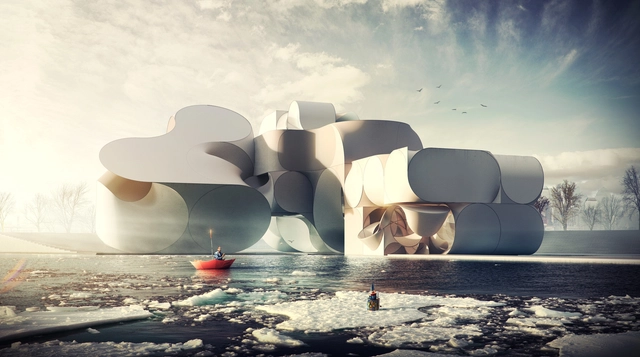
A team of students from Austrian-based Studio Hani Rashid at the University of Applied Arts in Vienna have unveiled their conceptual design for a Cirque du Soleil Performance Center in Brooklyn, New York.
With its interior and exterior blended together, the entire building becomes a stage. Featuring large windows that allow the public to watch performances and training activities inside, people on each side are both viewers and viewed.

For this week's editions of Section D, Monocle 24's weekly review of design, architecture and craft, and The Urbanist, their weekly "guide to making better cities," the Monocle team travel across three continents exploring the seemingly illusive question of 'quality of life.'
In this week's edition of The Urbanist, and to coincide with Monocle's annual Quality of Life survey, Andrew Tuck examines why Tokyo is at the forefront of an urban-garden revolution, how the Austrian capital is planning on self-facilitating its development as a major business hub, and talks to Robert Doyle, Lord Mayor of Melbourne, about the apparent cultural boom currently taking place in his city. In Section D, Josh Fehnert transports listeners to the UK's "post-industrial heartland" to talk to the people behind this year's Sheffield Design Week, plus more.
Listen to both episodes after the break.


.jpg?1499781753 "Asmara. Image© <a href='https://commons.wikimedia.org/wiki/File:Asmara_(8351468351).jpg'>Wikimedia user David Stanley</a> licensed under <a href='https://creativecommons.org/licenses/by/2.0/deed.en'>CC BY 2.0</a>")