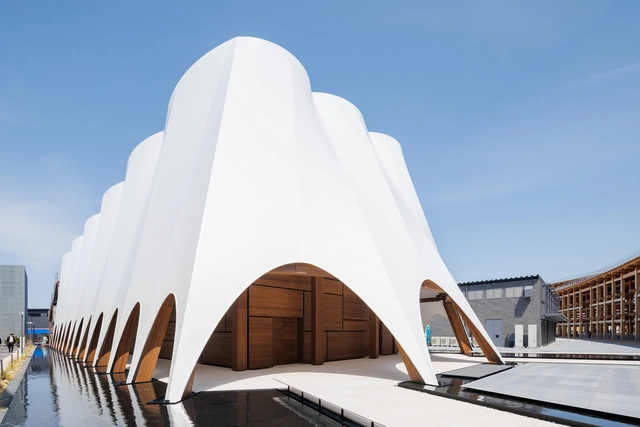
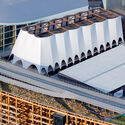
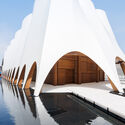
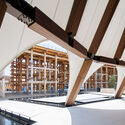
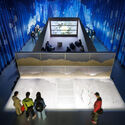
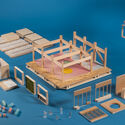
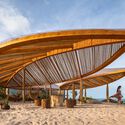
The State of Qatar has just opened its national pavilion's doors at Expo Osaka 2025. Designed by Kengo Kuma & Associates in collaboration with Qatar Museums, the pavilion blends traditional craftsmanship from Qatar and Japan while highlighting the two countries' connection to the sea, which is understood as a hub of resources and a medium for trade and knowledge exchange. The exhibition will be on view until October 13, 2025, aiming to showcase Qatar's innovations across diverse fields.
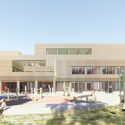
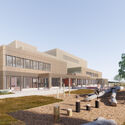
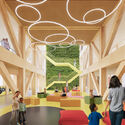
As part of the Circlewood consortium, OMA’s David Gianotten and Michel den Otter have developed a modular system to build schools that can adapt and transform throughout their lifecycle. The system was selected by the City of Amsterdam to be employed to build multiple schools in the coming ten years, as part of the Innovation Partnership School Buildings program. The citywide initiative aims to build nine to thirty “high-quality, flexible, and sustainable” schools as a way to contribute to the city’s goal of becoming fully circular by 2050.
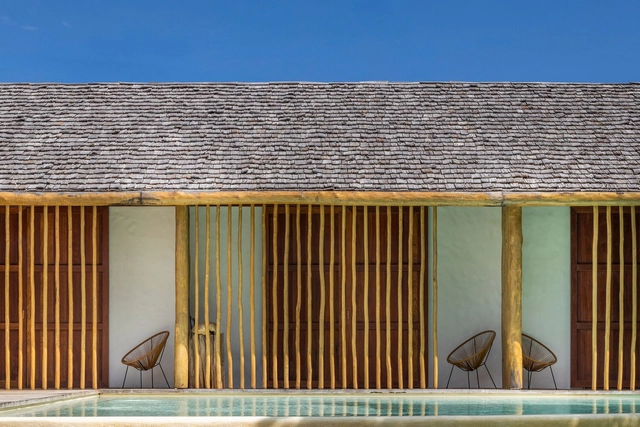
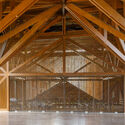
From ancestral constructions to the "concrete of the future", terms abound to describe timber. Present in the history and horizon of world architecture, the material demonstrates a sustainable possibility and is associated with the coziness and warmth that it provides in the spatial atmosphere. In Brazil, it is no different. Several contemporary works explore the qualities and benefits of its use, including structural bias.
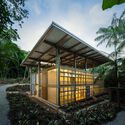
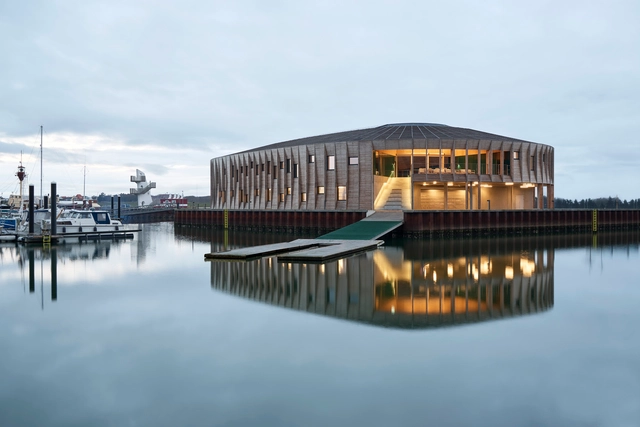
Developed by WERK Arkitekter and Snøhetta, the new maritime center on the coast of Esbjerg, Denmark, opens to the public. The wooden structure is conceived as a gathering space for watersports clubs and other visitors to the harbor, providing the coastal town with a maritime social hub. The circular structure protects the visitors from harsh weather conditions, while the large windows and amphitheater stairs open up views of the sea. Dubbed “The Lantern,” the project represents the winning design of a competition organized in 2019.
Whether to mark a change of direction, to highlight its first steps or its own presence in a room, stairs that combine two or more materials tend to draw attention by establishing dialogs between particular characteristics of each material. Concrete, steel and wood are some of the most common choices to compose the structure of stairs due to their high strength and versatility. But, when combined, these different materials expand their individual possibilities and reveal how the design can be tailored to their peculiarities and connections.
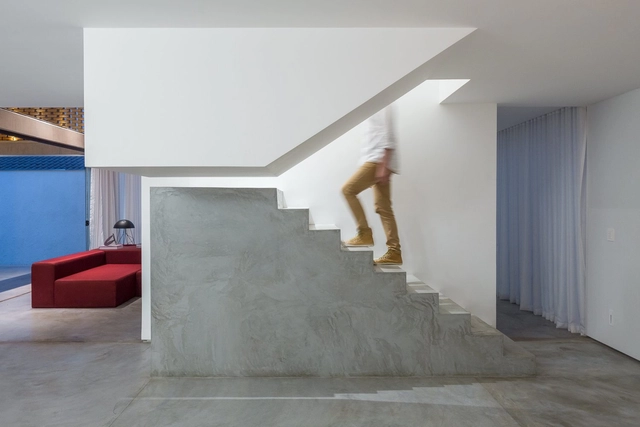
The combination of textures, colors, and finishes among materials can provide a number of creative solutions for these elements used for vertical circulation, as shown in LÂM’s Home, by AD+studio and House 9A, by 23o5Studio, characterized by stairs with a sturdy and rough base that meets a light and sleek structure of steps. The opposite composition order, a lighter base that meets a robust set of steps, thrives ingeniously in Luis Carbonell's Casa Chulavista and messina | rivas' Angatuba House, where the light wooden stairs' base is followed by raw concrete steps.