1. ArchDaily
  2. Yugoslavia

Yugoslavia: The Latest Architecture and News

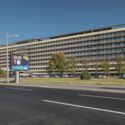
Demolition of Modernist Landmark Hotel Jugoslavia Begins in Belgrade, Serbia

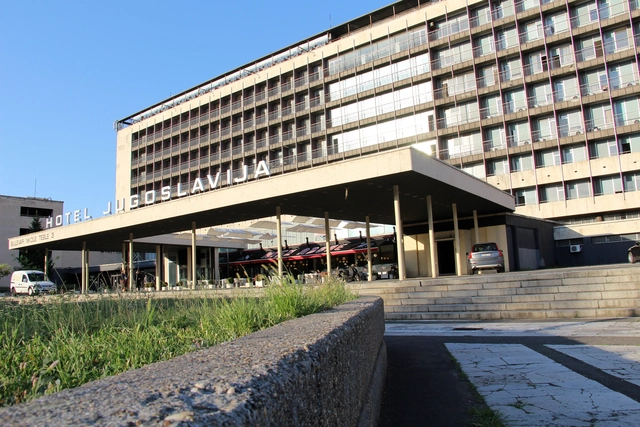
The demolition of Hotel Jugoslavija, a notable example of modernist architecture in Belgrade, has begun, making way for new development in the city's rapidly changing urban landscape. Constructed in 1969 in New Belgrade, the hotel was once among the largest and most prominent in Europe, reflecting the aspirations of the Socialist Federal Republic of Yugoslavia (SFRY) during its peak. Designed by Zagreb architect Lavoslav Horvat, the eight-story hotel was a key project under the leadership of Josip Broz Tito. It showcased the modernist principles of the time, combining functionality with imposing architectural forms. Its interiors featured luxurious details, including a Swarovski chandelier comprised of 40,000 crystals, which underscored the building's significance as a flagship of Yugoslavia's international presence.


Demolition of Modernist Landmark Hotel Jugoslavia Begins in Belgrade, Serbia - Image 1 of 4Demolition of Modernist Landmark Hotel Jugoslavia Begins in Belgrade, Serbia - Image 2 of 4Demolition of Modernist Landmark Hotel Jugoslavia Begins in Belgrade, Serbia - Image 3 of 4Demolition of Modernist Landmark Hotel Jugoslavia Begins in Belgrade, Serbia - Image 4 of 4Demolition of Modernist Landmark Hotel Jugoslavia Begins in Belgrade, Serbia - More Images

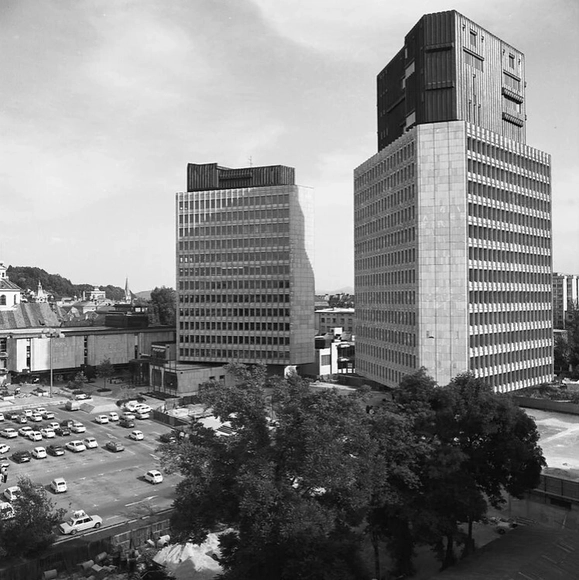
AD Classics: Republic Square / Edvard Ravnikar

Republic Square in Ljubljana holds immense historical and symbolic significance for Slovenia. It is located in the historic center of the city and features a blend of buildings with different designs, scales, and dimensions, together with interconnected open spaces, passages, and underpasses. These elements form a multifunctional complex whose construction lasted more than 20 years and underwent several volumetric and programmatic reconfigurations. Visible from a distance and standing out above the Ursuline Church’s bell tower, two prominent office towers rise as part of this work designed by Edvard Ravnikar, the most prominent Slovenian architect of the second half of the 20th century.

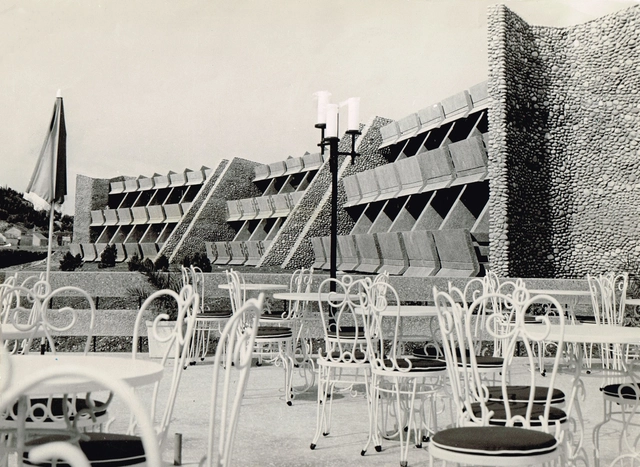
Yugoslav Architect Svetlana Kana Radevic's Legacy on Postwar Architecture Highlighted in the 2021 Venice Biennale

Part of the Collateral Events of the 17th International Architecture Exhibition, the extensive built work of Yugoslav architect Svetlana Kana Radević (1937-2000) is brought to light from May 22 until November 21 at the Palazzo Palumbo Fossati. Entitled “Skirting the Center: Svetlana Kana Radević on the Periphery of Postwar Architecture”, the exhibition curated by Dijana Vucinic and Anna Kats, aims to highlight the architect’s work and expand her representation.

Yugoslav Architect Svetlana Kana Radevic's Legacy on Postwar Architecture Highlighted in the 2021 Venice Biennale - Image 1 of 4Yugoslav Architect Svetlana Kana Radevic's Legacy on Postwar Architecture Highlighted in the 2021 Venice Biennale - Image 2 of 4Yugoslav Architect Svetlana Kana Radevic's Legacy on Postwar Architecture Highlighted in the 2021 Venice Biennale - Image 3 of 4Yugoslav Architect Svetlana Kana Radevic's Legacy on Postwar Architecture Highlighted in the 2021 Venice Biennale - Image 4 of 4Yugoslav Architect Svetlana Kana Radevic's Legacy on Postwar Architecture Highlighted in the 2021 Venice Biennale - More Images+ 9

The Slovenian Pavilion at the 2021 Venice Biennale Explores the Social Infrastructure of Local Cooperative Centres

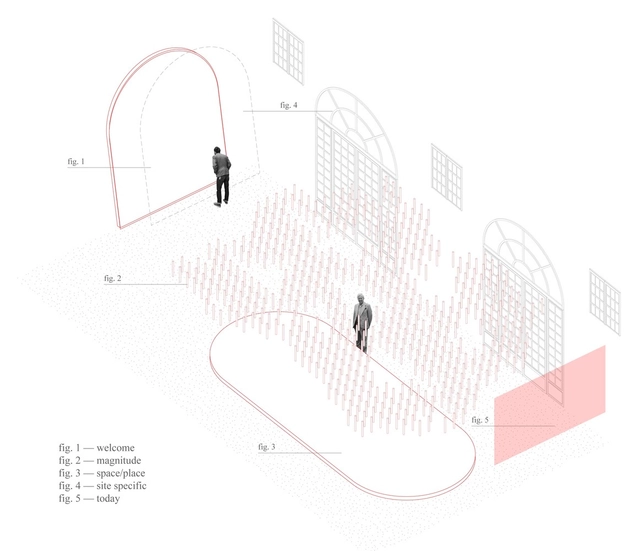
Slovenia's contribution to the 17th Venice Architecture Biennale explores interior public spaces as vital social infrastructure through the lens of the local cooperative centre typology. Titled "The Common in Community", the exhibition curated by Blaž Babnik Romaniuk, Martina Malešič, Rastko Pečar and Asta Vrečko details the architectural spaces of social interaction built after WWII in rural and suburban Slovenia, which continue to serve their purpose as local community centres to this day.

The Slovenian Pavilion at the 2021 Venice Biennale Explores the Social Infrastructure of Local Cooperative Centres  - Image 1 of 4The Slovenian Pavilion at the 2021 Venice Biennale Explores the Social Infrastructure of Local Cooperative Centres  - Image 2 of 4The Slovenian Pavilion at the 2021 Venice Biennale Explores the Social Infrastructure of Local Cooperative Centres  - Image 3 of 4The Slovenian Pavilion at the 2021 Venice Biennale Explores the Social Infrastructure of Local Cooperative Centres  - Image 4 of 4The Slovenian Pavilion at the 2021 Venice Biennale Explores the Social Infrastructure of Local Cooperative Centres  - More Images+ 3

An Expert Guide through MoMA's "Toward a Concrete Utopia: Architecture in Yugoslavia, 1948–1980"

Since July 2018, the Museum of Modern Art (MoMA) has hosted an exhibition exploring the architecture of the former Yugoslavia. “Concrete Utopia: Architecture in Yugoslavia, 1948-1980” became the first major US exhibition to study the subject, through over 400 drawings, models, photographs, and films.

With the exhibition soon coming to an end, Martino Stierli (Chief Curator of Architecture and Design at MoMA) and Vladimir Kulic (Guest Curator and Architecture Historian) have presented a 7-minute-long video guiding viewers through the highlights of the exhibition.

Films & Architecture: "Underground"

Subscriber Access | 
Films & Architecture: "Underground" - Image 3 of 4

Underground is the condensed version of a 5-hour series (originally broadcast on Serbian television in the 90′s) which takes place in Yugoslavia, showing the country from the beginning of WWII through the Yugoslav Wars. This theatrical version, directed by Emir Kusturica, considered one of the master filmmakers of our time, utilises symbolic elements that require a strong knowledge of story to fully understand, and ends with a memorable finale, with the characters dancing on a floating island that separates them from the continent. This is an extraordinary film that we invite you to enjoy and comment on.