David Basulto

Founder of this wonderful platform called ArchDaily :) Graduate Architect. Jury, speaker, curator, and anything that is required to spread our mission across the world. You can follow me on Instagram @dbasulto.

BROWSE ALL FROM THIS AUTHOR HERE

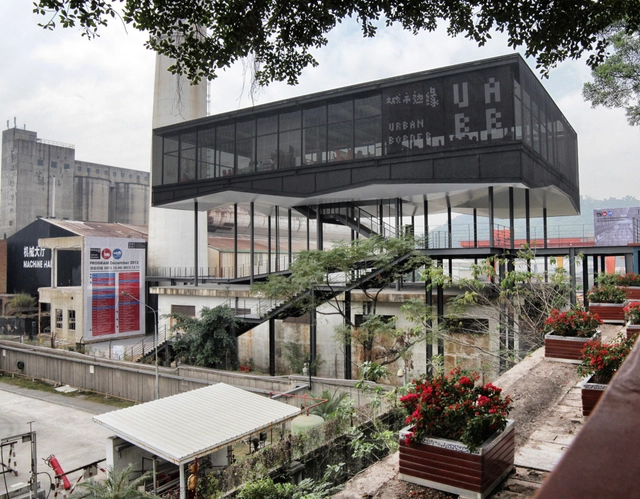
2013 Hong Kong Biennale, UABB (Bi-City Biennale of Urbanism /Architecture)

2013 Hong Kong Biennale, UABB (Bi-City Biennale of Urbanism /Architecture) - Image 12 of 4
Make Out City, BKK Collective (Architect Kidd, Chat Architects, Studio Make, Things Matter)

Now in its 5th edition, the Bi-City Biennale of Urbanism / Architecture (UABB) is the only biennial exhibition in the world to be based exclusively on the themes of urbanism and urbanization. The Biennale is co-organized by Shenzhen and Hong Kong, two of the most intensely urban cities in the world, where political and economical contexts have shaped unique urban dynamics.

On display until February 23rd, the Hong Kong Biennale is curated by Colin Fournier, together with Executive Curators Joshua Lau and Allen Poon of TETRA and Travis Bunt and Tat Lam of URBANUS.

The Biennale is “informed by the singularity of Hong Kong but it will not be primarily about Hong Kong, just as the Venice Biennale is not about Venice: it will be about the cities of the world, making use of the unique bi-city setting of the Biennale as a platform to address global issues in a visionary and critical way.” You can read the complete curatorial statement here.

Photos and more about the individual exhibits after the break:

Yuri Grigoryan and Alexei Komissarov at the III Moscow Urban Forum

Subscriber Access | 

Last month we had the chance to attend to the III Moscow Urban Forum, an instance where urbanists, architects, city mayors, the real estate industry and the citizens of Moscow had an open dialogue related to the future of the city under the theme “Megacities: Success Beyond the Centre”. The forum was organized by the Government of Moscow, who invited global urban planning gurus with experience in developing suburbs, to discuss how to resolve the problems of deprived outskirts, how to transform “dead” zones in towns into socially beneficial areas for work and leisure, how make a city environmentally sound and comfortable for living at a low cost, and how to create a transport system that is convenient for its citizens.

Announcing the 2014 ArchDaily Building of the Year Awards

Subscriber Access | 
Announcing the 2014 ArchDaily Building of the Year Awards - Image 1 of 4

Dear readers,

For the 5th consecutive year, we are proud to announce the Building of the Year Awards.

During the past year our network of architectural knowledge has grown intensely. Not only did we reach over 300,000 daily visitors; almost 70 million page views per month; 160,000 followers on Twitter; 105,000 followers on Instagram; and more than a million fans on Facebook, but, moreover, our local versions - ArchDaily Brasil, ArchDaily México and Plataforma Arquitectura - have grown exponentially as well.

This means that ArchDaily is now reaching every corner of the globe - and in many different formats. From the many lectures and events we attended this year to the launch of our new mobile version (which puts ArchDaily in pockets everywhere), we’re doing everything possible to spread our content - and our mission - around the world.

Which is why the Building of the Year Awards continue to be so important for us. As our audience has grown, so has your collective voice.The Building of the Year Awards are our chance to hear it. This is when you - whether you’re from the smallest town in Africa or the largest city in China - get to identify and recognize the most impactful/meaningful/inspiring project that was published on ArchDaily during the past year. This is an opportunity to tap into our global readership’s collective intelligence; an opportunity for you to judge over 3,500 projects from around the world, according to criteria and priorities that are important to you.

Click here to nominate your favorite projects

Announcing the 2014 ArchDaily Building of the Year Awards - Image 3 of 4

Full rules, including how your vote could win you an iPad Mini, after the break:

AD Interviews: Francine Houben / Mecanoo

Subscriber Access | 

Francine Houben (@FrancineHouben on Twitter) is one of the founders and the current Creative Director of acclaimed Dutch firm Mecanoo.

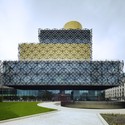
The firm was founded in 1984 after Francine and a group of fellow students at the Delft University of Technology won a competition for a social housing complex. Since then the firm has developed a unique language with a special focus on the expression of materials, a strong relation with context, technical expertise, and the precise resolution of details, as can be seen in the TU Delft Library, the La Llotja Theatre and Congress Centre, the Montevideo Building, and the recently opened Birmingham Library, currently the largest library in Europe.

The firm's logo, a falling diver "represents a free spirit and unlimited creativity" according to @Mecanoo__.

In this interview Francine explains the challenges of designing a library, a program currently undergoing quick and constant evolution, and shares her experience running the practice.

Currently, the firm is directed by Francine and technical director Aart Fransen, joined by partners Francesco Veenstra (watch Mies.UK interview), Ellen van der Wal, Paul Ketelaars and Dick van Gameren. Mecanoo has projects under construction all around the world, including the Wei-Wu-Ying Center for the Arts in Kaohsiung (Taiwan, see watch construction video), the Dudley Municipal Center in Boston (USA) and the Shenzhen Cultural Center (China).

Projects by Mecanoo at ArchDaily:

AD Interviews: Francine Houben / Mecanoo - Arch Daily InterviewsAD Interviews: Francine Houben / Mecanoo - Arch Daily InterviewsAD Interviews: Francine Houben / Mecanoo - Arch Daily InterviewsAD Interviews: Francine Houben / Mecanoo - Arch Daily InterviewsAD Interviews: Francine Houben / Mecanoo - Arch Daily InterviewsAD Interviews: Francine Houben / Mecanoo - Arch Daily InterviewsAD Interviews: Francine Houben / Mecanoo - Arch Daily InterviewsAD Interviews: Francine Houben / Mecanoo - Arch Daily InterviewsAD Interviews: Francine Houben / Mecanoo - More Images+ 5

ArchDaily: What Happened in 2013, and What is Coming for 2014!

Subscriber Access | 

Dear readers,

The Ten Most Watched Interviews of 2013

Our mission is to provide inspiration, knowledge and tools to the architects who will have the challenge to face the urban growth of the next 40 years.

We understand that each of the thousand of projects that we feature every year can transfer knowledge from the firms to other architects around the world, through the photos, details, diagrams and their own descriptions.

But we feel that there is a very important structural layer in these projects that can only be understood by actually knowing the architects behind them. And that’s why we started our interview program when we launched ArchDaily in 2008.

During this year we have had the opportunity to interview an incredible group of architects, ranging from Toyo Ito -an exclusive interview the same day he was announced as the 2013 Pritzker Laureate-, Wolf D. Prix, Iñaki Ábalos and Reiner de Graaf, to young upcoming firms from all over the world. But we have also interviewed business men who influence cities, synthetic biologists who are thinking in the future of architecture, sociologists analyzing the future of the urban world, and curators of the most influential museums of the world.

Here you will find the list of the ten most watched (or read) interviews of 2013.

And be ready for 2014, as we have some great interviews lined up for next year!

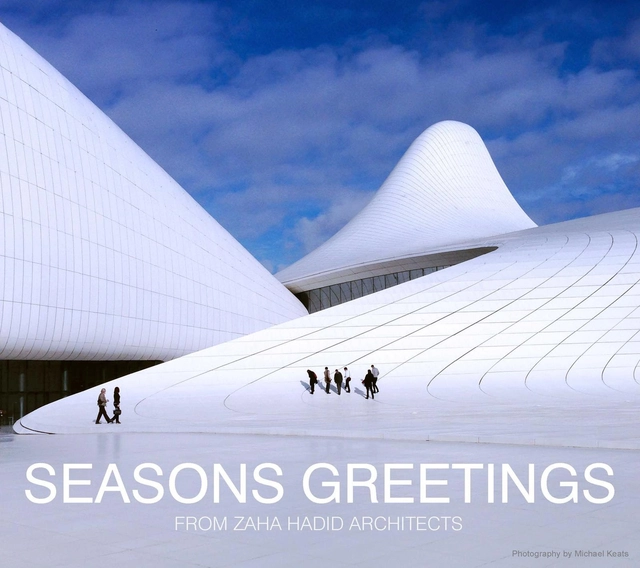
Seasons Greetings from the Architects!

Subscriber Access | 

Every year architects from around the world share their holiday greetings with us, applying their architectural creativity to an e-card format. Here we share some of our favorites from this year.

Happy holidays from all of us at ArchDaily to you!

Shenzhen Biennale: The Value Factory and the Urban Border

Subscriber Access | 

Now in its 5th edition, the Bi-City Biennale of Urbanism / Architecture (UABB) is the only biennial exhibition in the world to be based exclusively on the themes of urbanism and urbanization. The Biennale is co-organized by Shenzhen and Hong Kong, two of the most intensely urban cities in the world, where political and economical contexts have shaped unique urban dynamics.

A few days ago we had the chance to attend the opening of the Shenzhen Biennale, curated by Creative Director Ole Bouman together with Academic Directors Li Xiangning and Jeffrey Johnson. The Biennale, focused on “Urban Borders,” is split between two venues that will be open until Feb 28th, 2014.

Shenzhen Biennale: The Value Factory and the Urban Border - Image 27 of 4
Toll Stations and Canopies at the AP-7 South La Jonquera - Salou, Catalonia

Right next to the Shenzhen Ferry Terminal, where thousands of people commute every day between Hong Kong, Macau and Chinese cities along the Pearl River Delta, the Border Warehouse displays a series of projects -including the national pavilions- that deal with border issues, from projects that mediate Shenzhen and Hong Kong; the 3,154km long border between Mexico and the US, to transit stations and border checkpoints designed by contemporary architects. Participating include Enrique Walker, Juerguen Mayer, Aterlier Bow Wow, Joseph Grima, Teddy Cruz, Abalos + Sienkiewicz, MAD, among many others.

"Cities are filled with numerous – and at first sight invisible – borders. Between rich and poor, between ethnic groups, between high and low, between dense and sprawl, in short, between center and periphery. But who and what define these borders?" -- Ole Bouman

But perhaps the most interesting part of the Biennale takes place at the main venue: The Value Factory. 

More information about the Value Factory and a complete photo report after the break:

Introducing our Latest Innovation: ArchDaily Materials

Subscriber Access | 

Dear Readers,

ArchDaily at the University of Arizona

ArchDaily will lecture on Dec 2nd at the University of Arizona College of Architecture, Planning & Landscape Architecture, as part of their Critical Practice lecture series.

2013 Hong Kong Biennale, UABB (Bi-City Biennale of Urbanism /Architecture)

Now in its 5th edition, the Bi-City Biennale of Urbanism / Architecture (UABB) is the only biennial exhibition in the world to be based exclusively on the themes of urbanism and urbanization. The Biennale is co-organized by Shenzhen and Hong Kong, two of the most intensely urban cities in the world, where political and economical contexts have shaped unique urban dynamics.

The Hong Kong Biennale is led by Chief Curator Prof. Colin Fournier along with Joshua Lau and Allen Poon of TETRA and Travis Bunt and Tat Lam of URBANUS. As reported earlier, the Shenzhen edition will be curated by Ole Bouman and Team Li Xiangning + Jeffrey Johnson.

As Asia’s leading architecture, design and planning event, it will exhibit work by leading international and local design professionals and engage in a three month cultural dialogue that will include satellite exhibitions, performances, fi lm screenings, forums, workshops, guided tours and lectures.

The Biennale "will be informed by the singularity of Hong Kong but it will not be primarily about Hong Kong, just as the Venice Biennale is not about Venice: it will be about the cities of the world, making use of the unique bi-city setting of the Biennale as a platform to address global issues in a visionary and critical way."

ArchDaily will be present at the opening of the Shenzhen edition to bring you all the insights of the event.

Curatorial statement below:

III Moscow Urban Forum - “Megacities: Success Beyond the Centre”

Moscow Urban Forum is an international conference on city planning, urban development and related subjects. The Forum has been held annually in Moscow since 2011 with the support of the Moscow Government, and with the Urban Land Institute as international partner. Moscow Urban Forum is a platform for an exchange of ideas where the heads of the largest cities in Russia and the world have an opportunity to discuss topics and projects of concern with the representatives of the international expert community.

ArchiLab, Naturalizing Architecture: The Architects

Subscriber Access | 

After taking a hiatus while the new FRAC Centre was being built, ArchiLab has returned for its ninth edition. The lab started as an opportunity to question the practice of the architect, the diversification of the field, and the new urban challenges of our changing, globalized world. Founded by Marie-Ange Brayer (Director of the FRAC) & Frédéric Migayrou (Deputy Director of the MNAM-Centre Pompidou), it has shaped the architectural debate and served as a launch platform for many architects.

AD Interviews: Jakob + MacFarlane / FRAC Centre

Subscriber Access | 

During the opening of the new FRAC Centre in Orléans, France, we had the chance to interview architect Brendan MacFarlane, one of the founders of the Paris-based firm Jakob + MacFarlane (the architects behind the building).

ArchDaily's Google Glass Experiment

When Google Glass launched, we wondered how this wearable augmented reality device could add a whole other dimension to the consumption of architectural publications, by bringing the experience of space, matter, and light to our screens.

AA DLAB 2013: Light Forest

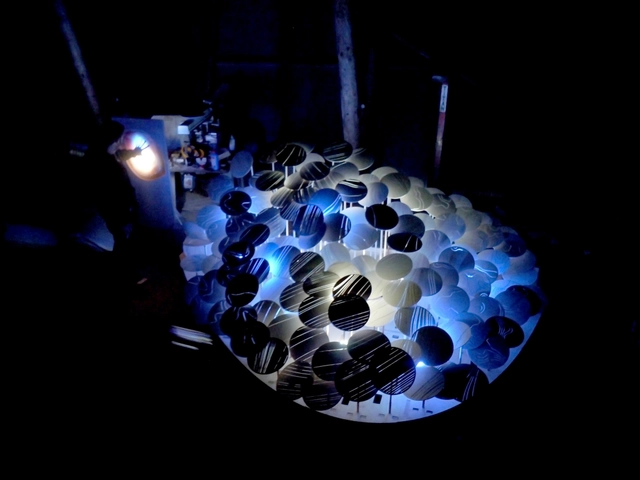
Light Forest is the final working prototype of the Architectural Association (AA) DLAB Visiting School, which took place in AA London and AA Hooke Park, a 350-acre working forest in Dorset, south west England, where the AA has a small educational facility centred on a woodworking workshop.

9th ArchiLab: Naturalizing Architecture Symposiums

Currently on view at the FRAC Centre in Orléans, ArchiLab 2013 introduces the latest progress in terms of research in digital architecture and its interaction with the sciences, permitted by the simulation of growth phenomena in the living world.

ArchDaily 3D Printing Challenge: The Winners

ArchDaily 3D Printing Challenge: The Winners - Image 1 of 4

3D Printing has opened up a whole new world for architecture. Technology that was once restricted to fabrication labs is now available to the end user – and at an affordable price. Of course, this new technology has also created the necessity to easily share 3D data over the web.