Former ArchDaily's Managing Editor. BA in Architecture from Newcastle University, and interested in how overlooked elements of architectural culture —from the media to competitions to procurement processes can alter the designs we end up with.
"Understanding precedes action." That is the motto of the Urban Observatory, an interactive installation and web app created by TED founder Richard Saul Wurman that compiled a wide range of urban data for over 150 cities, allowing users to compare various characteristics of those cities – from population density to traffic speed limits – side-by-side. Urban Observatory was first created in 2013, a banner year for news about urban big data; later that same year, Waag made headlines with its interactive map visualising the age of every building in the Netherlands. The emergence of such platforms allowed people to see the world around them in new ways.
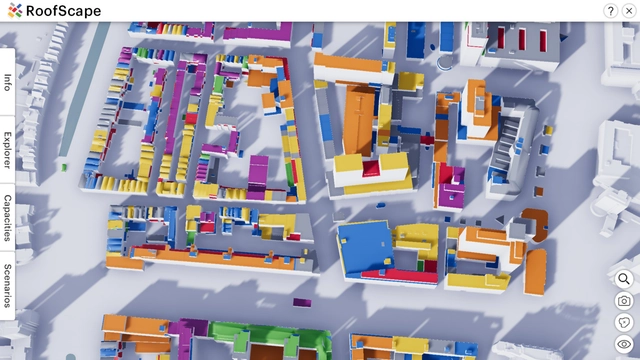
With the rise of Google Earth and other GIS tools, and platforms like envelope.city, or environmental simulations based on digital twin models of cities, urban big data has quietly come to underpin a wide range of tools used by professionals who shape our cities, with both the amount of data collected and the influence it has over decision-making expanding dramatically. However, these advances typically happen behind closed doors and in undemocratic spaces. How long must we wait for software that has all the user-friendliness, accessibility, and appeal of those older platforms, but which provides the average person with the tools to shape their city? In other words, if "understanding precedes action", then why after almost a decade are we not seeing big-data-driven apps that encourage the public to actually do something?
In this video from NOWNESS, an excerpt from Yuri Ancarani's documentary "Il Capo" (The Chief), the filmmaker captures the mesmerizing business of Marble extraction in the hills of Northwest Italy. The prized delicacy of the Carrara stone's surface is juxtaposed against the dramatic size and weight of the blocks they are removing, which eventually fall with an earth-shattering thud. Similarly the rugged power of the excavators is in marked contrast to the precise, understated gestures of the chief himself, who directs his workers with a complex series of predetermined hand signals.
"Marble quarries are places so unbelievable and striking, they almost feel like they are big theaters or sets," explains Yuri Ancarani. "I was so taken by the chief, watching him work. How he can move gigantic marble blocks using enormous excavators, but his own movements are light, precise and determined."
This article was originally published on February 25, 2015.
When learning about architecture, there is no replacement for practical experience: seeing how materials can be joined together, how structural elements respond to the stresses placed upon them, or how construction techniques can alter the finished project. For this reason, it is a good idea to give students a chance for some hands-on experience building real structures—something that, due to budgetary constraints and the academic culture of many architecture schools, has sadly been uncommon in the past.
However, in recent years, this culture has started to shift, with increasing numbers of architecture schools finding ways for students to be involved in construction projects, from small, temporary interventions and pavilions, to larger permanent buildings. In order to show the excellent work that can be done in an educational context, for the fourth timeArchDaily is calling on students and professors to submit the design-build projects they have completed in the past year. As always, we're teaming up with allofArchDailyen Español,ArchDaily Brasil, and ArchDaily China, in the hope that we can present the best work from students worldwide to a worldwide audience. Read on to find out how you can take part.
Are we going to follow a model of unsustainable building and construction similar to what I witnessed in China—or can we develop a uniquely African model of sustainable, and equitable development? I'm optimistic we can.
In this recent TED Talk, Christian Benimana talks about his journey as an architect—growing up in Rwanda, studying in China, and finally returning to Africa to see the beginnings of a building boom very similar to what he witnessed in Shanghai. Given this background, he then explains why he and MASS Design Group founded the African Design Center, a school and innovation center that intends to be a catalyst for positive urban development on the continent.
Metro and subway maps can tell us a lot about cities. For example, by comparing metro maps from different cities, you might be able to understand those cities' relative size or level of development. Or, by comparing a metro map to an earlier version from the same city, you can learn about the pace of development being experienced in that city. What these "maps" rarely tell you with any reliability, though, is the actual geography of the city itself.
In a fascinating series of posts over at /r/dataisbeautiful earlier this year, Reddit users created GIFs comparing the official metro maps of cities around the world with the real geography those maps correspond to. The results show the incredible changes that cities are subjected to in the name of visual clarity: in cities such as London, Tokyo, and Berlin, transit maps expand the urban core, masking the density at these regions' centers; in other cities such as Washington DC, shortened lines hide the extent of the city's suburbs; while in some cities, entire neighborhoods are moved to the other side of the city to make the map layout more attractive (we're looking at you, Prague). Read on to see 11 of the best creations by Reddit users.
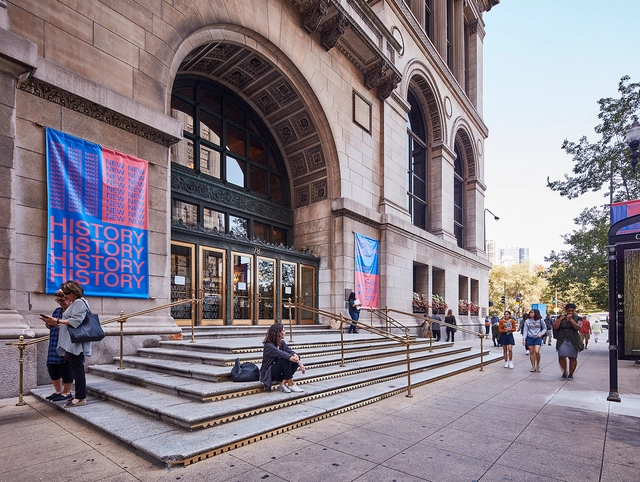
The 2017 Chicago Architecture Biennial is drawing to a close next week after almost 4 months of exhibitions, discussions, tours, film screenings, and other events. The second edition of the event, which opened on September 16th and is based upon the theme of "Make New History," will round out with two final events before the exhibition finally closes on Sunday, January 7th. Read on for more about the remaining events.
Is your knowledge of the world's most notable architects the best of the best? Can it stand the test of cryptic emoji-based clues? In lieu of their usual daily building identification quiz, online architecture quiz What Building?has created a fun knowledge test, converting the names of 20 famous architects into strings of emoji. Covering architects both past and present, the quiz is a great test of both architecture knowledge and lateral thinking. How many can you get?
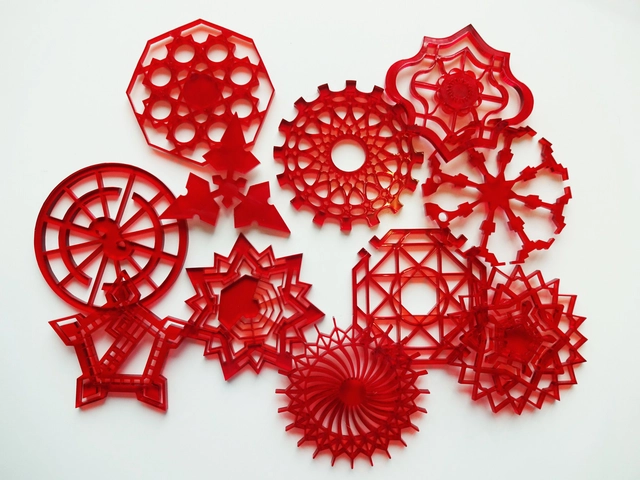
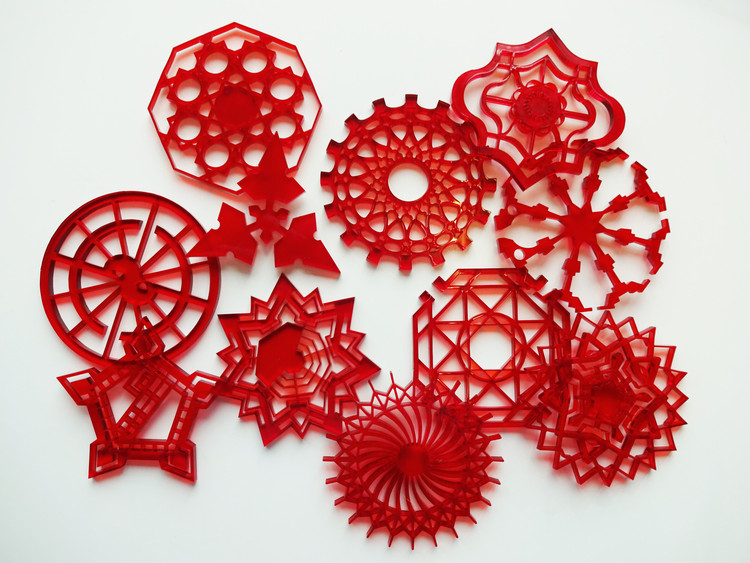
In the foyer of their London offices, architecture firm Allies and Morrison is displaying "Archiflakes," a series of snowflake designs inspired by the floorplans of famous structures from around the world. Developed by staff member Maria Spada, the series was a response to an internal competition to design the office's seasonal decorations.
Recently I spent part of a week in the company of a multidisciplinary group of academics and researchers from Europe, the US, and Africa, at a workshop entitled “The Practice and Politics of DIY Urbanism in Africa.” Jonathan Makuwira, a professor from the Malawi University of Technology, delivered a compelling paper on “Disability and Urbanism in Malawi,” highlighting the many challenges of the continent’s disabled population, using that city as a case study.
The lecture reaffirmed my sentiments on the gross inadequacies of urban public spaces for the disabled. It’s an issue that formed the basis for my 2016 entry for the Richard Rogers Fellowship at the Harvard Graduate School of Design (GSD), where I had proposed to use the fellowship to develop a prescriptive accessible design blueprint for public spaces in the city of Abuja.
As all architects know, there are few things in life more valuable than a good sketchbook. That's why the Architools Notebook, a sketchbook now raising funds on Kickstarter, was designed from the ground up to suit an architect's workflow and sense of style. From the design of the covers (which incorporates the golden ratio) to the type of binding (which allows the open book to lay flat for double-page sketching or scanning), the Architools Notebook has considered all the little things that can help make a sketchbook the perfect companion.
Foster + Partners has won the competition to design a new extension to Marseille Airport that will allow the building to process up to 12 million passengers a year. The 2-phase design will add a new central pavilion to the existing building—which comprises the original 1960s structure designed by Fernand Pouillon, and a 1992 extension by Richard Rogers—and a new pier to provide access to the planes.
This week, Zaha Hadid Design released a new platform wedge shoe and accompanying clutch bag with British shoe and accessory brand Charlotte Olympia. The limited edition pieces, which sport the familiar flowing forms perfected by Hadid in her architecture, are both constructed using a combination of transparent perspex and rose gold accents.
The drive to introduce autonomous vehicles to the roads took a blow yesterday, when a self-driving shuttle bus in Las Vegas was involved in a minor collision with a truck—just 2 hours into the vehicle's first day of operations. The bus, a 12-seat Navya Arma, was on the first day a 12-month trial covering a 0.6-mile (1-kilometer) loop in Las Vegas' Fremont East “Innovation District” when it was grazed by a reversing truck.
In a blog post by the city of Las Vegas, the blame was placed on the driver of the truck, who was cited by city officials for illegal backing. However, according to The Guardian, passengers at the time said the crash could have been avoided if the shuttle had simply backed out of the truck's way.
As architects, we've all been there: the payment for your most recent completed building comes through, and as you look around, you realize you have nothing left to spend the money on. Your subscriptions for all of your extortionately priced software are paid; you've bought all the latest trendy gadgets; your costly sartorial tastes are satisfied; and of course, you're living in a cool, spacious house of your own design. What does the architect who has everything do with their money? There's only so many bottles of wine you can send to the high school guidance counselor who introduced you to your lucrative career.
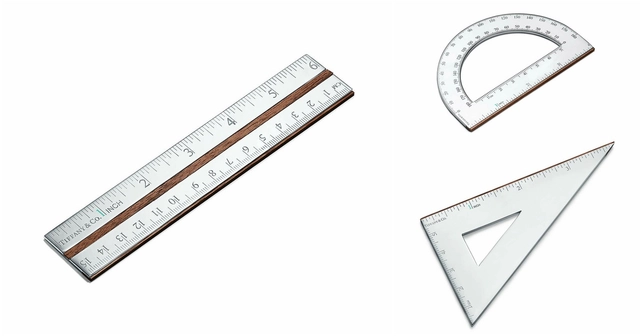
But fear not! As part of their new "Everyday Objects" range, Tiffany & Co has released a set of basic drawing tools that, purchased together, will relieve you of $1,275 in unwanted cash.
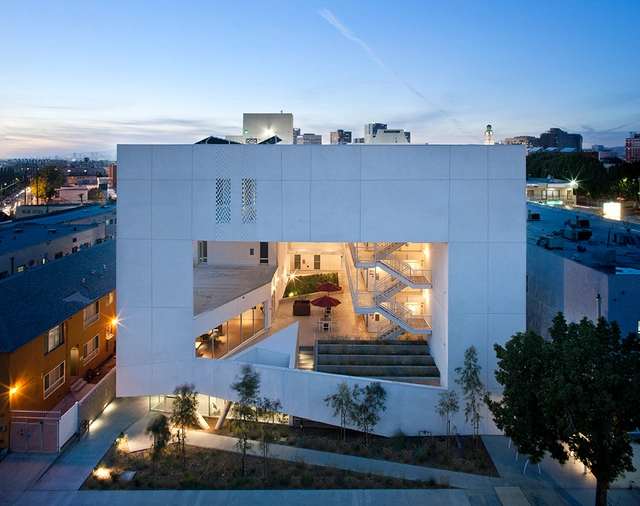
Zumtobel Group has announced the 2017 winners of its Zumtobel Group Awards for architecture, which rewards the year's innovations which best promote "sustainability and humanity in the built environment." Leading the awards is Los Angeles-based firm Michael Maltzan Architecture whose Star Apartments project, which provides 102 homes for previously homeless individuals in LA, was awarded the prize in Zumtobel Group's Buildings category. Also winning prizes were UNStudio, Atelier TeamMinus, and Arturo Vittori. Read on for more details and the full list of winners and honorable mentions.
Earlier today, the UK Prime Minister Theresa May made her closing speech at the Conservative Party Conference in Manchester. In a speech which focused on the fallout of Brexit and the economy, May devoted considerable attention to the issue of the UK housing market, announcing a plan to add £2 billion to the government's existing £7 billion affordable housing fund—a fund which local governments, private housebuilders, and housing associations can apply to for grants to subsidize construction of affordable housing.
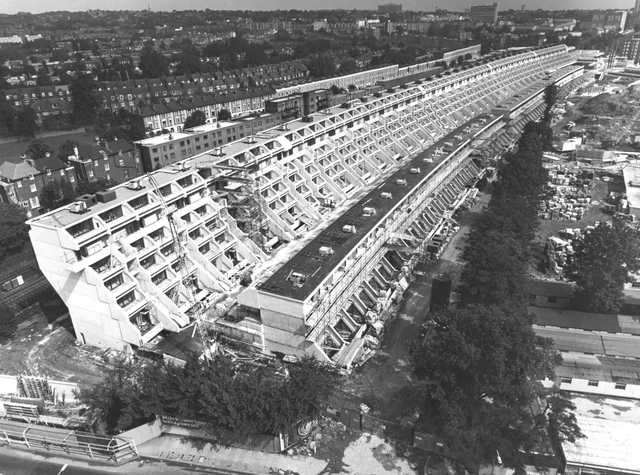
However, the Royal Institute of British Architects (RIBA) has strongly criticized the government's proposal, arguing that £2 billion will not be nearly enough to address the scale of the problem—by most estimates, the country is falling short of housing demand by hundreds of thousands of units annually, and house prices are increasingly out of reach for the young and the poor. In response, the RIBA argues for a much greater investment in social housing, highlighting its recent decision to award its Gold Medal to 20th Century social housing architect Neave Brown and stating that "we need a concerted program of public investment in new social housing across the country and that means spending a lot more than was announced today." Read on for RIBA President Ben Derbyshire's full statement:
With the launch today of Apple's iOS 11—and with it, the release of the company's powerful system for augmented reality apps, ARKit—Morpholio has released a new update to their popular Trace app that allows users to sketch over photographs with perfect accuracy. While it has always been an option to sketch over photographs in Trace, the new "Perspective Finder" tool superimposes a scaled grid over the photograph that helps designers follow the perspective of the image and measure their drawings accurately.






.jpg?1514402280)