By definition, architecture and urban planning operate within a certain degree of indeterminacy, using present context to find viable answers for an unknown future. As a result, design is a constant search for a balance between prescribing and taking a step back to make room for alternate yet unforeseeable scenarios. Uncertainty is an inherent condition in present-day society, and recent rapid social, economic, and even environmental changes prompt a closer look at how architecture can incorporate indeterminacy. The following reviews some precedents and contemporary examples that programmatically operate with indeterminacy, highlighting several strategies for designing for uncertainty and change.
Bjarke Ingels Group and A-Lab have unveiled their design of Oslo Science City, a new innovation district in Norway's capital that aims to create a physical framework for Norway’s innovation environment of estimated 150,000 scientists, students, entrepreneurs, and contribute to the country’s transition to renewable energy. The district aims to be a net zero emission area that operates on renewable energy and circular economic principles, as well as zero emission solutions during development and operation.
In its new exhibition Peter Cook: City Landscapes, Louisiana Museum of Modern Art showcases drawings by the influential architect, best known for his architectural theories and visionary concepts. Curated by Kjeld Kjeldsen and Mette Marie Kallehauge, the event is part of the exhibition series Louisiana on Paper, which presented the work of various artists over the years and is now debuting its first show featuring drawings by an architect.
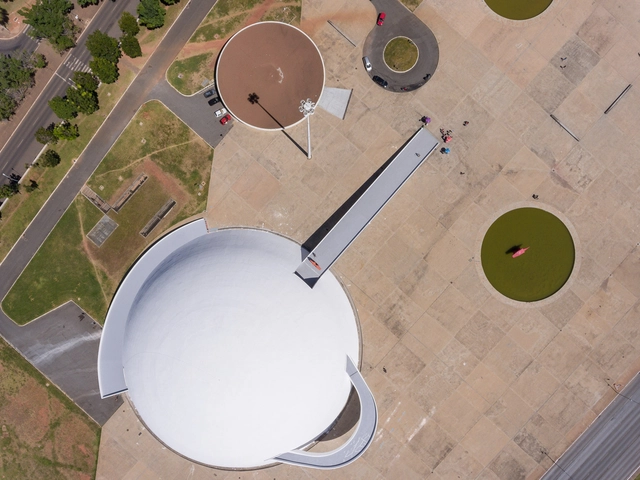
After launching virtual exhibitions about Parma (Italy), Pittsburgh and Milwaukee (United States), and Lagos (Nigeria), the online platform Google Arts & Culturehas opened the virtual exhibition Brasília: um Sonho Construído (Brasilia: a Built Dream), which presents an immersive tour of the Brazilian federal capital designed by Lúcio Costa.
Curated by the National Museum of the Republic, the exhibition had the collaboration of the Public Archives of the Federal District, the Institute of Architects of Brazil, the Chamber of Deputies Museum, the Federal Supreme Court, and other organizations based in Brasília. Through images from Google Street View, visitors travel through the corridors of six museums in the capital in 360° virtual tours, including the Museu de Valores (Museum of Currencies), the Square of the Three Powers, and also the Supreme Federal Court building.
https://www.archdaily.com/972550/google-arts-and-culture-opens-free-virtual-exhibition-about-brasiliaEquipe ArchDaily Brasil
Shortly after the millennium, Vanity Fair, a magazine that purports to follow every kind of cultural milestone, asked a select group of 52 “experts” to pick the five best buildings since 1980. The selections were bizarre; almost every building was by one of the chosen architects, which made up the vast majority of those asked for their picks. Few choices received more than five votes.
https://www.archdaily.com/972957/where-are-the-architectural-masterpiecesMark Alan Hewitt
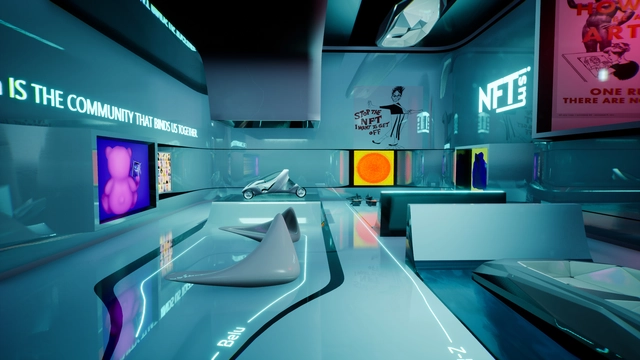
Zaha Hadid Architects have presented "NFTism", a virtual art gallery at Art Basel Miami that explores architecture and social interaction in the metaverse. The gallery features spatial designs created by ZHA that focus on user experience, social interaction, and "dramaturgical" compositions, combined with MMO (massively multiplayer online game) and interaction technological services.
In downtown Kuala Lumpur, Merdeka 118 topped out at 678.9 metres tall and 118 storeys, becoming the second-tallest building in the world. Five years after construction started, the tower’s final silhouette is revealed with the completion of the spire, redefining the city’s skyline currently dominated by the Petronas Towers and the Kuala Lumpur Tower. Designed by Australian firm Fender Katsalidis, the project features a triangular faceted glass façade inspired by patterns found in Malaysian art and, together with the surrounding park designed by Sasaki, creates a new layer of the city’s identity.
MAIO is currently building a five-story building with 40 social housing units in the Sant Feliu de Llobregat district, Barcelona. The project design urban connectivity, social equity, and sustainability. As the winner of a two-phase competition, the building will house hierarchyless, generic, flexible spaces to fit the inhabitants' needs.
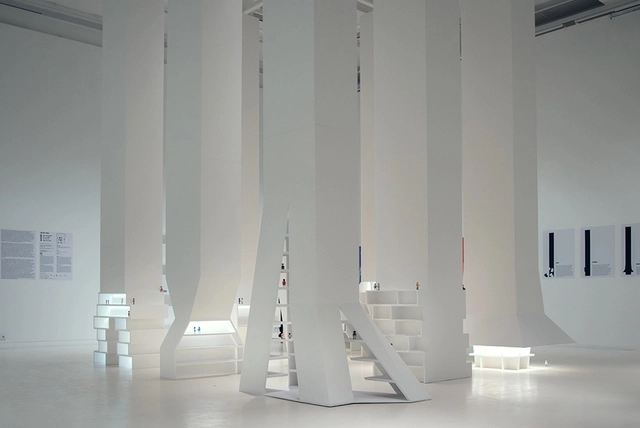
Shape Tomorrow, a new exhibition at AEDES Architecture Forum in Berlin, is a reaction to both staid, self-serious architecture shows and to the staid, self-serious architecture profession. Taking the form of a miniature city, it turns buildings into named characters, encourages visitors to populate structures with miniature people, and leaves space for them to fill the room with their ideas and criticism.
The exhibition, on view through January 13, is the brainchild of German architect Matthias Hollwich, founder of New York-based HWKN—a burgeoning firm known for both its research and its sense of whimsy. The show centers on nine, 16-foot-tall white plaster towers whose glowing bases take on the forms of some of the firm’s playful, kinetic projects from around the world. These include 25 Kent, a fractured office building in Williamsburg, and Die Macherei, a jutting and terraced mixed-use business district in Munich.
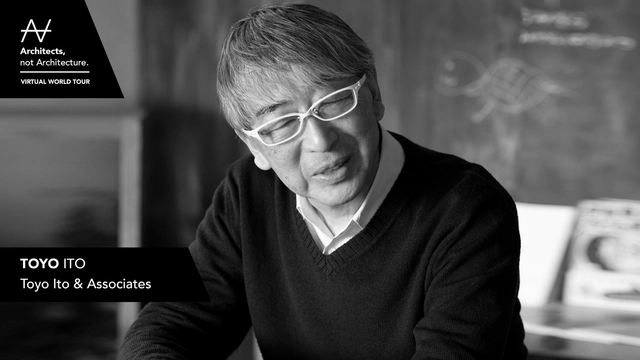
On November 17th, 2021, as a part of the second season of the Virtual World Tour, Architects, not Architecture had the honor to have as guest the 2013 Pritzker Prize Toyo Ito.
We all might be familiar with his works, but how much do we know about his biography and about the vicissitudes that shaped him?
ArchDaily Professionals is an initiative that focuses on all of the collaborators involved in architecture and construction, who participated and are credited in the projects we have carefully curated and published. This project aims to recognize and highlight the best collaborators responsible for delivering the best architecture, by delivering valuable knowledge related to the different disciplines within our community. Today, we are launching a series of video interviews between architects and collaborating professionals, to learn more about their work and to understand the importance of these relationships to deliver high-quality architectural projects.
For this first interview, ArchDaily’s Managing Editor, Christele Harrouk, met with lighting design firm L’Observatoire International’s founder, Hervé Descottes, and American architect Steven Holl. In this moderated talk, we had the chance to speak to Hervé and Steven about their collaboration in three cultural projects in the United States: the Institute for Contemporary Art at VCU, the Winter Visual Arts Building, and Nancy and Rich Kinder Museum. In this conversation, we learned more about what lighting in architecture means to them, how space and light should be conceived and why a close collaboration between architects and lighting designers is crucial to architecture projects.
Interior design is far from an easy task – it is often a five-step process that involves swapping out ideas time after time until the perfect look is achieved. But a new online tool is allowing architects and designers to view and adapt furniture for all interior design projects, with just a few clicks. Hello Raye is a curated online marketplace that offers 3D-model configuration for tens of thousands of commercial and residential products including furniture, fixtures and equipment all in one place.
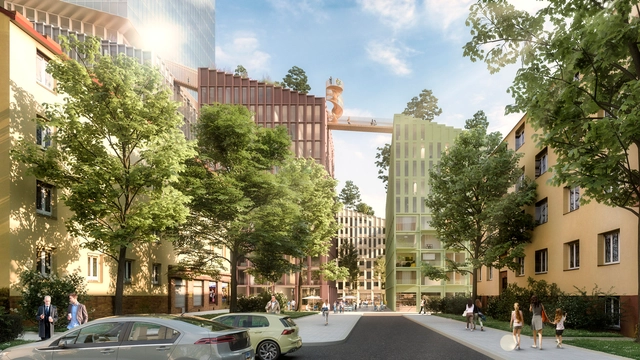
KCAP Architects and Planners have unveiled the ZIL-Southmasterplan, a new residential district in Moscow built on the basis of a 15-minute city. The masterplan will be built on the largest brownfield area of the former ZIL industrial zone, and will feature more than 100 hectares of commercial and residential landmarks, public spaces, parks, landscapes, and interconnect routes alongside the Moskva River, all inspired by the area's pre-industrial past.
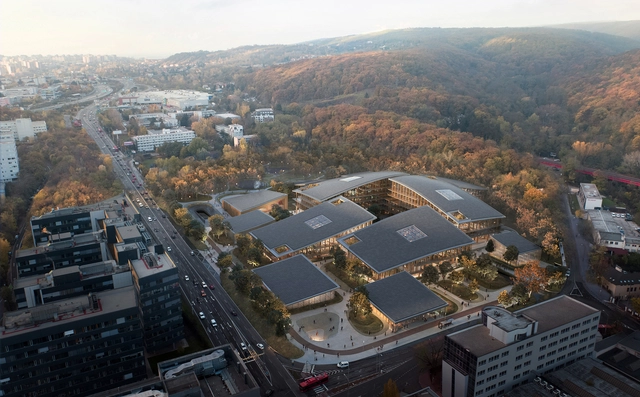
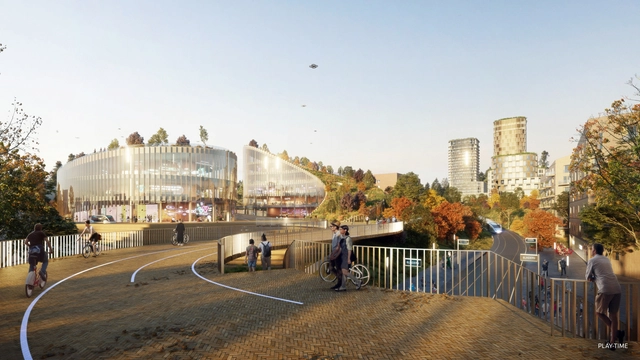
Benthem Crouwel Architects reveals competition-winning design for the Valley, a new mixed-use development comprising housing, workspaces and retail in Prague. Featuring a rooftop landscape designed by Felixx Landscape Architects & Planners, and a network of diverse public spaces, the project introduces high density and varied programming while establishing a strong connection with the surrounding neighbourhood.
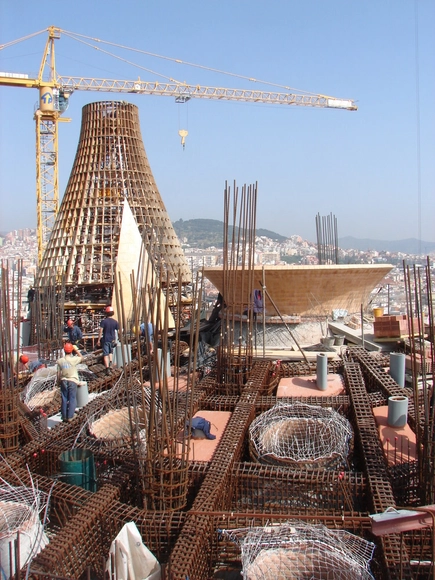
A masterpiece is often defined as the most remarkable work in an artist's career, one which highlights the height of their techniques and ideals. The Mona Lisa by Leonardo da Vinci; Michelangelo's Pietá; the Beatles' Sgt. Pepper's Lonely Hearts Club Band album. There are many examples, which are not always unanimously agreed upon. But what if what many consider to be the masterpiece was started by someone else, the credited creator didn't live to see its completion, and almost all of its documentation was destroyed? Catalan architect Antoni Gaudí and his world-famous Temple Expiatori de la Sagrada Família are examples of these complications. From a highly crafted stone construction to the most modern 3D printing techniques and high strength concrete, numerous technologies were and continue to be incorporated in the project's construction.
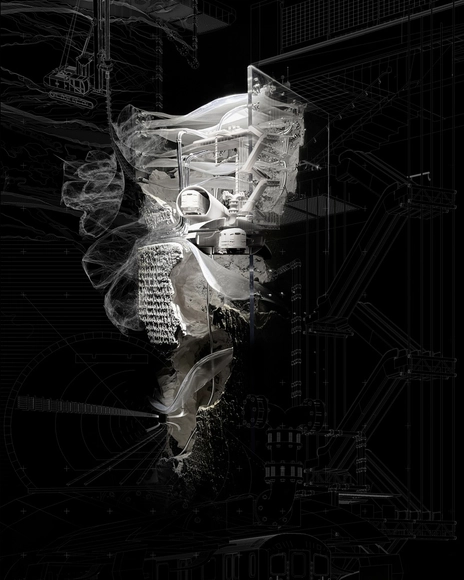
The Architecture Drawing Prize is celebrating its fifth year and continues to attract outstanding entries from around the world. This year has been exceptional in the number and strength of student submissions the Prize has attracted across its three categories for entry: hand-drawn, hybrid and digital. In fact, the winning drawings for all three categories are by students.
As our world evolves at an unprecedented pace, the challenges that come with it are becoming more and more complex. The questions faced by the cities and networks of our global world, the physical and virtual environments where our evolution takes place, are making architecture more relevant than ever.
The issues of the built environment are no longer exclusive to the incumbents who build and design it and have become transversal questions in our society. From the citizens who question the quality of their public spaces to the self-trained builder erecting a tiny house in the woods, to the homeowners using an app to codesign their interiors during lockdown, we want to have a saying and we want to take action. Why does architecture have to be so uncertain, so distant?
Bjarke Ingels Group revealed the design for a tech campus in Bratislava, an urban village of interconnected buildings organized around a central courtyard that would foster a creative ecosystem for cybersecurity and AI innovation. Created in collaboration with Inflow, Pantograph, BuroHappold, and ARUP, the project features an undulating photovoltaic roof that unifies the twelve individual structures while defining the architectural silhouette on the backdrop of the Carpathian Mountains.
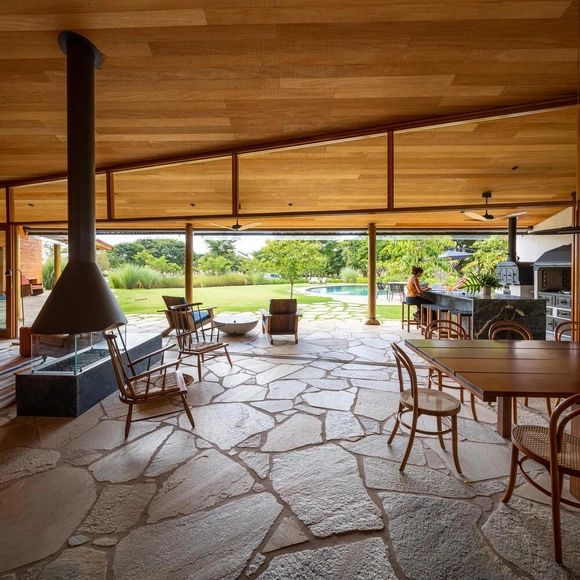
Nowadays, many architects have been looking for inspiration in traditional techniques, adapting them to more contemporary designs. In this sense, floors with rustic stone such as quartzite and sandstone are becoming more and more popular in residential architecture. Although this material was usually used for external areas, to build traditional stepping stone garden paths, for example, today it is also used in interiors, as an element that disrupts the hardness of rectilinear layouts and, in some cases, creates a connection between interior and exterior, which is something many professionals seek to achieve.
https://www.archdaily.com/972637/brazilian-houses-10-designs-with-rustic-stone-flooringEquipe ArchDaily Brasil
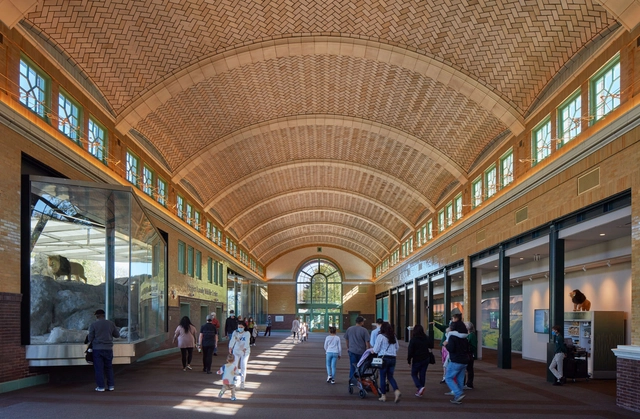
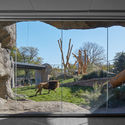
The historic lion house has long been a central element of Chicago’s Lincoln Park Zoo. When global architecture firm Goettsch Partners (GP) set out to renovate and expand the structure, the aim was to preserve the original building while increasing the usable area and creating a new spatial experience. The facility is home to a pride of four African lions, as well as Canada lynx, red pandas and snow leopards.
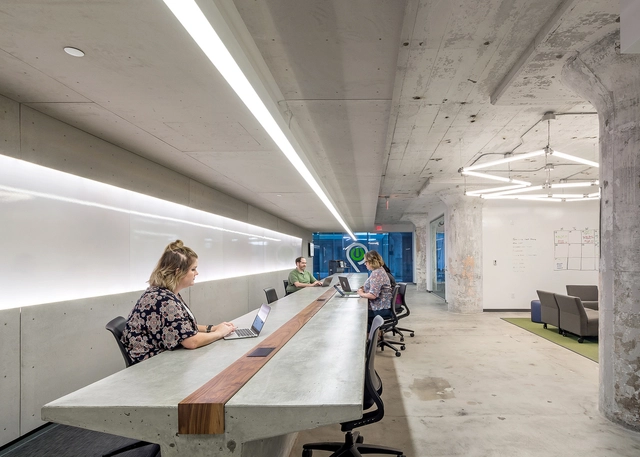
People spend hours at work every day. Offices still fail to recognise the difference lighting can make to their workspaces. Lighting is an important matter when talking about visual comfort and productivity. Optimized lighting can help to improve performance and there are determined practice guidelines on which lighting systems work best for your work environment.
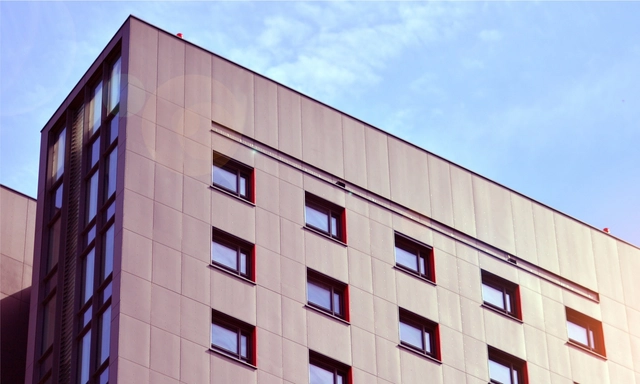
The building construction industry currently accounts for 40% of annual greenhouse gas emissions, due to its high carbon embodiment and carbonated energy demands. Building-integrated photovoltaics (BIPV) is a sustainable solution to address these concerns and to contribute to a net-positive world. This advanced technology can be utilized in solar building envelopes, skylights, windows, and balcony railings to produce green energy.
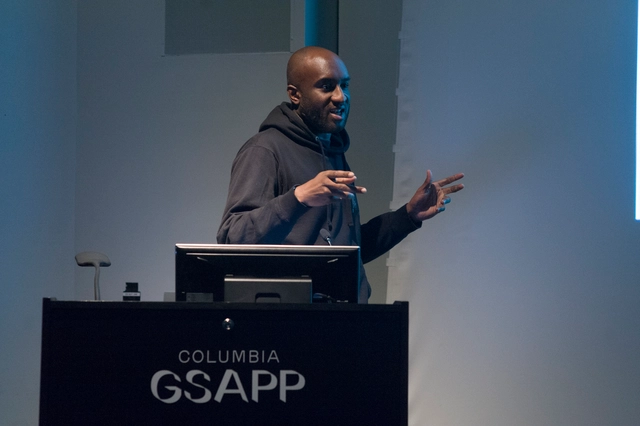
Virgil Abloh, a great American influential figure in the fashion, art, culture, design, and architecture scene, passed away at 41, after a silent battle with cancer. Known for his collaboration with AMO, especially for the Off-White Flagship Store in Miami, a brand he founded back in 2012, the trained architect was the first African-American to become the artistic director of a French luxury brand.
The news was announced on Sunday on Abloh’s official Instagram Account. The Creative Director of Louis Vuitton menswear battled a “rare, aggressive form of cancer, cardiac angiosarcoma […] privately since his diagnosis in 2019”, according to the post.









_MODEL.jpg?1627415949&format=webp&width=640&height=580)



.jpg?1636573420&format=webp&width=640&height=580)
_KCAP_3_Park_Quarters.jpg?1638352982&format=webp&width=640&height=580)
_KCAP_4_Urban_Gardens.jpg?1638353099 "Courtesy of KCAP")
_KCAP_6_Business_Quarters.jpg?1638353124 "Courtesy of KCAP")
_KCAP_5_River_Quarters.jpg?1638353058 "Courtesy of KCAP")
_KCAP_9_Pedestrian_Boulevard.jpg?1638353251 "Courtesy of KCAP")
_KCAP_3_Park_Quarters.jpg?1638352982)