1. ArchDaily
  2. 99% Invisible

99% Invisible: The Latest Architecture and News

From Podcast to Print, Roman Mars Discusses The 99% Invisible City

Over the last ten years, the podcast 99% Invisible has been captivating listeners throughout the world by exposing the overlooked and seemingly mundane aspects of architecture and design. While the show had modest beginnings in creator Roman Mars’s bedroom, it has now grown to more than 400 episodes generating over 400 million downloads.

This week, fans can also hold the show’s stories in their hands in the form of a new book titled The 99% Invisible City: A Field Guide to the Hidden World of Everyday Design, which Mars co-wrote with digital director and producer Kurt Kohlstedt. Composed of research and reporting from the podcast as well as brand new stories, the book (illustrated by Patrick Vale) highlights design considerations that often go unnoticed.

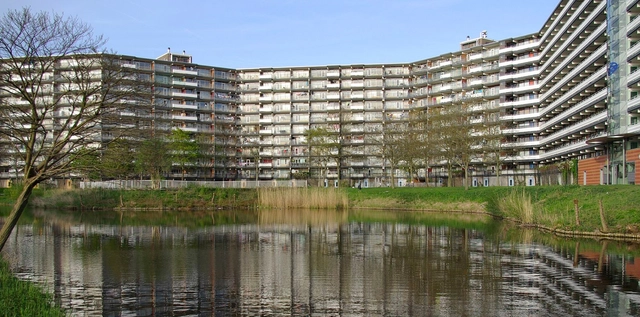
99% Invisible Investigates the Utopian and Dystopian Histories of the Bijlmermeer

How can we plan a better city? The answer has confounded architects and urban planners since the birth of the industrial city. One attempt at answering came in the form of a spectacular modernist proposal outside of Amsterdam called the Bijlmermeer. And, as a new two-part episode by 99% Invisible reveals, it failed miserably. But, like all histories, the story is not as simple as it first appears.

99% Invisible Recalls the Unknown Arts Awards of the Olympic Games

99% Invisible Recalls the Unknown Arts Awards of the Olympic Games - Featured Image
London Olympic Stadium by Populous. Image © Morley von Sternberg

We’ve all heard of the record-breaking times, longest distances and of course, winners of those coveted medals, but according to 99% Invisible there is a lesser-known Olympic Games honor participants have received: awards in architecture. In an article tracing the history of this bizarre tradition, Kurt Kohlstedt explores how medals were awarded to five categories of the arts during the Olympic Games, presented to participants alongside their sporting competitors.

11 Architecture, Design and Urbanism Podcasts to Start Listening to Now

It can sometimes feel as if the world is divided into two camps: those who do not listen to podcasts (probably because they don’t know what a podcast is) and those who listen to podcasts, love podcasts, and keep badgering their friends for recommendations so they can start listening to even more.

Unlike other media, it’s notoriously difficult to discover and share podcasts – even more so if you’re looking for a podcast on a niche subject like architecture, design or urbanism. To help you in your hour of need, Metropolis’ Vanessa Quirk (author of Guide to Podcasting) and ArchDaily’s James Taylor-Foster (whose silvery tones you may have heard on various architecture and design audio stories) have come together to compile this list of eleven podcasts you should subscribe to.

99% Invisible Explores Brutalism, From London to Boston

In the latest episode of 99% Invisible, Hard to Love a Brute, Roman Mars and Avery Trufelman take a look at the potted history of the "hulking concrete brutes" of post-war Europe, centring on the UK, and the US east coast. Exploring Ernö Goldfinger's Balfron and Trellick towers, while making a pitstop in Boston, MA, this twenty minute podcast examines why people "love to hate" Brutalism and why, "as harsh as it looks, concrete is an utterly optimistic building material."

The Latest 99% Invisible Podcast Will Have You on the “Edge of Your Seat”

“A Chair is a difficult object. A skyscraper is almost easier.” – Mies van der Rohe

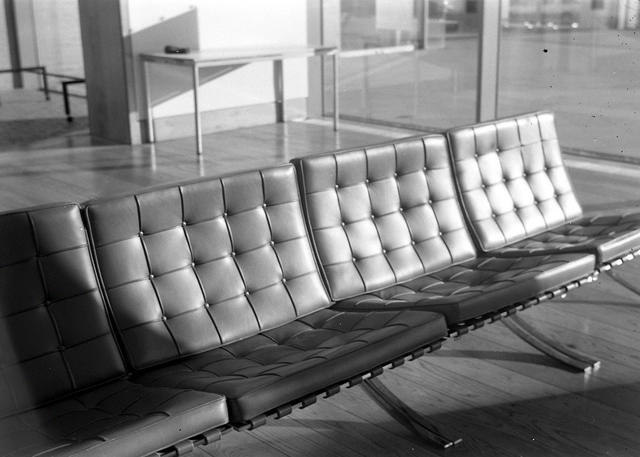
In his latest 99% Invisible podcast, Roman Mars takes listeners to the edge of their seats (literally), as he tackles one of design’s unique challenges: the chair. From Van der Rohe to Gehry, Hadid, Libeskind and Corbusier, “if they’ve designed a big building, chances are they’ve designed a thing on which to sit,” begins Mars. Yet the complexity of chair design comes from the fact that a chair “disappears when in use...Chairs need to look fantastic when empty, and remain invisible (and comfortable) while in use,” states Mars. And with numerous recent studies showing the negative impacts of sitting too much, innovative chair design is now more important than ever.

Listen to the full podcast and check out some well-known chairs designed by architects after the break.

The Latest 99% Invisible: Hundertwasser and His Fight Against the Godless Line

Subscriber Access | 
The Latest 99% Invisible: Hundertwasser and His Fight Against the Godless Line - Featured Image
Hot Springs Village, Bad Blumau, Styria, Austria. Image © Flickr CC User Enrico Carcasci

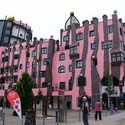
In the latest episode of his 99% Invisible podcast, Roman Mars digs into the work of lesser-known architect Tausendsassa Friedensreich Regentag Dunkelbunt Hundertwasser. Often cited for his colorful and curvilinear forms, his name translates to “Multi-Talented Peace-Filled Rainy Day Dark-Colored Hundred Waters.” In everything from his name to his unusual ideas put forth in manifestos, it is immediately evident that Hundertwasser was no ordinary architect. Listen to the podcast and check out some of Hundertwasser’s works after the break.

The Latest 99% Invisible: Hundertwasser and His Fight Against the Godless Line - Image 1 of 4The Latest 99% Invisible: Hundertwasser and His Fight Against the Godless Line - Image 2 of 4The Latest 99% Invisible: Hundertwasser and His Fight Against the Godless Line - Image 3 of 4The Latest 99% Invisible: Hundertwasser and His Fight Against the Godless Line - Image 4 of 4The Latest 99% Invisible: Hundertwasser and His Fight Against the Godless Line - More Images+ 7

Should Architects Follow a Code of Ethics?

In the latest episode of his 99% Invisible podcast, Roman Mars bravely takes on a very sensitive topic: the design of prisons which contain execution chambers or house prisoners in solitary confinement. More specifically, the podcast discusses whether architects have a moral duty to decline these commissions and whether, as a profession, architecture should have a code of ethics which prevents registered architects from participating in such designs.

He compares architecture to the medical profession, where the American Medical Association imposes an ethical code on its members which all but forbids them from taking part in execution by lethal injection, based on medicine's general aim of preservation, rather than destruction of life. The American Institute of Architect's ethical code is both generic and meager in comparison: “Members should uphold human rights in all their professional endeavors.”

Why Skaters Need the Southbank Centre

Subscriber Access | 

Among the extensive discussion of Feilden Clegg Bradley's scheme to redesign the Southbank Centre in London, one issue which has sometimes been ignored by the architectural media has been the proposal to relocate the skate park in the under-croft of the Queen Elizabeth Hall to a space beneath the nearby Hungerford bridge.

Unsurprisingly, this decision has sparked a petition which has collected nearly 40,000 signatures to save one of the UK's most famous skating hotspots. We’ve talked about how skaters can teach architects about understanding space before; however, in this instance I would like to examine how skaters as a (sub)cultural entity interact with the city, and how the city can cater to their needs. Though many architects are already in favor of accepting skaters, I hope to explore why the wider community tends to see skating as a problem to be solved, and what this can reveal about the proposal at the Southbank Centre.

Read on to find out more about the peculiar way skaters experience cities

Le Corbusier: The Patron Saint of Skateboarders

Subscriber Access | 
Le Corbusier: The Patron Saint of Skateboarders - Image 1 of 4
PAS House, by Francois Perrin and Gil Lebon Delapointe. Image courtesy of Skateboarder Magazine.

We here at ArchDaily are big fans of Roman Mars' radio program 99% Invisible, and just had to share the latest show: "In and Out of Love." In it, Mars explores the changing face of Philadelphia's JFK Plaza (more commonly known as LOVE Park), why its Modernist characteristics made it perfect for skateboarding (although city officials certainly didn't feel that way), and why Le Corbusier truly is the patron saint of skateboarders.

And, if you like this, check out Why Skateboarding Matters to Architecture, and follow the jump for some very cool, very innovative skate-friendly homes, stores, and parks...

Read more about this episode at 99% Invisible.

Le Corbusier: The Patron Saint of Skateboarders - Featured ImageLe Corbusier: The Patron Saint of Skateboarders - Image 2 of 4Le Corbusier: The Patron Saint of Skateboarders - Image 3 of 4Le Corbusier: The Patron Saint of Skateboarders - Image 4 of 4Le Corbusier: The Patron Saint of Skateboarders - More Images+ 4

Disruptive Minds: Roman Mars, Host of 99% Invisible

Subscriber Access | 

disruptive minds

smartwater

here

A few months ago, in a little Bavarian town, far far away, an architect, by the name of Peter Zumthor (you may have heard of him), was asked to design a gate. Zumthor designed a transcendent, transparent structure, and unveiled it to the town. Upon seeing the marvel, the townspeople said it looked like a pair of “Glass Underpants.” And there our story ends.

Your first instinct may be to blame those uncouth Bavarians. But, like Jody Brown did in an excellent blog post, you could also fault Zumthor. Zumthor couldn’t “sell” his gate, because, like many an architect, he speaks “architect,” not “human.”

Roman Mars, on the other hand, is fluent in both. A population geneticist who went to college at age 15, Mars jumped off the science boat to follow his passion: radio. His show on architecture and design, 99% invisible, has become a sleeper hit, earning over $170,000 in a record-breaking Kickstarter campaign.

Its popularity comes down to its story-driven approach, which opens your eyes to the 99% of our reality that goes un-noticed: a building’s unknown history, a detail’s un-obvious purpose, a place’s hidden treasures. Through its stories, 99% invisible lives in the place where the “human” and the “architect” meet.

And, be you architect or nay, it hooks you from the start.

Read our exclusive interview with 99% invisible Producer, Roman Mars, after the break…