1. ArchDaily
  2. Aleph Zero + Rosenbaum

Aleph Zero + Rosenbaum: The Latest Architecture and News

Childhood and Ancestry: What South American Indigenous Communities Can Teach Us About Environments for Children

In South American Indigenous communities, a child’s place is wherever they choose to be. Babies crawl on the earthen floor, approach the fire, investigate anthills, and experience the world with their whole bodies. They learn by feeling: discovering limits, recognizing dangers, and gathering lessons no manual could ever teach. In urban contexts, by contrast, children are often confined to spaces designed for adults, filled with rules that—though well-intentioned—tend to distance them from essential experiences. Rather than judging which model is “better,” what matters is recognizing that when cultures observe one another, there is always room for learning.

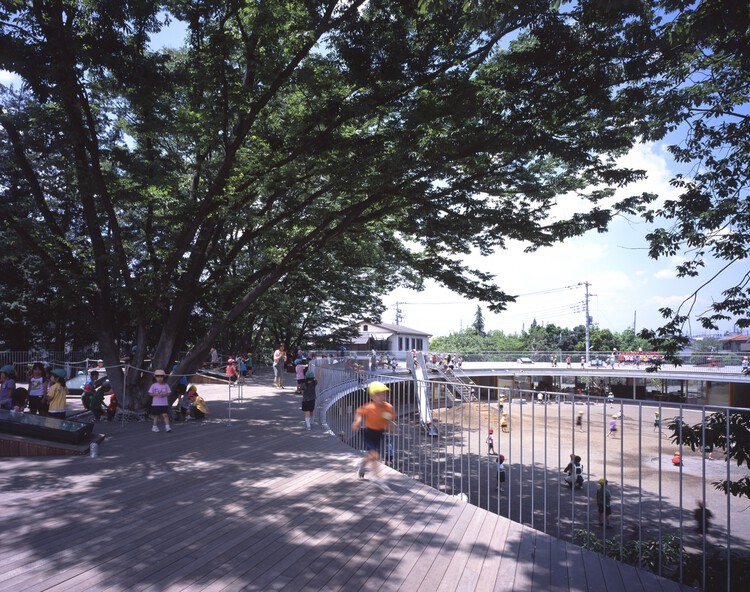
From an architectural perspective, this childhood with little freedom of time and movement challenges us to rethink how we shape daily environments. Why restrict spontaneous exploration to controlled settings? Why create physical and symbolic barriers between children and the natural world? And, above all, how might contemporary architecture break away from this paradigm and, inspired by Indigenous childhoods, design environments that restore to children their wild, curious, and complete dimension?

Childhood and Ancestry: What South American Indigenous Communities Can Teach Us About Environments for Children - Image 1 of 4Childhood and Ancestry: What South American Indigenous Communities Can Teach Us About Environments for Children - Image 2 of 4Childhood and Ancestry: What South American Indigenous Communities Can Teach Us About Environments for Children - Image 3 of 4Childhood and Ancestry: What South American Indigenous Communities Can Teach Us About Environments for Children - Image 4 of 4Childhood and Ancestry: What South American Indigenous Communities Can Teach Us About Environments for Children - More Images+ 15

This Week in Architecture: Reduce, Reuse, Rethink

It's easy to feel overwhelmed by the massive production of architecture today. Scroll through ArchDaily for more than a minute and even we'd forgive you for losing track of it all. But what seems like an endless scroll of architectural production doesn't quite fit with the popular movements surrounding resource sharing and community. 

Hidden among the mass production that has defined architecture in the last century is a germ - one that seems to be marching to the forefront of practice today. More and more designers seem to be taking on locally-focused and/or adaptive reuse works. Award shortlists today highlight not icons by recognizable names, but sensitive international works that are notable for their process as much as their product. 

The common image of the architect may be of one obsessed with ego and newness, but practice today doesn't bear that out as much as it used to. This week's news touched on issues of reduction, reuse, and a radical rethink what architecture is in the 21st century. 

Children Village by Aleph Zero and Rosenbaum Wins 2018 RIBA International Prize

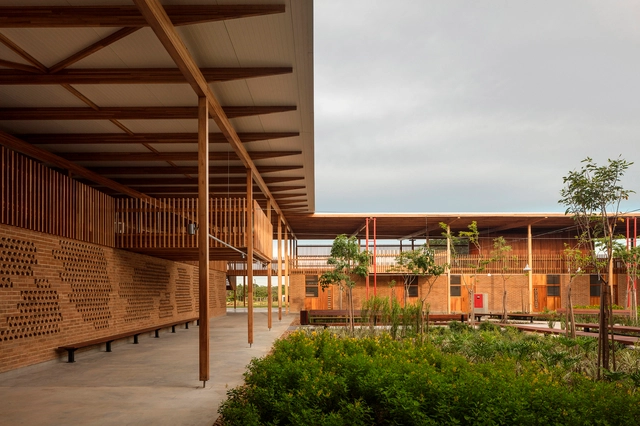
Children Village by Brazilian architects Aleph Zero and Rosenbaum has won the 2018 RIBA International Prize. Located on the edge of the rain forest in northern Brazil, the new school complex provides accommodation for 540 children attending the Canuanã School. The RIBA International Prize is awarded every two years to a building that exemplifies design excellence and architectural ambition, and delivers meaningful social impact. Children Village was recognized for it's vision in imagining architecture as a tool for social transformation.

Children Village by Aleph Zero and Rosenbaum Wins 2018 RIBA International Prize - Image 1 of 4Children Village by Aleph Zero and Rosenbaum Wins 2018 RIBA International Prize - Image 2 of 4Children Village by Aleph Zero and Rosenbaum Wins 2018 RIBA International Prize - Image 3 of 4Children Village by Aleph Zero and Rosenbaum Wins 2018 RIBA International Prize - Image 4 of 4Children Village by Aleph Zero and Rosenbaum Wins 2018 RIBA International Prize - More Images+ 26

This Week in Architecture: Being Recognized

Subscriber Access | 
This Week in Architecture: Being Recognized  - Image 3 of 4

Try as we might to inure ourselves to the opinions of others, recognition is a powerful thing. It brings with it a captive (and expectant) audience, not just of admirers but of kingmakers - or, cynically, those who see an opportunity to capitalize. For architects, this can be both a blessing and a curse. Many practices start with the motivation to pursue an idea or concept; as recognition becomes diluted to labels it becomes harder to understand what was distinguishing in the first place. This week saw the announcements of a numerous significant awards - and an interview with a practice determined to shake off the labels that come with recognition. Read on for this week’s review.

4 Buildings Shortlisted for the RIBA 2018 International Prize

The Royal Institute of British Architects (RIBA) has announced the shortlist of four finalist projects in the running for the 2018 RIBA International Prize. A biennial award open to any qualified architect in the world, the International Prize seeks to name the world’s “most inspirational and significant” building. Criteria for consideration include the demonstration of “design excellence, architectural ambition, and [delivery of] meaningful social impact.”

The inaugural prize was awarded to Grafton Architects in 2016 for their UTEC university building in Lima, Peru, described as a “modern-day Machu Picchu.”