1. ArchDaily
  2. Alison and Peter Smithson

Alison and Peter Smithson: The Latest Architecture and News

Heritage After Failure: What We Will Keep From Today’s Architectural Mistakes

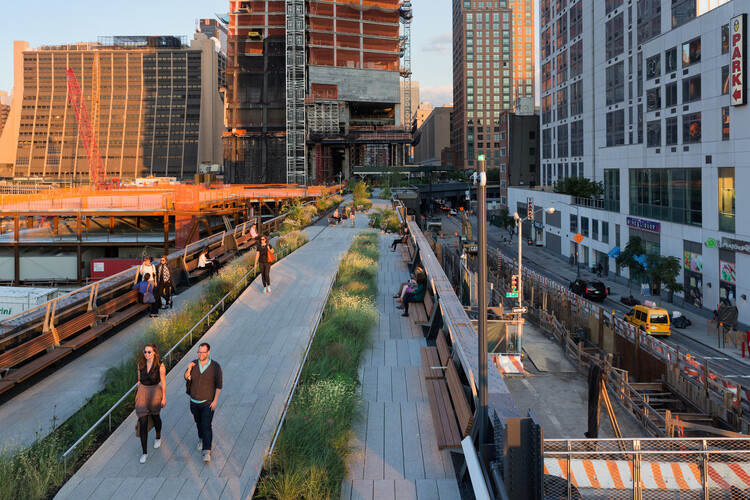
Architectural heritage is often described as what survives time. Yet survival does not explain why certain buildings are preserved while others disappear. Many works now protected as cultural heritage were once criticized, contested, or openly rejected; they were accused of being socially misguided, materially flawed, or symbolically excessive. Over time, however, these same shortcomings have become central to their meaning as heritage emerges as a slow and unstable process of interpretation.

Contemporary architecture operates under intense scrutiny, pressured by environmental responsibility, social equity, economic volatility, and accelerated technological change. Buildings are expected to perform ethically, efficiently, and symbolically, often simultaneously. As a result, architectural failure is no longer an exception but an increasingly common condition. Projects age faster, materials reveal limitations sooner, and urban strategies quickly fall out of sync with shifting political, social, and environmental realities.

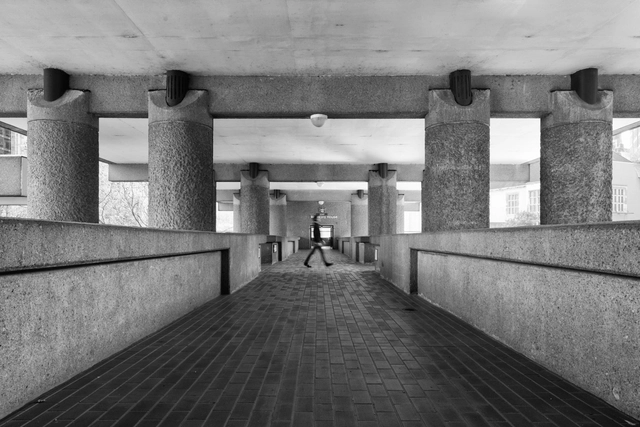
Heritage After Failure: What We Will Keep From Today’s Architectural Mistakes - Image 1 of 4Heritage After Failure: What We Will Keep From Today’s Architectural Mistakes - Image 2 of 4Heritage After Failure: What We Will Keep From Today’s Architectural Mistakes - Image 3 of 4Heritage After Failure: What We Will Keep From Today’s Architectural Mistakes - Image 4 of 4Heritage After Failure: What We Will Keep From Today’s Architectural Mistakes - More Images+ 28

Upper Lawn: A Manifestation of Alison and Peter Smithson's Architectural Vision

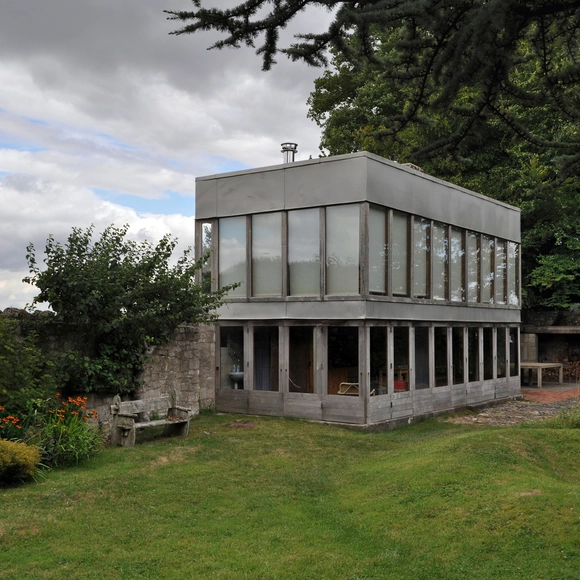
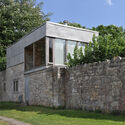
Nestled near the ruins of Fonthill Abbey in the English countryside, Upper Lawn Pavilion — also known as the Solar Pavilion — is a modest yet profound architectural experiment by Alison and Peter Smithson. Built between 1959 and 1962 as a weekend retreat and laboratory for ideas, the pavilion embodies their ethos of economy, material honesty, and respect for context, reflecting the pioneering spirit of New Brutalism.

Upper Lawn's thoughtful interplay between the new and the existing is particularly compelling. Built on the remains of an 18th-century English farmhouse, the pavilion repurposes thick masonry walls from the original structure, incorporating elements such as the well, trees, and lawn into its design. Using prefabricated materials like timber, glass, and aluminum, the Smithsons constructed a light-filled space that harmonizes with its surroundings, embodying their principle of "as found architecture" — a concept rooted in honoring and adapting to preexisting conditions rather than imposing on them.

Upper Lawn: A Manifestation of Alison and Peter Smithson's Architectural Vision - Image 1 of 4Upper Lawn: A Manifestation of Alison and Peter Smithson's Architectural Vision - Image 2 of 4Upper Lawn: A Manifestation of Alison and Peter Smithson's Architectural Vision - Image 3 of 4Upper Lawn: A Manifestation of Alison and Peter Smithson's Architectural Vision - Image 4 of 4Upper Lawn: A Manifestation of Alison and Peter Smithson's Architectural Vision - More Images+ 11

Inside the Lost House of the Future by the Smithsons

Subscriber Access | 

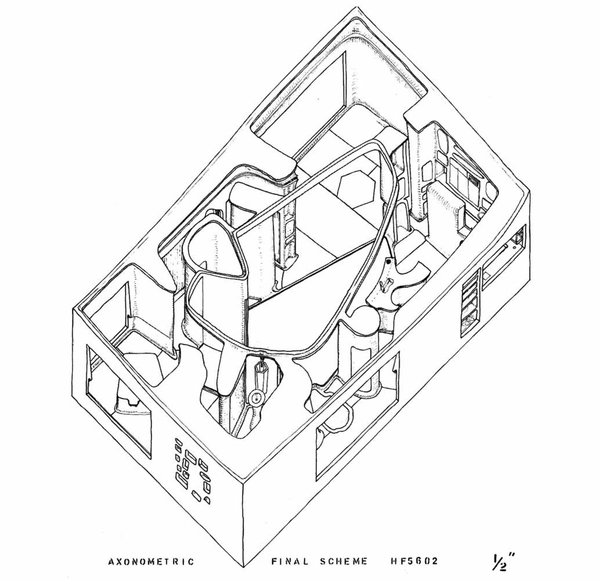
The House of the Future was designed by Alison and Peter Smithson in 1956 to showcase what house designs might be like 25 years in the future. It is an interior-focused rectangle filled in with amorphously shaped walls, storage units, and a central courtyard as well as high technology of all sorts. It is like something out of the Jetsons. While the design remains unique in the Smithsons portfolio, it was highly influential in their student’s work and firms like Archigram built upon its boldly novel concepts. Despite this long and robust influence, the structure was physically standing for only a short time. In this video, the house is reconstructed and explored in real-time. What would it have been like to occupy The House of the Future? See for yourself.

Brutalist Beirut: Showcasing a Forgotten Modern Heritage

In recent years, people started to regain interest in a movement that dates back to the last century; a movement, first introduced during the 1940s and 1950s, through the works of Le Corbusier and Alison and Peter Smithson. With monolithic structures, modular shapes, and impressive massing, Brutalism highlights architectural integrity. This movement is highly characterized by rough, raw, and pure surfaces that underline the essence of the substances in question. Spread across the globe, architects have adopted and developed their own vision of this modern movement, creating contextual variations.

In the midst of all the chaos currently taking place in the city of Beirut, we look back on the Lebanese capital’s hidden Brutalist gems. To shed the light on a movement that's often neglected and forgotten, Architect Hadi Mroue created a series of images that highlight the Lebanese Brutalism movement as well as its evolution as an important part of the Lebanese modern heritage.

V&A Museum to Save Large Section of Robin Hood Gardens from Demolition

London’s V&A Museum has announced that they will be acquiring a section of Alison and Peter Smithson’s Brutalist housing development Robin Hood Gardens, sparing it from destruction as the complex is currently being demolished.

The three-story section will consist of both the exterior facades and interiors of a maisonette flat, one of the signature typologies of the development and a defining example of the Brutalist movement in architecture.

Demolition is Underway on Alison and Peter Smithson's Robin Hood Gardens in London

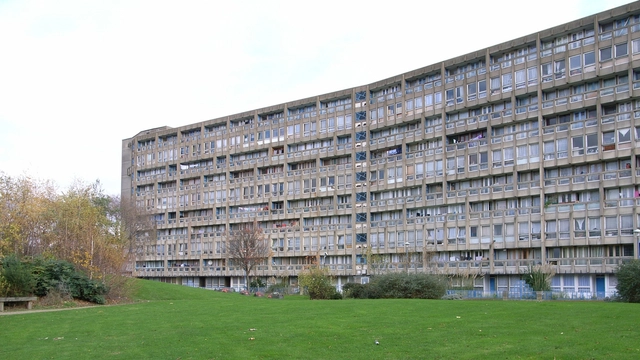
Demolition has officially commenced on East London housing development Robin Hood Gardens, bringing to an end any chance of a last-minute preservation effort for the Brutalist icon. Designed by British architects Alison and Peter Smithson and completed in 1972, plans for the site’s clearing and redevelopment have been in the works for more than five years, before government indecision and a spirited protest campaign led by architects including Richard Rogers, Zaha Hadid, Robert Venturi, and Toyo Ito put those plans in doubt.

C.F. Møller to Lead Design of Project Replacing Alison and Peter Smithson’s Robin Hood Gardens

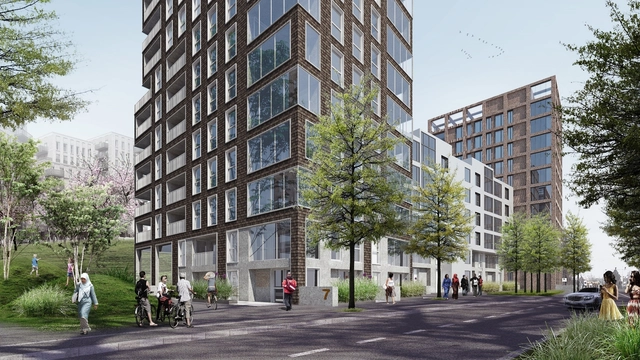
The Swan Housing Association has announced the appointment of Danish firm C.F. Møller to join Haworth Tompkins and Metropolitan Workshop in designing housing projects for the Blackwall Reach regeneration plan, a £300 million redevelopment effort which will replace Alison and Peter Smithson’s Brutalist east London estate, Robin Hood Gardens.

As leaders of Phase 3 of the plan, C.F. Møller will design housing for the eastern portion of the site. A total of 330 one- to five-bedroom residential units, half of which have been designated as affordable, will be located within a courtyard block complex at the edge of an existing garden mound – one of the few elements of the original estate that will be retained. The garden is planned to be replanted and renamed the “Millennium Green.” 

Fighting the Neoliberal: What Today's Architects Can Learn From the Brutalists

Subscriber Access | 

In this second installment of his revamped “Beyond London” column for ArchDaily, Simon Henley of London-based practice Henley Halebrown discusses a potential influence that might help UK architects combat the economic hegemony currently afflicting the country – turning for moral guidance to the Brutalists of the 1960s.

Before Christmas, I finished writing my book entitled Redefining Brutalism. As the title suggests I am seeking to redefine the subject, to detoxify the term and to find relevance in the work, not just a cause for nostalgia. Concrete Brutalism is, to most people, a style that you either love or hate. But Brutalism is far more than just a style; it is way of thinking and making. The historian and critic Reyner Banham argued in his 1955 essay and 1966 book both entitled The New Brutalism: Ethic or Aesthetic that the New Brutalism began as an ethical movement only to be hijacked by style. Today, it is a mirror to be held up to the architecture of Neoliberalism, to an architecture that serves capitalism. More than ever, architecture relies on the brand association of the big name architects whose work has little to do with the challenges faced by society, which are today not unlike the ones faced by the post-war generation: to build homes, places in which to learn and work, places for those who are old and infirm, and places to gather. We can learn a lot from this bygone generation.

Fighting the Neoliberal: What Today's Architects Can Learn From the Brutalists - Image 1 of 4Fighting the Neoliberal: What Today's Architects Can Learn From the Brutalists - Image 2 of 4Fighting the Neoliberal: What Today's Architects Can Learn From the Brutalists - Image 3 of 4Fighting the Neoliberal: What Today's Architects Can Learn From the Brutalists - Image 4 of 4Fighting the Neoliberal: What Today's Architects Can Learn From the Brutalists - More Images+ 5

Robin Hood Gardens to be Demolished

Subscriber Access | 
Robin Hood Gardens to be Demolished - Featured Image
© Chris Guy

After many years spent fighting to preserve the famous Robin Hood Gardens social housing complex in East London, the architecture community mourns another loss. Tower Hamlets Council and the London Thames Gateway Development Corporations have approved the demolition of the 1960s Brutalist complex in an effort to make way for a new £500 million sustainable development comprised of energy efficient, mixed-tenure homes and an enlarged central park. The historic building was built by modernist architects Alison and Peter Smithson and remains an important piece to Great Britain’s architectural history. Continue reading for more.